Question 1:
 This sign warns drivers that:
A
they cannot go straight ahead.
B
they will soon be facing oncoming traffic.
C
a shared lane starts ahead.
Answer Explanation
This traffic sign indicates: they will soon be facing oncoming traffic. Observing and obeying all roadway signs ensures safe traffic flow and legal driving.
This traffic sign indicates: they will soon be facing oncoming traffic. Observing and obeying all roadway signs ensures safe traffic flow and legal driving.
Question 2:
 This sign indicates:
A
A slow-moving vehicle
B
A no-passing zone
C
Yield
Answer Explanation
This traffic sign indicates: A slow-moving vehicle. Observing and obeying all roadway signs ensures safe traffic flow and legal driving.
This traffic sign indicates: A slow-moving vehicle. Observing and obeying all roadway signs ensures safe traffic flow and legal driving.
Question 3:
 This driver is using hand signals to show that he is about to:
A
turn left.
B
stop.
C
slow down.
D
turn right.
Answer Explanation
The correct driving rule is: turn left. Following standard DMV road rules and practicing defensive driving ensures safety for all road users.
The correct driving rule is: turn left. Following standard DMV road rules and practicing defensive driving ensures safety for all road users.
Question 4:
You should signal your intentions to turn at least for the last _____ before turning.
A
10 feet
B
200 feet
C
100 feet
D
500 feet
Answer Explanation
State laws require signaling your intention: 100 feet. Signal at least 100 feet before making a turn or changing lanes.
State laws require signaling your intention: 100 feet. Signal at least 100 feet before making a turn or changing lanes.
Question 5:
Green and white signs:
A
give information about directions and distances.
B
are mainly used at intersections and driveways.
C
warn drivers of unexpected road conditions.
Answer Explanation
The correct driving rule is: give information about directions and distances. Following standard DMV road rules and practicing defensive driving ensures safety for all road users.
The correct driving rule is: give information about directions and distances. Following standard DMV road rules and practicing defensive driving ensures safety for all road users.
Question 6:
A white light must make the license plate visible from __ feet.
A
200
B
5
C
500
D
50
Answer Explanation
The correct driving rule is: 50. Following standard DMV road rules and practicing defensive driving ensures safety for all road users.
The correct driving rule is: 50. Following standard DMV road rules and practicing defensive driving ensures safety for all road users.
Question 7:
In Florida, vehicle registration certificate and license plate must be obtained within __ days after beginning employment.
A
90
B
10
C
30
D
60
Answer Explanation
The correct driving rule is: 10. Following standard DMV road rules and practicing defensive driving ensures safety for all road users.
The correct driving rule is: 10. Following standard DMV road rules and practicing defensive driving ensures safety for all road users.
Question 8:
Driving too slowly:
A
is a safe driving practice.
B
should be avoided when you are impatient.
C
is always recommended.
D
can be very dangerous.
Answer Explanation
The correct driving rule is: can be very dangerous. Following standard DMV road rules and practicing defensive driving ensures safety for all road users.
The correct driving rule is: can be very dangerous. Following standard DMV road rules and practicing defensive driving ensures safety for all road users.
Question 9:
Pentagonal signs are used to indicate:
A
possible hazards on roadways.
B
no passing zones.
C
school crossings.
Answer Explanation
The correct driving rule is: school crossings. Following standard DMV road rules and practicing defensive driving ensures safety for all road users.
The correct driving rule is: school crossings. Following standard DMV road rules and practicing defensive driving ensures safety for all road users.
Question 10:
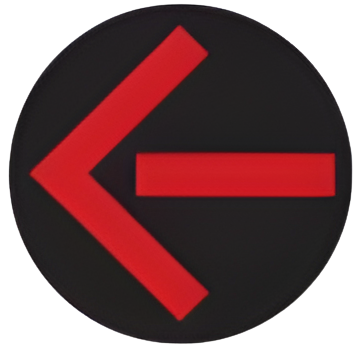 What does a red arrow signal mean?
A
Do not make the movement shown by the arrow until the green light appears.
B
After stopping, you may turn right if there is not a NO TURN ON RED sign and the way is clear.
C
You may turn left from a one-way street onto a one-way street that has traffic moving to the left.
D
All of the above.
Answer Explanation
Defensive driving best practices include: Do not make the movement shown by the arrow until the green light appears; After stopping, you may turn right if there is not a NO TURN ON RED sign and the way is clear; You may turn left from a one-way street onto a one-way street that has traffic moving to the left. Staying alert and maintaining spacing prevents unexpected hazards.
Defensive driving best practices include: Do not make the movement shown by the arrow until the green light appears; After stopping, you may turn right if there is not a NO TURN ON RED sign and the way is clear; You may turn left from a one-way street onto a one-way street that has traffic moving to the left. Staying alert and maintaining spacing prevents unexpected hazards.
Question 11:
Bicyclists under the age of __ are required to wear helmets that meet federal safety standards.
A
12
B
16
C
18
D
21
Answer Explanation
The correct driving rule is: 16. Following standard DMV road rules and practicing defensive driving ensures safety for all road users.
The correct driving rule is: 16. Following standard DMV road rules and practicing defensive driving ensures safety for all road users.
Question 12:
Which of the following is a serious violation of the License Law:
A
Failing to make crash reports.
B
Allowing an unlicensed person to use your car.
C
Having more than one U.S. driver license.
D
All of the above.
Answer Explanation
All of the listed points are essential driving requirements: Failing to make crash reports; Allowing an unlicensed person to use your car; Having more than one U.S. driver license. Practicing each ensures compliance with DMV safety laws.
All of the listed points are essential driving requirements: Failing to make crash reports; Allowing an unlicensed person to use your car; Having more than one U.S. driver license. Practicing each ensures compliance with DMV safety laws.
Question 13:
Who must wear safety belts in Florida?
A
Only passengers under the age of 16.
B
The driver and all passengers, regardless of their age.
C
The driver and all passengers under the age of 21.
D
The driver and front seat passengers, and all passengers under 18 years old.
Answer Explanation
The correct driving rule is: The driver and front seat passengers, and all passengers under 18 years old. Following standard DMV road rules and practicing defensive driving ensures safety for all road users.
The correct driving rule is: The driver and front seat passengers, and all passengers under 18 years old. Following standard DMV road rules and practicing defensive driving ensures safety for all road users.
Question 14:
 This sign warns that:
A
traffic must merge left.
B
the bridge ahead is wide enough for only one vehicle at a time.
C
traffic must merge right.
Answer Explanation
This traffic sign indicates: traffic must merge left. Observing and obeying all roadway signs ensures safe traffic flow and legal driving.
This traffic sign indicates: traffic must merge left. Observing and obeying all roadway signs ensures safe traffic flow and legal driving.
Question 15:
 This sign means:
A
Hairpin corner ahead.
B
Warning: U-turn ahead.
C
Sharp right turn ahead.
Answer Explanation
This traffic sign indicates: Hairpin corner ahead. Observing and obeying all roadway signs ensures safe traffic flow and legal driving.
This traffic sign indicates: Hairpin corner ahead. Observing and obeying all roadway signs ensures safe traffic flow and legal driving.
Question 16:
Which of the following is a way to avoid road rage?
A
Shouting obscenities.
B
Not getting behind the wheel if you are tired.
C
Making eye contact with other drivers.
D
All of the above.
Answer Explanation
The correct driving rule is: Not getting behind the wheel if you are tired. Following standard DMV road rules and practicing defensive driving ensures safety for all road users.
The correct driving rule is: Not getting behind the wheel if you are tired. Following standard DMV road rules and practicing defensive driving ensures safety for all road users.
Question 17:
If a law enforcement officer stops a vehicle and finds a front seat passenger 17 years of age or younger not wearing a seat belt, a seat belt violation will be charged to:
A
the driver.
B
the passenger.
C
the officer.
D
both the driver and the passenger.
Answer Explanation
The correct driving rule is: the driver. Following standard DMV road rules and practicing defensive driving ensures safety for all road users.
The correct driving rule is: the driver. Following standard DMV road rules and practicing defensive driving ensures safety for all road users.
Question 18:
A three-point turn is used:
A
to turn your car around in a small space.
B
on a curve, when a sign indicates that making a U-turn is prohibited.
C
to indicate your intention to turn.
D
whenever possible, to change lane.
Answer Explanation
The correct driving rule is: to turn your car around in a small space. Following standard DMV road rules and practicing defensive driving ensures safety for all road users.
The correct driving rule is: to turn your car around in a small space. Following standard DMV road rules and practicing defensive driving ensures safety for all road users.
Question 19:
A traffic sign with a red circle around and a slash over a symbol means:
A
the maneuver shown by the symbol is not allowed.
B
Do not drive faster than the posted speed limit.
C
the maneuver shown on the sign should be executed with extreme caution.
Answer Explanation
This traffic sign indicates: the maneuver shown by the symbol is not allowed. Observing and obeying all roadway signs ensures safe traffic flow and legal driving.
This traffic sign indicates: the maneuver shown by the symbol is not allowed. Observing and obeying all roadway signs ensures safe traffic flow and legal driving.
Question 20:
Which of the following is NOT a serious violation of the License Law:
A
Changing your license in any way.
B
Making a fraudulent application for a driver license.
C
Unlawful use of your license.
D
None of the other answers are correct.
Answer Explanation
The correct driving rule is: None of the other answers are correct. Following standard DMV road rules and practicing defensive driving ensures safety for all road users.
The correct driving rule is: None of the other answers are correct. Following standard DMV road rules and practicing defensive driving ensures safety for all road users.
Question 21:
Low-beam headlights can show objects ___ feet ahead.
A
30
B
450
C
50
D
150
Answer Explanation
The correct driving rule is: 150. Following standard DMV road rules and practicing defensive driving ensures safety for all road users.
The correct driving rule is: 150. Following standard DMV road rules and practicing defensive driving ensures safety for all road users.
Question 22:
On an upgrade, passing a truck is often:
A
easier.
B
impossible.
C
more difficult.
D
illegal.
Answer Explanation
When sharing the road with other vehicles: easier. Giving large vehicles and vulnerable users adequate clearance prevents dangerous accidents.
When sharing the road with other vehicles: easier. Giving large vehicles and vulnerable users adequate clearance prevents dangerous accidents.
Question 23:
You must complete a department approved driver improvement course if you were convicted of your ____ traffic offense that caused a crash within __ months.
A
second; 12
B
fourth; 48
C
third; 36
D
second; 24
Answer Explanation
The correct driving rule is: third; 36. Following standard DMV road rules and practicing defensive driving ensures safety for all road users.
The correct driving rule is: third; 36. Following standard DMV road rules and practicing defensive driving ensures safety for all road users.
Question 24:
Who must wear safety belts?
A
The driver and front passengers under the age of 18.
B
Only the driver.
C
The driver and all passengers under the age of 18.
D
The driver and front passengers under the age of 16.
Answer Explanation
The correct driving rule is: The driver and all passengers under the age of 18. Following standard DMV road rules and practicing defensive driving ensures safety for all road users.
The correct driving rule is: The driver and all passengers under the age of 18. Following standard DMV road rules and practicing defensive driving ensures safety for all road users.
Question 25:
When passing a truck, you should:
A
take your time.
B
complete your pass as quickly as possible.
C
cut in between the commercial vehicle and the curb to the right.
D
avoid blinking your headlights to let the truck driver know you are passing.
Answer Explanation
When sharing the road with other vehicles: complete your pass as quickly as possible. Giving large vehicles and vulnerable users adequate clearance prevents dangerous accidents.
When sharing the road with other vehicles: complete your pass as quickly as possible. Giving large vehicles and vulnerable users adequate clearance prevents dangerous accidents.
Question 26:
When are lane signals used?
A
To show that a toll booth is open or closed.
B
To show which lanes are opened or closed.
C
When the direction of the flow of traffic changes during the day.
D
All of the above.
Answer Explanation
All of the listed points are essential driving requirements: To show that a toll booth is open or closed; To show which lanes are opened or closed; When the direction of the flow of traffic changes during the day. Practicing each ensures compliance with DMV safety laws.
All of the listed points are essential driving requirements: To show that a toll booth is open or closed; To show which lanes are opened or closed; When the direction of the flow of traffic changes during the day. Practicing each ensures compliance with DMV safety laws.
Question 27:
While walking along a highway without a sidewalk, you should:
A
walk on the side of the road with less traffic.
B
It does not matter.
C
always walk on the shoulder on the left side, facing traffic.
D
walk in the same direction as traffic.
Answer Explanation
Defensive driving guidelines state that: always walk on the shoulder on the left side, facing traffic. Anticipating road hazards and communicating maneuvers keeps traffic predictable and safe.
Defensive driving guidelines state that: always walk on the shoulder on the left side, facing traffic. Anticipating road hazards and communicating maneuvers keeps traffic predictable and safe.
Question 28:
If, while driving, you hit a vehicle with no one in it, you must:
A
sketch the scene.
B
tell the owner.
C
not move your vehicle.
D
leave immediately.
Answer Explanation
The correct driving rule is: tell the owner. Following standard DMV road rules and practicing defensive driving ensures safety for all road users.
The correct driving rule is: tell the owner. Following standard DMV road rules and practicing defensive driving ensures safety for all road users.
Question 29:
Road rage can:
A
be caused by sudden acceleration.
B
be an indirect consequence of aggressive driving.
C
result in crashes or other incidents.
D
be avoided by cutting off other drivers.
Answer Explanation
The correct driving rule is: result in crashes or other incidents. Following standard DMV road rules and practicing defensive driving ensures safety for all road users.
The correct driving rule is: result in crashes or other incidents. Following standard DMV road rules and practicing defensive driving ensures safety for all road users.
Question 30:
A driver of a car being passed:
A
should slow down immediately.
B
must not increase speed until the pass is complete.
C
must move to the left side of his/her lane to help the other driver pass safely.
D
must increase speed before the pass is complete.
Answer Explanation
The correct driving rule is: must not increase speed until the pass is complete. Following standard DMV road rules and practicing defensive driving ensures safety for all road users.
The correct driving rule is: must not increase speed until the pass is complete. Following standard DMV road rules and practicing defensive driving ensures safety for all road users.
Question 31:
When you are driving on a multi-lane road, if another vehicle moves into your lane right in front of you, cutting you off, you should:
A
Brake only if necessary to avoid a crash, and follow the other vehicle closely for a while.
B
Honk your horn and brake firmly, to quickly drop back from the other vehicle.
C
Stay calm. Slow down if necessary to avoid a crash, and gently drop back to a safe following distance.
D
brake sharply.
Answer Explanation
The correct driving rule is: stay calm. Slow down if necessary to avoid a crash, and gently drop back to a safe following distance. Following standard DMV road rules and practicing defensive driving ensures safety for all road users.
The correct driving rule is: stay calm. Slow down if necessary to avoid a crash, and gently drop back to a safe following distance. Following standard DMV road rules and practicing defensive driving ensures safety for all road users.
Question 32:
On a two way street, a stopped school bus is picking up children. Drivers must:
A
overtake and pass the bus before the bus’ stop arm is withdrawn.
B
pass the bus.
C
stop and remain stopped until all children are clear of the roadway and the bus’ stop arm is withdrawn.
D
yield to vehicles coming in the opposite direction.
Answer Explanation
When a school bus displays flashing red lights and extended stop sign: stop and remain stopped until all children are clear of the roadway and the bus’ stop arm is withdrawn. Traffic in both directions must come to a full stop on undivided roads until children are clear.
When a school bus displays flashing red lights and extended stop sign: stop and remain stopped until all children are clear of the roadway and the bus’ stop arm is withdrawn. Traffic in both directions must come to a full stop on undivided roads until children are clear.
Question 33:
Crossing guards are the ____ to enter and ____ to exit a crosswalk to indicate to drivers that pedestrians are about to cross.
A
first; first
B
first; last
C
last; first
D
last; last
Answer Explanation
Drivers must always yield the right-of-way to pedestrians crossing at intersections and crosswalks: first; last. Stop and allow them to clear the lane safely.
Drivers must always yield the right-of-way to pedestrians crossing at intersections and crosswalks: first; last. Stop and allow them to clear the lane safely.
Question 34:
When parking on a public road, drivers should:
A
move as far away from traffic as possible.
B
always park on the left side of the roadway.
C
All of the above.
Answer Explanation
Under standard parking and curb regulations: move as far away from traffic as possible. Following parking distance clearances keeps roadways unobstructed and emergency lanes accessible.
Under standard parking and curb regulations: move as far away from traffic as possible. Following parking distance clearances keeps roadways unobstructed and emergency lanes accessible.
Question 35:
You are driving along an expressway with a speed limit of 70 MPH. What is the minimum speed limit, unless otherwise posted?
A
50 MPH
B
There is no minimum speed.
C
55 MPH
D
65 MPH
Answer Explanation
For safe speed and stopping control: 50 MPH. Adjusting speed to match visibility and road traction prevents loss of steering grip.
For safe speed and stopping control: 50 MPH. Adjusting speed to match visibility and road traction prevents loss of steering grip.
Question 36:
When you are driving on a paved highway that does not have a paved shoulder, if your vehicle breaks down you should:
A
try to reach the next available paved shoulder.
B
try not to stop.
C
try to get your vehicle completely out of traffic lanes and off the paved surface of the highway before stopping.
D
come to a complete stop and use your emergency flashers.
Answer Explanation
Rearview mirrors do not show vehicles in blind spots: try to get your vehicle completely out of traffic lanes and off the paved surface of the highway before stopping. Always look over your shoulder before merging or changing lanes.
Rearview mirrors do not show vehicles in blind spots: try to get your vehicle completely out of traffic lanes and off the paved surface of the highway before stopping. Always look over your shoulder before merging or changing lanes.
Question 37:
Most signs used in street work areas are:
A
round.
B
diamond shaped.
C
rectangle shaped.
Answer Explanation
The correct driving rule is: diamond shaped. Following standard DMV road rules and practicing defensive driving ensures safety for all road users.
The correct driving rule is: diamond shaped. Following standard DMV road rules and practicing defensive driving ensures safety for all road users.
Question 38:
When driving in a roundabout, drivers should:
A
change lane to indicate their intention to exit.
B
travel in a clockwise direction.
C
use the left turn signal to indicate their intention to exit.
D
use the right turn signal to indicate their intention to exit.
Answer Explanation
Vehicles entering a roundabout must yield right-of-way to circulating traffic already inside: use the right turn signal to indicate their intention to exit. Wait for a safe gap before entering.
Vehicles entering a roundabout must yield right-of-way to circulating traffic already inside: use the right turn signal to indicate their intention to exit. Wait for a safe gap before entering.
Question 39:
What should you do as you prepare to turn right at an intersection?
A
Honk your horn.
B
Yield to bicyclists coming from the opposite direction.
C
Signal your turn, check for bicyclists, and do not turn directly in front of a bicyclist.
Answer Explanation
According to standard right-of-way regulations: signal your turn, check for bicyclists, and do not turn directly in front of a bicyclist. Yielding appropriately prevents intersection collisions and maintains safe traffic flow.
According to standard right-of-way regulations: signal your turn, check for bicyclists, and do not turn directly in front of a bicyclist. Yielding appropriately prevents intersection collisions and maintains safe traffic flow.
Question 40:
When infractions occur within a school zone or construction zone, the resulting fines are:
A
reduced by half.
B
the same.
C
doubled.
D
tripled.
Answer Explanation
The correct driving rule is: doubled. Following standard DMV road rules and practicing defensive driving ensures safety for all road users.
The correct driving rule is: doubled. Following standard DMV road rules and practicing defensive driving ensures safety for all road users.
Question 41:
Which signs have black letters on a yellow or orange background?
A
Warning signs (diamond)
B
Regulatory signs (vertical rectangle)
C
Railroad advance warning signs (round)
Answer Explanation
The correct driving rule is: Warning signs (diamond). Following standard DMV road rules and practicing defensive driving ensures safety for all road users.
The correct driving rule is: Warning signs (diamond). Following standard DMV road rules and practicing defensive driving ensures safety for all road users.
Question 42:
Expressways are:
A
single-lane roads with traffic lights, stop signs and railroad crossings.
B
single-lane roads with no traffic lights and stop signs.
C
multiple-lane roads with limited traffic.
D
multiple-lane roads with no traffic lights, stop signs or railroad crossings.
Answer Explanation
The correct driving rule is: multiple-lane roads with no traffic lights, stop signs or railroad crossings. Following standard DMV road rules and practicing defensive driving ensures safety for all road users.
The correct driving rule is: multiple-lane roads with no traffic lights, stop signs or railroad crossings. Following standard DMV road rules and practicing defensive driving ensures safety for all road users.
Question 43:
A parent of a child younger than 6 years of age may NOT:
A
secure the child in the rear seat.
B
drive when it's foggy.
C
leave the child unattended in a motor vehicle for more than 15 minutes.
D
drive faster than 25 MPH under any circumstances.
Answer Explanation
The correct driving rule is: leave the child unattended in a motor vehicle for more than 15 minutes. Following standard DMV road rules and practicing defensive driving ensures safety for all road users.
The correct driving rule is: leave the child unattended in a motor vehicle for more than 15 minutes. Following standard DMV road rules and practicing defensive driving ensures safety for all road users.
Question 44:
At 50 MPH, the impact and braking distance are __ times greater than at 25 MPH.
A
16
B
6
C
4
D
2
Answer Explanation
For safe speed and stopping control: 4. Adjusting speed to match visibility and road traction prevents loss of steering grip.
For safe speed and stopping control: 4. Adjusting speed to match visibility and road traction prevents loss of steering grip.
Question 45:
At night, glare from oncoming cars can:
A
improve your vision.
B
reduce your vision.
C
replace hand gestures.
D
signal their intention to turn.
Answer Explanation
The correct driving rule is: reduce your vision. Following standard DMV road rules and practicing defensive driving ensures safety for all road users.
The correct driving rule is: reduce your vision. Following standard DMV road rules and practicing defensive driving ensures safety for all road users.
Question 46:
Pedestrians approaching a railroad-highway grade crossing must stop when:
A
a human flagger is warning of an approaching train.
B
an approaching train is clearly visible.
C
warning devices are flashing.
D
All of the above.
Answer Explanation
Defensive driving best practices include: a human flagger is warning of an approaching train; an approaching train is clearly visible; warning devices are flashing. Staying alert and maintaining spacing prevents unexpected hazards.
Defensive driving best practices include: a human flagger is warning of an approaching train; an approaching train is clearly visible; warning devices are flashing. Staying alert and maintaining spacing prevents unexpected hazards.
Question 47:
High beam headlights are most effective for speeds faster than:
A
25 MPH
B
90 MPH
C
70 MPH
D
50 MPH
Answer Explanation
The correct driving rule is: 25 MPH. Following standard DMV road rules and practicing defensive driving ensures safety for all road users.
The correct driving rule is: 25 MPH. Following standard DMV road rules and practicing defensive driving ensures safety for all road users.
Question 48:
When entering an expressway, never stop in the acceleration lane unless:
A
you receive a very important text.
B
there are one or more vehicles behind you.
C
you need to make a U-turn.
D
traffic is too heavy for you to merge safely.
Answer Explanation
The correct driving rule is: traffic is too heavy for you to merge safely. Following standard DMV road rules and practicing defensive driving ensures safety for all road users.
The correct driving rule is: traffic is too heavy for you to merge safely. Following standard DMV road rules and practicing defensive driving ensures safety for all road users.
Question 49:
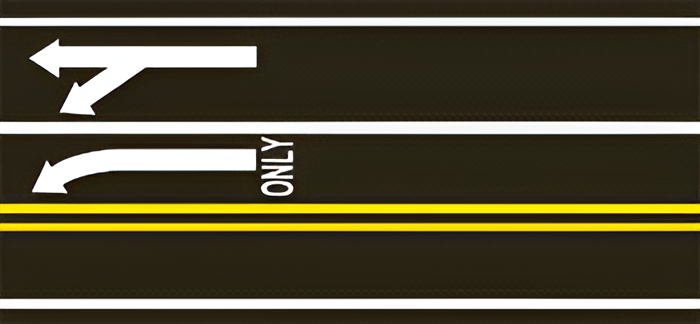 If you are in the lane marked with a curved arrow and the word ONLY:
A
You must turn left.
B
You are the only driver in the lane who can turn left.
C
You are the only driver in the lane who MUST turn in the direction of the arrow.
D
You must turn right.
Answer Explanation
The correct driving rule is: you must turn left. Following standard DMV road rules and practicing defensive driving ensures safety for all road users.
The correct driving rule is: you must turn left. Following standard DMV road rules and practicing defensive driving ensures safety for all road users.
Question 50:
What is an ideal situation for overtaking and passing another vehicle on the right?
A
Passing a vehicle on the right is never allowed.
B
When it's dark, you had more than a few drinks, you are driving 40 MPH above the speed limit and your radio is playing hard rock music.
C
When the vehicle you are passing is making a right turn.
D
When the vehicle you are passing is making or about to make a left turn.
Answer Explanation
Defensive driving guidelines state that: When the vehicle you are passing is making or about to make a left turn. Anticipating road hazards and communicating maneuvers keeps traffic predictable and safe.
Defensive driving guidelines state that: When the vehicle you are passing is making or about to make a left turn. Anticipating road hazards and communicating maneuvers keeps traffic predictable and safe.