Question 1:
The total stopping distance of a vehicle traveling at 30 MPH is ___ feet:
A
633
B
123
C
268
D
66
For safe speed and stopping control: 123. Adjusting speed to match visibility and road traction prevents loss of steering grip.
Question 2:
What is the ideal steering wheel hand placement?
A
9-3 or 8-4
B
12-6 or 11-7
C
3-6 or 4-7
D
8-4 or 10-5
The correct driving rule is: 9-3 or 8-4. Following standard DMV road rules and practicing defensive driving ensures safety for all road users.
Question 3:
A bicyclist on a sidewalk or crosswalk:
A
must yield the right-of-way to motorcycles.
B
always has the right-of-way.
C
must yield the right-of-way to pedestrians.
D
can be fined.
Drivers must always yield the right-of-way to pedestrians crossing at intersections and crosswalks: must yield the right-of-way to pedestrians. Stop and allow them to clear the lane safely.
Question 4:
You can be charged with DUI if you are found to be driving:
A
while under the influence of alcoholic beverages.
B
faster than 85 MPH.
C
without your seatbelt on.
D
while you are drowsy.
Under state DUI and traffic safety laws: while under the influence of alcoholic beverages. Alcohol degrades judgment, slows reaction times, and distorts depth perception.
Question 5:
The towing connection between two vehicles:
A
must be 30 feet or longer.
B
must not be used unless the vehicle is towing pipes or poles.
C
must be longer than 10 feet.
D
must not be more than 15 feet long.
The correct driving rule is: must not be more than 15 feet long. Following standard DMV road rules and practicing defensive driving ensures safety for all road users.
Question 6:
The length of a point suspension is 30 days for:
A
15 points within a 15-month period.
B
12 points within a 12-month period.
C
18 points within a 18-month period.
D
6 points within a 12-month period.
The correct driving rule is: 12 points within a 12-month period. Following standard DMV road rules and practicing defensive driving ensures safety for all road users.
Question 7:
Motorcycles are entitled to:
A
the entire lane.
B
the right-of-way at intersections.
C
half a lane on public roads.
D
the left lane.
The correct driving rule is: the entire lane. Following standard DMV road rules and practicing defensive driving ensures safety for all road users.
Question 8:
When is it legal to pass another vehicle using the shoulder of a road?
A
When there’s a vehicle in front of you in the passing lane.
B
Always.
C
When the shoulder is unpaved.
D
Never.
The correct driving rule is: Never. Following standard DMV road rules and practicing defensive driving ensures safety for all road users.
Question 9:
Drawbridges are:
A
random bridges.
B
special bridges reserved for car-pool vehicles.
C
bridges found on roadways with 2 or 4 lanes.
D
mechanical bridges over navigable waters.
The correct driving rule is: mechanical bridges over navigable waters. Following standard DMV road rules and practicing defensive driving ensures safety for all road users.
Question 10:
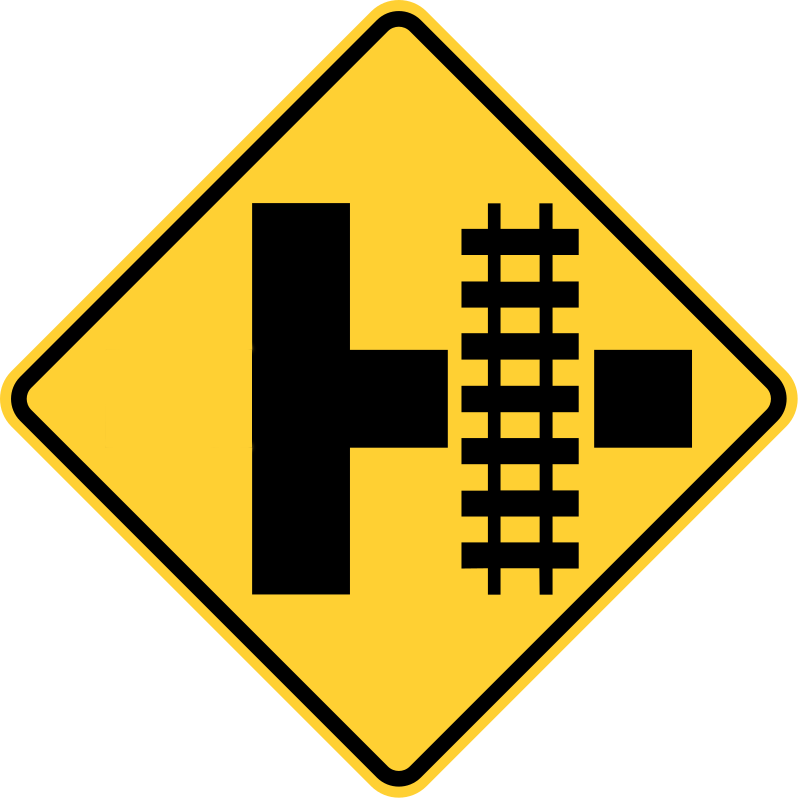 What does this sign indicate?
A
Parallel railroad crossing (side road)
B
Low ground clearance railroad crossing
C
Parallel railroad crossing (crossroad)
Circular signs with an 'X' and 'RR' designate a Railroad Advance Warning: Parallel railroad crossing (side road). Drivers must slow down, look both ways, listen for trains, and be prepared to stop.
Question 11:
_______ can drink alcohol and drive safely.
A
People who are used to drinking
B
Drivers who are 21 years of age or above
C
People who drink responsibly
D
No one
Under state DUI and traffic safety laws: No one. Alcohol degrades judgment, slows reaction times, and distorts depth perception.
Question 12:
 What does a flashing left yellow arrow mean?
A
Vehicles turning left must stop if they can. The light will soon be red.
B
Only right turns are allowed.
C
Left turns are allowed. Yield to oncoming traffic and pedestrians.
D
None of the above.
The correct driving rule is: Left turns are allowed. Yield to oncoming traffic and pedestrians. Following standard DMV road rules and practicing defensive driving ensures safety for all road users.
Question 13:
Drivers who dump more than 15 pounds of trash:
A
must attend a Littering Avoidance Course.
B
can be charged with a first-degree misdemeanor.
C
will have their license suspended for 30 days.
D
will have their license cancelled.
The correct driving rule is: can be charged with a first-degree misdemeanor. Following standard DMV road rules and practicing defensive driving ensures safety for all road users.
Question 14:
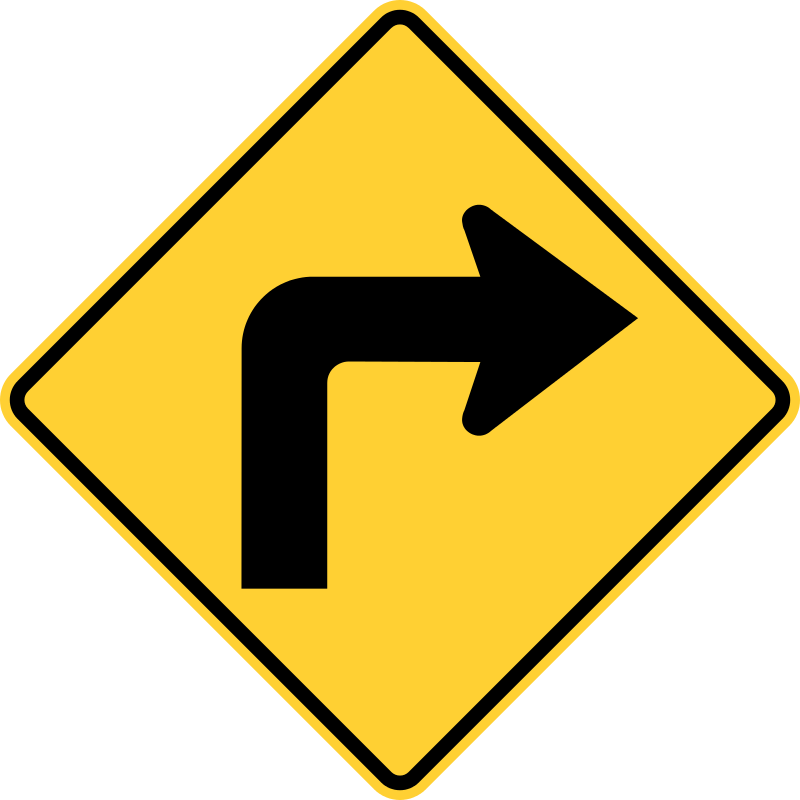 This sign warns drivers that:
A
the road will make a sharp turn to the right.
B
right turns are not allowed.
C
another road enters the highway from the direction shown.
This traffic sign indicates: the road will make a sharp turn to the right. Observing and obeying all roadway signs ensures safe traffic flow and legal driving.
Question 15:
Parking is not allowed within __ feet of any stop sign, flashing signal or traffic signal.
A
50
B
15
C
30
D
100
An octagonal Stop sign requires a full and complete stop before the stop line or crosswalk: 30. Proceed only after yielding to all cross traffic and pedestrians.
Question 16:
When children or school crossing guards are present in a crosswalk, what should drivers do?
A
Stop in the crosswalk.
B
Yield or stop at the marked stop line and without stopping in the crosswalk.
C
Enter the crosswalk while the school crossing guard is in the roadway.
D
Stop after the marked stop line.
Drivers must always yield the right-of-way to pedestrians crossing at intersections and crosswalks: yield or stop at the marked stop line and without stopping in the crosswalk. Stop and allow them to clear the lane safely.
Question 17:
When approaching an intersection, drivers should:
A
stop after entering the intersection.
B
not pass or change lanes.
C
drive at the slowest speed while crossing the intersection.
D
increase their speed.
According to standard right-of-way regulations: not pass or change lanes. Yielding appropriately prevents intersection collisions and maintains safe traffic flow.
Question 18:
An orange warning may indicate:
A
A no passing zone
B
A construction area
C
A stop sign
D
A railroad ahead
The correct driving rule is: A construction area. Following standard DMV road rules and practicing defensive driving ensures safety for all road users.
Question 19:
In a heavy rain, tires can ride on a thin film of water, without touching the road. This is called:
A
hydroplaning.
B
high-planing.
C
rainplaning.
D
waterplaning.
When hydroplaning on water: hydroplaning. Gently ease off the accelerator and hold the steering wheel straight without sudden braking.
Question 20:
If your vehicle enters water, it will float on the surface for ___________ before starting to sink.
A
1 to 2 hours.
B
30 to 60 seconds
C
3 to 5 minutes
D
5 to 8 minutes
The correct driving rule is: 30 to 60 seconds. Following standard DMV road rules and practicing defensive driving ensures safety for all road users.
Question 21:
All expressway entrances have three basic parts:
A
Entrance lane, acceleration lane, deceleration lane
B
Entrance ramp, acceleration lane, merging area
C
Express entrance, acceleration lane, parking area.
D
Passing ramp, merging lane, exit area
The correct driving rule is: Entrance ramp, acceleration lane, merging area. Following standard DMV road rules and practicing defensive driving ensures safety for all road users.
Question 22:
An octagonal sign means that drivers must:
A
respect the posted speed limit.
B
come to a complete stop at the marked stop line.
C
be aware possible hazards ahead.
An octagonal Stop sign requires a full and complete stop before the stop line or crosswalk: come to a complete stop at the marked stop line. Proceed only after yielding to all cross traffic and pedestrians.
Question 23:
You are driving and you are feeling drowsy. You should:
A
avoid drinking coffee.
B
turn on the radio to keep you awake.
C
find a safe place to stop for a break.
Under state DUI and traffic safety laws: find a safe place to stop for a break. Alcohol degrades judgment, slows reaction times, and distorts depth perception.
Question 24:
Passing on the right is legal when:
A
when you are passing two truck in a row.
B
the vehicle you are passing is making a right turn.
C
you are driving above the speed limit.
D
there are two or more lanes of traffic moving in the same direction.
Defensive driving guidelines state that: there are two or more lanes of traffic moving in the same direction. Anticipating road hazards and communicating maneuvers keeps traffic predictable and safe.
Question 25:
 What should drivers do when they see this road sign?
A
come to a complete stop and wait for a train to cross.
B
slow down, look for a train, and be prepared to stop.
C
look for a human flagger.
This traffic sign indicates: slow down, look for a train, and be prepared to stop. Observing and obeying all roadway signs ensures safe traffic flow and legal driving.
Question 26:
At the time of arrest for DUI, you will be administratively suspended if you:
A
fail to declare which controlled substances you have used.
B
have a breath or blood alcohol level of 0.02 or above.
C
refuse to submit to a chemical test.
D
refuse to take a bus to go home.
Only time allows the liver to metabolize and remove alcohol from the bloodstream (roughly one standard drink per hour). Coffee, cold showers, and fresh air cannot lower BAC.
Question 27:
The countdown time period of a pedestrian countdown signal is based on:
A
walking speed and crossing distance.
B
reaction distance and braking distance.
C
reaction time and walking speed.
D
how many people are crossing the road.
Drivers must always yield the right-of-way to pedestrians crossing at intersections and crosswalks: walking speed and crossing distance. Stop and allow them to clear the lane safely.
Question 28:
 This road sign warns drivers that:
A
they are coming to a point where another traffic lane joins the one they are on.
B
a divided highway is ahead.
C
the one-way street or roadway is about to change to two-way traffic.
This traffic sign indicates: the one-way street or roadway is about to change to two-way traffic. Observing and obeying all roadway signs ensures safe traffic flow and legal driving.
Question 29:
Which shape is used for advance warning of no passing zones?
A
Pennant
B
Diamond
C
Octagon
D
Pentagon
Defensive driving guidelines state that: Pennant. Anticipating road hazards and communicating maneuvers keeps traffic predictable and safe.
Question 30:
Stop lines, crosswalks and parking spaces are marked by:
A
white lines.
B
white broken lines.
C
yellow lines.
D
red lines.
Under standard parking and curb regulations: white lines. Following parking distance clearances keeps roadways unobstructed and emergency lanes accessible.
Question 31:
Wearing shoulder belts and lap belts make your chances of living through a crash:
A
twice as good.
B
four times as good.
C
1.5 times as good.
D
three times as good.
The correct driving rule is: twice as good. Following standard DMV road rules and practicing defensive driving ensures safety for all road users.
Question 32:
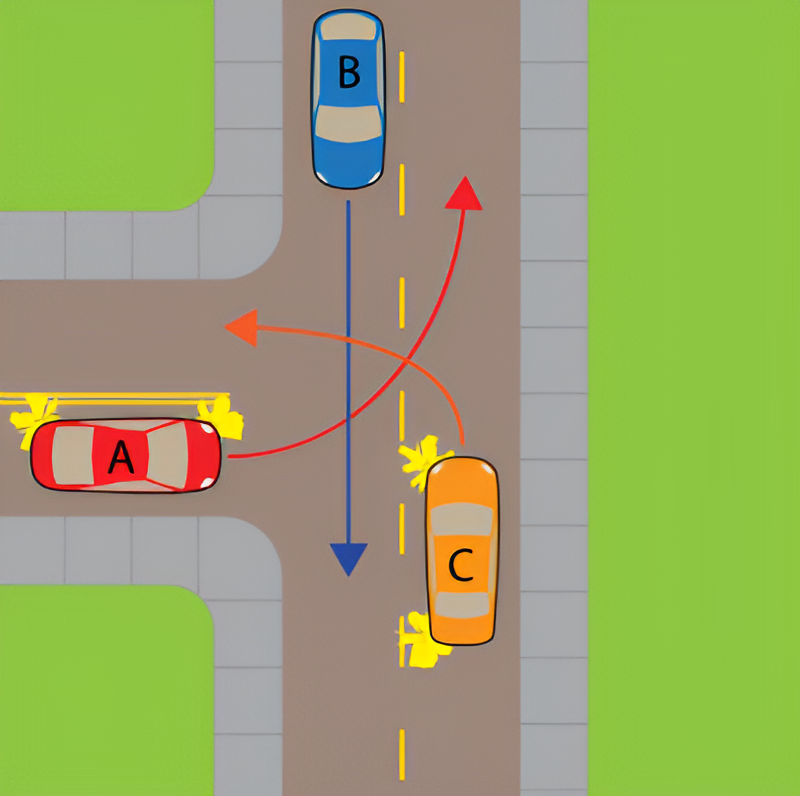 In what order can the 3 cars in the uncontrolled intersection proceed?
A
A, C and B (red, yellow and blue)
B
B, C and A (blue, yellow and red)
C
C, A and B (yellow, red and blue)
D
A, B and C (red, blue and yellow)
At an uncontrolled intersection or 4-way stop where vehicles arrive at the same time: B, C and A (blue, yellow and red). The driver on the left must always yield to the driver on the right.
Question 33:
Which of the following is true about a driver who is convicted of running a red light?
A
The driver may attend a basic driver improvement course in lieu of points on his/her driving record.
B
The driver must complete a basic driver improvement course in order to retain the driver license.
C
The driver will receive an insurance discount after completing the Substance Abuse Education course.
D
The driver was in a hurry.
According to standard right-of-way regulations: The driver must complete a basic driver improvement course in order to retain the driver license. Yielding appropriately prevents intersection collisions and maintains safe traffic flow.
Question 34:
The picture shows:
A
a railroad advance warning sign.
B
a speeding fines doubled sign.
C
a reversible road sign.
The correct driving rule is: a railroad advance warning sign. Following standard DMV road rules and practicing defensive driving ensures safety for all road users.
Question 35:
What is the minimum required clearance a motorist must maintain from a cyclist?
A
30 feet
B
3 feet
C
15 feet
D
8 feet
State laws require motorists to provide a safe clearance buffer: 3 feet. Allow at least 3 feet of space when overtaking a bicyclist.
Question 36:
If you are involved in a crash and your vehicle enters water, you should:
A
take off your clothes and shoes before trying to open the door.
B
make every attempt to get out of the vehicle immediately.
C
wait for the vehicle to sink and for the pressure to equalize before trying to escape.
D
call the police.
The correct driving rule is: make every attempt to get out of the vehicle immediately. Following standard DMV road rules and practicing defensive driving ensures safety for all road users.
Question 37:
A solid white line:
A
means you should not cross the line unless you must do so to avoid a hazard.
B
marks the right edge of the roadway.
C
separates lanes of traffic moving in the same direction.
D
All of the above.
All of the listed points are essential driving requirements: means you should not cross the line unless you must do so to avoid a hazard; marks the right edge of the roadway; separates lanes of traffic moving in the same direction. Practicing each ensures compliance with DMV safety laws.
Question 38:
More than half of the crashes that cause injury or death happen at speeds less than:
A
90 MPH
B
40 MPH
C
55 MPH
D
25 MPH
The correct driving rule is: 40 MPH. Following standard DMV road rules and practicing defensive driving ensures safety for all road users.
Question 39:
Which of the following is NOT correct. When making a turn, drivers should:
A
not cause a pedestrian to stop.
B
give a turn signal for at least 10 feet before you make the turn.
C
slow down to a safe turning speed.
D
always scan for pedestrians before starting a left turn.
The correct driving rule is: give a turn signal for at least 10 feet before you make the turn. Following standard DMV road rules and practicing defensive driving ensures safety for all road users.
Question 40:
A yellow light tells drivers to:
A
increase their speed. The light will soon be red.
B
go. The light will soon be green.
C
stop if they can safely do so. The light will soon be red.
D
yield to oncoming traffic and pedestrians.
According to standard right-of-way regulations: stop if they can safely do so. The light will soon be red. Yielding appropriately prevents intersection collisions and maintains safe traffic flow.
Question 41:
In Florida, there are two motor vehicle insurance laws. They are:
A
the Car-Insurance Law and the Pay-In-Advance Law.
B
the Financial Responsibility Law and the No-Fault law.
C
the Social Responsibility Law and the No-Fault law.
D
the Social Responsibility Law and the No-Risk law.
The correct driving rule is: the Financial Responsibility Law and the No-Fault law. Following standard DMV road rules and practicing defensive driving ensures safety for all road users.
Question 42:
A licensed driver (Class E or higher) who is 17 years of age may not operate a motor vehicle between ___________, unless accompanied by a driver who is 21 years of age or older and holds a valid driver license (Class E or higher)
A
2 AM and 4 AM.
B
2 PM and 4 AM.
C
1 PM and 5 PM.
D
1 AM and 5 AM.
The correct driving rule is: 1 AM and 5 AM. Following standard DMV road rules and practicing defensive driving ensures safety for all road users.
Question 43:
More than half of the crashes that cause injury or death happen at speeds less than __ MPH and within __ miles from home.
A
25; 40
B
40; 25
C
30; 50
D
90; 20
The correct driving rule is: 40; 25. Following standard DMV road rules and practicing defensive driving ensures safety for all road users.
Question 44:
 This sign means:
A
Narrow bridge ahead. Slow down and drive with caution.
B
Do not to enter if your vehicle is taller than the height listed on the sign.
C
No passing zone ahead.
This traffic sign indicates: Do not to enter if your vehicle is taller than the height listed on the sign. Observing and obeying all roadway signs ensures safe traffic flow and legal driving.
Question 45:
An open/uncontrolled intersection is one:
A
where all vehicles have the right-of-way.
B
without traffic control signs or signals.
C
with four or more traffic signals.
D
where cars can travel freely.
At an uncontrolled intersection or 4-way stop where vehicles arrive at the same time: without traffic control signs or signals. The driver on the left must always yield to the driver on the right.
Question 46:
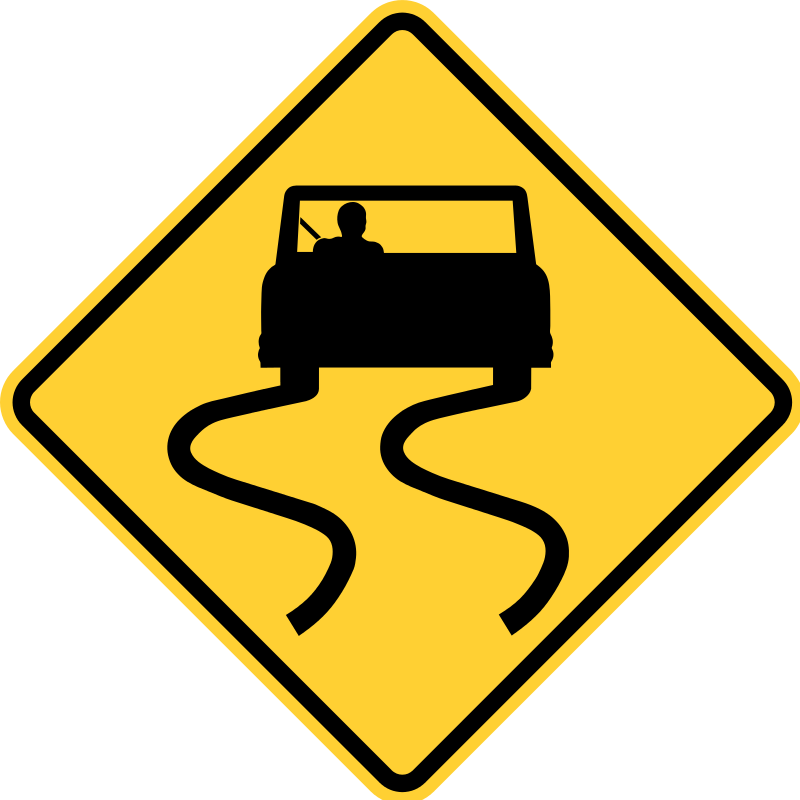 When they see this sign, drivers:
A
should be prepared to make sharp turns at a high speed.
B
need to be prepared to turn right and then left quickly.
C
should not speed up or brake quickly.
This traffic sign indicates: should not speed up or brake quickly. Observing and obeying all roadway signs ensures safe traffic flow and legal driving.
Question 47:
A center lane between lanes of traffic traveling in opposite directions may be designated for:
A
car-pool vehicles.
B
right turn only.
C
left turns only.
D
limos.
The correct driving rule is: left turns only. Following standard DMV road rules and practicing defensive driving ensures safety for all road users.
Question 48:
Mature drivers should NOT:
A
listen to loud music while driving.
B
drive at all.
C
get power steering when turning the steering wheel gets harder due to age.
D
watch the entire road, from their front bumper to 12 seconds ahead of them.
The correct driving rule is: listen to loud music while driving. Following standard DMV road rules and practicing defensive driving ensures safety for all road users.
Question 49:
If you’re involved in a minor crash and your vehicle is blocking the flow of traffic, you must:
A
not move it.
B
call the police.
C
take pictures of the scene.
D
move it.
The correct driving rule is: move it. Following standard DMV road rules and practicing defensive driving ensures safety for all road users.
Question 50:
A single yellow line marks the ________ of divided highways and one-way streets.
A
left edge
B
shared lane
C
right edge
D
reversible lane
The correct driving rule is: left edge. Following standard DMV road rules and practicing defensive driving ensures safety for all road users.