Question 1:
On two-lane, two-way streets or highways, you should start left turns:
A
in the center of the lane.
B
anywhere in the lane.
C
close to the center line.
D
close to the outside line.
The correct driving rule is: close to the center line. Following standard DMV road rules and practicing defensive driving ensures safety for all road users.
Question 2:
To make an emergency stop while driving on an interstate, you should:
A
get out of the vehicle use hand signals to stop oncoming vehicles.
B
pull off the road, turn on your emergency flashers and stay in your vehicle if possible.
C
sound the horn and pull off the road.
The correct driving rule is: pull off the road, turn on your emergency flashers and stay in your vehicle if possible. Following standard DMV road rules and practicing defensive driving ensures safety for all road users.
Question 3:
The speed limit in residential zones is:
A
20 MPH
B
35 MPH
C
30 MPH
D
25 MPH
For safe speed and stopping control: 25 MPH. Adjusting speed to match visibility and road traction prevents loss of steering grip.
Question 4:
Vehicles with Specialty License Plates that display the International Symbol of Access:
A
may access any international parking area.
B
may legally park anywhere.
C
may legally park in spaces reserved for people with disabilities.
D
are reserved for foreign people with disabilities.
The correct driving rule is: may legally park in spaces reserved for people with disabilities. Following standard DMV road rules and practicing defensive driving ensures safety for all road users.
Question 5:
Parking is not allowed:
A
on the road side of a parked vehicle.
B
in a tunnel.
C
All of the above.
Under standard parking and curb regulations: All of the above. Following parking distance clearances keeps roadways unobstructed and emergency lanes accessible.
Question 6:
If a broken yellow line is on your side of the center line:
A
you may not pass other vehicles.
B
you may cross the line to pass other vehicles.
C
you are driving in the left lane.
D
you have the right-of-way when turning left.
The correct driving rule is: you may cross the line to pass other vehicles. Following standard DMV road rules and practicing defensive driving ensures safety for all road users.
Question 7:
Before stopping your vehicle on the roadway, drivers should:
A
check their mirrors for traffic.
B
place their foot on the accelerator.
C
pump the brakes to check if they work properly.
The correct driving rule is: check their mirrors for traffic. Following standard DMV road rules and practicing defensive driving ensures safety for all road users.
Question 8:
New York State has a “primary enforcement” seat belt law, which means that:
A
children in primary school are not required to wear a seat belt.
B
police officers can not issue a ticket for failure to wear a seat belt, unless you are also violating other traffic safety laws.
C
if you get stopped with a child under 6 and no child seat, you can get your first offense dismissed if you purchase an approved child restraint system before your court date.
D
a law enforcement officer can issue a traffic ticket for failure to wear a seat belt.
The correct driving rule is: a law enforcement officer can issue a traffic ticket for failure to wear a seat belt. Following standard DMV road rules and practicing defensive driving ensures safety for all road users.
Question 9:
While driving on a narrow road, you meet an oncoming vehicle. You must:
A
make the other vehicle pull over as you were there first.
B
pull completely off the road and stop.
C
turn on your headlights to make sure the other vehicle sees you.
D
allow the on-coming vehicle at least one-half of the main travelled portion of the road.
The correct driving rule is: allow the on-coming vehicle at least one-half of the main travelled portion of the road. Following standard DMV road rules and practicing defensive driving ensures safety for all road users.
Question 10:
Road signs that point out scenic areas and parks are:
A
brown and white.
B
black and orange.
C
green and white.
The correct driving rule is: brown and white. Following standard DMV road rules and practicing defensive driving ensures safety for all road users.
Question 11:
When driving a vehicle upon any public street or highway, you must:
A
show your driver’s license upon demand.
B
carry your license with you.
C
have a valid driver’s license.
D
All of the above.
Defensive driving best practices include: show your driver’s license upon demand; carry your license with you; have a valid driver’s license. Staying alert and maintaining spacing prevents unexpected hazards.
Question 12:
Before entering a traffic circle, drivers must slow down and yield to ___________ in the traffic circle.
A
pedestrians
B
vehicles
C
bicyclists
D
All of the above.
Safe navigation at intersections requires following all established rules: pedestrians; vehicles; bicyclists. Always yield right-of-way properly to prevent collisions.
Question 13:
In New York State, leaving the scene of a traffic crash that involves property damage is:
A
a traffic violation.
B
required by law. Not leaving the scene will result in a license suspension.
C
recommended to allow law enforcement officers and rescue personnel to do their job.
D
a criminal violation.
The correct driving rule is: a traffic violation. Following standard DMV road rules and practicing defensive driving ensures safety for all road users.
Question 14:
A person riding a bicycle has all the same rights and responsibilities as a driver of a motor vehicle.
A
False
B
True
State laws require motorists to provide a safe clearance buffer: True. Allow at least 3 feet of space when overtaking a bicyclist.
Question 15:
The 2 red taillights mounted on the rear of a vehicle must be visible from ____ feet.
A
100
B
2000
C
1000
D
450
The correct driving rule is: 1000. Following standard DMV road rules and practicing defensive driving ensures safety for all road users.
Question 16:
If you miss your exit from an interstate expressway, you should:
A
go to the next exit and come back to the exit you missed.
B
use the right turn signal, check your mirrors and move to the right.
C
pull over to the right and back up with caution until you reach the exit ramp.
D
make a quick U-turn from your lane of travel.
Defensive driving guidelines state that: go to the next exit and come back to the exit you missed. Anticipating road hazards and communicating maneuvers keeps traffic predictable and safe.
Question 17:
What should you do when approaching an intersection where the traffic signals are completely out of order (blacked out)?
A
Treat the intersection as an all-way (four-way) stop
B
Drive straight through at the posted speed limit
C
Yield only to vehicles turning left
D
Honk your horn and continue without stopping
When traffic signals are non-functioning, state laws require drivers to treat the intersection as a multi-way stop sign.
Question 18:
When passing a motorcycle you must:
A
give the motorcyclist the right hand part of his traffic lane.
B
give the motorcyclist the entire traffic lane as if the motorcycle was a car.
C
sound your horn to alert the motorcyclist.
Motorcycles can stop rapidly and are easily hidden in vehicle blind spots: give the motorcyclist the entire traffic lane as if the motorcycle was a car. Always allow an increased following distance of at least 3 to 4 seconds.
Question 19:
Your license will be suspended when you accumulate ______ under the point system law.
A
12 points
B
5 points
C
15 points
The correct driving rule is: 12 points. Following standard DMV road rules and practicing defensive driving ensures safety for all road users.
Question 20:
If you need to slow down while driving on a slippery road, you should first:
A
pump your brakes.
B
take your foot off the gas pedal.
C
apply your parking brake.
D
firmly apply your brakes.
For safe speed and stopping control: take your foot off the gas pedal. Adjusting speed to match visibility and road traction prevents loss of steering grip.
Question 21:
When driving at night with no other vehicles ahead, a driver should use:
A
high beam lights.
B
low-beam lights.
C
parking lights.
The correct driving rule is: high beam lights. Following standard DMV road rules and practicing defensive driving ensures safety for all road users.
Question 22:
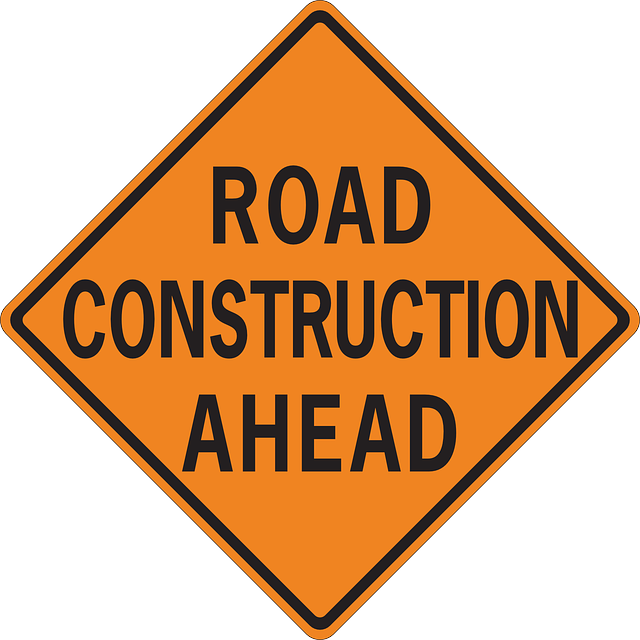 This road sign means:
A
One-way traffic ahead
B
No passing zone
C
Construction zone ahead
D
Your lane ends ahead
This traffic sign indicates: Construction zone ahead. Observing and obeying all roadway signs ensures safe traffic flow and legal driving.
Question 23:
A flashing red traffic light:
A
has the same meaning as a yield sign.
B
is used to indicate a pedestrian crossing.
C
has the same meaning as a stop sign.
D
indicates that you should drive with caution.
The correct driving rule is: has the same meaning as a stop sign. Following standard DMV road rules and practicing defensive driving ensures safety for all road users.
Question 24:
Unless otherwise posted, the speed limit in New York City is __ MPH.
A
55
B
25
C
30
D
35
For safe speed and stopping control: 25. Adjusting speed to match visibility and road traction prevents loss of steering grip.
Question 25:
 An orange and red sign of this shape on a vehicle means:
A
Slow moving vehicle
B
The vehicle has the right of way
C
Construction zone ahead.
The correct driving rule is: slow moving vehicle. Following standard DMV road rules and practicing defensive driving ensures safety for all road users.
Question 26:
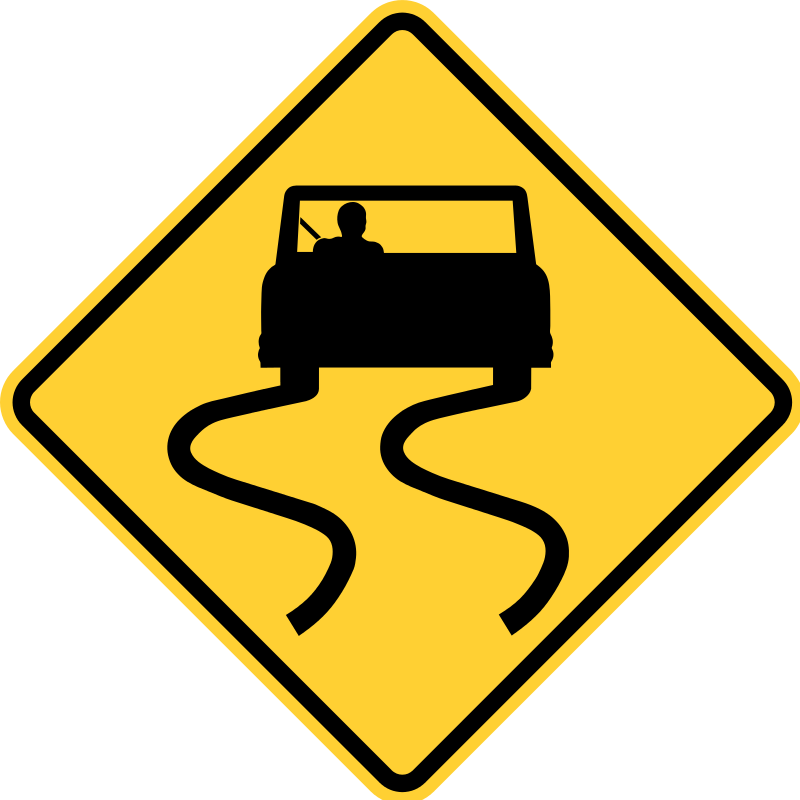 When they see this sign, drivers:
A
should be prepared to make sharp turns at a high speed.
B
need to be prepared to turn right and then left quickly.
C
should not speed up or brake quickly.
This traffic sign indicates: should not speed up or brake quickly. Observing and obeying all roadway signs ensures safe traffic flow and legal driving.
Question 27:
The road is the most slippery:
A
when it first starts to rain.
B
after it rains.
C
All of the above.
For safe speed and stopping control: when it first starts to rain. Adjusting speed to match visibility and road traction prevents loss of steering grip.
Question 28:
When driving through school zones:
A
watch for a school flagger.
B
always drive at 20 MPH or less.
C
obey the posted speed limits.
D
remember that students must always yield right-of-way to vehicles.
The correct driving rule is: obey the posted speed limits. Following standard DMV road rules and practicing defensive driving ensures safety for all road users.
Question 29:
When driving on wet roads, you should:
A
stay close to the vehicle ahead.
B
increase following distance to 5 or 6 seconds.
C
decrease following distance to 2 seconds.
D
maintain a 4-second following distance.
The correct driving rule is: increase following distance to 5 or 6 seconds. Following standard DMV road rules and practicing defensive driving ensures safety for all road users.
Question 30:
When you are stopped by a law enforcement officer you should:
A
pull off to the extreme left.
B
pull off to the extreme right.
C
increase your speed to avoid being arrested.
D
decrease your speed as you may be driving too fast.
The correct driving rule is: pull off to the extreme right. Following standard DMV road rules and practicing defensive driving ensures safety for all road users.
Question 31:
When entering highway from private road, drivers should:
A
turn on their emergency flashers to alert other drivers.
B
yield to all vehicles approaching on the roadway.
C
only yield to the vehicle on their right.
D
only yield to the vehicle on their left.
Defensive driving guidelines state that: yield to all vehicles approaching on the roadway. Anticipating road hazards and communicating maneuvers keeps traffic predictable and safe.
Question 32:
You are driving on a five-lane freeway in the lane closest to the center divider. To exit the freeway on the right you should:
A
change lanes one at a time until you are in the proper lane.
B
slow before beginning each lane change.
C
carefully cross all the lanes at one time.
Defensive driving guidelines state that: change lanes one at a time until you are in the proper lane. Anticipating road hazards and communicating maneuvers keeps traffic predictable and safe.
Question 33:
Lane signals are used:
A
to show when pedestrians may begin crossing the street.
B
to alert drivers to a warning sign.
C
to show which lanes are opened or closed.
D
None of the above.
The correct driving rule is: to show which lanes are opened or closed. Following standard DMV road rules and practicing defensive driving ensures safety for all road users.
Question 34:
At intersections marked with stop lines, drivers must:
A
come to a complete stop.
B
slow down and enter the intersection.
C
signal other vehicles to stop.
The correct driving rule is: come to a complete stop. Following standard DMV road rules and practicing defensive driving ensures safety for all road users.
Question 35:
When you see a funeral procession:
A
you must pass the procession on the right on a multiple lane highway.
B
you must yield the right-of-way to any vehicles in the procession.
C
wait for a gap in the funeral procession to proceed.
The correct driving rule is: you must yield the right-of-way to any vehicles in the procession. Following standard DMV road rules and practicing defensive driving ensures safety for all road users.
Question 36:
What happens if two vehicles reach at the same time an intersection with four-way stop signs?
A
The driver on the right yields to the driver on the left.
B
The driver on the left yields to the driver on the right.
C
The first vehicle to reach the intersection must yield.
At an uncontrolled intersection or 4-way stop where vehicles arrive at the same time: The driver on the left yields to the driver on the right. The driver on the left must always yield to the driver on the right.
Question 37:
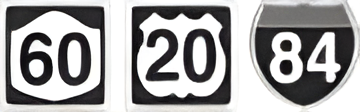 These are:
A
route signs.
B
miles-left signs.
C
speed limit signs.
The correct driving rule is: route signs. Following standard DMV road rules and practicing defensive driving ensures safety for all road users.
Question 38:
What is the slow moving vehicle symbol?
A
A reflective yellow diamond
B
A reflective white triangle
C
A reflective orange triangle
The correct driving rule is: A reflective orange triangle. Following standard DMV road rules and practicing defensive driving ensures safety for all road users.
Question 39:
When driving in winter, you should NOT:
A
use snow tires on all four wheels of your vehicle.
B
use cruise control.
C
drive on interstate roads.
D
check your vehicle's antifreeze level and windshield washer fluid.
The correct driving rule is: use cruise control. Following standard DMV road rules and practicing defensive driving ensures safety for all road users.
Question 40:
The maximum unposted speed limit in an urban district or residential area is 30 MPH.
A
False
B
True
For safe speed and stopping control: True. Adjusting speed to match visibility and road traction prevents loss of steering grip.
Question 41:
If you see a distracted driver, you should maintain a safe following distance of:
A
1-2 seconds.
B
2-3 seconds.
C
3-4 seconds.
The 3-second following distance rule provides a safe reaction cushion under ideal conditions: 3-4 seconds. Increase distance in bad weather or behind large vehicles.
Question 42:
Drivers with junior licenses who text while driving will receive a ___-day suspension for first convictions and revocations of _______ for subsequent convictions within six months of the time a license is restored after suspension.
A
90; 6 months
B
60; 60 days
C
60; 6 months
D
30; 60 days
The correct driving rule is: 60; 60 days. Following standard DMV road rules and practicing defensive driving ensures safety for all road users.
Question 43:
If your driver license is suspended by the point system, it may be taken for ______ for the first suspension.
A
3 months
B
15 days
C
60 days
D
180 days
The correct driving rule is: 60 days. Following standard DMV road rules and practicing defensive driving ensures safety for all road users.
Question 44:
Drivers who have been drinking are more likely to:
A
keep a safe following distance.
B
yield right-of-way to oncoming vehicles.
C
be less reactive.
The correct driving rule is: be less reactive. Following standard DMV road rules and practicing defensive driving ensures safety for all road users.
Question 45:
Large trucks:
A
have large blind spots.
B
can stop quicker than passenger vehicles.
C
do not need more room to maneuver.
D
All of the above.
The correct driving rule is: have large blind spots. Following standard DMV road rules and practicing defensive driving ensures safety for all road users.
Question 46:
Cell phones can be a cause of distracted driving.
A
True
B
False
The correct driving rule is: True. Following standard DMV road rules and practicing defensive driving ensures safety for all road users.
Question 47:
Which of the following is NOT correct. When making a turn, drivers should:
A
not cause a pedestrian to stop.
B
give a turn signal for at least 10 feet before you make the turn.
C
slow down to a safe turning speed.
D
always scan for pedestrians before starting a left turn.
The correct driving rule is: give a turn signal for at least 10 feet before you make the turn. Following standard DMV road rules and practicing defensive driving ensures safety for all road users.
Question 48:
You should use turn signals to indicate your intention with sufficient time to allow other drivers to see the signal:
A
if it’s raining.
B
AFTER you move.
C
BEFORE you move.
State laws require signaling your intention: BEFORE you move. Signal at least 100 feet before making a turn or changing lanes.
Question 49:
When you change your name you must notify the county examiner of drivers _____________ with proof of the change.
A
in writing within 60 days
B
by phone within 10 days
C
in person within 30 days
D
in writing within 30 days
The correct driving rule is: in person within 30 days. Following standard DMV road rules and practicing defensive driving ensures safety for all road users.
Question 50:
Drivers may not have on or in their car:
A
Blue emergency lights.
B
Signs, stickers or posters on windows, except those required by law.
C
A TV which the driver can see.
D
All of the above.
All of the listed points are essential driving requirements: Blue emergency lights; Signs, stickers or posters on windows, except those required by law; A TV which the driver can see. Practicing each ensures compliance with DMV safety laws.