Question 1:
If it is your second collision in a 2-year period, you will be required to:
A
attend a DUI Prevention Course.
B
retake the driving knowledge test.
C
attend a Community Centre for 3 months.
D
attend a Traffic Collision Avoidance Course.
The correct driving rule is: attend a Traffic Collision Avoidance Course. Following standard DMV road rules and practicing defensive driving ensures safety for all road users.
Question 2:
The first sign drivers see when approaching a highway-rail intersection is usually:
A
a crossbuck sign.
B
an advance warning sign.
C
a speed limit sign.
According to standard right-of-way regulations: an advance warning sign. Yielding appropriately prevents intersection collisions and maintains safe traffic flow.
Question 3:
Anyone who uses a Parking Permit that does not belong to them can:
A
be charged with a second degree misdemeanor.
B
loan the Parking Permit to people with disabilities.
C
legally park in spaces reserved for people with disabilities.
D
be sent to prison.
Under standard parking and curb regulations: be charged with a second degree misdemeanor. Following parking distance clearances keeps roadways unobstructed and emergency lanes accessible.
Question 4:
You can be charged with DUI if you are found to be driving:
A
while under the influence of alcohol or controlled substances.
B
under the influence of heavy metal music (rage music).
C
while you are angry.
D
while texting.
Under state DUI and traffic safety laws: while under the influence of alcohol or controlled substances. Alcohol degrades judgment, slows reaction times, and distorts depth perception.
Question 5:
Drivers must obey traffic signals except when:
A
pedestrians are crossing the road.
B
they are impatient.
C
an officer is directing traffic.
D
a car is at the stop line.
The correct driving rule is: an officer is directing traffic. Following standard DMV road rules and practicing defensive driving ensures safety for all road users.
Question 6:
Which drugs can affect a person’s ability to drive safely?
A
Illegal drugs only.
B
Many prescription drugs and even many of the drugs you can buy without a prescription.
C
Over the counter drugs only.
D
Prescription drugs only.
Under state DUI and traffic safety laws: Many prescription drugs and even many of the drugs you can buy without a prescription. Alcohol degrades judgment, slows reaction times, and distorts depth perception.
Question 7:
Unless otherwise posted, what is the speed limit on a highway outside a town or city?
A
50 MPH
B
65 MPH
C
55 MPH
D
70 MPH
For safe speed and stopping control: 55 MPH. Adjusting speed to match visibility and road traction prevents loss of steering grip.
Question 8:
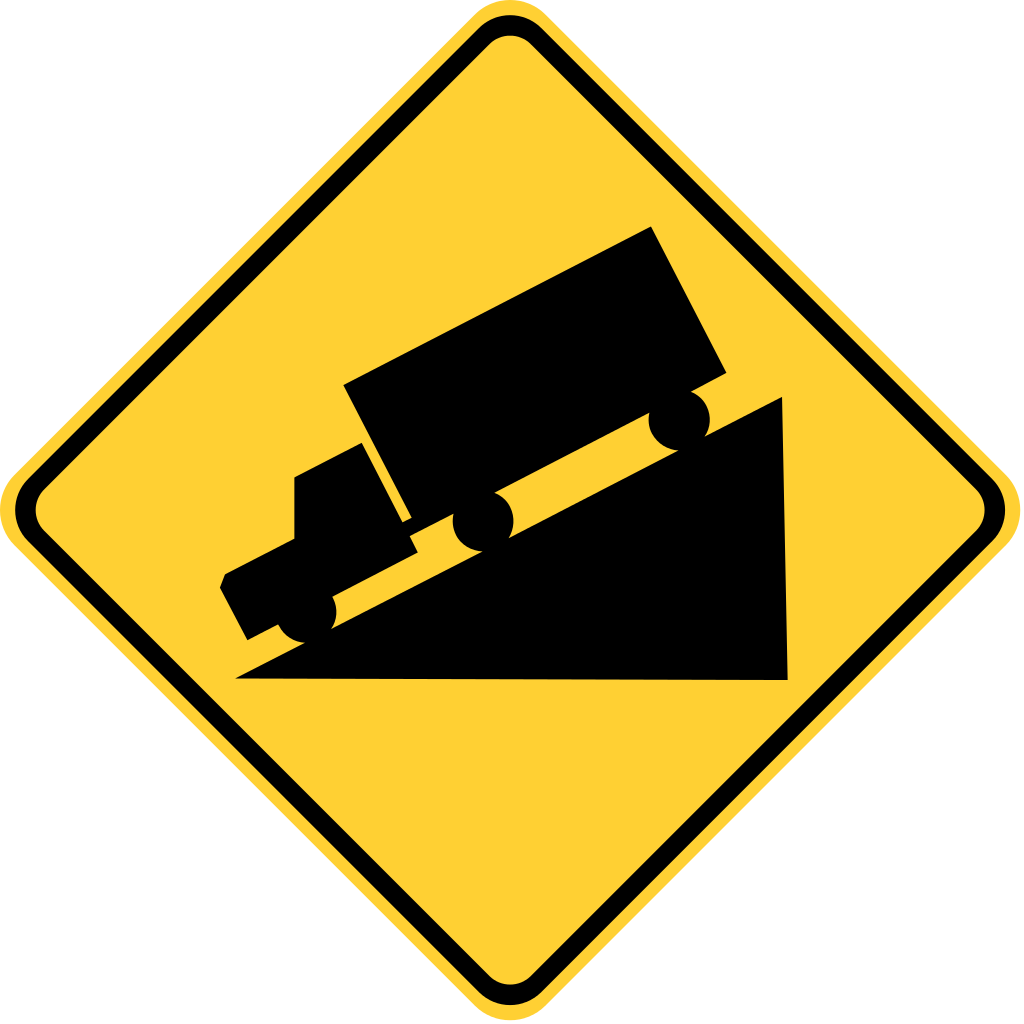 This sign warns of a ________ ahead.
A
hill
B
no passing zone
C
soft shoulder
This traffic sign indicates: hill. Observing and obeying all roadway signs ensures safe traffic flow and legal driving.
Question 9:
Drinking alcohol does NOT:
A
improve reflexes.
B
distort decision-making.
C
impair judgment.
D
hinder coordination.
Under state DUI and traffic safety laws: improve reflexes. Alcohol degrades judgment, slows reaction times, and distorts depth perception.
Question 10:
Which of the following is true about double yellow lines, one solid, one broken?
A
They prohibit vehicles moving in either direction from crossing the lines.
B
If the broken line is closer to the driver, he/she can cross the broken line only to pass another vehicle, if it is safe to do so.
C
They separate lanes of traffic moving in the same direction.
D
None of the above.
The correct driving rule is: If the broken line is closer to the driver, he/she can cross the broken line only to pass another vehicle, if it is safe to do so. Following standard DMV road rules and practicing defensive driving ensures safety for all road users.
Question 11:
Your license can be cancelled if:
A
your license was issued in error.
B
you are found guilty of 2 cases of reckless driving within one year.
C
you are found guilty of racing on a highway.
D
you break a traffic law and fail to pay your fine.
The correct driving rule is: your license was issued in error. Following standard DMV road rules and practicing defensive driving ensures safety for all road users.
Question 12:
What is the meaning of fluorescent yellow green signs?
A
Green area ahead.
B
Warning of school, pedestrian, and bicycling activity.
C
Railroad crossing.
D
Construction area ahead.
The correct driving rule is: Warning of school, pedestrian, and bicycling activity. Following standard DMV road rules and practicing defensive driving ensures safety for all road users.
Question 13:
Bike lanes are separated from motor vehicle travel lanes by:
A
double yellow lines.
B
broken yellow lines.
C
solid or broken white lines.
D
solid yellow lines.
The correct driving rule is: solid or broken white lines. Following standard DMV road rules and practicing defensive driving ensures safety for all road users.
Question 14:
The Financial Responsibility Law requires you to have bodily injury liability insurance at the time of:
A
a crash where you are at fault and injuries have occurred.
B
a citation for DUI, which results in a revocation.
C
a suspension for excessive points against your driver license.
D
All of the above.
All of the listed points are essential driving requirements: a crash where you are at fault and injuries have occurred; a citation for DUI, which results in a revocation; a suspension for excessive points against your driver license. Practicing each ensures compliance with DMV safety laws.
Question 15:
Motorcyclists may slow down without visual warning because:
A
they take up less of your field of vision.
B
they can stop much more quickly than cars.
C
they often slow down by downshifting or rolling off the throttle.
D
some motorcycles may not have the brake light.
The correct driving rule is: they often slow down by downshifting or rolling off the throttle. Following standard DMV road rules and practicing defensive driving ensures safety for all road users.
Question 16:
A _______ line marks the left edge of the pavement on divided or one-way roadways.
A
double yellow
B
broken white
C
solid white
D
single yellow
The correct driving rule is: single yellow. Following standard DMV road rules and practicing defensive driving ensures safety for all road users.
Question 17:
Drivers should ________ share the lane with a motorcycle.
A
stay on the left and
B
always attempt to
C
drive with caution when they
D
never attempt to
Motorcycles can stop rapidly and are easily hidden in vehicle blind spots: never attempt to. Always allow an increased following distance of at least 3 to 4 seconds.
Question 18:
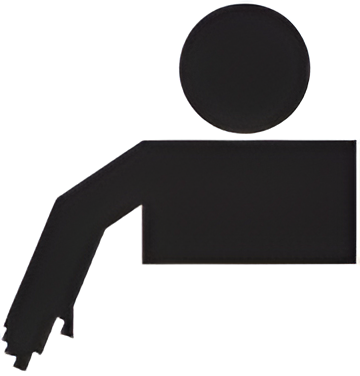 The driver in the picture is using hand signals to show that he is about to:
A
yield to oncoming vehicles.
B
slow down or stop.
C
turn right.
D
turn left.
The correct driving rule is: slow down or stop. Following standard DMV road rules and practicing defensive driving ensures safety for all road users.
Question 19:
Vehicles going less than __ miles per hour must display the ‘slow moving vehicle’ sign on the rear when using public highways.
A
25
B
35
C
15
D
55
The correct driving rule is: 25. Following standard DMV road rules and practicing defensive driving ensures safety for all road users.
Question 20:
At the time of arrest for DUI, you will be suspended if you have a breath or blood alcohol level of ___ or above.
A
0.008
B
0.08
C
0.8
D
8
In nearly all US states, drivers age 21 and older are legally intoxicated with a Blood Alcohol Concentration (BAC) of 0.08% or higher.
Question 21:
Drivers under 21 years old who receive a notice of suspension for driving with a BAL of .02 to .05, must:
A
take their driving tests again.
B
complete an advanced driver improvement course.
C
complete a Traffic Law and Substance Abuse Education course.
D
complete a basic driver improvement course.
The correct driving rule is: complete a Traffic Law and Substance Abuse Education course. Following standard DMV road rules and practicing defensive driving ensures safety for all road users.
Question 22:
Which of the following is NOT dangerous:
A
Driving while texting on a mobile phone.
B
Driving when you are upset.
C
Using high-beam headlights within 100 feet of oncoming vehicles.
D
None of the other answers are correct.
The correct driving rule is: None of the other answers are correct. Following standard DMV road rules and practicing defensive driving ensures safety for all road users.
Question 23:
Horizontal rectangles:
A
typically provide guidance to drivers.
B
are always red.
C
are used exclusively for yield signs.
D
are used for regulatory signs.
The correct driving rule is: typically provide guidance to drivers. Following standard DMV road rules and practicing defensive driving ensures safety for all road users.
Question 24:
The ‘Slower Traffic Keep Right’ sign is used:
A
at most intersections.
B
on multiple lane highways.
C
in school zones.
The correct driving rule is: on multiple lane highways. Following standard DMV road rules and practicing defensive driving ensures safety for all road users.
Question 25:
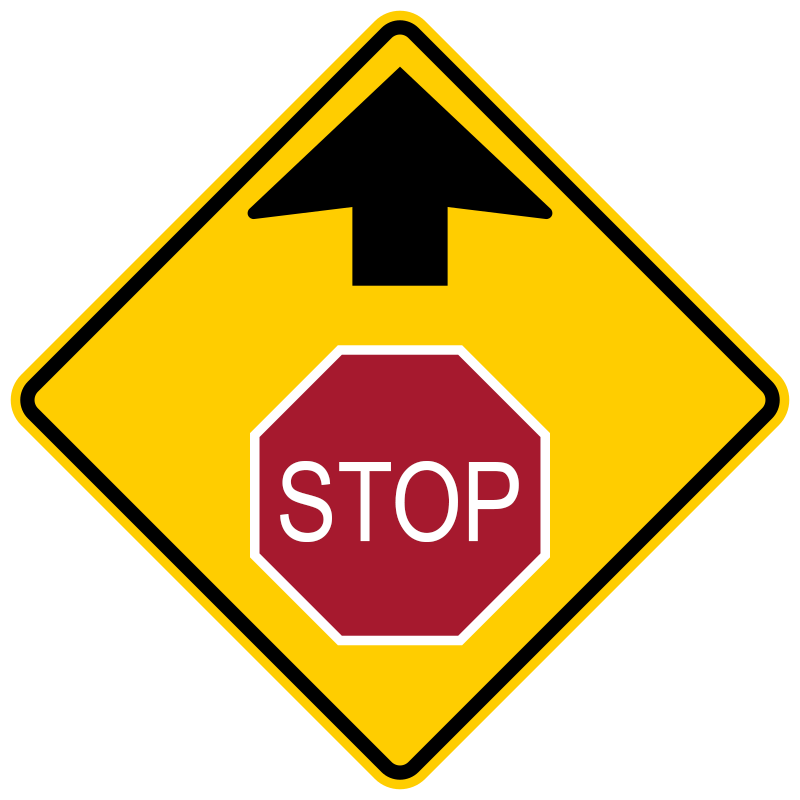 When drivers come to this sign, they must:
A
be ready to stop at the stop sign.
B
warn other drivers that a stop sign is ahead.
C
brake sharply and come to a complete stop.
This traffic sign indicates: be ready to stop at the stop sign. Observing and obeying all roadway signs ensures safe traffic flow and legal driving.
Question 26:
 This road sign warns drivers that:
A
the road surface ahead changes to a low-type surface or earth road.
B
vehicles must leave the pavement immediately.
C
the dirt on the side of the road is soft.
This traffic sign indicates: the road surface ahead changes to a low-type surface or earth road. Observing and obeying all roadway signs ensures safe traffic flow and legal driving.
Question 27:
Who has the right-of-way in Florida?
A
Pedestrians
B
Trucks
C
No one
D
Everyone
According to standard right-of-way regulations: No one. Yielding appropriately prevents intersection collisions and maintains safe traffic flow.
Question 28:
You are driving toward a railroad crossing that does not have gates or lights. A train is approaching, but there might be just enough time for you to cross the tracks before it arrives. You should:
A
stop on the tracks and get out of the vehicle immediately.
B
increase your speed and cross the tracks before the train arrives.
C
slow down, stop at the crossing, and wait for the train to cross in front of you.
D
cross the tracks only if the train is more than 50 feet away.
The correct driving rule is: slow down, stop at the crossing, and wait for the train to cross in front of you. Following standard DMV road rules and practicing defensive driving ensures safety for all road users.
Question 29:
What should you do if you drive past the exit on an interstate highway where you wanted to get off?
A
Go to the next exit.
B
Slow down and signal the intention to leave the expressway by using the turn signal.
C
Come to a complete stop.
D
Make a U-turn and go back to the desired exit.
Defensive driving guidelines state that: Go to the next exit. Anticipating road hazards and communicating maneuvers keeps traffic predictable and safe.
Question 30:
The ‘Speeding Fines Doubled’ sign applies to:
A
one-way streets.
B
expressway exit ramps and divided highways.
C
both active school and work zones.
D
interstate highways.
The correct driving rule is: both active school and work zones. Following standard DMV road rules and practicing defensive driving ensures safety for all road users.
Question 31:
If a road has four or more lanes with two-way traffic, drivers should drive _______ except when overtaking and passing.
A
in the right lanes
B
in the center lanes
C
slowly
D
in the left lanes
Defensive driving guidelines state that: in the right lanes. Anticipating road hazards and communicating maneuvers keeps traffic predictable and safe.
Question 32:
In the following situations, drivers should increase their following interval:
A
When following vehicles that are required to come to a stop at railroad crossings.
B
When it is hard to see ahead because of bad weather.
C
All of the above.
All of the listed points are essential driving requirements: When following vehicles that are required to come to a stop at railroad crossings; When it is hard to see ahead because of bad weather. Practicing each ensures compliance with DMV safety laws.
Question 33:
Which of the following are NOT exempt from the seat belt requirements?
A
Motorcycles.
B
Buses used for transportation of persons for compensation.
C
Passengers under the age of 18.
D
A person certified by a physician as having a medical condition that causes seat belt use to be inappropriate.
The correct driving rule is: Passengers under the age of 18. Following standard DMV road rules and practicing defensive driving ensures safety for all road users.
Question 34:
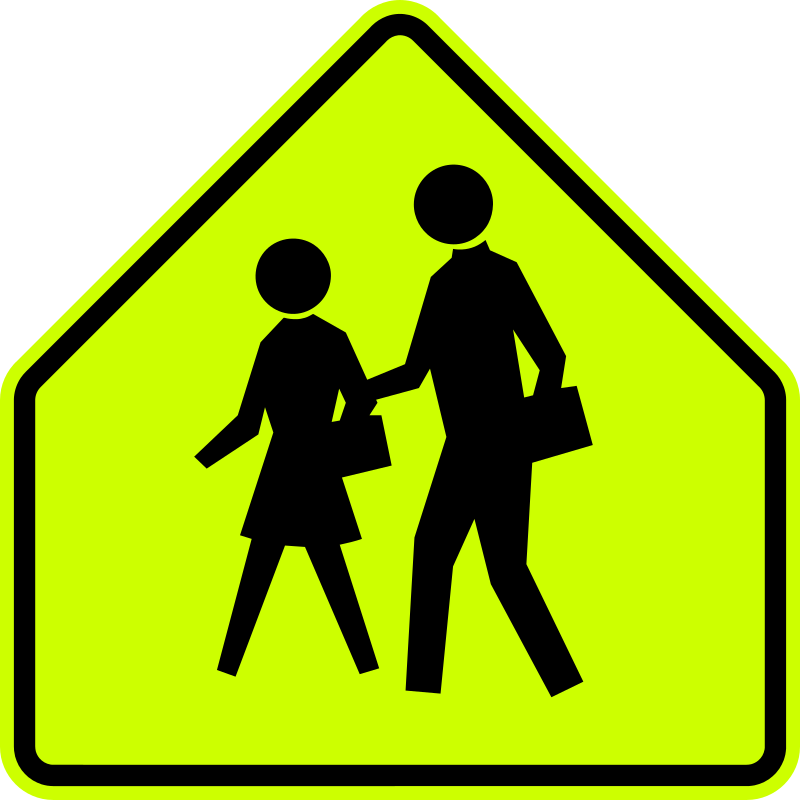 This sign means:
A
Business area nearby. Watch for business people.
B
There is a work zone ahead. Watch for workers.
C
The driver is near a school and should watch for children.
Pentagonal (5-sided) signs are exclusively reserved for school zones and school crossings: The driver is near a school and should watch for children. Drivers must reduce speed and yield right-of-way to all crossing children.
Question 35:
If you are driving on a two-lane road and come to an intersection with a divided highway, you:
A
must yield the right of way to trains.
B
must yield the right-of-way to other traffic.
C
have the right-of-way.
D
None of the above.
According to standard right-of-way regulations: must yield the right-of-way to other traffic. Yielding appropriately prevents intersection collisions and maintains safe traffic flow.
Question 36:
Left turns on a red light are allowed:
A
from a one-way street into a one-way street.
B
Never.
C
at intersections, after stopping, if the way is clear.
When turning left across traffic lanes: from a one-way street into a one-way street. You must yield to all oncoming vehicles and crossing pedestrians before completing the turn.
Question 37:
Reckless driving will result in __ points being added.
A
6
B
2
C
3
D
4
The correct driving rule is: 4. Following standard DMV road rules and practicing defensive driving ensures safety for all road users.
Question 38:
What is the stopping distance of an average freight train traveling at 30 MPH?
A
Less than 50 feet.
B
More than half a mile.
C
About 200 feet.
D
About 100 feet.
For safe speed and stopping control: More than half a mile. Adjusting speed to match visibility and road traction prevents loss of steering grip.
Question 39:
Drivers may not have on or in their car:
A
Blue emergency lights.
B
Signs, stickers or posters on windows, except those required by law.
C
A TV which the driver can see.
D
All of the above.
All of the listed points are essential driving requirements: Blue emergency lights; Signs, stickers or posters on windows, except those required by law; A TV which the driver can see. Practicing each ensures compliance with DMV safety laws.
Question 40:
All children _____ years of age or younger must use a restraint device when riding in a motor vehicle.
A
5
B
9
C
3
D
6
The correct driving rule is: 5. Following standard DMV road rules and practicing defensive driving ensures safety for all road users.
Question 41:
Any driver under the age of 18 who accumulates _ or more points within a __ month period is automatically restricted for one year to driving for “Business Purposes ONLY”.
A
9; 18
B
6; 12
C
6; 18
D
8; 18
The correct driving rule is: 6; 12. Following standard DMV road rules and practicing defensive driving ensures safety for all road users.
Question 42:
When they see a crossbuck sign, drivers:
A
must slow down and wait for the red lights to flash.
B
must always come to a complete stop.
C
are legally required to yield the right of way to trains.
The correct driving rule is: are legally required to yield the right of way to trains. Following standard DMV road rules and practicing defensive driving ensures safety for all road users.
Question 43:
Cars must have two red stoplights, visible from ___ feet in the daytime.
A
1000
B
300
C
50
D
150
The correct driving rule is: 300. Following standard DMV road rules and practicing defensive driving ensures safety for all road users.
Question 44:
When leaving an expressway, drivers should NOT:
A
slow down as soon as they are off the expressway.
B
signal their intention to leave the expressway by using their turn signal.
C
make last-minute turns into an exit.
D
All of the above.
The correct driving rule is: make last-minute turns into an exit. Following standard DMV road rules and practicing defensive driving ensures safety for all road users.
Question 45:
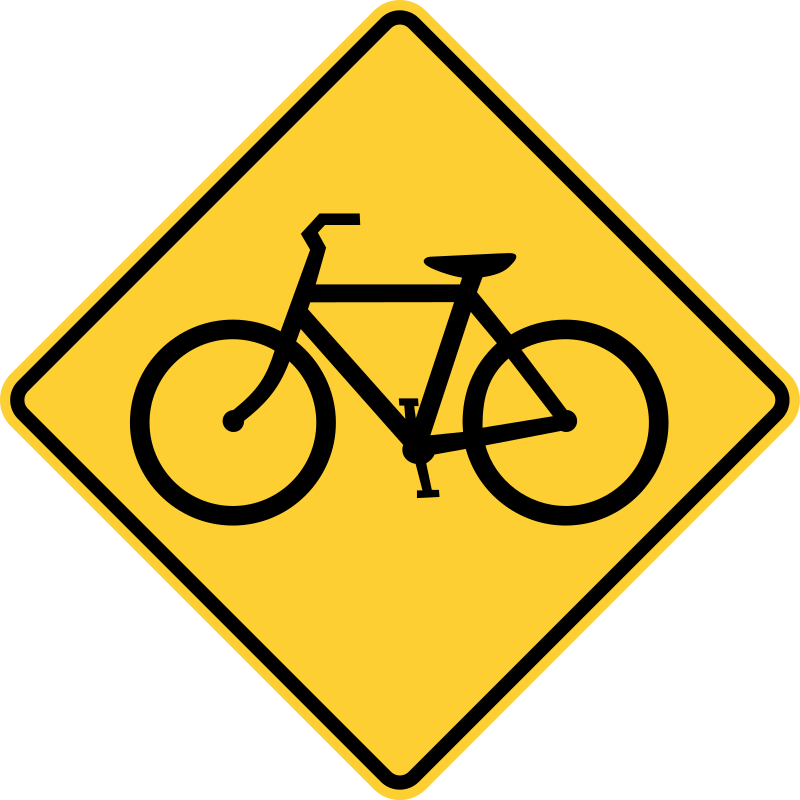 This sign means:
A
Bicycles should yield to vehicles ahead.
B
Warning: a bikeway crosses the roadway ahead.
C
The lane ahead is reserved for bicycles.
This traffic sign indicates: Warning: a bikeway crosses the roadway ahead. Observing and obeying all roadway signs ensures safe traffic flow and legal driving.
Question 46:
You are going to a party where you plan to have a few drinks. You should:
A
be extremely careful when driving back home.
B
arrange to go with two or more persons and agree which one of you will not drink alcohol.
C
stop drinking at least half an hour before leaving the party.
D
drink no more than 4 glasses of wine.
The correct driving rule is: arrange to go with two or more persons and agree which one of you will not drink alcohol. Following standard DMV road rules and practicing defensive driving ensures safety for all road users.
Question 47:
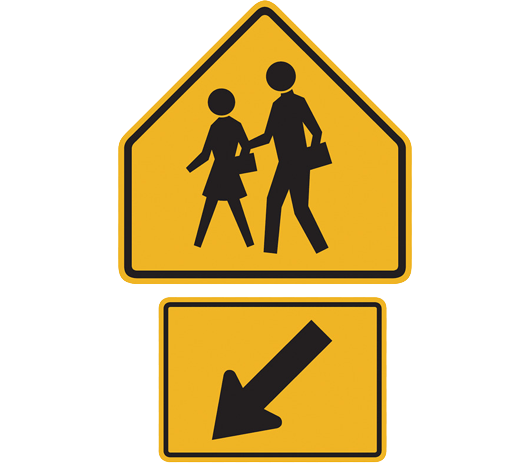 When they approach this sign, drivers must:
A
slow down and watch for children crossing the road.
B
obey signals from crossing guards.
C
stop if necessary.
D
All of the above.
This sign alerts drivers to several mandatory requirements: slow down and watch for children crossing the road, obey signals from crossing guards, stop if necessary. Obeying all posted traffic control instructions is required by law.
Question 48:
What are three types of intersections on the road?
A
Open, closed and narrow.
B
Roundabout, clear and closed.
C
Controlled, uncontrolled and blind.
D
Crossed, uncrossed and open.
The correct driving rule is: Controlled, uncontrolled and blind. Following standard DMV road rules and practicing defensive driving ensures safety for all road users.
Question 49:
The average driver has a reaction time of:
A
0.75 to 1 second.
B
9 to 10 seconds.
C
3 to 4 seconds.
D
0.2 to 0.3 seconds.
The correct driving rule is: 0.75 to 1 second. Following standard DMV road rules and practicing defensive driving ensures safety for all road users.
Question 50:
A licensed driver (Class E or higher) who is under the age of 17 years of age may not operate a motor vehicle between ___________, unless accompanied by a driver who is 21 years of age or older and holds a valid driver license (Class E or higher)
A
9:00 p.m. and 8:00 a.m.
B
11:00 p.m. and 6:00 a.m.
C
1:00 a.m. and 5:00 a.m.
D
2:00 a.m. and 4:00 a.m.
The correct driving rule is: 11:00 p.m. and 6:00 a.m. Following standard DMV road rules and practicing defensive driving ensures safety for all road users.