Question 1:
Ramp signals:
A
control the rate of vehicles entering an expressway.
B
are considered speed control devices.
C
control the types of vehicles entering a freeway.
D
are used to warn drivers of unexpected ramp conditions.
Answer Explanation
The correct driving rule is: control the rate of vehicles entering an expressway. Following standard DMV road rules and practicing defensive driving ensures safety for all road users.
The correct driving rule is: control the rate of vehicles entering an expressway. Following standard DMV road rules and practicing defensive driving ensures safety for all road users.
Question 2:
You are driving on a two-lane road with traffic moving in opposite directions, and a solid yellow line is painted on your side of the center line. You:
A
may not pass other vehicles.
B
may pass only if you are within 100 feet of a bridge, tunnel, or railroad crossing.
C
may cross the solid yellow line when changing lanes.
D
must pass other vehicles on the right.
Answer Explanation
The correct driving rule is: may not pass other vehicles. Following standard DMV road rules and practicing defensive driving ensures safety for all road users.
The correct driving rule is: may not pass other vehicles. Following standard DMV road rules and practicing defensive driving ensures safety for all road users.
Question 3:
The Florida “standard” speed limit on limited access highways is:
A
55 MPH.
B
90 MPH.
C
70 MPH.
D
45 MPH.
Answer Explanation
For safe speed and stopping control: 70 MPH. Adjusting speed to match visibility and road traction prevents loss of steering grip.
For safe speed and stopping control: 70 MPH. Adjusting speed to match visibility and road traction prevents loss of steering grip.
Question 4:
 When they see a yellow X signal, drivers should:
A
come to a complete stop at the marked stop line.
B
turn off the ignition.
C
prepare to leave the lane safely.
Answer Explanation
State laws require signaling your intention: prepare to leave the lane safely. Signal at least 100 feet before making a turn or changing lanes.
State laws require signaling your intention: prepare to leave the lane safely. Signal at least 100 feet before making a turn or changing lanes.
Question 5:
Low beam headlamps are only effective for speeds up to ___ MPH.
A
50-55
B
20-25
C
30-35
D
70-85
Answer Explanation
The correct driving rule is: 20-25. Following standard DMV road rules and practicing defensive driving ensures safety for all road users.
The correct driving rule is: 20-25. Following standard DMV road rules and practicing defensive driving ensures safety for all road users.
Question 6:
The length of a point suspension is:
A
1 year for 24 points within a 36-month period.
B
3 months for 18 points within a 18-month period.
C
30 days for 12 points within a 12-month period.
D
All of the above.
Answer Explanation
All of the listed points are essential driving requirements: 1 year for 24 points within a 36-month period; 3 months for 18 points within a 18-month period; 30 days for 12 points within a 12-month period. Practicing each ensures compliance with DMV safety laws.
All of the listed points are essential driving requirements: 1 year for 24 points within a 36-month period; 3 months for 18 points within a 18-month period; 30 days for 12 points within a 12-month period. Practicing each ensures compliance with DMV safety laws.
Question 7:
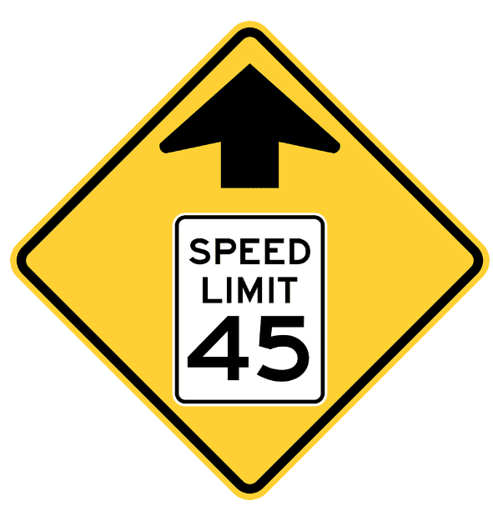 This warning sign:
A
provides advance notice to upcoming speed limit change.
B
shows the current speed limit that all vehicles traveling in the direction of the arrow must not exceed.
C
indicates the suggested highest safe speed.
Answer Explanation
This traffic sign indicates: provides advance notice to upcoming speed limit change. Observing and obeying all roadway signs ensures safe traffic flow and legal driving.
This traffic sign indicates: provides advance notice to upcoming speed limit change. Observing and obeying all roadway signs ensures safe traffic flow and legal driving.
Question 8:
Which of the following is an important benefit of ABS?
A
It improves visibility at night.
B
The driver can steer the vehicle away from hazards while braking.
C
It can be turned off by pumping the brakes.
D
All of the above.
Answer Explanation
The correct driving rule is: The driver can steer the vehicle away from hazards while braking. Following standard DMV road rules and practicing defensive driving ensures safety for all road users.
The correct driving rule is: The driver can steer the vehicle away from hazards while braking. Following standard DMV road rules and practicing defensive driving ensures safety for all road users.
Question 9:
 When they see this sign, drivers should:
A
increase their speed and keep well to the right.
B
slow down and keep well to the right.
C
slow down and keep well to the left.
Answer Explanation
This traffic sign indicates: slow down and keep well to the left. Observing and obeying all roadway signs ensures safe traffic flow and legal driving.
This traffic sign indicates: slow down and keep well to the left. Observing and obeying all roadway signs ensures safe traffic flow and legal driving.
Question 10:
If you see red reflectors facing you on the lane lines, you:
A
are on the wrong side of the road.
B
should turn around or get into the proper lane immediately.
C
could have a head-on collision.
D
All of the above.
Answer Explanation
All of the listed points are essential driving requirements: are on the wrong side of the road; should turn around or get into the proper lane immediately; could have a head-on collision. Practicing each ensures compliance with DMV safety laws.
All of the listed points are essential driving requirements: are on the wrong side of the road; should turn around or get into the proper lane immediately; could have a head-on collision. Practicing each ensures compliance with DMV safety laws.
Question 11:
More crashes happen _____________ than any other place.
A
at intersections
B
on highways
C
in school zones
D
near hospitals
Answer Explanation
The correct driving rule is: at intersections. Following standard DMV road rules and practicing defensive driving ensures safety for all road users.
The correct driving rule is: at intersections. Following standard DMV road rules and practicing defensive driving ensures safety for all road users.
Question 12:
For all turning vehicles, the rear wheels follow ____________ the front wheels.
A
a shorter path than
B
a longer path than
C
a different path than
D
the same path as
Answer Explanation
The correct driving rule is: a shorter path than. Following standard DMV road rules and practicing defensive driving ensures safety for all road users.
The correct driving rule is: a shorter path than. Following standard DMV road rules and practicing defensive driving ensures safety for all road users.
Question 13:
When making a turn, drivers should:
A
yield the right-of-way to vehicles coming from the opposite direction.
B
move into the correct lane without using turn signals.
C
increase their speed to avoid tailgating.
D
None of the above.
Answer Explanation
The correct driving rule is: yield the right-of-way to vehicles coming from the opposite direction. Following standard DMV road rules and practicing defensive driving ensures safety for all road users.
The correct driving rule is: yield the right-of-way to vehicles coming from the opposite direction. Following standard DMV road rules and practicing defensive driving ensures safety for all road users.
Question 14:
Operators of mopeds must have the minimum of a:
A
Class B license.
B
Class C license.
C
Class M license.
D
Class E license.
Answer Explanation
The correct driving rule is: Class E license. Following standard DMV road rules and practicing defensive driving ensures safety for all road users.
The correct driving rule is: Class E license. Following standard DMV road rules and practicing defensive driving ensures safety for all road users.
Question 15:
When they meet a truck coming from the opposite direction, drivers should:
A
swerve off the road.
B
keep as far as possible to the side to avoid a sideswipe crash.
C
introduce themselves.
D
speed up while the truck is passing.
Answer Explanation
When sharing the road with other vehicles: keep as far as possible to the side to avoid a sideswipe crash. Giving large vehicles and vulnerable users adequate clearance prevents dangerous accidents.
When sharing the road with other vehicles: keep as far as possible to the side to avoid a sideswipe crash. Giving large vehicles and vulnerable users adequate clearance prevents dangerous accidents.
Question 16:
When they back up, drivers should NOT:
A
back slowly.
B
look directly through the rear window.
C
depend on rearview or side mirrors to check behind their vehicle.
D
be cautious.
Answer Explanation
The correct driving rule is: depend on rearview or side mirrors to check behind their vehicle. Following standard DMV road rules and practicing defensive driving ensures safety for all road users.
The correct driving rule is: depend on rearview or side mirrors to check behind their vehicle. Following standard DMV road rules and practicing defensive driving ensures safety for all road users.
Question 17:
What does the Implied Consent Law say?
A
If you drive in Florida, you have agreed by signing your driver license to take a breath or blood alcohol test if asked by an officer.
B
You are required by law to ask an officer for permission to take a blood or alcohol test.
C
You can refuse to take a breath or blood test by exercising your Implied Consent rights.
D
An officer cannot ask for your consent to take a breath or blood test.
Answer Explanation
Under the Implied Consent Law, operating a motor vehicle means you agree to chemical BAC testing (breath, blood, or urine) upon lawful arrest by a police officer. Refusal results in mandatory license suspension.
Under the Implied Consent Law, operating a motor vehicle means you agree to chemical BAC testing (breath, blood, or urine) upon lawful arrest by a police officer. Refusal results in mandatory license suspension.
Question 18:
Parking is NOT allowed:
A
when it's raining.
B
within 20 feet of an intersection.
C
on the right side of the roadway.
D
on hills.
Answer Explanation
Under standard parking and curb regulations: within 20 feet of an intersection. Following parking distance clearances keeps roadways unobstructed and emergency lanes accessible.
Under standard parking and curb regulations: within 20 feet of an intersection. Following parking distance clearances keeps roadways unobstructed and emergency lanes accessible.
Question 19:
An ‘uncontrolled’ or ‘open’ intersection is an intersection where:
A
there is no speed limit.
B
no traffic lights or signs are used to indicate the right-of-way.
C
no law enforcement officer is directing traffic.
D
None of the above.
Answer Explanation
At an uncontrolled intersection or 4-way stop where vehicles arrive at the same time: no traffic lights or signs are used to indicate the right-of-way. The driver on the left must always yield to the driver on the right.
At an uncontrolled intersection or 4-way stop where vehicles arrive at the same time: no traffic lights or signs are used to indicate the right-of-way. The driver on the left must always yield to the driver on the right.
Question 20:
Any driver under 21 years of age who is stopped by law enforcement and has a breath alcohol level of .02 or higher will have their driving privilege suspended for:
A
12 months.
B
6 months.
C
3 months.
D
1 month.
Answer Explanation
Under state DUI and traffic safety laws: 6 months. Alcohol degrades judgment, slows reaction times, and distorts depth perception.
Under state DUI and traffic safety laws: 6 months. Alcohol degrades judgment, slows reaction times, and distorts depth perception.
Question 21:
Road signs that direct drivers to services are:
A
brown and white.
B
blue and white.
C
green and white.
Answer Explanation
The correct driving rule is: blue and white. Following standard DMV road rules and practicing defensive driving ensures safety for all road users.
The correct driving rule is: blue and white. Following standard DMV road rules and practicing defensive driving ensures safety for all road users.
Question 22:
What is NOT true regarding the use of headlights?
A
High beam headlights are used when traveling behind other vehicles.
B
When driving in low visibility, drivers should use low-beam headlights.
C
High-beams can reveal objects up to a distance of 450 feet.
D
All of the above.
Answer Explanation
The correct driving rule is: High beam headlights are used when traveling behind other vehicles. Following standard DMV road rules and practicing defensive driving ensures safety for all road users.
The correct driving rule is: High beam headlights are used when traveling behind other vehicles. Following standard DMV road rules and practicing defensive driving ensures safety for all road users.
Question 23:
Alcohol reaches your brain within _____ after consumption.
A
25 seconds
B
hours
C
5 seconds
D
minutes
Answer Explanation
Under state DUI and traffic safety laws: minutes. Alcohol degrades judgment, slows reaction times, and distorts depth perception.
Under state DUI and traffic safety laws: minutes. Alcohol degrades judgment, slows reaction times, and distorts depth perception.
Question 24:
You should use turn signals to indicate your intention with sufficient time to allow other drivers to see the signal:
A
if it’s raining.
B
AFTER you move.
C
BEFORE you move.
Answer Explanation
State laws require signaling your intention: BEFORE you move. Signal at least 100 feet before making a turn or changing lanes.
State laws require signaling your intention: BEFORE you move. Signal at least 100 feet before making a turn or changing lanes.
Question 25:
When drivers see the ‘Wrong Way’ sign:
A
they are going the wrong way on an expressway exit ramp.
B
they must drive past this sign and reach the next intersection.
C
they must not leave the pavement except in an emergency.
Answer Explanation
The correct driving rule is: they are going the wrong way on an expressway exit ramp. Following standard DMV road rules and practicing defensive driving ensures safety for all road users.
The correct driving rule is: they are going the wrong way on an expressway exit ramp. Following standard DMV road rules and practicing defensive driving ensures safety for all road users.
Question 26:
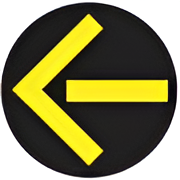 What does a yellow arrow signal mean?
A
The same as the yellow light, but applies only to movement in the direction of the arrow.
B
The same as a green light.
C
Vehicles moving in all directions must stop if they can. The light will soon be red.
Answer Explanation
State laws require signaling your intention: The same as the yellow light, but applies only to movement in the direction of the arrow. Signal at least 100 feet before making a turn or changing lanes.
State laws require signaling your intention: The same as the yellow light, but applies only to movement in the direction of the arrow. Signal at least 100 feet before making a turn or changing lanes.
Question 27:
Drivers who throw trash on public streets:
A
can be charged with a first degree misdemeanor.
B
can be fined up to a maximum of $150.
C
are probably in a rush.
D
are allowed to dump a maximum of 15 pounds of trash.
Answer Explanation
The correct driving rule is: can be charged with a first degree misdemeanor. Following standard DMV road rules and practicing defensive driving ensures safety for all road users.
The correct driving rule is: can be charged with a first degree misdemeanor. Following standard DMV road rules and practicing defensive driving ensures safety for all road users.
Question 28:
When parking uphill, you should shift manual gears to:
A
neutral.
B
top.
C
reverse.
D
first.
Answer Explanation
Under standard parking and curb regulations: first. Following parking distance clearances keeps roadways unobstructed and emergency lanes accessible.
Under standard parking and curb regulations: first. Following parking distance clearances keeps roadways unobstructed and emergency lanes accessible.
Question 29:
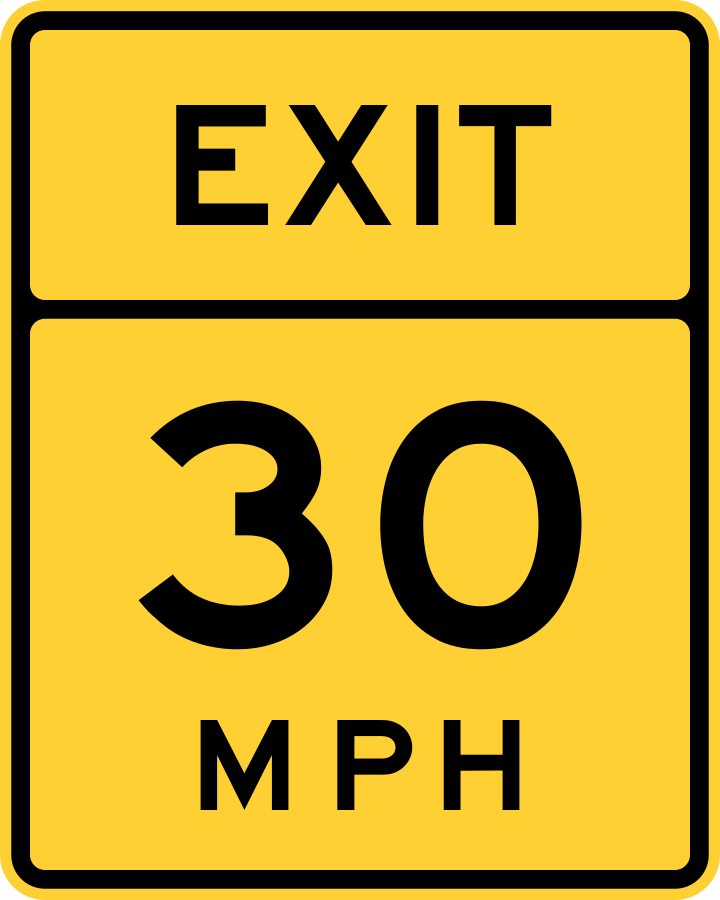 The sign in the picture:
A
shows the highest speed drivers can travel at the exit of the intersection.
B
is used to advise motorists of the appropriate ramp speed at the highway exit point.
C
indicates the minimum ramp speed at the highway exit point.
Answer Explanation
The correct driving rule is: is used to advise motorists of the appropriate ramp speed at the highway exit point. Following standard DMV road rules and practicing defensive driving ensures safety for all road users.
The correct driving rule is: is used to advise motorists of the appropriate ramp speed at the highway exit point. Following standard DMV road rules and practicing defensive driving ensures safety for all road users.
Question 30:
To drive defensively, you must:
A
anticipate errors by other drivers.
B
assume that a driver who approaches a STOP sign on a side road is actually going to stop.
C
not check behind you through your mirrors.
Answer Explanation
The correct driving rule is: anticipate errors by other drivers. Following standard DMV road rules and practicing defensive driving ensures safety for all road users.
The correct driving rule is: anticipate errors by other drivers. Following standard DMV road rules and practicing defensive driving ensures safety for all road users.
Question 31:
On a two-lane highway, drivers are allowed to drive on the left half of the roadway when:
A
the lane is reserved for car pool vehicles.
B
it is safe to pass and passing is allowed.
C
they are about to exit.
D
they are driving slower than the other vehicles.
Answer Explanation
Defensive driving guidelines state that: it is safe to pass and passing is allowed. Anticipating road hazards and communicating maneuvers keeps traffic predictable and safe.
Defensive driving guidelines state that: it is safe to pass and passing is allowed. Anticipating road hazards and communicating maneuvers keeps traffic predictable and safe.
Question 32:
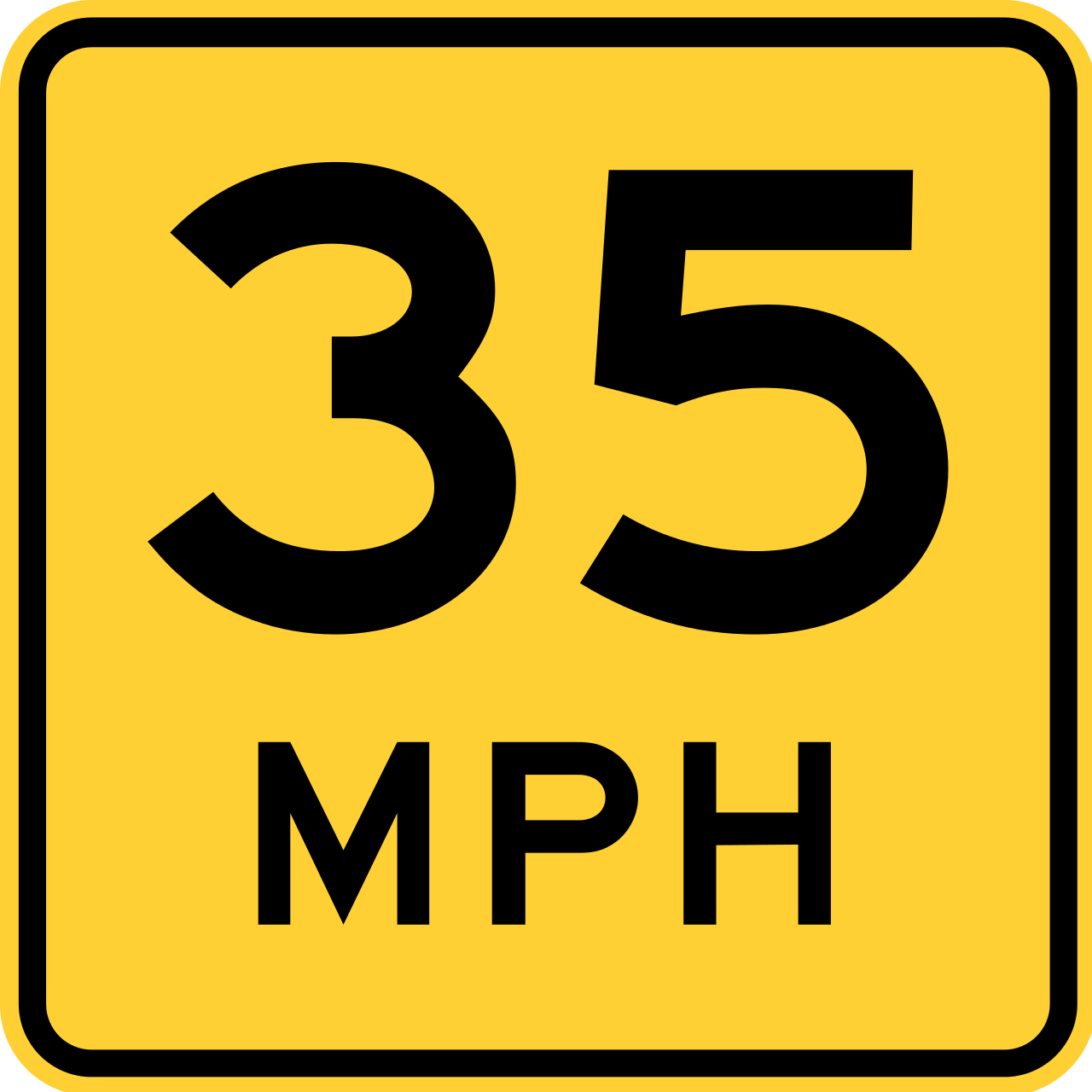 This road sign means:
A
The maximum speed limit is 35 MPH
B
The minimum safe speed is 35 MPH
C
The maximum speed at night is 35 MPH
D
The recommended speed limit is 35 MPH
Answer Explanation
This traffic sign indicates: The recommended speed limit is 35 MPH. Observing and obeying all roadway signs ensures safe traffic flow and legal driving.
This traffic sign indicates: The recommended speed limit is 35 MPH. Observing and obeying all roadway signs ensures safe traffic flow and legal driving.
Question 33:
Which of the following is true about the Anti-Locking Brake System?
A
It prevents skidding.
B
It allows drivers to steer during an emergency braking situation.
C
All of the above.
Answer Explanation
All of the listed points are essential driving requirements: It prevents skidding; It allows drivers to steer during an emergency braking situation. Practicing each ensures compliance with DMV safety laws.
All of the listed points are essential driving requirements: It prevents skidding; It allows drivers to steer during an emergency braking situation. Practicing each ensures compliance with DMV safety laws.
Question 34:
The seat belt law applies to passenger cars manufactured beginning with the ____ model year.
A
1968
B
2008
C
1978
D
1986
Answer Explanation
The correct driving rule is: 1968. Following standard DMV road rules and practicing defensive driving ensures safety for all road users.
The correct driving rule is: 1968. Following standard DMV road rules and practicing defensive driving ensures safety for all road users.
Question 35:
Which shape is a yield sign?
A
Vertical rectangle
B
Upside-down triangle
C
Diamond
Answer Explanation
The correct driving rule is: Upside-down triangle. Following standard DMV road rules and practicing defensive driving ensures safety for all road users.
The correct driving rule is: Upside-down triangle. Following standard DMV road rules and practicing defensive driving ensures safety for all road users.
Question 36:
Parking is not allowed within __ feet of an intersection
A
50
B
30
C
10
D
20
Answer Explanation
According to standard right-of-way regulations: 20. Yielding appropriately prevents intersection collisions and maintains safe traffic flow.
According to standard right-of-way regulations: 20. Yielding appropriately prevents intersection collisions and maintains safe traffic flow.
Question 37:
What can you do to prevent skids on snow and ice?
A
Allow the wheels to keep turning.
B
Brake early and gently.
C
All of the above.
Answer Explanation
Hazardous road and weather conditions require extra caution: Allow the wheels to keep turning; Brake early and gently. Reducing speed and expanding following distance preserves control.
Hazardous road and weather conditions require extra caution: Allow the wheels to keep turning; Brake early and gently. Reducing speed and expanding following distance preserves control.
Question 38:
A broken white line:
A
means passing or crossing is prohibited in that lane.
B
separates two lanes traveling in the same direction.
C
marks the right edge of the roadway.
Answer Explanation
The correct driving rule is: separates two lanes traveling in the same direction. Following standard DMV road rules and practicing defensive driving ensures safety for all road users.
The correct driving rule is: separates two lanes traveling in the same direction. Following standard DMV road rules and practicing defensive driving ensures safety for all road users.
Question 39:
When driving slower than the flow of traffic, drivers should __________ so others may safely pass.
A
come to a stop
B
keep left
C
move to the leftmost lane
D
keep right
Answer Explanation
The correct driving rule is: keep right. Following standard DMV road rules and practicing defensive driving ensures safety for all road users.
The correct driving rule is: keep right. Following standard DMV road rules and practicing defensive driving ensures safety for all road users.
Question 40:
On a three-lane expressway, drivers should use the ____ lane for lower speed driving.
A
left
B
center
C
It doesn't matter.
D
right
Answer Explanation
For safe speed and stopping control: right. Adjusting speed to match visibility and road traction prevents loss of steering grip.
For safe speed and stopping control: right. Adjusting speed to match visibility and road traction prevents loss of steering grip.
Question 41:
At 80 MPH, the braking distance is __ times greater than at 20 MPH.
A
2
B
16
C
8
D
4
Answer Explanation
For safe speed and stopping control: 16. Adjusting speed to match visibility and road traction prevents loss of steering grip.
For safe speed and stopping control: 16. Adjusting speed to match visibility and road traction prevents loss of steering grip.
Question 42:
You are looking for a place to park your car and there is a space ahead, near a fire hydrant. You are not allowed to park within ____ of a fire hydrant.
A
5 feet.
B
35 feet.
C
25 feet.
D
15 feet.
Answer Explanation
State and municipal laws prohibit parking within 15 feet of a fire hydrant to ensure emergency fire crews have clear, unobstructed access.
State and municipal laws prohibit parking within 15 feet of a fire hydrant to ensure emergency fire crews have clear, unobstructed access.
Question 43:
 The sign in the picture:
A
is a Construction and Maintenance Traffic Control sign.
B
is found at most intersections and indicates that drivers must yield to other vehicles.
C
is displayed on the rear of slow moving vehicles.
Answer Explanation
The correct driving rule is: is displayed on the rear of slow moving vehicles. Following standard DMV road rules and practicing defensive driving ensures safety for all road users.
The correct driving rule is: is displayed on the rear of slow moving vehicles. Following standard DMV road rules and practicing defensive driving ensures safety for all road users.
Question 44:
When parking on hills, drivers should:
A
set the parking brake.
B
turn the wheels so that if the car starts to move, it will roll away from traffic or into the curb.
C
turn wheels to the curb, if they are parking downhill.
D
All of the above.
Answer Explanation
Under standard parking and curb regulations: All of the above. Following parking distance clearances keeps roadways unobstructed and emergency lanes accessible.
Under standard parking and curb regulations: All of the above. Following parking distance clearances keeps roadways unobstructed and emergency lanes accessible.
Question 45:
High beams are ___________ the fog.
A
reflected back off
B
perfect to completely remove
C
the best choice when driving in
D
better than low beams when driving in
Answer Explanation
For safe speed and stopping control: reflected back off. Adjusting speed to match visibility and road traction prevents loss of steering grip.
For safe speed and stopping control: reflected back off. Adjusting speed to match visibility and road traction prevents loss of steering grip.
Question 46:
If a broken yellow line is on your side of the center line:
A
you may not pass other vehicles.
B
you may cross the line to pass other vehicles.
C
you are driving in the left lane.
D
you have the right-of-way when turning left.
Answer Explanation
The correct driving rule is: you may cross the line to pass other vehicles. Following standard DMV road rules and practicing defensive driving ensures safety for all road users.
The correct driving rule is: you may cross the line to pass other vehicles. Following standard DMV road rules and practicing defensive driving ensures safety for all road users.
Question 47:
A _________ is the termination of a licensee’s privilege to drive a motor vehicle.
A
termination
B
suspension
C
revocation
D
restriction
Answer Explanation
The correct driving rule is: revocation. Following standard DMV road rules and practicing defensive driving ensures safety for all road users.
The correct driving rule is: revocation. Following standard DMV road rules and practicing defensive driving ensures safety for all road users.
Question 48:
 This regulatory road sign indicates that:
A
Vehicles must slow down and stay in the right lane.
B
The right hand lane is reserved for buses and car-pool vehicles.
C
Slower vehicles traveling on multiple lane highways must stay in the right hand lane.
Answer Explanation
This traffic sign indicates: Slower vehicles traveling on multiple lane highways must stay in the right hand lane. Observing and obeying all roadway signs ensures safe traffic flow and legal driving.
This traffic sign indicates: Slower vehicles traveling on multiple lane highways must stay in the right hand lane. Observing and obeying all roadway signs ensures safe traffic flow and legal driving.
Question 49:
To lower the risk of rear-end collisions, drivers should:
A
decrease the minimum safe following distance.
B
signal well in advance for turns and stops.
C
never use their rearview mirrors.
D
avoid driving with the flow of traffic.
Answer Explanation
The correct driving rule is: signal well in advance for turns and stops. Following standard DMV road rules and practicing defensive driving ensures safety for all road users.
The correct driving rule is: signal well in advance for turns and stops. Following standard DMV road rules and practicing defensive driving ensures safety for all road users.
Question 50:
White lane lines:
A
are only used in school zones and business areas.
B
separate lanes of traffic moving in the same direction.
C
prohibit vehicles moving in either direction from crossing the lines.
D
separate lanes of traffic moving in opposite directions.
Answer Explanation
The correct driving rule is: separate lanes of traffic moving in the same direction. Following standard DMV road rules and practicing defensive driving ensures safety for all road users.
The correct driving rule is: separate lanes of traffic moving in the same direction. Following standard DMV road rules and practicing defensive driving ensures safety for all road users.