Question 1:
The length of a point suspension is 1 year for:
A
18 points within a 18-month period.
B
24 points within a 36-month period.
C
36 points within a 36-month period.
D
36 points within a 24-month period.
The correct driving rule is: 24 points within a 36-month period. Following standard DMV road rules and practicing defensive driving ensures safety for all road users.
Question 2:
Car pool vehicles are:
A
vehicles with 2 or more occupants in the car.
B
luxury vehicles with special driving privileges.
C
not allowed on some interstate roads.
D
not allowed to pass on a two-lane highway.
The correct driving rule is: vehicles with 2 or more occupants in the car. Following standard DMV road rules and practicing defensive driving ensures safety for all road users.
Question 3:
Which of the following can be dangerous:
A
Driving while adjusting the radio.
B
Driving while calling on a mobile phone.
C
Reading while driving.
D
All of the above.
All of the listed points are essential driving requirements: Driving while adjusting the radio; Driving while calling on a mobile phone; Reading while driving. Practicing each ensures compliance with DMV safety laws.
Question 4:
Which of the following is NOT a way to avoid aggressive driving?
A
Calling the police if you witness something you think is aggressive driving.
B
Closely tailgating the car in front of you.
C
Not getting behind the wheel if you are irritable.
D
Avoid driving when you are feeling tired.
The correct driving rule is: Closely tailgating the car in front of you. Following standard DMV road rules and practicing defensive driving ensures safety for all road users.
Question 5:
If you are in a crash while driving, you must:
A
take pictures immediately.
B
go to the hospital immediately.
C
stop and call law enforcement.
D
clear the road.
The correct driving rule is: stop and call law enforcement. Following standard DMV road rules and practicing defensive driving ensures safety for all road users.
Question 6:
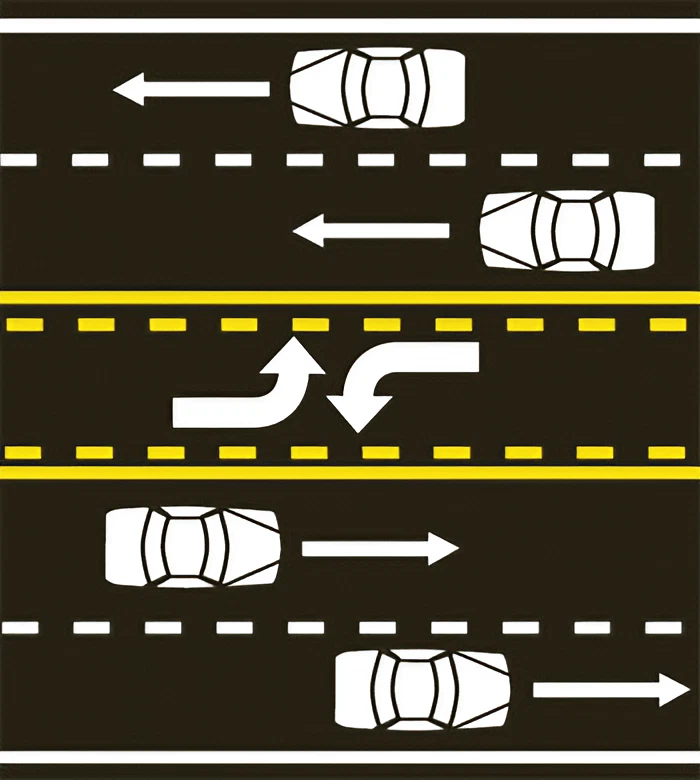 The center lane in the picture:
A
can be used for right turns.
B
may be used for left turns.
C
may be used for passing.
D
All of the above.
The correct driving rule is: may be used for left turns. Following standard DMV road rules and practicing defensive driving ensures safety for all road users.
Question 7:
 A flashing yellow light:
A
warns drivers to proceed with caution.
B
is used at dangerous intersections.
C
All of the above.
Safe navigation at intersections requires following all established rules: warns drivers to proceed with caution; is used at dangerous intersections. Always yield right-of-way properly to prevent collisions.
Question 8:
Unless otherwise posted, the speed limit for cars in a residential area is __ miles per hour.
A
25
B
55
C
30
D
20
For safe speed and stopping control: 30. Adjusting speed to match visibility and road traction prevents loss of steering grip.
Question 9:
The risk of death is __ times greater if you are thrown from a vehicle in a crash.
A
5
B
2
C
50
D
10
The correct driving rule is: 5. Following standard DMV road rules and practicing defensive driving ensures safety for all road users.
Question 10:
 What does this road sign indicate?
A
Hospital service
B
Area reserved for people with disabilities
C
Interstate highway
This traffic sign indicates: Hospital service. Observing and obeying all roadway signs ensures safe traffic flow and legal driving.
Question 11:
Controlled substances do NOT include:
A
Alcoholic beverages
B
Narcotics
C
Prescription drugs
D
Depressants
The correct driving rule is: Alcoholic beverages. Following standard DMV road rules and practicing defensive driving ensures safety for all road users.
Question 12:
Before entering a curve, drivers should _____________ and watch for oncoming vehicles.
A
close their eyes
B
slow down, move to the right side of the road
C
move to the left side of the road
D
turn their head to make sure the blind spots are clear.
The correct driving rule is: slow down, move to the right side of the road. Following standard DMV road rules and practicing defensive driving ensures safety for all road users.
Question 13:
What are blind spots?
A
Areas to the side or rear of a vehicle that the driver cannot see while driving in the fog.
B
Areas near the rear corners of vehicles that drivers cannot see in their rearview mirrors.
C
Areas reserved for blind people at crossings.
D
None of the above.
The correct driving rule is: Areas near the rear corners of vehicles that drivers cannot see in their rearview mirrors. Following standard DMV road rules and practicing defensive driving ensures safety for all road users.
Question 14:
Parking is not allowed:
A
on the road side of a parked vehicle.
B
in a tunnel.
C
All of the above.
Under standard parking and curb regulations: All of the above. Following parking distance clearances keeps roadways unobstructed and emergency lanes accessible.
Question 15:
When going down a steep hill, drivers must:
A
turn wheels to the curb.
B
turn off the ignition.
C
increase their speed.
D
shift to lower gear.
The correct driving rule is: shift to lower gear. Following standard DMV road rules and practicing defensive driving ensures safety for all road users.
Question 16:
If a chain is used as the towing connection between two vehicles, what does the chain need to have displayed on it?
A
A white flag at least 12 inches square.
B
A red flasher, visible from 500 feet.
C
A red flag with a triangular warning sign.
D
None of the above.
The correct driving rule is: A white flag at least 12 inches square. Following standard DMV road rules and practicing defensive driving ensures safety for all road users.
Question 17:
Leaving the scene involving property damage commits a misdemeanor of the _____ degree.
A
fourth
B
second
C
third
D
first
The correct driving rule is: second. Following standard DMV road rules and practicing defensive driving ensures safety for all road users.
Question 18:
 The picture shows a _________ sign.
A
no U-turn
B
no left turn
C
sharp turn
The correct driving rule is: no U-turn. Following standard DMV road rules and practicing defensive driving ensures safety for all road users.
Question 19:
Who is more affected by alcohol?
A
Old drivers
B
Young drivers
C
Women
D
People living in urban areas.
Under state DUI and traffic safety laws: Young drivers. Alcohol degrades judgment, slows reaction times, and distorts depth perception.
Question 20:
When a ‘Road Closed’ sign is displayed, drivers must:
A
make a U-turn.
B
look for a detour or another route.
C
come to a complete stop and wait for the lights to turn green.
The correct driving rule is: look for a detour or another route. Following standard DMV road rules and practicing defensive driving ensures safety for all road users.
Question 21:
A broken yellow line:
A
separates lanes of traffic moving in opposite directions.
B
prohibits vehicles moving in either direction from crossing the line.
C
separates lanes of traffic moving in the same direction.
D
None of the above.
The correct driving rule is: separates lanes of traffic moving in opposite directions. Following standard DMV road rules and practicing defensive driving ensures safety for all road users.
Question 22:
A ____________ marks the right edge of the roadway.
A
broken yellow line
B
solid white line
C
solid yellow line
D
broken white line
The correct driving rule is: solid white line. Following standard DMV road rules and practicing defensive driving ensures safety for all road users.
Question 23:
Tampering with emissions control devices can cause:
A
more vehicle efficiency.
B
increased air pollution.
C
less maintenance costs.
D
higher gas mileage.
The correct driving rule is: increased air pollution. Following standard DMV road rules and practicing defensive driving ensures safety for all road users.
Question 24:
A driver must stop __ feet, but not less than __ feet from the nearest rail of a railroad-highway grade crossing, when the the crossing gate is lowered.
A
5; 2
B
50; 15
C
15; 5
D
100; 15
Defensive driving guidelines state that: 50; 15. Anticipating road hazards and communicating maneuvers keeps traffic predictable and safe.
Question 25:
Are motor vehicles allowed to drive in bike lanes?
A
No, except at intersections where indicated by broken white lines, and only when no bicyclists are present in the bike lane.
B
Yes, but only when indicated by broken yellow lines.
C
Yes, always.
D
No, never.
The correct driving rule is: No, except at intersections where indicated by broken white lines, and only when no bicyclists are present in the bike lane. Following standard DMV road rules and practicing defensive driving ensures safety for all road users.
Question 26:
What should drivers do in case of a brake failure?
A
Shift to a lower gear.
B
Tie a white cloth on the left door handle.
C
Brake lightly.
The correct driving rule is: shift to a lower gear. Following standard DMV road rules and practicing defensive driving ensures safety for all road users.
Question 27:
Which of the following is NOT a rule for safe driving:
A
Don’t drive when you are sleep deprived.
B
Always wear corrective lenses as required.
C
Don’t drink and drive.
D
Always wear sunglasses in dark conditions.
The correct driving rule is: Always wear sunglasses in dark conditions. Following standard DMV road rules and practicing defensive driving ensures safety for all road users.
Question 28:
Cars entering an expressway:
A
have the right-of-way over trucks.
B
must yield the right-of-way to traffic on the expressway.
C
have the right-of-way over other vehicles.
D
must stop at traffic lights.
The correct driving rule is: must yield the right-of-way to traffic on the expressway. Following standard DMV road rules and practicing defensive driving ensures safety for all road users.
Question 29:
Which of the following is true? Vehicles approaching a railroad-highway grade crossing must:
A
not stop when the warning devices are flashing,
B
always stop.
C
stop when the crossing gate is lowered.
D
stop only when an approaching train is clearly visible.
Defensive driving guidelines state that: stop when the crossing gate is lowered. Anticipating road hazards and communicating maneuvers keeps traffic predictable and safe.
Question 30:
 This sign warns drivers that:
A
there is a one lane bridge ahead.
B
the right lane ends.
C
the road ahead is narrow.
This traffic sign indicates: the right lane ends. Observing and obeying all roadway signs ensures safe traffic flow and legal driving.
Question 31:
Drivers entering a roundabout:
A
must yield to traffic already in the circle.
B
must follow the vehicle in front of them closely.
C
must travel in a clockwise direction.
D
must stop when the traffic signal turns red.
Vehicles entering a roundabout must yield right-of-way to circulating traffic already inside: must yield to traffic already in the circle. Wait for a safe gap before entering.
Question 32:
Which shape is a warning sign?
A
Diamond
B
Triangle
C
Pennant
This traffic sign indicates: Diamond. Observing and obeying all roadway signs ensures safe traffic flow and legal driving.
Question 33:
You arrive at an intersection with a green traffic signal. Can you drive straight through the intersection?
A
Yes, as long as you yield to pedestrians and vehicles still in the intersection.
B
Yes, but only if this is an open/uncontrolled intersection.
C
Yes, but only if the intersection is not clear.
D
No.
A triangular Yield sign requires drivers to slow down and give right-of-way to other traffic: Yes, as long as you yield to pedestrians and vehicles still in the intersection. Proceed only when there is a safe opening.
Question 34:
Your car stalls on the tracks at a railroad crossing, and a collision with a train is imminent. After getting yourself and your passengers out of the car, you should:
A
run toward the train but stay off the tracks.
B
signal the train to stop.
C
cross the tracks.
The correct driving rule is: run toward the train but stay off the tracks. Following standard DMV road rules and practicing defensive driving ensures safety for all road users.
Question 35:
Road signs that point out scenic areas and parks are:
A
brown and white.
B
black and orange.
C
green and white.
The correct driving rule is: brown and white. Following standard DMV road rules and practicing defensive driving ensures safety for all road users.
Question 36:
Red reflectors facing you mean that:
A
you are on the wrong side of the road.
B
you are approaching a red traffic signal at an intersection.
C
you need to come to a complete stop.
D
None of the above.
The correct driving rule is: you are on the wrong side of the road. Following standard DMV road rules and practicing defensive driving ensures safety for all road users.
Question 37:
What happens if two vehicles reach at the same time an intersection with four-way stop signs?
A
The driver on the right yields to the driver on the left.
B
The driver on the left yields to the driver on the right.
C
The first vehicle to reach the intersection must yield.
At an uncontrolled intersection or 4-way stop where vehicles arrive at the same time: The driver on the left yields to the driver on the right. The driver on the left must always yield to the driver on the right.
Question 38:
Flashing arrow panels are used:
A
at highway-rail intersections.
B
at dangerous intersections.
C
to indicate that vehicles must not make a right or left turn at the intersection.
D
where it is necessary to move into another lane.
The correct driving rule is: where it is necessary to move into another lane. Following standard DMV road rules and practicing defensive driving ensures safety for all road users.
Question 39:
If a driver doubles the speed of a car, they increases its force of impact:
A
3 times.
B
8 times.
C
6 times.
D
4 times.
For safe speed and stopping control: 4 times. Adjusting speed to match visibility and road traction prevents loss of steering grip.
Question 40:
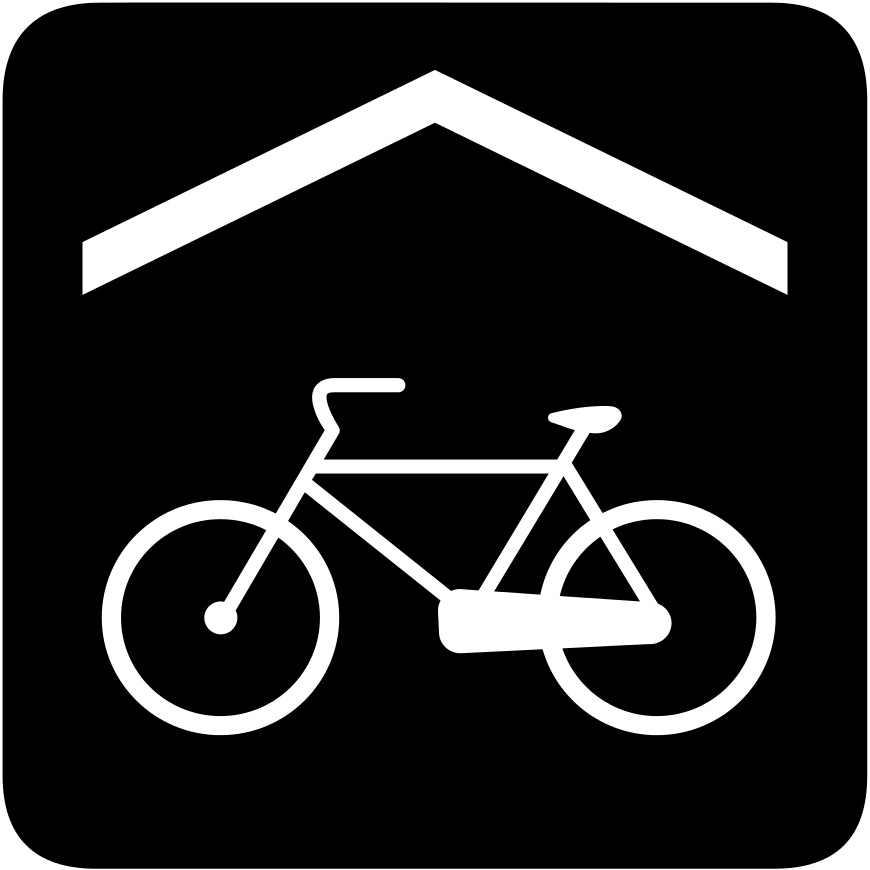 The picture shows:
A
a directional sign for bicycles.
B
shared-use lane markings (sharrows).
C
a bicycle lane.
D
a bike warning sign.
The correct driving rule is: shared-use lane markings (sharrows). Following standard DMV road rules and practicing defensive driving ensures safety for all road users.
Question 41:
To operate a moped on a public road, you must be __ years of age or older.
A
16
B
18
C
21
D
12
The correct driving rule is: 16. Following standard DMV road rules and practicing defensive driving ensures safety for all road users.
Question 42:
The Florida Department of Transportation’s Traffic Information Service operates 24 hours a day on the phone by dialing:
A
555
B
515
C
115
D
511
The correct driving rule is: 511. Following standard DMV road rules and practicing defensive driving ensures safety for all road users.
Question 43:
If you refuse to take a blood test when asked by an officer, your license will automatically be suspended for:
A
18 months
B
3 months.
C
1 year
D
6 months
The correct driving rule is: 1 year. Following standard DMV road rules and practicing defensive driving ensures safety for all road users.
Question 44:
If you drink alcohol, you should:
A
stop if you are feeling drowsy while driving.
B
drive very carefully
C
not drive
D
drive safely
Under state DUI and traffic safety laws: not drive. Alcohol degrades judgment, slows reaction times, and distorts depth perception.
Question 45:
 When you see this sign you should:
A
increase your speed and try to pass other vehicles.
B
slow your speed and be prepared to stop.
C
slow your speed and do not pass other vehicles.
This traffic sign indicates: slow your speed and do not pass other vehicles. Observing and obeying all roadway signs ensures safe traffic flow and legal driving.
Question 46:
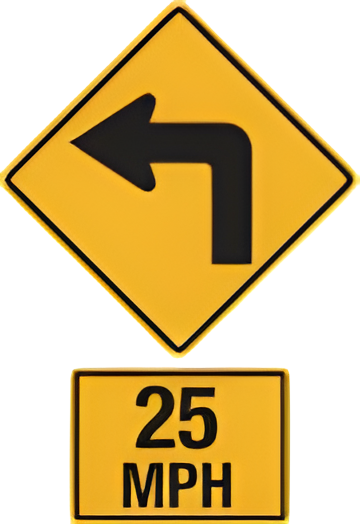 This sign indicates that:
A
the highest safe speed drivers should travel around the curve ahead is 25 MPH.
B
the safe speed around the curve ahead is at least 25 MPH.
C
drivers may not turn right if traveling at 25 MPH or less.
This traffic sign indicates: the highest safe speed drivers should travel around the curve ahead is 25 MPH. Observing and obeying all roadway signs ensures safe traffic flow and legal driving.
Question 47:
Parking is NOT allowed:
A
on public roads.
B
in front of driveways.
C
on slippery roads.
D
All of the above.
Under standard parking and curb regulations: in front of driveways. Following parking distance clearances keeps roadways unobstructed and emergency lanes accessible.
Question 48:
What is a reversible traffic lane?
A
A traffic lane where the flow of traffic may change during different times of the day.
B
A lane reserved for car pool vehicles.
C
A lane where the flow of traffic may be reversed by traffic signals.
D
A traffic lane where vehicles are allowed to travel in both directions.
The correct driving rule is: A traffic lane where the flow of traffic may change during different times of the day. Following standard DMV road rules and practicing defensive driving ensures safety for all road users.
Question 49:
Driving 15 MPH or less over lawful or posted speed will result in __ points being added.
A
4
B
3
C
5
D
6
For safe speed and stopping control: 3. Adjusting speed to match visibility and road traction prevents loss of steering grip.
Question 50:
Drivers may need more space in front of their vehicle:
A
when following motorcycles.
B
when carrying a heavy load or pulling a trailer.
C
All of the above.
All of the listed points are essential driving requirements: when following motorcycles; when carrying a heavy load or pulling a trailer. Practicing each ensures compliance with DMV safety laws.