Question 1:
When changing lanes, you should not:
A
signal your intentions early.
B
check your side and rear view mirrors.
C
use the inside rearview mirror to check for blind spots
D
check to see if other drivers are moving into the same lane.
Answer Explanation
The correct driving rule is: use the inside rearview mirror to check for blind spots. Following standard DMV road rules and practicing defensive driving ensures safety for all road users.
The correct driving rule is: use the inside rearview mirror to check for blind spots. Following standard DMV road rules and practicing defensive driving ensures safety for all road users.
Question 2:
Before a school bus stops to load passengers, the driver will usually flash:
A
yellow warning lights.
B
red warning lights.
C
red lights.
Answer Explanation
When a school bus displays flashing red lights and extended stop sign: yellow warning lights. Traffic in both directions must come to a full stop on undivided roads until children are clear.
When a school bus displays flashing red lights and extended stop sign: yellow warning lights. Traffic in both directions must come to a full stop on undivided roads until children are clear.
Question 3:
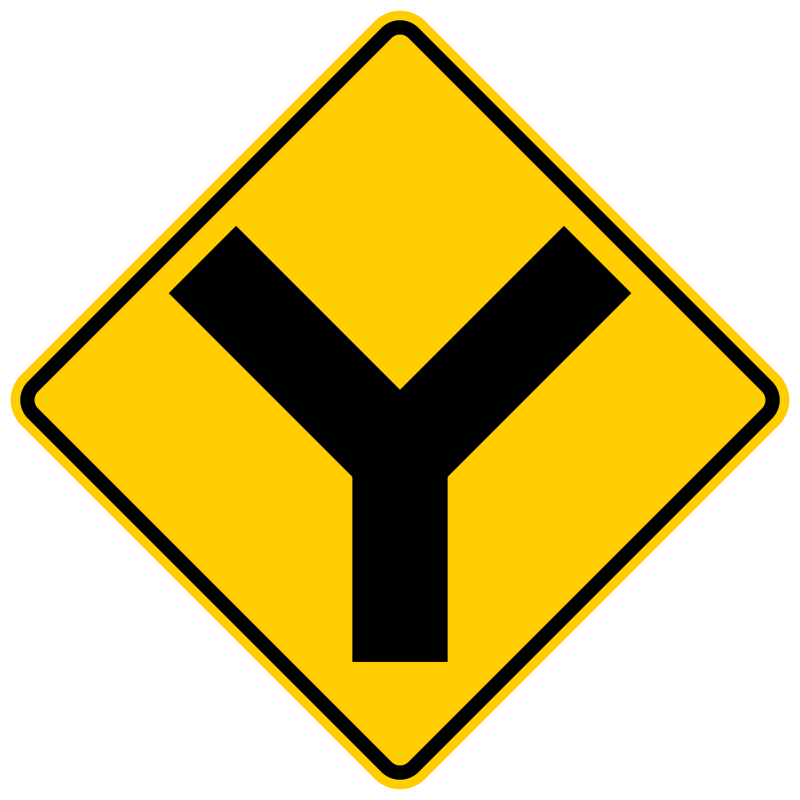 This road sign means:
A
A road joins from the left
B
You must bear either right or left
C
A 3-way intersection is ahead
Answer Explanation
This traffic sign indicates: you must bear either right or left. Observing and obeying all roadway signs ensures safe traffic flow and legal driving.
This traffic sign indicates: you must bear either right or left. Observing and obeying all roadway signs ensures safe traffic flow and legal driving.
Question 4:
When you drive near parks and playgrounds, you should expect children:
A
not to cross unless they are with an adult.
B
to know when it is safe to cross.
C
to stop at the curb before crossing the street.
D
to suddenly run into the street.
Answer Explanation
The correct driving rule is: to suddenly run into the street. Following standard DMV road rules and practicing defensive driving ensures safety for all road users.
The correct driving rule is: to suddenly run into the street. Following standard DMV road rules and practicing defensive driving ensures safety for all road users.
Question 5:
Reaction time is slower:
A
after drinking alcohol.
B
after sleeping.
C
between 9 and 11 PM.
Answer Explanation
The correct driving rule is: after drinking alcohol. Following standard DMV road rules and practicing defensive driving ensures safety for all road users.
The correct driving rule is: after drinking alcohol. Following standard DMV road rules and practicing defensive driving ensures safety for all road users.
Question 6:
Left turns on a red light are allowed:
A
from a one-way street into a one-way street.
B
Never.
C
at intersections, after stopping, if the way is clear.
Answer Explanation
When turning left across traffic lanes: from a one-way street into a one-way street. You must yield to all oncoming vehicles and crossing pedestrians before completing the turn.
When turning left across traffic lanes: from a one-way street into a one-way street. You must yield to all oncoming vehicles and crossing pedestrians before completing the turn.
Question 7:
You have stopped for a train at a railroad crossing. After the train passes, you must:
A
look to see if another train is coming, then cross the tracks if it is safe to do so.
B
watch for vehicles that must stop at railroad crossings (school buses, vehicles carrying hazardous materials, etc.).
C
All of the above.
Answer Explanation
All of the listed points are essential driving requirements: look to see if another train is coming, then cross the tracks if it is safe to do so; watch for vehicles that must stop at railroad crossings (school buses, vehicles carrying hazardous materials, etc.). Practicing each ensures compliance with DMV safety laws.
All of the listed points are essential driving requirements: look to see if another train is coming, then cross the tracks if it is safe to do so; watch for vehicles that must stop at railroad crossings (school buses, vehicles carrying hazardous materials, etc.). Practicing each ensures compliance with DMV safety laws.
Question 8:
Your license can be suspended if you are under 21 and drive with a BAC of:
A
0.15% or more.
B
any amount.
C
0.08% or more.
Answer Explanation
Under state DUI and traffic safety laws: any amount. Alcohol degrades judgment, slows reaction times, and distorts depth perception.
Under state DUI and traffic safety laws: any amount. Alcohol degrades judgment, slows reaction times, and distorts depth perception.
Question 9:
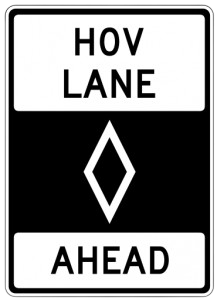 This road sign indicates that:
A
a lane is reserved for certain purposes or certain vehicles.
B
buses and car pools may not travel in the restricted lane.
C
vehicles cannot go straight ahead. Cars must turn either to the right or left.
Answer Explanation
This traffic sign indicates: a lane is reserved for certain purposes or certain vehicles. Observing and obeying all roadway signs ensures safe traffic flow and legal driving.
This traffic sign indicates: a lane is reserved for certain purposes or certain vehicles. Observing and obeying all roadway signs ensures safe traffic flow and legal driving.
Question 10:
 This sign means:
A
Bicycles should yield to vehicles ahead.
B
Warning: a bikeway crosses the roadway ahead.
C
The lane ahead is reserved for bicycles.
Answer Explanation
This traffic sign indicates: Warning: a bikeway crosses the roadway ahead. Observing and obeying all roadway signs ensures safe traffic flow and legal driving.
This traffic sign indicates: Warning: a bikeway crosses the roadway ahead. Observing and obeying all roadway signs ensures safe traffic flow and legal driving.
Question 11:
Broken white lines can be crossed over:
A
when it is safe to change lanes.
B
only when passing another car.
C
at any time.
D
only in passing zones.
Answer Explanation
The correct driving rule is: when it is safe to change lanes. Following standard DMV road rules and practicing defensive driving ensures safety for all road users.
The correct driving rule is: when it is safe to change lanes. Following standard DMV road rules and practicing defensive driving ensures safety for all road users.
Question 12:
Drivers should allow a larger space cushion when stopping:
A
at a stop sign.
B
on an up-hill.
C
at an intersection.
D
at a yield sign.
Answer Explanation
The correct driving rule is: on an up-hill. Following standard DMV road rules and practicing defensive driving ensures safety for all road users.
The correct driving rule is: on an up-hill. Following standard DMV road rules and practicing defensive driving ensures safety for all road users.
Question 13:
If your front wheels start to skid, the first thing you should do is:
A
Take your foot off the gas pedal and shift to neutral.
B
Immediately turn in the direction you want to go.
C
Speed up, pump your brakes and steer in the direction the vehicle is trying to go.
Answer Explanation
The correct driving rule is: take your foot off the gas pedal and shift to neutral. Following standard DMV road rules and practicing defensive driving ensures safety for all road users.
The correct driving rule is: take your foot off the gas pedal and shift to neutral. Following standard DMV road rules and practicing defensive driving ensures safety for all road users.
Question 14:
When dust is blowing across the roadway making it difficult to see other vehicles, you should drive slower and turn on your:
A
headlights.
B
parking lights.
C
emergency flashers.
Answer Explanation
The correct driving rule is: headlights. Following standard DMV road rules and practicing defensive driving ensures safety for all road users.
The correct driving rule is: headlights. Following standard DMV road rules and practicing defensive driving ensures safety for all road users.
Question 15:
A flashing yellow light means:
A
The light will soon change from green to red.
B
Drive with caution.
C
Yield the right-of-way to other traffic at the intersection.
Answer Explanation
According to standard right-of-way regulations: drive with caution. Yielding appropriately prevents intersection collisions and maintains safe traffic flow.
According to standard right-of-way regulations: drive with caution. Yielding appropriately prevents intersection collisions and maintains safe traffic flow.
Question 16:
Never make a U-turn from:
A
the lane you’re in.
B
the right lane.
C
the left part of the lane nearest to the centerline of the roadway.
Answer Explanation
According to standard right-of-way regulations: the right lane. Yielding appropriately prevents intersection collisions and maintains safe traffic flow.
According to standard right-of-way regulations: the right lane. Yielding appropriately prevents intersection collisions and maintains safe traffic flow.
Question 17:
When you back up:
A
always look through the rear window.
B
you should rely only on your rearview mirror.
C
do it as fast as possible.
Answer Explanation
The correct driving rule is: always look through the rear window. Following standard DMV road rules and practicing defensive driving ensures safety for all road users.
The correct driving rule is: always look through the rear window. Following standard DMV road rules and practicing defensive driving ensures safety for all road users.
Question 18:
 This sign means:
A
divided highway ahead.
B
narrow bridge ahead.
C
road construction.
D
lane ends, merge left.
Answer Explanation
This traffic sign indicates: lane ends, merge left. Observing and obeying all roadway signs ensures safe traffic flow and legal driving.
This traffic sign indicates: lane ends, merge left. Observing and obeying all roadway signs ensures safe traffic flow and legal driving.
Question 19:
A yellow arrow used to control turns from a specific traffic lane:
A
is never used as a traffic signal.
B
is warning the traffic a green arrow is about to be shown.
C
means the same as a circular yellow light for the lane of traffic indicated by the arrow.
D
means that you may go in the direction indicated by the arrow.
Answer Explanation
The correct driving rule is: means the same as a circular yellow light for the lane of traffic indicated by the arrow. Following standard DMV road rules and practicing defensive driving ensures safety for all road users.
The correct driving rule is: means the same as a circular yellow light for the lane of traffic indicated by the arrow. Following standard DMV road rules and practicing defensive driving ensures safety for all road users.
Question 20:
When an approaching driver at night blinds you by failing to dim their high beams, you should look:
A
straight down the middle of the road.
B
towards the left side of the road.
C
None of the other answers is correct.
D
towards the right side of the road.
Answer Explanation
The correct driving rule is: towards the right side of the road. Following standard DMV road rules and practicing defensive driving ensures safety for all road users.
The correct driving rule is: towards the right side of the road. Following standard DMV road rules and practicing defensive driving ensures safety for all road users.
Question 21:
 This sign is a:
A
regulatory sign.
B
warning sign.
C
guide sign.
Answer Explanation
This traffic sign indicates: warning sign. Observing and obeying all roadway signs ensures safe traffic flow and legal driving.
This traffic sign indicates: warning sign. Observing and obeying all roadway signs ensures safe traffic flow and legal driving.
Question 22:
When following a motorcycle, drivers must remember that motorcycles can ____________ than other vehicles.
A
accelerate much faster
B
stop much more quickly
C
stop much more slowly
Answer Explanation
Motorcycles can stop rapidly and are easily hidden in vehicle blind spots: stop much more quickly. Always allow an increased following distance of at least 3 to 4 seconds.
Motorcycles can stop rapidly and are easily hidden in vehicle blind spots: stop much more quickly. Always allow an increased following distance of at least 3 to 4 seconds.
Question 23:
When driving at night, if an approaching car is using its high-beams you should:
A
look toward the left edge of the road.
B
look toward the right edge of the road.
C
turn your lights on and off.
Answer Explanation
The correct driving rule is: look toward the right edge of the road. Following standard DMV road rules and practicing defensive driving ensures safety for all road users.
The correct driving rule is: look toward the right edge of the road. Following standard DMV road rules and practicing defensive driving ensures safety for all road users.
Question 24:
When passing you should NOT:
A
leave less than 4 feet of space between your vehicle and the vehicle you are passing.
B
signal left to let others know that you will be pulling out.
C
look in your rearview mirrors and glance over your shoulder before pulling out to pass.
D
go far enough past the vehicle you are passing so that you can see the vehicle in your inside rearview mirror.
Answer Explanation
Defensive driving guidelines state that: leave less than 4 feet of space between your vehicle and the vehicle you are passing. Anticipating road hazards and communicating maneuvers keeps traffic predictable and safe.
Defensive driving guidelines state that: leave less than 4 feet of space between your vehicle and the vehicle you are passing. Anticipating road hazards and communicating maneuvers keeps traffic predictable and safe.
Question 25:
 This road sign means:
A
You have the right of way
B
No Passing Zone
C
Yield the right-of-way
Answer Explanation
A triangular Yield sign requires drivers to slow down and give right-of-way to other traffic: yield the right-of-way. Proceed only when there is a safe opening.
A triangular Yield sign requires drivers to slow down and give right-of-way to other traffic: yield the right-of-way. Proceed only when there is a safe opening.
Question 26:
What is the first thing to do when you make a three-point turn?
A
Signal with your left turn signal, then check carefully for traffic coming toward you.
B
Signal with your right turn signal, then pull over to the right and stop.
C
Turn left, go across the road so you come to a stop while you face the edge of the road.
Answer Explanation
The correct driving rule is: signal with your right turn signal, then pull over to the right and stop. Following standard DMV road rules and practicing defensive driving ensures safety for all road users.
The correct driving rule is: signal with your right turn signal, then pull over to the right and stop. Following standard DMV road rules and practicing defensive driving ensures safety for all road users.
Question 27:
After passing a vehicle, it is safe to return to your lane:
A
when you can no longer see the vehicle over your right shoulder.
B
after about five seconds.
C
when you see the front bumper of the other vehicle in your mirror.
Answer Explanation
Defensive driving guidelines state that: when you see the front bumper of the other vehicle in your mirror. Anticipating road hazards and communicating maneuvers keeps traffic predictable and safe.
Defensive driving guidelines state that: when you see the front bumper of the other vehicle in your mirror. Anticipating road hazards and communicating maneuvers keeps traffic predictable and safe.
Question 28:
When you see an emergency vehicle with flashing lights, you must:
A
stop exactly where you are.
B
pull to the curb and stop.
C
speed up and take the nearest exit.
D
slow down and keep moving in your lane.
Answer Explanation
When sharing the road with other vehicles: pull to the curb and stop. Giving large vehicles and vulnerable users adequate clearance prevents dangerous accidents.
When sharing the road with other vehicles: pull to the curb and stop. Giving large vehicles and vulnerable users adequate clearance prevents dangerous accidents.
Question 29:
Construction zone signs are generally:
A
rectangular with white red coloring.
B
triangular with black and yellow coloring.
C
diamond or rectangular with orange and black coloring.
Answer Explanation
The correct driving rule is: diamond or rectangular with orange and black coloring. Following standard DMV road rules and practicing defensive driving ensures safety for all road users.
The correct driving rule is: diamond or rectangular with orange and black coloring. Following standard DMV road rules and practicing defensive driving ensures safety for all road users.
Question 30:
A diamond-shaped sign is a:
A
school zone sign.
B
warning sign.
C
regulatory sign.
Answer Explanation
The correct driving rule is: warning sign. Following standard DMV road rules and practicing defensive driving ensures safety for all road users.
The correct driving rule is: warning sign. Following standard DMV road rules and practicing defensive driving ensures safety for all road users.
Question 31:
When entering an expressway from the entrance ramp, you should:
A
go down to the bottom of the ramp and stop until it is safe to enter the expressway.
B
cross over to the traffic lane as soon as possible.
C
use the acceleration lane to blend into the traffic.
Answer Explanation
The correct driving rule is: use the acceleration lane to blend into the traffic. Following standard DMV road rules and practicing defensive driving ensures safety for all road users.
The correct driving rule is: use the acceleration lane to blend into the traffic. Following standard DMV road rules and practicing defensive driving ensures safety for all road users.
Question 32:
To avoid having to make an emergency stop while driving in traffic, drivers should:
A
drive in the right lane only.
B
look ahead and maintain a safe following distance.
C
sound their horn to warn other drivers.
D
drive slower than the flow of traffic.
Answer Explanation
The correct driving rule is: look ahead and maintain a safe following distance. Following standard DMV road rules and practicing defensive driving ensures safety for all road users.
The correct driving rule is: look ahead and maintain a safe following distance. Following standard DMV road rules and practicing defensive driving ensures safety for all road users.
Question 33:
Give the right-of-way to any pedestrian:
A
on the opposite side of the street.
B
if you have the green light.
C
in a marked crosswalk.
Answer Explanation
Drivers must always yield the right-of-way to pedestrians crossing at intersections and crosswalks: in a marked crosswalk. Stop and allow them to clear the lane safely.
Drivers must always yield the right-of-way to pedestrians crossing at intersections and crosswalks: in a marked crosswalk. Stop and allow them to clear the lane safely.
Question 34:
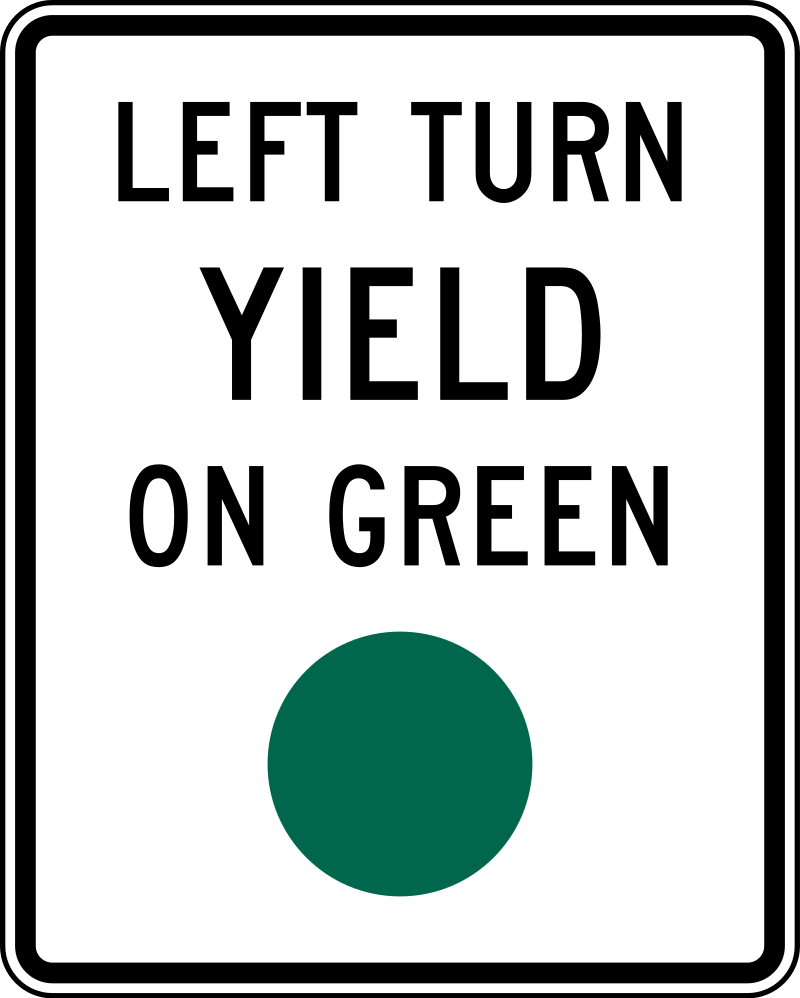 This white sign means you:
A
may turn left on a green light when it is safe to do so.
B
may turn left only on a green arrow.
C
must wait for the solid green light before you turn left.
Answer Explanation
This traffic sign indicates: may turn left on a green light when it is safe to do so. Observing and obeying all roadway signs ensures safe traffic flow and legal driving.
This traffic sign indicates: may turn left on a green light when it is safe to do so. Observing and obeying all roadway signs ensures safe traffic flow and legal driving.
Question 35:
After passing a vehicle, it is safe to return to your lane when:
A
the driver you passed slows down to let you return to your lane.
B
you can see both headlights of the vehicle you just passed in your rearview mirror.
C
you are at least 100 feet ahead of the vehicle you passed.
Answer Explanation
Defensive driving guidelines state that: you can see both headlights of the vehicle you just passed in your rearview mirror. Anticipating road hazards and communicating maneuvers keeps traffic predictable and safe.
Defensive driving guidelines state that: you can see both headlights of the vehicle you just passed in your rearview mirror. Anticipating road hazards and communicating maneuvers keeps traffic predictable and safe.
Question 36:
When other vehicles are approaching an uncontrolled intersection at approximately the same time, you should:
A
maintain your speed and proceed through the intersection.
B
come to a complete stop and wait until there are no vehicles at the intersection.
C
watch for vehicles coming from the right and yield the right-of-way, then proceed when safe.
D
increase your speed and get through the intersection.
Answer Explanation
At an uncontrolled intersection or 4-way stop where vehicles arrive at the same time: watch for vehicles coming from the right and yield the right-of-way, then proceed when safe. The driver on the left must always yield to the driver on the right.
At an uncontrolled intersection or 4-way stop where vehicles arrive at the same time: watch for vehicles coming from the right and yield the right-of-way, then proceed when safe. The driver on the left must always yield to the driver on the right.
Question 37:
Drivers must not drive at:
A
a speed that is greater than reasonable.
B
a speed that is not prudent for the circumstances.
C
a speed that is greater than the posted speed limit.
D
All of the above.
Answer Explanation
All of the listed points are essential driving requirements: a speed that is greater than reasonable; a speed that is not prudent for the circumstances; a speed that is greater than the posted speed limit. Practicing each ensures compliance with DMV safety laws.
All of the listed points are essential driving requirements: a speed that is greater than reasonable; a speed that is not prudent for the circumstances; a speed that is greater than the posted speed limit. Practicing each ensures compliance with DMV safety laws.
Question 38:
Directions given by traffic officers ___________ signs, signals or pavement markings.
A
take precedence over
B
are less important than
C
must obey
Answer Explanation
The correct driving rule is: take precedence over. Following standard DMV road rules and practicing defensive driving ensures safety for all road users.
The correct driving rule is: take precedence over. Following standard DMV road rules and practicing defensive driving ensures safety for all road users.
Question 39:
You reach an intersection that is not controlled at the same time as a driver on your right, and both of you prepare to go straight. Who has the right-of-way?
A
You.
B
No one.
C
The other driver.
Answer Explanation
According to standard right-of-way regulations: The other driver. Yielding appropriately prevents intersection collisions and maintains safe traffic flow.
According to standard right-of-way regulations: The other driver. Yielding appropriately prevents intersection collisions and maintains safe traffic flow.
Question 40:
When driving in foggy weather, drivers should:
A
put their lights on low beam.
B
put their lights on high beam.
C
put their emergency flashers on.
Answer Explanation
The correct driving rule is: put their lights on low beam. Following standard DMV road rules and practicing defensive driving ensures safety for all road users.
The correct driving rule is: put their lights on low beam. Following standard DMV road rules and practicing defensive driving ensures safety for all road users.
Question 41:
When parking on a public road, drivers should:
A
move as far away from traffic as possible.
B
always park on the left side of the roadway.
C
All of the above.
Answer Explanation
Under standard parking and curb regulations: move as far away from traffic as possible. Following parking distance clearances keeps roadways unobstructed and emergency lanes accessible.
Under standard parking and curb regulations: move as far away from traffic as possible. Following parking distance clearances keeps roadways unobstructed and emergency lanes accessible.
Question 42:
If your brakes are wet, you can dry them by:
A
riding the pedal lightly.
B
pull over to the right and wait until it stops raining.
C
having them checked by a mechanic.
Answer Explanation
The correct driving rule is: riding the pedal lightly. Following standard DMV road rules and practicing defensive driving ensures safety for all road users.
The correct driving rule is: riding the pedal lightly. Following standard DMV road rules and practicing defensive driving ensures safety for all road users.
Question 43:
Double solid lines on the roadway mean:
A
you cannot pass.
B
you can not go across the lines except to turn left to enter or leave the highway.
C
All of the above.
Answer Explanation
All of the listed points are essential driving requirements: you cannot pass; you can not go across the lines except to turn left to enter or leave the highway. Practicing each ensures compliance with DMV safety laws.
All of the listed points are essential driving requirements: you cannot pass; you can not go across the lines except to turn left to enter or leave the highway. Practicing each ensures compliance with DMV safety laws.
Question 44:
Motorcycles:
A
must share a traffic lane with another vehicle.
B
are easier to see than cars.
C
are entitled to use a complete traffic lane.
Answer Explanation
The correct driving rule is: are entitled to use a complete traffic lane. Following standard DMV road rules and practicing defensive driving ensures safety for all road users.
The correct driving rule is: are entitled to use a complete traffic lane. Following standard DMV road rules and practicing defensive driving ensures safety for all road users.
Question 45:
To be able to turn quickly, your hands should be:
A
placed outside of the steering wheel on opposite sides
B
next to each other on the top of the steering wheel.
C
on the steering wheel, so they are at the 6 and 12 o'clock positions.
Answer Explanation
The correct driving rule is: placed outside of the steering wheel on opposite sides. Following standard DMV road rules and practicing defensive driving ensures safety for all road users.
The correct driving rule is: placed outside of the steering wheel on opposite sides. Following standard DMV road rules and practicing defensive driving ensures safety for all road users.
Question 46:
Blocking an intersection during rush hour traffic is not permitted:
A
under any circumstances.
B
unless you entered the intersection on a green light.
C
unless you have the right-of-way.
Answer Explanation
According to standard right-of-way regulations: under any circumstances. Yielding appropriately prevents intersection collisions and maintains safe traffic flow.
According to standard right-of-way regulations: under any circumstances. Yielding appropriately prevents intersection collisions and maintains safe traffic flow.
Question 47:
A broken white line:
A
means passing or crossing is prohibited in that lane.
B
separates two lanes traveling in the same direction.
C
marks the right edge of the roadway.
Answer Explanation
The correct driving rule is: separates two lanes traveling in the same direction. Following standard DMV road rules and practicing defensive driving ensures safety for all road users.
The correct driving rule is: separates two lanes traveling in the same direction. Following standard DMV road rules and practicing defensive driving ensures safety for all road users.
Question 48:
If weather requires you to have your lights on, you should use your:
A
low beams.
B
parking lights.
C
high beams.
Answer Explanation
The correct driving rule is: low beams. Following standard DMV road rules and practicing defensive driving ensures safety for all road users.
The correct driving rule is: low beams. Following standard DMV road rules and practicing defensive driving ensures safety for all road users.
Question 49:
Having a drivers license is:
A
a requirement.
B
a privilege.
C
a constitutional right.
Answer Explanation
The correct driving rule is: a privilege. Following standard DMV road rules and practicing defensive driving ensures safety for all road users.
The correct driving rule is: a privilege. Following standard DMV road rules and practicing defensive driving ensures safety for all road users.
Question 50:
If a vehicle suddenly cuts in front of you creating a hazard, which of these actions should you take first?
A
Sound your horn and step on the brake firmly.
B
Swerve into the lane next to you.
C
Take your foot off the gas pedal.
Answer Explanation
The correct driving rule is: take your foot off the gas pedal. Following standard DMV road rules and practicing defensive driving ensures safety for all road users.
The correct driving rule is: take your foot off the gas pedal. Following standard DMV road rules and practicing defensive driving ensures safety for all road users.