Question 1:
When exiting a highway, you should slow down:
A
when you first see the exit sign.
B
before moving into the exit lane.
C
once you have moved into the exit lane.
D
once you see the toll booth.
Answer Explanation
Defensive driving guidelines state that: once you have moved into the exit lane. Anticipating road hazards and communicating maneuvers keeps traffic predictable and safe.
Defensive driving guidelines state that: once you have moved into the exit lane. Anticipating road hazards and communicating maneuvers keeps traffic predictable and safe.
Question 2:
Parking is not allowed:
A
in an intersection, unless permitted by signs.
B
within 300 feet of a pedestrian safety area.
C
on public roads
Answer Explanation
Under standard parking and curb regulations: in an intersection, unless permitted by signs. Following parking distance clearances keeps roadways unobstructed and emergency lanes accessible.
Under standard parking and curb regulations: in an intersection, unless permitted by signs. Following parking distance clearances keeps roadways unobstructed and emergency lanes accessible.
Question 3:
A traffic sign with a red circle around and a slash over a symbol means:
A
the maneuver shown by the symbol is not allowed.
B
Do not drive faster than the posted speed limit.
C
the maneuver shown on the sign should be executed with extreme caution.
Answer Explanation
This traffic sign indicates: the maneuver shown by the symbol is not allowed. Observing and obeying all roadway signs ensures safe traffic flow and legal driving.
This traffic sign indicates: the maneuver shown by the symbol is not allowed. Observing and obeying all roadway signs ensures safe traffic flow and legal driving.
Question 4:
A flashing yellow light means:
A
The light will soon change from green to red.
B
Drive with caution.
C
Yield the right-of-way to other traffic at the intersection.
Answer Explanation
According to standard right-of-way regulations: drive with caution. Yielding appropriately prevents intersection collisions and maintains safe traffic flow.
According to standard right-of-way regulations: drive with caution. Yielding appropriately prevents intersection collisions and maintains safe traffic flow.
Question 5:
When you get in a car to drive, the first thing you should do is:
A
check your rear view mirror.
B
adjust the steering wheel.
C
adjust your seat belt.
D
adjust your seat.
Answer Explanation
The correct driving rule is: adjust your seat. Following standard DMV road rules and practicing defensive driving ensures safety for all road users.
The correct driving rule is: adjust your seat. Following standard DMV road rules and practicing defensive driving ensures safety for all road users.
Question 6:
Emergency vehicles:
A
may follow each other.
B
may use a loudspeaker to give instructions.
C
have the right-of-way when using siren and red/blue lights.
D
All of the above.
Answer Explanation
All of the listed points are essential driving requirements: may follow each other; may use a loudspeaker to give instructions; have the right-of-way when using siren and red/blue lights. Practicing each ensures compliance with DMV safety laws.
All of the listed points are essential driving requirements: may follow each other; may use a loudspeaker to give instructions; have the right-of-way when using siren and red/blue lights. Practicing each ensures compliance with DMV safety laws.
Question 7:
When you are in a line of traffic that is crossing a railroad track that has no signals or gates:
A
you may pass slower drivers crossing the track.
B
before you start to cross, you need to make sure there is space to get all the way across the tracks without stopping.
C
you have the right of way and do not need to check for trains.
D
All of the above.
Answer Explanation
The correct driving rule is: before you start to cross, you need to make sure there is space to get all the way across the tracks without stopping. Following standard DMV road rules and practicing defensive driving ensures safety for all road users.
The correct driving rule is: before you start to cross, you need to make sure there is space to get all the way across the tracks without stopping. Following standard DMV road rules and practicing defensive driving ensures safety for all road users.
Question 8:
To safely cross a railroad, drivers should:
A
listen and look both ways, then proceed if it is safe to do so.
B
drive across quickly if a train is approaching, or if it is too close, stop and then back up.
C
stop within 10 feet of all railroad crossings.
D
look both ways only if the red light is flashing.
Answer Explanation
The correct driving rule is: listen and look both ways, then proceed if it is safe to do so. Following standard DMV road rules and practicing defensive driving ensures safety for all road users.
The correct driving rule is: listen and look both ways, then proceed if it is safe to do so. Following standard DMV road rules and practicing defensive driving ensures safety for all road users.
Question 9:
 This sign means:
A
A road crosses the main highway ahead.
B
The divided highway on which drivers are traveling ends ahead.
C
Drivers are coming to a point where another traffic lane joins the one they are on.
Answer Explanation
This traffic sign indicates: drivers are coming to a point where another traffic lane joins the one they are on. Observing and obeying all roadway signs ensures safe traffic flow and legal driving.
This traffic sign indicates: drivers are coming to a point where another traffic lane joins the one they are on. Observing and obeying all roadway signs ensures safe traffic flow and legal driving.
Question 10:
When driving at night with no other vehicles ahead, a driver should use:
A
high beam lights.
B
low-beam lights.
C
parking lights.
Answer Explanation
The correct driving rule is: high beam lights. Following standard DMV road rules and practicing defensive driving ensures safety for all road users.
The correct driving rule is: high beam lights. Following standard DMV road rules and practicing defensive driving ensures safety for all road users.
Question 11:
Drivers must yield to pedestrians:
A
only if the pedestrian is in a crosswalk.
B
if the pedestrian signals to the driver that the driver must stop.
C
only if the pedestrian is on the same side of the road.
D
even when the pedestrian crosses the street without looking both ways.
Answer Explanation
The correct driving rule is: even when the pedestrian crosses the street without looking both ways. Following standard DMV road rules and practicing defensive driving ensures safety for all road users.
The correct driving rule is: even when the pedestrian crosses the street without looking both ways. Following standard DMV road rules and practicing defensive driving ensures safety for all road users.
Question 12:
When driving on slick roads, drivers should:
A
accelerate quickly.
B
take turns more slowly.
C
use alternate routes.
D
drive as they would on dry roads.
Answer Explanation
The correct driving rule is: take turns more slowly. Following standard DMV road rules and practicing defensive driving ensures safety for all road users.
The correct driving rule is: take turns more slowly. Following standard DMV road rules and practicing defensive driving ensures safety for all road users.
Question 13:
At intersections marked with stop lines, drivers must:
A
come to a complete stop.
B
slow down and enter the intersection.
C
signal other vehicles to stop.
Answer Explanation
The correct driving rule is: come to a complete stop. Following standard DMV road rules and practicing defensive driving ensures safety for all road users.
The correct driving rule is: come to a complete stop. Following standard DMV road rules and practicing defensive driving ensures safety for all road users.
Question 14:
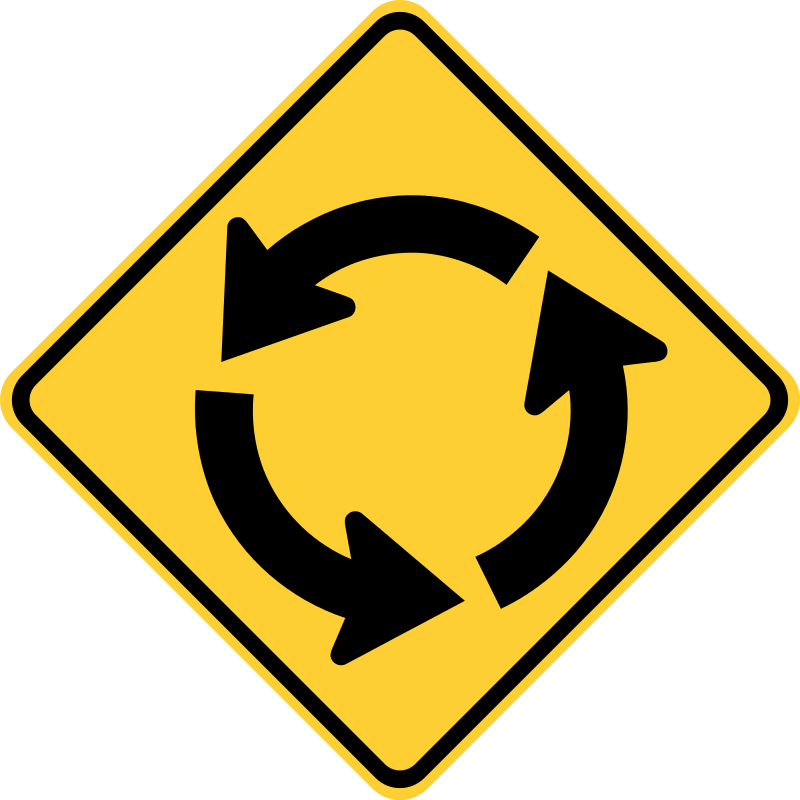 This road sign:
A
warns drivers of a sharp turn left. Drivers should slow their speed and keep to the left.
B
provides an advance notice of a roundabout.
C
warns drivers that U-turns are not permitted.
D
is a no-right-turns sign.
Answer Explanation
This traffic sign indicates: provides an advance notice of a roundabout. Observing and obeying all roadway signs ensures safe traffic flow and legal driving.
This traffic sign indicates: provides an advance notice of a roundabout. Observing and obeying all roadway signs ensures safe traffic flow and legal driving.
Question 15:
When children are close, what should you do before you back out of a driveway?
A
Rely on your mirrors.
B
Get out of the car and check behind the car.
C
Look through your back window for children.
Answer Explanation
The correct driving rule is: Get out of the car and check behind the car. Following standard DMV road rules and practicing defensive driving ensures safety for all road users.
The correct driving rule is: Get out of the car and check behind the car. Following standard DMV road rules and practicing defensive driving ensures safety for all road users.
Question 16:
Drivers who eat and drink while driving:
A
have no driving errors.
B
may have trouble controlling their vehicles.
C
must yield the right-of-way.
D
tend to be more aggressive.
Answer Explanation
The correct driving rule is: may have trouble controlling their vehicles. Following standard DMV road rules and practicing defensive driving ensures safety for all road users.
The correct driving rule is: may have trouble controlling their vehicles. Following standard DMV road rules and practicing defensive driving ensures safety for all road users.
Question 17:
When following a motorcycle, drivers must remember that motorcycles can ____________ than other vehicles.
A
accelerate much faster
B
stop much more quickly
C
stop much more slowly
Answer Explanation
Motorcycles can stop rapidly and are easily hidden in vehicle blind spots: stop much more quickly. Always allow an increased following distance of at least 3 to 4 seconds.
Motorcycles can stop rapidly and are easily hidden in vehicle blind spots: stop much more quickly. Always allow an increased following distance of at least 3 to 4 seconds.
Question 18:
To avoid having to make an emergency stop while driving in traffic, drivers should:
A
drive in the right lane only.
B
look ahead and maintain a safe following distance.
C
sound their horn to warn other drivers.
D
drive slower than the flow of traffic.
Answer Explanation
The correct driving rule is: look ahead and maintain a safe following distance. Following standard DMV road rules and practicing defensive driving ensures safety for all road users.
The correct driving rule is: look ahead and maintain a safe following distance. Following standard DMV road rules and practicing defensive driving ensures safety for all road users.
Question 19:
 Vertical rectangles tell drivers:
A
the law.
B
what is not allowed.
C
the direction they should travel.
Answer Explanation
The correct driving rule is: the law. Following standard DMV road rules and practicing defensive driving ensures safety for all road users.
The correct driving rule is: the law. Following standard DMV road rules and practicing defensive driving ensures safety for all road users.
Question 20:
Your first response to reduced visibility should be:
A
to look for road edge markings to guide you.
B
to turn on your windshield wipers.
C
to reduce your speed.
D
to turn on your headlights.
Answer Explanation
The correct driving rule is: to reduce your speed. Following standard DMV road rules and practicing defensive driving ensures safety for all road users.
The correct driving rule is: to reduce your speed. Following standard DMV road rules and practicing defensive driving ensures safety for all road users.
Question 21:
When driving near light rail vehicles, drivers should:
A
never drive around lowered crossing gates.
B
expect trains on any track at any time.
C
always obey signs and traffic signals.
D
All of the above.
Answer Explanation
All of the listed points are essential driving requirements: never drive around lowered crossing gates; expect trains on any track at any time; always obey signs and traffic signals. Practicing each ensures compliance with DMV safety laws.
All of the listed points are essential driving requirements: never drive around lowered crossing gates; expect trains on any track at any time; always obey signs and traffic signals. Practicing each ensures compliance with DMV safety laws.
Question 22:
Directions given by traffic officers ___________ signs, signals or pavement markings.
A
take precedence over
B
are less important than
C
must obey
Answer Explanation
The correct driving rule is: take precedence over. Following standard DMV road rules and practicing defensive driving ensures safety for all road users.
The correct driving rule is: take precedence over. Following standard DMV road rules and practicing defensive driving ensures safety for all road users.
Question 23:
If an aggressive driver cuts you off, you should:
A
sound your horn.
B
look towards the left side of the road.
C
stay calm and get out of the aggressive driver's way.
D
call the police immediately.
Answer Explanation
The correct driving rule is: stay calm and get out of the aggressive driver's way. Following standard DMV road rules and practicing defensive driving ensures safety for all road users.
The correct driving rule is: stay calm and get out of the aggressive driver's way. Following standard DMV road rules and practicing defensive driving ensures safety for all road users.
Question 24:
The first sign drivers see when approaching a highway-rail intersection is usually:
A
a crossbuck sign.
B
an advance warning sign.
C
a speed limit sign.
Answer Explanation
According to standard right-of-way regulations: an advance warning sign. Yielding appropriately prevents intersection collisions and maintains safe traffic flow.
According to standard right-of-way regulations: an advance warning sign. Yielding appropriately prevents intersection collisions and maintains safe traffic flow.
Question 25:
 This road sign warns drivers that:
A
they are coming to a point where another traffic lane joins the one they are on.
B
a divided highway is ahead.
C
the one-way street or roadway is about to change to two-way traffic.
Answer Explanation
This traffic sign indicates: the one-way street or roadway is about to change to two-way traffic. Observing and obeying all roadway signs ensures safe traffic flow and legal driving.
This traffic sign indicates: the one-way street or roadway is about to change to two-way traffic. Observing and obeying all roadway signs ensures safe traffic flow and legal driving.