Question 1:
Keeping a space cushion between you and the other vehicles around you is important because it:
A
gives you time to react to situations.
B
prevents distractions from other vehicles.
C
keeps other drivers alert.
D
keeps traffic flowing at a safe pace.
The correct driving rule is: gives you time to react to situations. Following standard DMV road rules and practicing defensive driving ensures safety for all road users.
Question 2:
An octagonal sign means that drivers must:
A
respect the posted speed limit.
B
come to a complete stop at the marked stop line.
C
be aware possible hazards ahead.
An octagonal Stop sign requires a full and complete stop before the stop line or crosswalk: come to a complete stop at the marked stop line. Proceed only after yielding to all cross traffic and pedestrians.
Question 3:
Vehicle stopping distance never depends on:
A
the condition of your vehicle's brakes.
B
your own reaction time.
C
the time of day.
D
the condition and type of vehicle tires.
For safe speed and stopping control: the time of day. Adjusting speed to match visibility and road traction prevents loss of steering grip.
Question 4:
When parking on a public road, drivers should:
A
move as far away from traffic as possible.
B
always park on the left side of the roadway.
C
All of the above.
Under standard parking and curb regulations: move as far away from traffic as possible. Following parking distance clearances keeps roadways unobstructed and emergency lanes accessible.
Question 5:
Highway markings:
A
provide information for drivers.
B
only apply to motorcycles.
C
are only found in school zones.
D
are usually red and blue in color.
Defensive driving guidelines state that: provide information for drivers. Anticipating road hazards and communicating maneuvers keeps traffic predictable and safe.
Question 6:
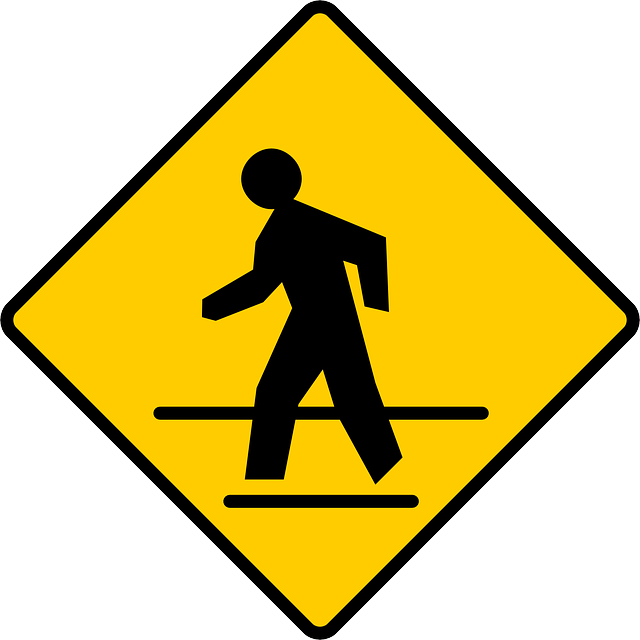 This road sign means:
A
School zone ahead
B
Pedestrians must not cross here
C
Pedestrian crossing ahead
This traffic sign indicates: Pedestrian crossing ahead. Observing and obeying all roadway signs ensures safe traffic flow and legal driving.
Question 7:
What should you do when another car is trying to pass you?
A
yield the right-of-way to the other driver.
B
speed up.
C
After checking for oncoming traffic, adjust your speed to allow safe passing.
D
pull off the road to allow safe passing.
The correct driving rule is: After checking for oncoming traffic, adjust your speed to allow safe passing. Following standard DMV road rules and practicing defensive driving ensures safety for all road users.
Question 8:
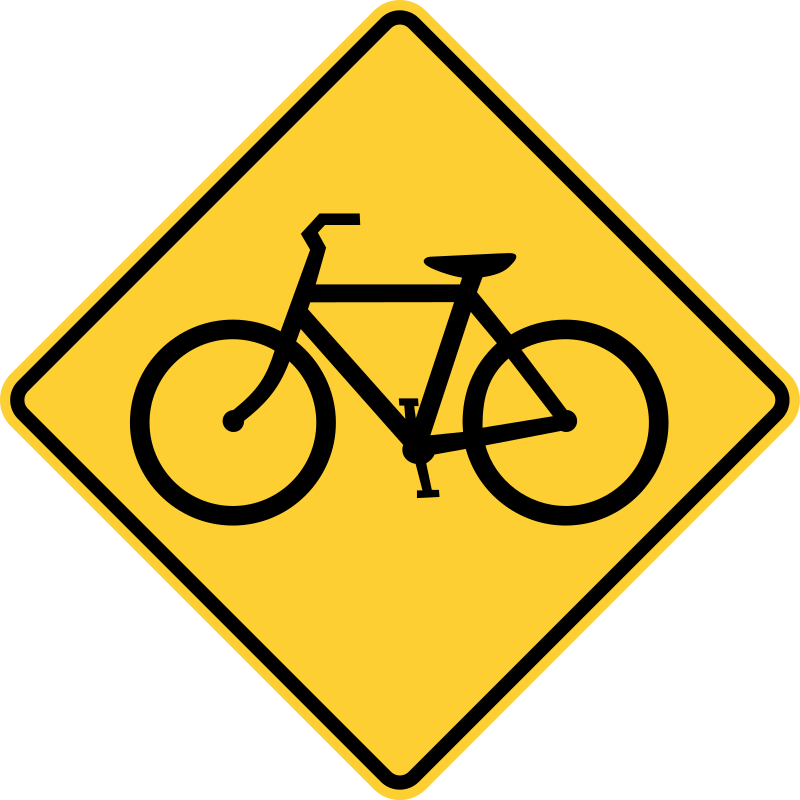 This road sign means:
A
Watch for bicycles
B
Bicycle parking ahead
C
Bicycles are not allowed in this area
This traffic sign indicates: watch for bicycles. Observing and obeying all roadway signs ensures safe traffic flow and legal driving.
Question 9:
When driving in heavy rain, drivers should use:
A
parking lights.
B
low beam headlights.
C
high beam headlights.
For safe speed and stopping control: low beam headlights. Adjusting speed to match visibility and road traction prevents loss of steering grip.
Question 10:
If the traffic lights are out of service when you approach an intersection, you:
A
must continue according to the rules of right-of-way.
B
must slow down and yield to oncoming traffic and pedestrians.
C
must come to a stop as you would for a stop sign.
D
must proceed with caution.
According to standard right-of-way regulations: must come to a stop as you would for a stop sign. Yielding appropriately prevents intersection collisions and maintains safe traffic flow.
Question 11:
__________ are blue with white letters and symbols.
A
Warning signs
B
Service signs
C
Destination signs (guide signs)
The correct driving rule is: Service signs. Following standard DMV road rules and practicing defensive driving ensures safety for all road users.
Question 12:
A yellow arrow means:
A
Do not go in the direction of the arrow.
B
If you intend to turn in the direction of the arrow, be prepared to stop.
C
The same as a steady yellow light.
The correct driving rule is: If you intend to turn in the direction of the arrow, be prepared to stop. Following standard DMV road rules and practicing defensive driving ensures safety for all road users.
Question 13:
 This road sign means:
A
Railroad Crossing
B
One Way
C
Limited parking
Circular signs with an 'X' and 'RR' designate a Railroad Advance Warning: Railroad Crossing. Drivers must slow down, look both ways, listen for trains, and be prepared to stop.
Question 14:
 This is:
A
a side road sign.
B
a merging traffic sign.
C
a right curve sign.
The correct driving rule is: a side road sign. Following standard DMV road rules and practicing defensive driving ensures safety for all road users.
Question 15:
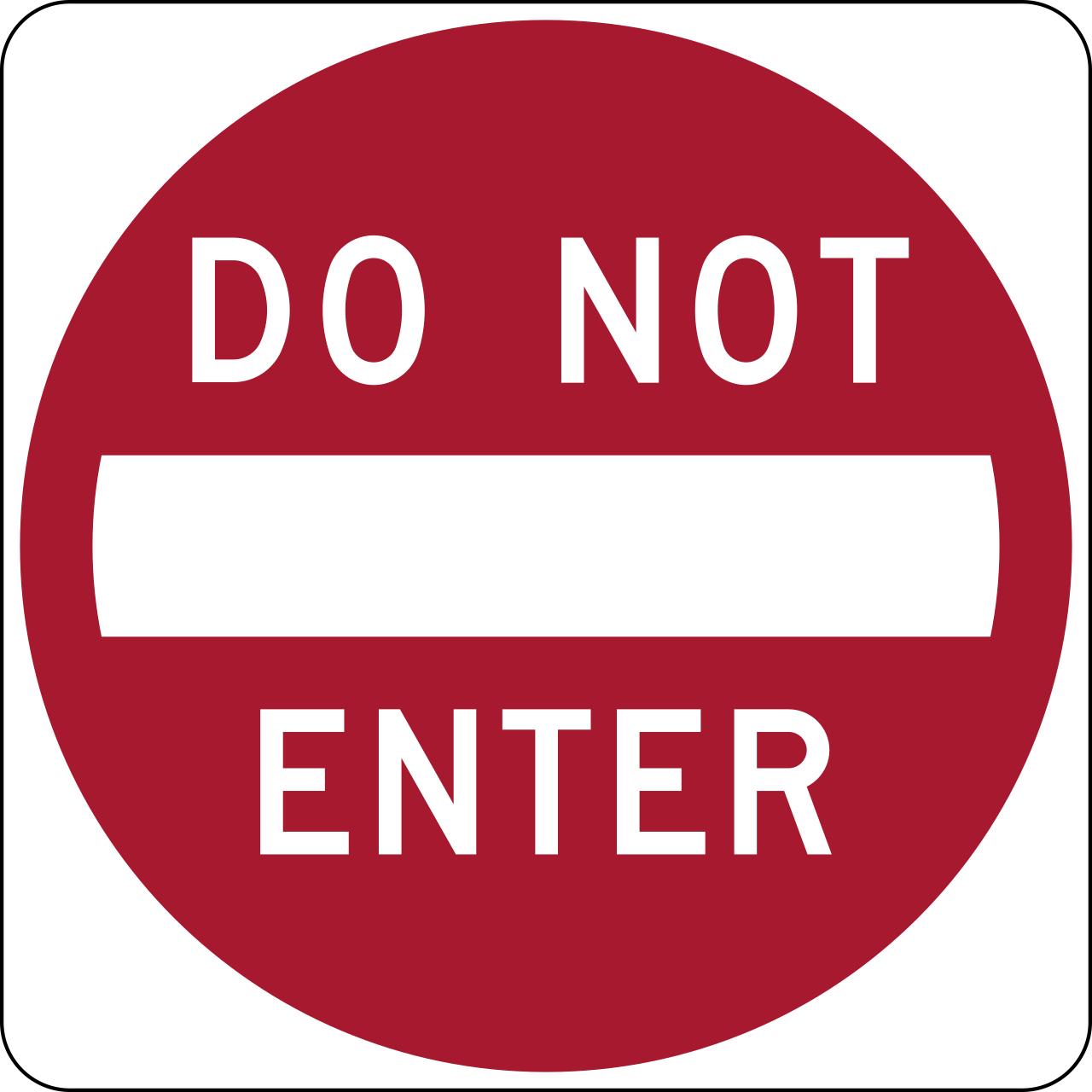 This sign indicates:
A
that you must not drive past this sign.
B
that you must yield the right-of-way.
C
the entrance to a construction site.
D
the entrance to a dead-end street.
This traffic sign indicates: that you must not drive past this sign. Observing and obeying all roadway signs ensures safe traffic flow and legal driving.
Question 16:
 This sign warns drivers that:
A
the highway ahead is divided into two one-way roadways. Drivers should keep to the right.
B
there is a winding road ahead.
C
there is a double curve ahead.
This traffic sign indicates: there is a double curve ahead. Observing and obeying all roadway signs ensures safe traffic flow and legal driving.
Question 17:
When driving in fog:
A
turn on your hazard lights.
B
do not drive over 10 MPH.
C
turn on your low beams.
D
drive the speed limit.
Always use low-beam headlights in fog, heavy rain, or snow. High beams reflect off moisture droplets and bounce glare back into your eyes.
Question 18:
Large trucks:
A
have large blind spots.
B
can stop quicker than passenger vehicles.
C
do not need more room to maneuver.
D
All of the above.
The correct driving rule is: have large blind spots. Following standard DMV road rules and practicing defensive driving ensures safety for all road users.
Question 19:
What does it mean If an oncoming driver flashes headlights at you during a period of low visibility?
A
Your headlights are too bright. You should turn them off.
B
Your vehicle was difficult to see. You should turn on your headlights.
C
Your headlights are too bright. You should use parking lights instead.
The correct driving rule is: Your vehicle was difficult to see. You should turn on your headlights. Following standard DMV road rules and practicing defensive driving ensures safety for all road users.
Question 20:
At intersections where two or more drivers stop at STOP signs at the same time and they are at right angles:
A
the driver on the left must yield to the driver on the right.
B
the driver who is late for work has the right-of-way.
C
the driver on the right must yield to the driver on the left.
The correct driving rule is: the driver on the left must yield to the driver on the right. Following standard DMV road rules and practicing defensive driving ensures safety for all road users.
Question 21:
__________ limit(s) your concentration, perception, judgment, and memory.
A
Even the smallest amount of alcohol
B
Only a blood alcohol level greater than .05
C
Alcohol does not
D
Only a blood alcohol level greater than the legal limit
The correct driving rule is: Even the smallest amount of alcohol. Following standard DMV road rules and practicing defensive driving ensures safety for all road users.
Question 22:
If your wheels drop off the pavement onto the shoulder of the road, you should:
A
maintain your current speed and turn onto the pavement.
B
slow down and carefully turn back onto the pavement.
C
stop your car on the side of the road.
D
immediately come to a complete stop, then quickly turn back onto the pavement.
The correct driving rule is: slow down and carefully turn back onto the pavement. Following standard DMV road rules and practicing defensive driving ensures safety for all road users.
Question 23:
You must pull over to the edge of the road and allow an emergency vehicle to pass:
A
only if the emergency vehicle is following you.
B
regardless of your direction.
C
only if the emergency vehicle is approaching.
D
None of the above.
When sharing the road with other vehicles: regardless of your direction. Giving large vehicles and vulnerable users adequate clearance prevents dangerous accidents.
Question 24:
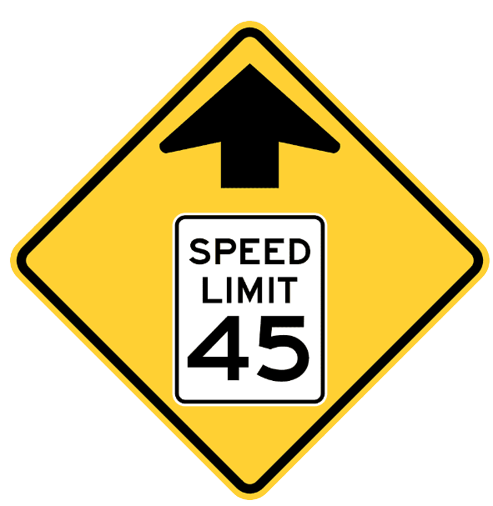 This warning sign:
A
provides advance notice to upcoming speed limit change.
B
shows the current speed limit that all vehicles traveling in the direction of the arrow must not exceed.
C
indicates the suggested highest safe speed.
This traffic sign indicates: provides advance notice to upcoming speed limit change. Observing and obeying all roadway signs ensures safe traffic flow and legal driving.
Question 25:
Regulation signs normally are:
A
white triangles.
B
green rectangles.
C
white rectangles.
The correct driving rule is: white rectangles. Following standard DMV road rules and practicing defensive driving ensures safety for all road users.
Question 26:
The traffic light is green and you want to drive straight through an intersection. If a car is already in the intersection and is making a turn, you must:
A
enter the intersection and then stop.
B
drive through the intersection. You have the right-of-way.
C
let that car complete its turn before you enter the intersection.
According to standard right-of-way regulations: let that car complete its turn before you enter the intersection. Yielding appropriately prevents intersection collisions and maintains safe traffic flow.
Question 27:
When you pass another vehicle, before you return to the right lane, you must:
A
look at your interior rear-view mirror.
B
signal.
C
All of the above.
All of the listed points are essential driving requirements: look at your interior rear-view mirror; signal. Practicing each ensures compliance with DMV safety laws.
Question 28:
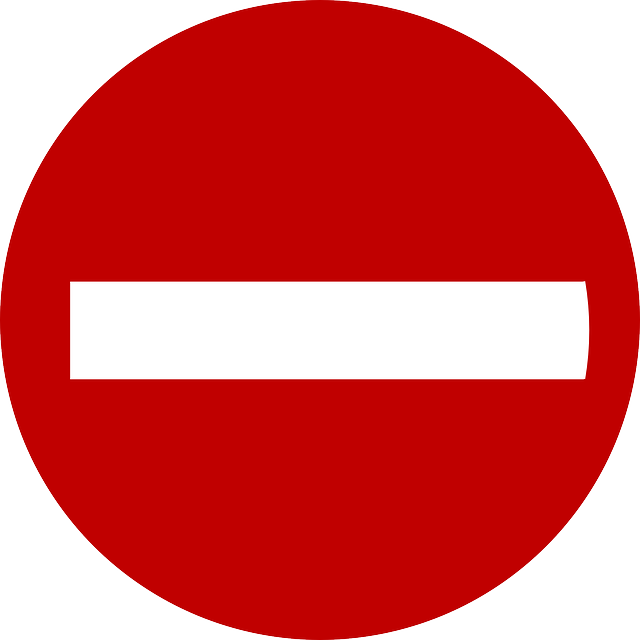 This road sign means:
A
No left turn
B
Lane ends
C
Do not enter
This traffic sign indicates: Do not enter. Observing and obeying all roadway signs ensures safe traffic flow and legal driving.
Question 29:
Alcohol causes:
A
poor judgment.
B
loss of concentration.
C
reduced perception.
D
All of the above.
Alcohol and impairing substances degrade all critical driving functions: poor judgment; loss of concentration; reduced perception. Driving while impaired carries severe criminal and safety penalties.
Question 30:
You are entering a roadway from a private road, and you need to turn left. You have to yield to:
A
vehicles from the right.
B
vehicles from the left.
C
vehicles from both directions.
According to standard right-of-way regulations: vehicles from both directions. Yielding appropriately prevents intersection collisions and maintains safe traffic flow.
Question 31:
What is the meaning of blue traffic signs?
A
A blue background indicates a regulatory sign.
B
They give directional information.
C
Blue indicates road user services.
The correct driving rule is: Blue indicates road user services. Following standard DMV road rules and practicing defensive driving ensures safety for all road users.
Question 32:
 This road sign means:
A
Curves ahead
B
Divided highway ahead
C
Divided highway ends
This traffic sign indicates: Divided highway ends. Observing and obeying all roadway signs ensures safe traffic flow and legal driving.
Question 33:
Drinking alcohol while taking drugs:
A
reduces the effects of the alcohol.
B
reduces the effects of the drug or medicine.
C
has no effect, they are different substances.
D
could multiply the effects of the alcohol.
Under state DUI and traffic safety laws: could multiply the effects of the alcohol. Alcohol degrades judgment, slows reaction times, and distorts depth perception.