Question 1:
Who is most at risk?
A
Drivers who are fatigued.
B
Drivers who are driving on long, boring roads.
C
All of the above.
Answer Explanation
All of the listed points are essential driving requirements: Drivers who are fatigued; Drivers who are driving on long, boring roads. Practicing each ensures compliance with DMV safety laws.
All of the listed points are essential driving requirements: Drivers who are fatigued; Drivers who are driving on long, boring roads. Practicing each ensures compliance with DMV safety laws.
Question 2:
Shared center lanes cannot be used for travel further than:
A
100 feet.
B
300 feet.
C
500 feet.
D
50 feet.
Answer Explanation
The correct driving rule is: 300 feet. Following standard DMV road rules and practicing defensive driving ensures safety for all road users.
The correct driving rule is: 300 feet. Following standard DMV road rules and practicing defensive driving ensures safety for all road users.
Question 3:
What should drivers do when the red lights begin to flash?
A
Stop.
B
Yield.
C
Slow down.
Answer Explanation
The correct driving rule is: stop. Following standard DMV road rules and practicing defensive driving ensures safety for all road users.
The correct driving rule is: stop. Following standard DMV road rules and practicing defensive driving ensures safety for all road users.
Question 4:
What is the slow moving vehicle symbol?
A
A reflective yellow diamond
B
A reflective white triangle
C
A reflective orange triangle
Answer Explanation
The correct driving rule is: A reflective orange triangle. Following standard DMV road rules and practicing defensive driving ensures safety for all road users.
The correct driving rule is: A reflective orange triangle. Following standard DMV road rules and practicing defensive driving ensures safety for all road users.
Question 5:
Road signs that point out scenic areas and parks are:
A
brown and white.
B
black and orange.
C
green and white.
Answer Explanation
The correct driving rule is: brown and white. Following standard DMV road rules and practicing defensive driving ensures safety for all road users.
The correct driving rule is: brown and white. Following standard DMV road rules and practicing defensive driving ensures safety for all road users.
Question 6:
If your car breaks down on the highway, you should:
A
use your four-way flashers to warn other drivers.
B
sound your horn to warn passing vehicles.
C
flash your headlights at oncoming traffic.
D
stop in the right lane.
Answer Explanation
Defensive driving guidelines state that: use your four-way flashers to warn other drivers. Anticipating road hazards and communicating maneuvers keeps traffic predictable and safe.
Defensive driving guidelines state that: use your four-way flashers to warn other drivers. Anticipating road hazards and communicating maneuvers keeps traffic predictable and safe.
Question 7:
 This road sign means:
A
Curves ahead
B
Divided highway ahead
C
Divided highway ends
Answer Explanation
This traffic sign indicates: Divided highway ends. Observing and obeying all roadway signs ensures safe traffic flow and legal driving.
This traffic sign indicates: Divided highway ends. Observing and obeying all roadway signs ensures safe traffic flow and legal driving.
Question 8:
When driving at night with no other vehicles ahead, a driver should use:
A
high beam lights.
B
low-beam lights.
C
parking lights.
Answer Explanation
The correct driving rule is: high beam lights. Following standard DMV road rules and practicing defensive driving ensures safety for all road users.
The correct driving rule is: high beam lights. Following standard DMV road rules and practicing defensive driving ensures safety for all road users.
Question 9:
 This sign warns drivers that:
A
they cannot go straight ahead.
B
they will soon be facing oncoming traffic.
C
a shared lane starts ahead.
Answer Explanation
This traffic sign indicates: they will soon be facing oncoming traffic. Observing and obeying all roadway signs ensures safe traffic flow and legal driving.
This traffic sign indicates: they will soon be facing oncoming traffic. Observing and obeying all roadway signs ensures safe traffic flow and legal driving.
Question 10:
An edge line that angles toward the center of the road indicates that:
A
the road is narrower ahead.
B
there’s a narrow bridge ahead.
C
you must turn right.
Answer Explanation
The correct driving rule is: the road is narrower ahead. Following standard DMV road rules and practicing defensive driving ensures safety for all road users.
The correct driving rule is: the road is narrower ahead. Following standard DMV road rules and practicing defensive driving ensures safety for all road users.
Question 11:
Directions given by traffic officers ___________ signs, signals or pavement markings.
A
take precedence over
B
are less important than
C
must obey
Answer Explanation
The correct driving rule is: take precedence over. Following standard DMV road rules and practicing defensive driving ensures safety for all road users.
The correct driving rule is: take precedence over. Following standard DMV road rules and practicing defensive driving ensures safety for all road users.
Question 12:
When you prepare to make a left turn from a one-way road into a one-way road, you must:
A
move into the right lane, or to the left side of a single lane.
B
move into the right lane, or to the right side of a single lane.
C
move into the left lane, or to the left side of a single lane.
Answer Explanation
The correct driving rule is: move into the left lane, or to the left side of a single lane. Following standard DMV road rules and practicing defensive driving ensures safety for all road users.
The correct driving rule is: move into the left lane, or to the left side of a single lane. Following standard DMV road rules and practicing defensive driving ensures safety for all road users.
Question 13:
You are stopped at a stop sign and you are going to go straight through the intersection. A car on the cross road has stopped at a stop sign on your right and is going to go straight. Who has the right-of-way?
A
Whoever enters the intersection first.
B
You.
C
The car on your right.
Answer Explanation
According to standard right-of-way regulations: The car on your right. Yielding appropriately prevents intersection collisions and maintains safe traffic flow.
According to standard right-of-way regulations: The car on your right. Yielding appropriately prevents intersection collisions and maintains safe traffic flow.
Question 14:
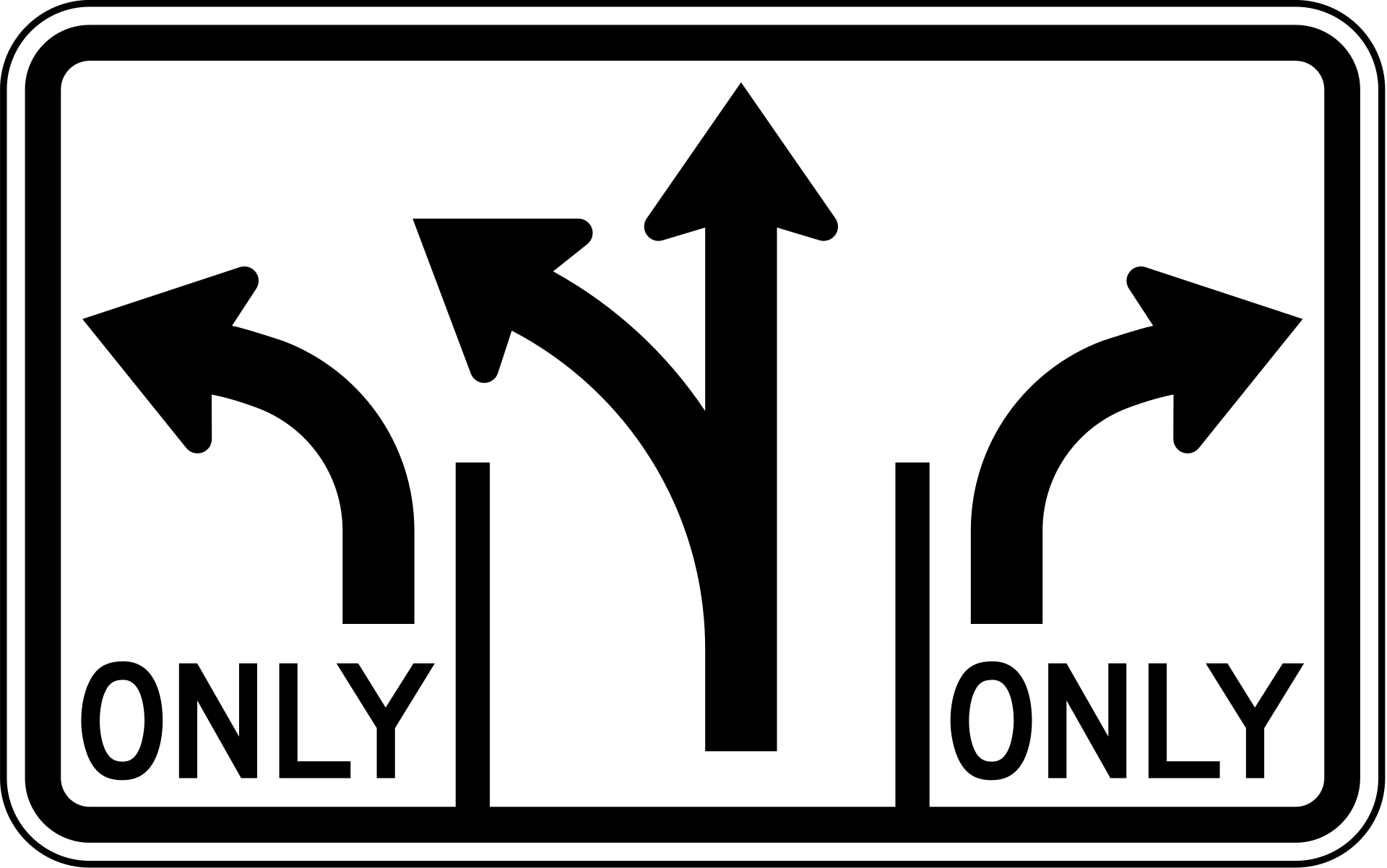 This regulatory sign tells drivers that:
A
traffic in the left lane must turn left at the intersection ahead.
B
all vehicles must turn left immediately.
C
traffic in the right lane must go straight.
Answer Explanation
This traffic sign indicates: traffic in the left lane must turn left at the intersection ahead. Observing and obeying all roadway signs ensures safe traffic flow and legal driving.
This traffic sign indicates: traffic in the left lane must turn left at the intersection ahead. Observing and obeying all roadway signs ensures safe traffic flow and legal driving.
Question 15:
When they see a crossbuck sign, drivers:
A
must slow down and wait for the red lights to flash.
B
must always come to a complete stop.
C
are legally required to yield the right of way to trains.
Answer Explanation
The correct driving rule is: are legally required to yield the right of way to trains. Following standard DMV road rules and practicing defensive driving ensures safety for all road users.
The correct driving rule is: are legally required to yield the right of way to trains. Following standard DMV road rules and practicing defensive driving ensures safety for all road users.
Question 16:
 What does this road sign indicate?
A
Hospital service
B
Area reserved for people with disabilities
C
Interstate highway
Answer Explanation
This traffic sign indicates: Hospital service. Observing and obeying all roadway signs ensures safe traffic flow and legal driving.
This traffic sign indicates: Hospital service. Observing and obeying all roadway signs ensures safe traffic flow and legal driving.
Question 17:
Which shape is a warning sign?
A
Diamond
B
Triangle
C
Pennant
Answer Explanation
This traffic sign indicates: Diamond. Observing and obeying all roadway signs ensures safe traffic flow and legal driving.
This traffic sign indicates: Diamond. Observing and obeying all roadway signs ensures safe traffic flow and legal driving.
Question 18:
If a traffic officer signals you to drive through a red light:
A
you must do it.
B
you must wait for the red light to turn green.
C
you must not obey the officer. Signs and signals take precedence over directions given by traffic officers.
Answer Explanation
According to standard right-of-way regulations: you must do it. Yielding appropriately prevents intersection collisions and maintains safe traffic flow.
According to standard right-of-way regulations: you must do it. Yielding appropriately prevents intersection collisions and maintains safe traffic flow.
Question 19:
In case of skidding, drivers should NOT:
A
take their foot off the gas pedal.
B
pump the brakes gently if they are about to hit something.
C
tap the gas pedal with their foot.
Answer Explanation
The correct driving rule is: tap the gas pedal with their foot. Following standard DMV road rules and practicing defensive driving ensures safety for all road users.
The correct driving rule is: tap the gas pedal with their foot. Following standard DMV road rules and practicing defensive driving ensures safety for all road users.
Question 20:
Parking is not allowed:
A
in an intersection, unless permitted by signs.
B
within 300 feet of a pedestrian safety area.
C
on public roads
Answer Explanation
Under standard parking and curb regulations: in an intersection, unless permitted by signs. Following parking distance clearances keeps roadways unobstructed and emergency lanes accessible.
Under standard parking and curb regulations: in an intersection, unless permitted by signs. Following parking distance clearances keeps roadways unobstructed and emergency lanes accessible.
Question 21:
 This road sign warns drivers that:
A
the road surface ahead changes to a low-type surface or earth road.
B
vehicles must leave the pavement immediately.
C
the dirt on the side of the road is soft.
Answer Explanation
This traffic sign indicates: the road surface ahead changes to a low-type surface or earth road. Observing and obeying all roadway signs ensures safe traffic flow and legal driving.
This traffic sign indicates: the road surface ahead changes to a low-type surface or earth road. Observing and obeying all roadway signs ensures safe traffic flow and legal driving.
Question 22:
If a bus has signaled and is pulling back onto the roadway, you must:
A
yield.
B
honk to let them know you’re there.
C
move to the left lane.
D
speed up to pass.
Answer Explanation
The correct driving rule is: yield. Following standard DMV road rules and practicing defensive driving ensures safety for all road users.
The correct driving rule is: yield. Following standard DMV road rules and practicing defensive driving ensures safety for all road users.
Question 23:
You may park or stop along the shoulder of the freeway:
A
if you need to check your smartphone for directions.
B
only if you have an emergency.
C
if no part of your vehicle is on the road.
D
as long as you turn on your emergency flashers.
Answer Explanation
Under standard parking and curb regulations: only if you have an emergency. Following parking distance clearances keeps roadways unobstructed and emergency lanes accessible.
Under standard parking and curb regulations: only if you have an emergency. Following parking distance clearances keeps roadways unobstructed and emergency lanes accessible.
Question 24:
What can you do to prevent skids on snow and ice?
A
Allow the wheels to keep turning.
B
Brake early and gently.
C
All of the above.
Answer Explanation
Hazardous road and weather conditions require extra caution: Allow the wheels to keep turning; Brake early and gently. Reducing speed and expanding following distance preserves control.
Hazardous road and weather conditions require extra caution: Allow the wheels to keep turning; Brake early and gently. Reducing speed and expanding following distance preserves control.
Question 25:
 The picture shows:
A
a railroad advance warning sign.
B
a speeding fines doubled sign.
C
a reversible road sign.
Answer Explanation
The correct driving rule is: a railroad advance warning sign. Following standard DMV road rules and practicing defensive driving ensures safety for all road users.
The correct driving rule is: a railroad advance warning sign. Following standard DMV road rules and practicing defensive driving ensures safety for all road users.
Question 26:
The first thing affected after drinking alcohol is:
A
balance.
B
judgment.
C
speech.
Answer Explanation
Under state DUI and traffic safety laws: judgment. Alcohol degrades judgment, slows reaction times, and distorts depth perception.
Under state DUI and traffic safety laws: judgment. Alcohol degrades judgment, slows reaction times, and distorts depth perception.
Question 27:
Regulation signs normally are:
A
white triangles.
B
green rectangles.
C
white rectangles.
Answer Explanation
The correct driving rule is: white rectangles. Following standard DMV road rules and practicing defensive driving ensures safety for all road users.
The correct driving rule is: white rectangles. Following standard DMV road rules and practicing defensive driving ensures safety for all road users.
Question 28:
If you get on a wrong expressway exit, you must:
A
get off at the next exit and look for signs that tell you how to return to the expressway.
B
use the the exit ramp to accelerate to expressway speed and blend with traffic.
C
drive in reverse to return to the expressway.
Answer Explanation
Defensive driving guidelines state that: get off at the next exit and look for signs that tell you how to return to the expressway. Anticipating road hazards and communicating maneuvers keeps traffic predictable and safe.
Defensive driving guidelines state that: get off at the next exit and look for signs that tell you how to return to the expressway. Anticipating road hazards and communicating maneuvers keeps traffic predictable and safe.
Question 29:
 The sign in the picture:
A
is a Construction and Maintenance Traffic Control sign.
B
is found at most intersections and indicates that drivers must yield to other vehicles.
C
is displayed on the rear of slow moving vehicles.
Answer Explanation
The correct driving rule is: is displayed on the rear of slow moving vehicles. Following standard DMV road rules and practicing defensive driving ensures safety for all road users.
The correct driving rule is: is displayed on the rear of slow moving vehicles. Following standard DMV road rules and practicing defensive driving ensures safety for all road users.
Question 30:
Which sign has white letters on a red background?
A
Stop
B
School zone
C
Yield
Answer Explanation
The correct driving rule is: stop. Following standard DMV road rules and practicing defensive driving ensures safety for all road users.
The correct driving rule is: stop. Following standard DMV road rules and practicing defensive driving ensures safety for all road users.
Question 31:
In Washington State, a person is considered legally drunk when their Blood Alcohol Content (BAC) level is:
A
at or above .12 percent.
B
at or above 1 percent.
C
at or above .01 percent.
D
at or above .08 percent.
Answer Explanation
Under state DUI and traffic safety laws: at or above .08 percent. Alcohol degrades judgment, slows reaction times, and distorts depth perception.
Under state DUI and traffic safety laws: at or above .08 percent. Alcohol degrades judgment, slows reaction times, and distorts depth perception.
Question 32:
If your brakes stop working, you should first:
A
flash your lights at oncoming traffic.
B
try to build up brake pressure by pumping the brake pedal several times.
C
sound your horn to warn other drivers.
D
shift into neutral.
Answer Explanation
The correct driving rule is: try to build up brake pressure by pumping the brake pedal several times. Following standard DMV road rules and practicing defensive driving ensures safety for all road users.
The correct driving rule is: try to build up brake pressure by pumping the brake pedal several times. Following standard DMV road rules and practicing defensive driving ensures safety for all road users.
Question 33:
If you hear a thumping sound while driving, you should:
A
hook your shoe under the gas pedal and see if you can free it.
B
get off the road and check your tires.
C
try your emergency lights.
Answer Explanation
The correct driving rule is: get off the road and check your tires. Following standard DMV road rules and practicing defensive driving ensures safety for all road users.
The correct driving rule is: get off the road and check your tires. Following standard DMV road rules and practicing defensive driving ensures safety for all road users.
Question 34:
If a person under 21 years old consumes alcohol, but is not driving a motor vehicle, the penalty for a first offense is _______ and a fine.
A
a 3-week jail sentence.
B
a 90-day license suspension
C
5 points on the driving record
D
a 3-month probation
Answer Explanation
Under state DUI and traffic safety laws: a 90-day license suspension. Alcohol degrades judgment, slows reaction times, and distorts depth perception.
Under state DUI and traffic safety laws: a 90-day license suspension. Alcohol degrades judgment, slows reaction times, and distorts depth perception.
Question 35:
The driver of an emergency vehicle that uses lights and a siren can legally:
A
pass red lights.
B
exceed the speed limit
C
All of the above.
Answer Explanation
Sharing the road safely requires mutual awareness and respect: pass red lights; exceed the speed limit. Maintaining safe space cushions protects all roadway users.
Sharing the road safely requires mutual awareness and respect: pass red lights; exceed the speed limit. Maintaining safe space cushions protects all roadway users.
Question 36:
What should you do if a vehicle is approaching head-on in your lane?
A
Pull over to the left and use your emergency lights to stop the other driver.
B
Decrease speed, pull over to the right and sound your horn to warn the other driver.
C
Turn off the ignition if your vehicle has power steering.
Answer Explanation
The correct driving rule is: Decrease speed, pull over to the right and sound your horn to warn the other driver. Following standard DMV road rules and practicing defensive driving ensures safety for all road users.
The correct driving rule is: Decrease speed, pull over to the right and sound your horn to warn the other driver. Following standard DMV road rules and practicing defensive driving ensures safety for all road users.
Question 37:
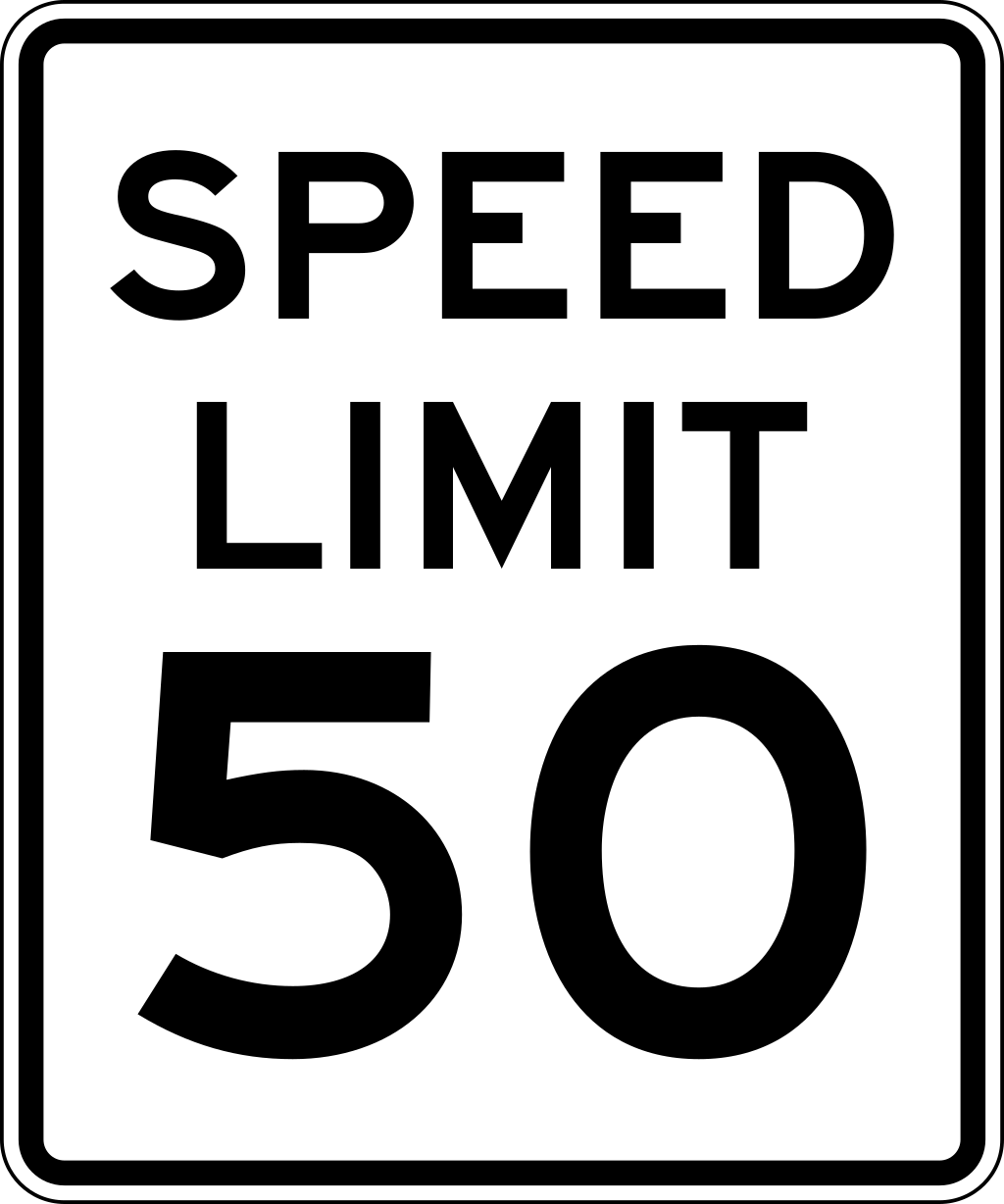 This road sign means:
A
You must travel at the speed indicated
B
The maximum speed limit under ideal conditions
C
None of the above
Answer Explanation
This traffic sign indicates: The maximum speed limit under ideal conditions. Observing and obeying all roadway signs ensures safe traffic flow and legal driving.
This traffic sign indicates: The maximum speed limit under ideal conditions. Observing and obeying all roadway signs ensures safe traffic flow and legal driving.
Question 38:
If a driver follows you too closely, you should:
A
move to another lane if possible.
B
activate your stop lights.
C
brake suddenly.
Answer Explanation
The correct driving rule is: move to another lane if possible. Following standard DMV road rules and practicing defensive driving ensures safety for all road users.
The correct driving rule is: move to another lane if possible. Following standard DMV road rules and practicing defensive driving ensures safety for all road users.
Question 39:
 A 4-way stop sign means:
A
The first vehicle to reach the intersection should move forward first.
B
Traffic from all four directions must stop.
C
There are four stop signs at the intersection.
D
All of the above.
Answer Explanation
This sign alerts drivers to several mandatory requirements: The first vehicle to reach the intersection should move forward first, Traffic from all four directions must stop, There are four stop signs at the intersection. Obeying all posted traffic control instructions is required by law.
This sign alerts drivers to several mandatory requirements: The first vehicle to reach the intersection should move forward first, Traffic from all four directions must stop, There are four stop signs at the intersection. Obeying all posted traffic control instructions is required by law.
Question 40:
To avoid being in a truck driver’s blind spot, you should:
A
never pass the truck and put your headlights on.
B
avoid driving on either side of the truck and don’t tailgate.
C
flash your lights.
D
sound your horn.
Answer Explanation
Large commercial trucks have extensive blind spots on all four sides called the 'No-Zone': avoid driving on either side of the truck and don’t tailgate. If you cannot see the truck driver in their side mirrors, they cannot see you.
Large commercial trucks have extensive blind spots on all four sides called the 'No-Zone': avoid driving on either side of the truck and don’t tailgate. If you cannot see the truck driver in their side mirrors, they cannot see you.