Question 1:
Following another vehicle too closely is known as:
A
speedgating.
B
closetailing.
C
tailgating.
The correct driving rule is: tailgating. Following standard DMV road rules and practicing defensive driving ensures safety for all road users.
Question 2:
You should never depend on your mirrors when you prepare to change lanes. Why?
A
Mirrors leave “blind spots” behind both sides of vehicles.
B
Mirrors need to be adjusted.
C
Mirrors are useless.
The correct driving rule is: Mirrors leave “blind spots” behind both sides of vehicles. Following standard DMV road rules and practicing defensive driving ensures safety for all road users.
Question 3:
At a crosswalk:
A
construction workers must yield to drivers.
B
drivers must yield to pedestrians.
C
pedestrians must yield to drivers.
Drivers must always yield the right-of-way to pedestrians crossing at intersections and crosswalks: drivers must yield to pedestrians. Stop and allow them to clear the lane safely.
Question 4:
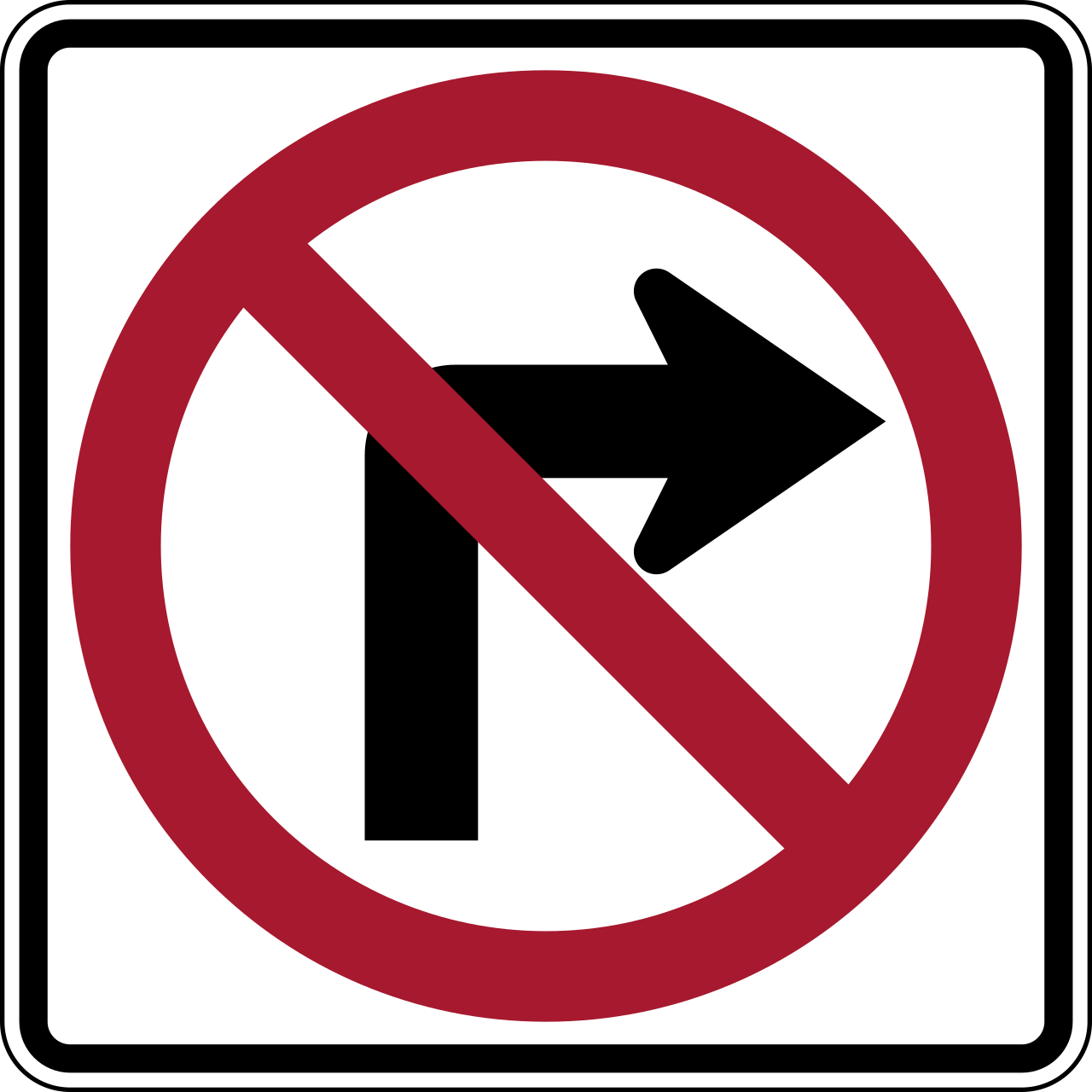 This road sign means:
A
No left turn
B
No right turn
C
No U-turns
This traffic sign indicates: No right turn. Observing and obeying all roadway signs ensures safe traffic flow and legal driving.
Question 5:
Which of the following is true about the Anti-Locking Brake System?
A
It prevents skidding.
B
It allows drivers to steer during an emergency braking situation.
C
All of the above.
All of the listed points are essential driving requirements: It prevents skidding; It allows drivers to steer during an emergency braking situation. Practicing each ensures compliance with DMV safety laws.
Question 6:
When you prepare to make a left turn from a one-way road into a two-way road, you must:
A
enter the two-way road to the left of its center line.
B
approach the turn in the right lane or from the right side of a single lane.
C
approach the turn in the left lane or from the left side of a single lane.
The correct driving rule is: approach the turn in the left lane or from the left side of a single lane. Following standard DMV road rules and practicing defensive driving ensures safety for all road users.
Question 7:
You have stopped for a train at a railroad crossing. After the train passes, you must:
A
look to see if another train is coming, then cross the tracks if it is safe to do so.
B
watch for vehicles that must stop at railroad crossings (school buses, vehicles carrying hazardous materials, etc.).
C
All of the above.
All of the listed points are essential driving requirements: look to see if another train is coming, then cross the tracks if it is safe to do so; watch for vehicles that must stop at railroad crossings (school buses, vehicles carrying hazardous materials, etc.). Practicing each ensures compliance with DMV safety laws.
Question 8:
If one of your tires blows out while driving, you should:
A
apply the brakes firmly and steer toward the right edge of the road.
B
pump the brakes.
C
hold the steering wheel firmly, slow down, and steer smoothly.
The correct driving rule is: hold the steering wheel firmly, slow down, and steer smoothly. Following standard DMV road rules and practicing defensive driving ensures safety for all road users.
Question 9:
A solid yellow line next to a broken yellow line means that vehicles:
A
next to the solid line may pass.
B
in both directions may pass.
C
next to the broken line may pass.
The correct driving rule is: next to the broken line may pass. Following standard DMV road rules and practicing defensive driving ensures safety for all road users.
Question 10:
When you make a left turn from a one-way road into a two-way road, you must:
A
enter the two-way road to the left of its center line.
B
make a U-turn into the two-way road.
C
enter the two-way road to the right of its center line.
The correct driving rule is: enter the two-way road to the right of its center line. Following standard DMV road rules and practicing defensive driving ensures safety for all road users.
Question 11:
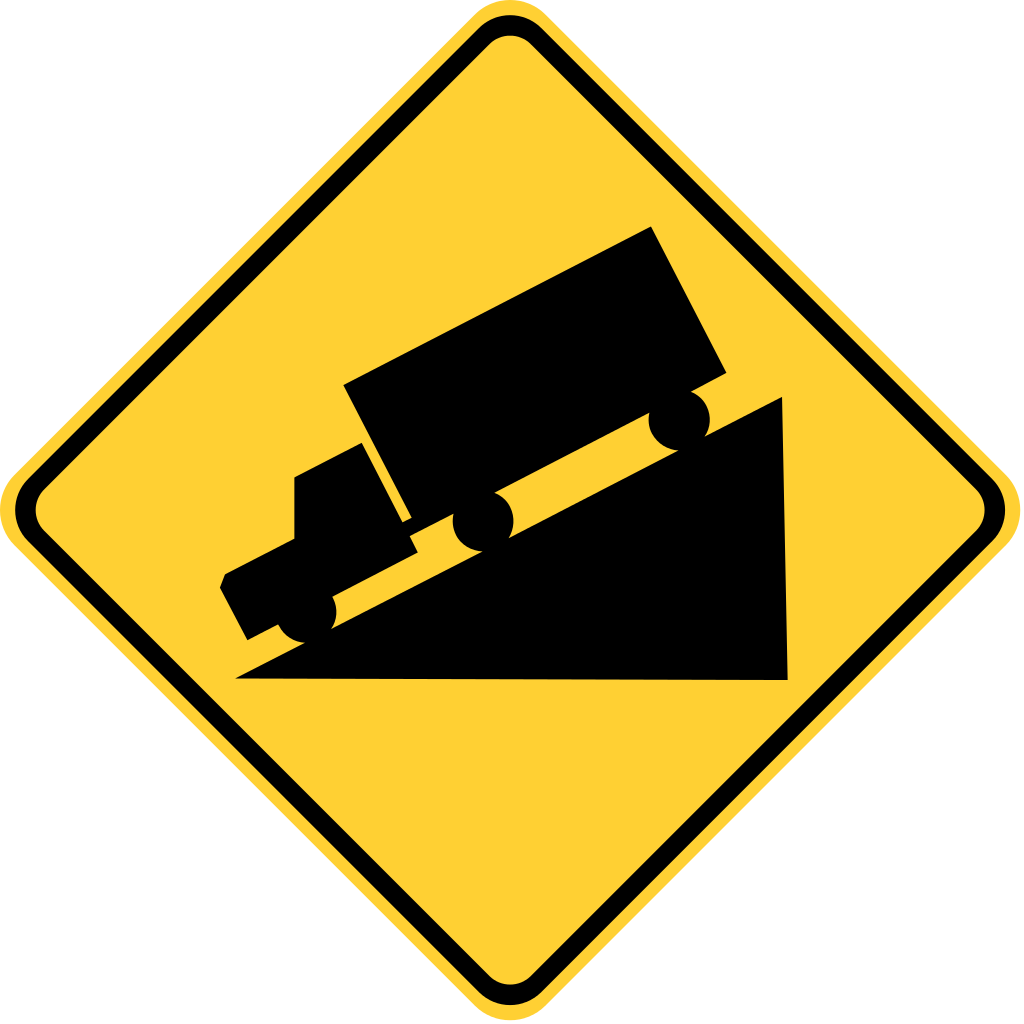 This road sign means:
A
Truck stop ahead
B
No trucks allowed
C
Hill or downgrade up ahead
This traffic sign indicates: Hill or downgrade up ahead. Observing and obeying all roadway signs ensures safe traffic flow and legal driving.
Question 12:
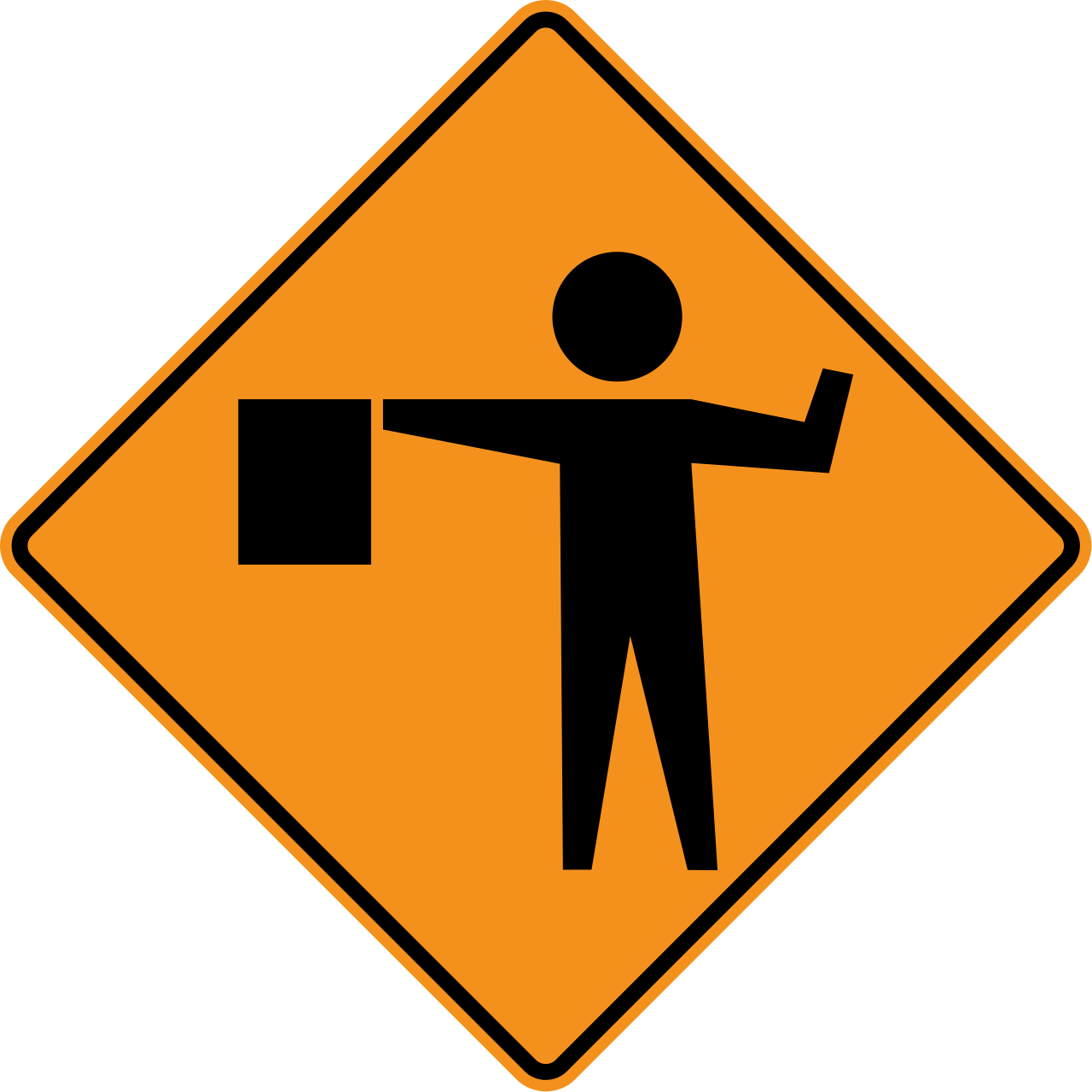 This road sign means:
A
Right lane closed
B
Do not block intersection
C
Flagger ahead
This traffic sign indicates: Flagger ahead. Observing and obeying all roadway signs ensures safe traffic flow and legal driving.
Question 13:
A broken yellow line to the right of a solid yellow center line means:
A
you may pass other vehicles if no oncoming traffic is present.
B
passing is prohibited.
C
you are only allowed to make left turns in this area.
The correct driving rule is: you may pass other vehicles if no oncoming traffic is present. Following standard DMV road rules and practicing defensive driving ensures safety for all road users.
Question 14:
When you back up:
A
always look through the rear window.
B
you should rely only on your rearview mirror.
C
do it as fast as possible.
The correct driving rule is: always look through the rear window. Following standard DMV road rules and practicing defensive driving ensures safety for all road users.
Question 15:
If your car goes into water, you should:
A
wait for water to rush in and let it out in small breaths through your nose.
B
call the fire department immediately.
C
remove yourself before it starts to sink.
The correct driving rule is: remove yourself before it starts to sink. Following standard DMV road rules and practicing defensive driving ensures safety for all road users.
Question 16:
Drivers turning left must yield to:
A
None of the above.
B
oncoming vehicles going straight.
C
oncoming vehicles turning left.
The correct driving rule is: oncoming vehicles going straight. Following standard DMV road rules and practicing defensive driving ensures safety for all road users.
Question 17:
What is the slow moving vehicle symbol?
A
A reflective yellow diamond
B
A reflective white triangle
C
A reflective orange triangle
The correct driving rule is: A reflective orange triangle. Following standard DMV road rules and practicing defensive driving ensures safety for all road users.
Question 18:
A school bus ahead of you in your lane is stopped with red lights flashing. You must:
A
stop until all the children have left the bus.
B
stop until the lights stop flashing.
C
reduce your speed, change lanes and pass.
When a school bus displays flashing red lights and extended stop sign: stop until the lights stop flashing. Traffic in both directions must come to a full stop on undivided roads until children are clear.
Question 19:
If another vehicle passes you on the left, you must:
A
increase your speed slightly and keep to the right.
B
decrease your speed, then pull over to the right and stop.
C
decrease your speed slightly and keep to the right.
The correct driving rule is: decrease your speed slightly and keep to the right. Following standard DMV road rules and practicing defensive driving ensures safety for all road users.
Question 20:
When passing a vehicle, it is safe to return to your lane when:
A
you look over your shoulder and see no vehicle behind you.
B
you can see both headlights of the vehicle you passed in your rearview mirror.
C
the driver you just passed signals you over.
Defensive driving guidelines state that: you can see both headlights of the vehicle you passed in your rearview mirror. Anticipating road hazards and communicating maneuvers keeps traffic predictable and safe.
Question 21:
What is the meaning of red traffic signs?
A
High emphasis warning.
B
Stop, do not enter or wrong way.
C
Regulatory.
The correct driving rule is: Stop, do not enter or wrong way. Following standard DMV road rules and practicing defensive driving ensures safety for all road users.
Question 22:
When a pedestrian carrying a white cane is at the corner ready to cross the street in front of you, before making your right turn, you should:
A
use your horn to help the pedestrian cross the street.
B
turn off the ignition until the person crosses the street.
C
yield the right-of-way and wait until the pedestrian crosses the street.
Drivers must always yield the right-of-way to pedestrians crossing at intersections and crosswalks: yield the right-of-way and wait until the pedestrian crosses the street. Stop and allow them to clear the lane safely.
Question 23:
ABS is the acronym for:
A
Anti-Braking System
B
Average-Beam System
C
Anti-Locking Brake System
The correct driving rule is: Anti-Locking Brake System. Following standard DMV road rules and practicing defensive driving ensures safety for all road users.
Question 24:
To drive defensively you should:
A
always put one car length between you and the car ahead.
B
keep your eyes moving to look for possible hazards.
C
look only at the car in front of you while driving.
The correct driving rule is: keep your eyes moving to look for possible hazards. Following standard DMV road rules and practicing defensive driving ensures safety for all road users.
Question 25:
Don't be afraid to sound a sharp blast on your horn when:
A
when a child is about to run into the street.
B
another vehicle is in danger of hitting you.
C
All of the above.
All of the listed points are essential driving requirements: when a child is about to run into the street; another vehicle is in danger of hitting you. Practicing each ensures compliance with DMV safety laws.
Question 26:
A flashing red light means:
A
The same as a STOP sign.
B
The light will soon change to steady red.
C
Drive with caution.
When an emergency vehicle approaches with flashing lights or sirens, you must safely pull over to the right curb and stop completely until it passes.
Question 27:
 This road sign means:
A
Lane reduction - the left lane ends soon
B
Highway entrance ramp ahead
C
Lane reduction - the right lane ends soon
This traffic sign indicates: Lane reduction - the right lane ends soon. Observing and obeying all roadway signs ensures safe traffic flow and legal driving.
Question 28:
Which statement about taking medications and driving is true?
A
Cold medications can make a person drowsy.
B
Prescribed drugs are safe to take at any time.
C
Over the counter drugs do not affect driving ability.
The correct driving rule is: Cold medications can make a person drowsy. Following standard DMV road rules and practicing defensive driving ensures safety for all road users.
Question 29:
If a traffic officer signals you to drive through a red light:
A
you must do it.
B
you must wait for the red light to turn green.
C
you must not obey the officer. Signs and signals take precedence over directions given by traffic officers.
According to standard right-of-way regulations: you must do it. Yielding appropriately prevents intersection collisions and maintains safe traffic flow.
Question 30:
There are two traffic lanes in your direction. You are driving in the left lane and many vehicles are passing you on the right, and the driver behind you wishes to drive faster. You should:
A
stay in your lane and maintain your current speed.
B
drive onto the left shoulder to let the other driver pass.
C
move over into the right lane when safe to do so.
Defensive driving guidelines state that: move over into the right lane when safe to do so. Anticipating road hazards and communicating maneuvers keeps traffic predictable and safe.
Question 31:
What is the purpose of minimum speed limits?
A
To keep a smooth traffic flow.
B
To halt the traffic flow.
C
To allow emergency vehicles with red flashing lights to safely pass other vehicles.
For safe speed and stopping control: To keep a smooth traffic flow. Adjusting speed to match visibility and road traction prevents loss of steering grip.
Question 32:
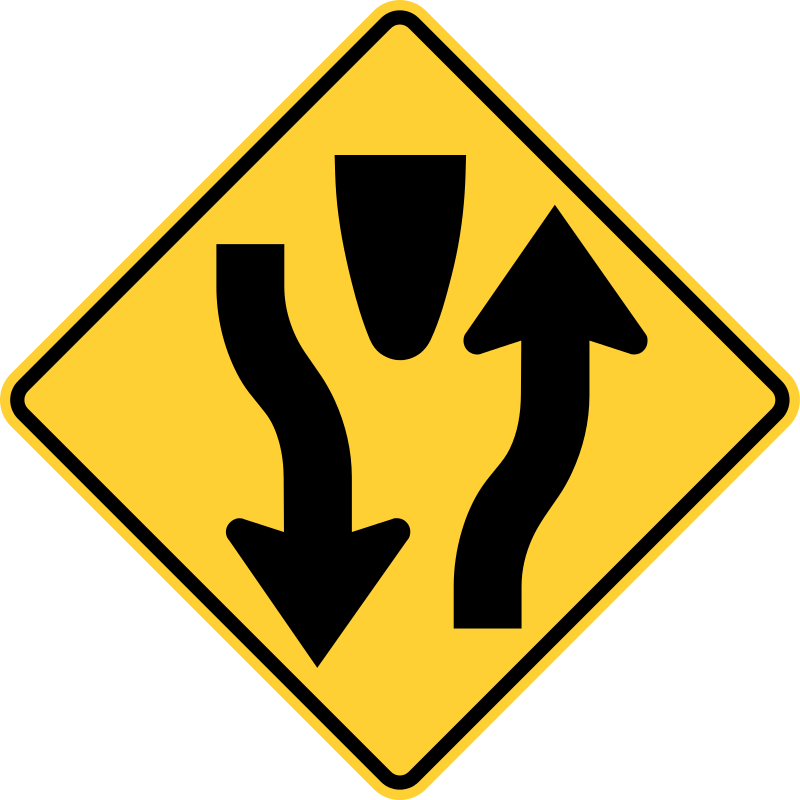 This road sign means:
A
Divided highway ahead
B
Merging traffic
C
Flagger ahead
This traffic sign indicates: Divided highway ahead. Observing and obeying all roadway signs ensures safe traffic flow and legal driving.
Question 33:
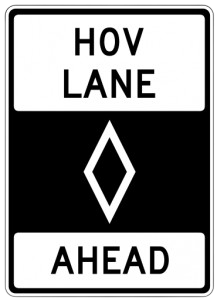 This road sign indicates that:
A
a lane is reserved for certain purposes or certain vehicles.
B
buses and car pools may not travel in the restricted lane.
C
vehicles cannot go straight ahead. Cars must turn either to the right or left.
This traffic sign indicates: a lane is reserved for certain purposes or certain vehicles. Observing and obeying all roadway signs ensures safe traffic flow and legal driving.
Question 34:
 This road sign warns drivers that:
A
they are coming to a point where another traffic lane joins the one they are on.
B
a divided highway is ahead.
C
the one-way street or roadway is about to change to two-way traffic.
This traffic sign indicates: the one-way street or roadway is about to change to two-way traffic. Observing and obeying all roadway signs ensures safe traffic flow and legal driving.
Question 35:
The golden rule of driving is to:
A
treat others the way you want to be treated.
B
put on your emergency flashers when driving at night.
C
drive faster than the vehicle behind you.
The correct driving rule is: treat others the way you want to be treated. Following standard DMV road rules and practicing defensive driving ensures safety for all road users.
Question 36:
BAC is:
A
the acronym for Beer ACcumulation.
B
the number of ounces of alcohol in your blood.
C
the percentage of alcohol in your blood.
Under state DUI and traffic safety laws: the percentage of alcohol in your blood. Alcohol degrades judgment, slows reaction times, and distorts depth perception.
Question 37:
What is the only effective method to reduce your BAC?
A
Eating before or while you drink.
B
Not drinking over a period of time.
C
Drinking coffee.
Under state DUI and traffic safety laws: Not drinking over a period of time. Alcohol degrades judgment, slows reaction times, and distorts depth perception.
Question 38:
A broken yellow line on your side of the roadway only means:
A
Passing is permitted on both sides.
B
Passing is permitted on your side of the roadway.
C
Passing is not permitted on either side.
The correct driving rule is: Passing is permitted on your side of the roadway. Following standard DMV road rules and practicing defensive driving ensures safety for all road users.
Question 39:
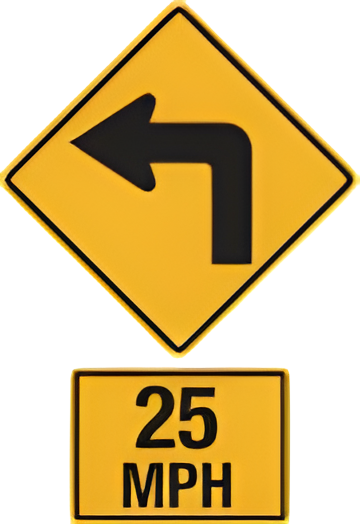 This sign indicates that:
A
the highest safe speed drivers should travel around the curve ahead is 25 MPH.
B
the safe speed around the curve ahead is at least 25 MPH.
C
drivers may not turn right if traveling at 25 MPH or less.
This traffic sign indicates: the highest safe speed drivers should travel around the curve ahead is 25 MPH. Observing and obeying all roadway signs ensures safe traffic flow and legal driving.
Question 40:
When driving in foggy weather, drivers should:
A
put their lights on low beam.
B
put their lights on high beam.
C
put their emergency flashers on.
The correct driving rule is: put their lights on low beam. Following standard DMV road rules and practicing defensive driving ensures safety for all road users.