Question 1:
You reach an intersection that is not controlled at the same time as a driver on your right, and both of you prepare to go straight. Who has the right-of-way?
A
You.
B
No one.
C
The other driver.
Answer Explanation
According to standard right-of-way regulations: The other driver. Yielding appropriately prevents intersection collisions and maintains safe traffic flow.
According to standard right-of-way regulations: The other driver. Yielding appropriately prevents intersection collisions and maintains safe traffic flow.
Question 2:
If cars approaching from opposite directions reach an intersection at the same time:
A
a car that moves straight must yield to cars that turn left.
B
a car that turns left must yield to cars that move straight or turn right.
C
a car that turns right must yield to cars that move straight or turn left.
Answer Explanation
According to standard right-of-way regulations: a car that turns left must yield to cars that move straight or turn right. Yielding appropriately prevents intersection collisions and maintains safe traffic flow.
According to standard right-of-way regulations: a car that turns left must yield to cars that move straight or turn right. Yielding appropriately prevents intersection collisions and maintains safe traffic flow.
Question 3:
Blind spots are:
A
Dangerous intersection where the maximum speed limit is 15 MPH or less.
B
At night, the darkest areas of a road, where emergency flashers should be used.
C
Areas to the side or rear of a vehicle that the driver cannot see with use of mirrors.
Answer Explanation
The correct driving rule is: Areas to the side or rear of a vehicle that the driver cannot see with use of mirrors. Following standard DMV road rules and practicing defensive driving ensures safety for all road users.
The correct driving rule is: Areas to the side or rear of a vehicle that the driver cannot see with use of mirrors. Following standard DMV road rules and practicing defensive driving ensures safety for all road users.
Question 4:
At a stop sign there is no stop line, you must stop:
A
before you enter the intersection.
B
before you enter the crosswalk.
C
after you enter the crosswalk.
Answer Explanation
The correct driving rule is: before you enter the crosswalk. Following standard DMV road rules and practicing defensive driving ensures safety for all road users.
The correct driving rule is: before you enter the crosswalk. Following standard DMV road rules and practicing defensive driving ensures safety for all road users.
Question 5:
 A pedestrian in the crosswalk when the 'DON’T WALK' signal begins flashing must:
A
stop immediately.
B
go back and wait the “WALK” light
C
finish crossing the street.
Answer Explanation
Drivers must always yield the right-of-way to pedestrians crossing at intersections and crosswalks: finish crossing the street. Stop and allow them to clear the lane safely.
Drivers must always yield the right-of-way to pedestrians crossing at intersections and crosswalks: finish crossing the street. Stop and allow them to clear the lane safely.
Question 6:
To turn right at an intersection with a steady red light, you should:
A
signal and wait until the light turns green.
B
slow down and look for traffic before turning.
C
stop, signal, then turn if it is safe to do so and there’s no sign prohibiting the turn on red.
D
wait until you have a green turn arrow.
Answer Explanation
According to standard right-of-way regulations: stop, signal, then turn if it is safe to do so and there’s no sign prohibiting the turn on red. Yielding appropriately prevents intersection collisions and maintains safe traffic flow.
According to standard right-of-way regulations: stop, signal, then turn if it is safe to do so and there’s no sign prohibiting the turn on red. Yielding appropriately prevents intersection collisions and maintains safe traffic flow.
Question 7:
To drive defensively, you must:
A
anticipate errors by other drivers.
B
assume that a driver who approaches a STOP sign on a side road is actually going to stop.
C
not check behind you through your mirrors.
Answer Explanation
The correct driving rule is: anticipate errors by other drivers. Following standard DMV road rules and practicing defensive driving ensures safety for all road users.
The correct driving rule is: anticipate errors by other drivers. Following standard DMV road rules and practicing defensive driving ensures safety for all road users.
Question 8:
Yellow traffic signs:
A
guide drivers.
B
when combined with an octagonal shape, tell drivers they must come to a complete stop at the marked stop line.
C
warn drivers.
Answer Explanation
The correct driving rule is: warn drivers. Following standard DMV road rules and practicing defensive driving ensures safety for all road users.
The correct driving rule is: warn drivers. Following standard DMV road rules and practicing defensive driving ensures safety for all road users.
Question 9:
 What does a flashing left yellow arrow mean?
A
Vehicles turning left must stop if they can. The light will soon be red.
B
Only right turns are allowed.
C
Left turns are allowed. Yield to oncoming traffic and pedestrians.
D
None of the above.
Answer Explanation
The correct driving rule is: Left turns are allowed. Yield to oncoming traffic and pedestrians. Following standard DMV road rules and practicing defensive driving ensures safety for all road users.
The correct driving rule is: Left turns are allowed. Yield to oncoming traffic and pedestrians. Following standard DMV road rules and practicing defensive driving ensures safety for all road users.
Question 10:
Green and white signs:
A
give information about directions and distances.
B
are mainly used at intersections and driveways.
C
warn drivers of unexpected road conditions.
Answer Explanation
The correct driving rule is: give information about directions and distances. Following standard DMV road rules and practicing defensive driving ensures safety for all road users.
The correct driving rule is: give information about directions and distances. Following standard DMV road rules and practicing defensive driving ensures safety for all road users.
Question 11:
Which shape is a railroad advance warning sign?
A
Crossbuck
B
Round
C
Pentagon
Answer Explanation
Circular signs with an 'X' and 'RR' designate a Railroad Advance Warning: Round. Drivers must slow down, look both ways, listen for trains, and be prepared to stop.
Circular signs with an 'X' and 'RR' designate a Railroad Advance Warning: Round. Drivers must slow down, look both ways, listen for trains, and be prepared to stop.
Question 12:
__________ are blue with white letters and symbols.
A
Warning signs
B
Service signs
C
Destination signs (guide signs)
Answer Explanation
The correct driving rule is: Service signs. Following standard DMV road rules and practicing defensive driving ensures safety for all road users.
The correct driving rule is: Service signs. Following standard DMV road rules and practicing defensive driving ensures safety for all road users.
Question 13:
Which of the following is a defensive driving skill/technique?
A
Maintain the correct speed.
B
Do not drive if you are very weary.
C
All of the above.
Answer Explanation
All of the listed points are essential driving requirements: Maintain the correct speed; Do not drive if you are very weary. Practicing each ensures compliance with DMV safety laws.
All of the listed points are essential driving requirements: Maintain the correct speed; Do not drive if you are very weary. Practicing each ensures compliance with DMV safety laws.
Question 14:
Regulatory signs are:
A
Suggestions
B
Warnings
C
Law
Answer Explanation
The correct driving rule is: Law. Following standard DMV road rules and practicing defensive driving ensures safety for all road users.
The correct driving rule is: Law. Following standard DMV road rules and practicing defensive driving ensures safety for all road users.
Question 15:
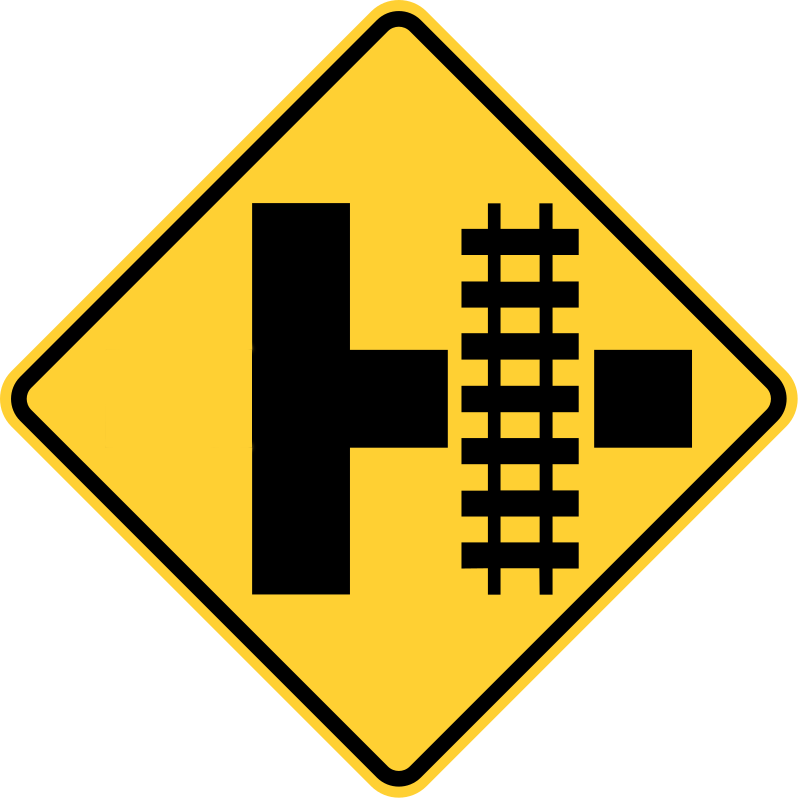 What does this sign indicate?
A
Parallel railroad crossing (side road)
B
Low ground clearance railroad crossing
C
Parallel railroad crossing (crossroad)
Answer Explanation
Circular signs with an 'X' and 'RR' designate a Railroad Advance Warning: Parallel railroad crossing (side road). Drivers must slow down, look both ways, listen for trains, and be prepared to stop.
Circular signs with an 'X' and 'RR' designate a Railroad Advance Warning: Parallel railroad crossing (side road). Drivers must slow down, look both ways, listen for trains, and be prepared to stop.
Question 16:
What is the first thing you should do if your wheels move off the pavement?
A
Pull the steering wheel back.
B
Pull over to the right and sound your horn to warn the other drivers.
C
Ease your foot off the gas pedal and brake gently.
Answer Explanation
The correct driving rule is: Ease your foot off the gas pedal and brake gently. Following standard DMV road rules and practicing defensive driving ensures safety for all road users.
The correct driving rule is: Ease your foot off the gas pedal and brake gently. Following standard DMV road rules and practicing defensive driving ensures safety for all road users.
Question 17:
What does it mean If an oncoming driver flashes headlights at you during a period of low visibility?
A
Your headlights are too bright. You should turn them off.
B
Your vehicle was difficult to see. You should turn on your headlights.
C
Your headlights are too bright. You should use parking lights instead.
Answer Explanation
The correct driving rule is: Your vehicle was difficult to see. You should turn on your headlights. Following standard DMV road rules and practicing defensive driving ensures safety for all road users.
The correct driving rule is: Your vehicle was difficult to see. You should turn on your headlights. Following standard DMV road rules and practicing defensive driving ensures safety for all road users.
Question 18:
 The yield sign means:
A
Drive with caution in wet weather.
B
You must come to a complete stop.
C
Slow down and give vehicles crossing your path the right-of-way.
Answer Explanation
A triangular Yield sign requires drivers to slow down and give right-of-way to other traffic: slow down and give vehicles crossing your path the right-of-way. Proceed only when there is a safe opening.
A triangular Yield sign requires drivers to slow down and give right-of-way to other traffic: slow down and give vehicles crossing your path the right-of-way. Proceed only when there is a safe opening.
Question 19:
Drivers entering an intersection to turn left:
A
must wait for the green arrow before turning left.
B
can wait in the intersection until they can get through it.
C
can wait in the intersection until they can turn left.
D
must not enter the intersection unless they can get through it without having to stop.
Answer Explanation
According to standard right-of-way regulations: must not enter the intersection unless they can get through it without having to stop. Yielding appropriately prevents intersection collisions and maintains safe traffic flow.
According to standard right-of-way regulations: must not enter the intersection unless they can get through it without having to stop. Yielding appropriately prevents intersection collisions and maintains safe traffic flow.
Question 20:
At a stop sign there is no stop line or crosswalk. You must stop:
A
before you enter the intersection.
B
at the next crosswalk.
C
after you enter the intersection, if you have a clear view of traffic on the intersecting roadway.
Answer Explanation
Drivers must always yield the right-of-way to pedestrians crossing at intersections and crosswalks: before you enter the intersection. Stop and allow them to clear the lane safely.
Drivers must always yield the right-of-way to pedestrians crossing at intersections and crosswalks: before you enter the intersection. Stop and allow them to clear the lane safely.
Question 21:
Alcohol:
A
makes drivers more prone to take chances.
B
increases reaction time.
C
All of the above.
Answer Explanation
Alcohol and impairing substances degrade all critical driving functions: makes drivers more prone to take chances; increases reaction time. Driving while impaired carries severe criminal and safety penalties.
Alcohol and impairing substances degrade all critical driving functions: makes drivers more prone to take chances; increases reaction time. Driving while impaired carries severe criminal and safety penalties.
Question 22:
 This road sign warns drivers that:
A
left turns are not allowed at the intersection.
B
the road will make a sharp turn to the right.
C
another road enters the highway from the direction shown.
Answer Explanation
This traffic sign indicates: another road enters the highway from the direction shown. Observing and obeying all roadway signs ensures safe traffic flow and legal driving.
This traffic sign indicates: another road enters the highway from the direction shown. Observing and obeying all roadway signs ensures safe traffic flow and legal driving.
Question 23:
 This sign means:
A
You can only park between 8:30 AM and 5:30 PM.
B
Parking is not allowed at 8:30 AM and at 5:30 PM
C
No parking between 8:30 AM and 5:30 PM.
Answer Explanation
This traffic sign indicates: No parking between 8:30 AM and 5:30 PM. Observing and obeying all roadway signs ensures safe traffic flow and legal driving.
This traffic sign indicates: No parking between 8:30 AM and 5:30 PM. Observing and obeying all roadway signs ensures safe traffic flow and legal driving.
Question 24:
A thumping sound can be a warning:
A
that a tire blowout is about to occur.
B
of a steering failure.
C
of a brake failure.
Answer Explanation
The correct driving rule is: that a tire blowout is about to occur. Following standard DMV road rules and practicing defensive driving ensures safety for all road users.
The correct driving rule is: that a tire blowout is about to occur. Following standard DMV road rules and practicing defensive driving ensures safety for all road users.
Question 25:
One broken line indicates:
A
You can pass other vehicles and change lanes, if it is safe.
B
You can not pass other vehicles or go across the line.
C
You can change lanes, but only when traffic conditions or obstructions in the road make it necessary.
Answer Explanation
The correct driving rule is: you can pass other vehicles and change lanes, if it is safe. Following standard DMV road rules and practicing defensive driving ensures safety for all road users.
The correct driving rule is: you can pass other vehicles and change lanes, if it is safe. Following standard DMV road rules and practicing defensive driving ensures safety for all road users.
Question 26:
 This road sign means:
A
School zone ahead
B
Pedestrians must not cross here
C
Pedestrian crossing ahead
Answer Explanation
This traffic sign indicates: Pedestrian crossing ahead. Observing and obeying all roadway signs ensures safe traffic flow and legal driving.
This traffic sign indicates: Pedestrian crossing ahead. Observing and obeying all roadway signs ensures safe traffic flow and legal driving.
Question 27:
You are driving and you are feeling drowsy. You should:
A
avoid drinking coffee.
B
turn on the radio to keep you awake.
C
find a safe place to stop for a break.
Answer Explanation
Under state DUI and traffic safety laws: find a safe place to stop for a break. Alcohol degrades judgment, slows reaction times, and distorts depth perception.
Under state DUI and traffic safety laws: find a safe place to stop for a break. Alcohol degrades judgment, slows reaction times, and distorts depth perception.
Question 28:
Your BAC depends on:
A
how much alcohol you drink.
B
how much time passes between drinks.
C
All of the above.
Answer Explanation
Alcohol and impairing substances degrade all critical driving functions: how much alcohol you drink; how much time passes between drinks. Driving while impaired carries severe criminal and safety penalties.
Alcohol and impairing substances degrade all critical driving functions: how much alcohol you drink; how much time passes between drinks. Driving while impaired carries severe criminal and safety penalties.
Question 29:
Which shape is a stop sign?
A
Diamond
B
Octagon
C
Upside-down triangle
Answer Explanation
The correct driving rule is: Octagon. Following standard DMV road rules and practicing defensive driving ensures safety for all road users.
The correct driving rule is: Octagon. Following standard DMV road rules and practicing defensive driving ensures safety for all road users.
Question 30:
Mature drivers should NOT:
A
listen to loud music while driving.
B
drive at all.
C
get power steering when turning the steering wheel gets harder due to age.
D
watch the entire road, from their front bumper to 12 seconds ahead of them.
Answer Explanation
The correct driving rule is: listen to loud music while driving. Following standard DMV road rules and practicing defensive driving ensures safety for all road users.
The correct driving rule is: listen to loud music while driving. Following standard DMV road rules and practicing defensive driving ensures safety for all road users.
Question 31:
When you prepare to make a left turn from a one-way road into a two-way road, you must:
A
enter the two-way road to the left of its center line.
B
approach the turn in the right lane or from the right side of a single lane.
C
approach the turn in the left lane or from the left side of a single lane.
Answer Explanation
The correct driving rule is: approach the turn in the left lane or from the left side of a single lane. Following standard DMV road rules and practicing defensive driving ensures safety for all road users.
The correct driving rule is: approach the turn in the left lane or from the left side of a single lane. Following standard DMV road rules and practicing defensive driving ensures safety for all road users.
Question 32:
 When drivers come to this sign, they must:
A
be ready to stop at the stop sign.
B
warn other drivers that a stop sign is ahead.
C
brake sharply and come to a complete stop.
Answer Explanation
This traffic sign indicates: be ready to stop at the stop sign. Observing and obeying all roadway signs ensures safe traffic flow and legal driving.
This traffic sign indicates: be ready to stop at the stop sign. Observing and obeying all roadway signs ensures safe traffic flow and legal driving.
Question 33:
When driving, it is important to keep a space cushion _______ of your vehicle.
A
only on the left and right side
B
only in back
C
on all sides
D
only in front
Answer Explanation
The correct driving rule is: on all sides. Following standard DMV road rules and practicing defensive driving ensures safety for all road users.
The correct driving rule is: on all sides. Following standard DMV road rules and practicing defensive driving ensures safety for all road users.
Question 34:
What happens if two vehicles reach at the same time an intersection with four-way stop signs?
A
The driver on the right yields to the driver on the left.
B
The driver on the left yields to the driver on the right.
C
The first vehicle to reach the intersection must yield.
Answer Explanation
At an uncontrolled intersection or 4-way stop where vehicles arrive at the same time: The driver on the left yields to the driver on the right. The driver on the left must always yield to the driver on the right.
At an uncontrolled intersection or 4-way stop where vehicles arrive at the same time: The driver on the left yields to the driver on the right. The driver on the left must always yield to the driver on the right.
Question 35:
The effect that lack of sleep has on your safe driving ability is the same as:
A
the effect that amphetamines have.
B
the effect that alcohol has.
C
the effect that aggressive driving has.
D
the effect that lack of coffee has.
Answer Explanation
The correct driving rule is: the effect that alcohol has. Following standard DMV road rules and practicing defensive driving ensures safety for all road users.
The correct driving rule is: the effect that alcohol has. Following standard DMV road rules and practicing defensive driving ensures safety for all road users.
Question 36:
 When they see this sign, drivers should:
A
be ready to brake sharply and stop.
B
be ready to shift to lower gear.
C
yield to trucks coming from the hill on the right.
Answer Explanation
This traffic sign indicates: be ready to shift to lower gear. Observing and obeying all roadway signs ensures safe traffic flow and legal driving.
This traffic sign indicates: be ready to shift to lower gear. Observing and obeying all roadway signs ensures safe traffic flow and legal driving.
Question 37:
 This sign means:
A
Reversible lane ahead.
B
The divided highway ends ahead.
C
Drivers are coming to a point where another traffic lane joins the one they are on.
Answer Explanation
This traffic sign indicates: The divided highway ends ahead. Observing and obeying all roadway signs ensures safe traffic flow and legal driving.
This traffic sign indicates: The divided highway ends ahead. Observing and obeying all roadway signs ensures safe traffic flow and legal driving.
Question 38:
You must use your low beams when you’re within ______ of the vehicle you’re following.
A
50 feet
B
300 feet
C
250 feet
D
500 feet
Answer Explanation
The correct driving rule is: 300 feet. Following standard DMV road rules and practicing defensive driving ensures safety for all road users.
The correct driving rule is: 300 feet. Following standard DMV road rules and practicing defensive driving ensures safety for all road users.
Question 39:
 This sign means:
A
You must yield the right-of-way ahead
B
Traffic signals ahead
C
You must stop ahead
D
Speeding is not allowed
Answer Explanation
This traffic sign indicates: traffic signals ahead. Observing and obeying all roadway signs ensures safe traffic flow and legal driving.
This traffic sign indicates: traffic signals ahead. Observing and obeying all roadway signs ensures safe traffic flow and legal driving.
Question 40:
Pentagonal signs are used to indicate:
A
possible hazards on roadways.
B
no passing zones.
C
school crossings.
Answer Explanation
The correct driving rule is: school crossings. Following standard DMV road rules and practicing defensive driving ensures safety for all road users.
The correct driving rule is: school crossings. Following standard DMV road rules and practicing defensive driving ensures safety for all road users.