Question 1:
How can you prevent fatigue on a long trip?
A
Plan to drive long trips with a companion.
B
Get enough sleep.
C
All of the above.
No explanation available.
Question 2:
In heavy rain, tires can ride on a thin film of water, without touching the road. This is called:
A
waterplaning.
B
risk-planning
C
hydroplaning.
D
rainplaning.
No explanation available.
Question 3:
If you’re going to turn left onto a one-way street, complete the turn into:
A
the lane closest to the one you came from.
B
either lane.
C
the right lane.
D
neither lane.
No explanation available.
Question 4:
If you drive a motor vehicle registered in Washington State, you must:
A
carry insurance only if you ride a motorcycle or a vehicle requiring a CDL license.
B
have liability insurance.
C
carry insurance only if you’re under the age of 18.
D
carry insurance only if your vehicle is newer than 5 years.
No explanation available.
Question 5:
Before crossing any railroad tracks, you must:
A
look and listen for trains.
B
make sure there is room for your vehicle on the other side.
C
All of the above.
No explanation available.
Question 6:
If a bicyclist on the road ahead has their left arm extended downward to their left, you should assume the bicyclist is signaling that he/she is:
A
tired.
B
about to turn right.
C
turning left.
D
slowing down or stopping.
No explanation available.
Question 7:
When passing another vehicle on a road with 2 lanes traveling in opposite directions:
A
do not return to the right side of the road until when you can see both headlights of the vehicle you just passed in your rearview mirror.
B
drive in either lane.
C
return to the right side of the road immediately.
D
when you return to the driving lane, try to leave as little room as possible between you and the vehicle you have passed.
No explanation available.
Question 8:
Where must you position your vehicle when you prepare to make a left turn from a two-way roadway into a one-way roadway?
A
As far to the right as possible.
B
On the right curb.
C
As close as possible to the center line.
No explanation available.
Question 9:
Are drivers allowed to exceed the speed limit to pass other vehicles?
A
Yes, but only by 10 MPH or less.
B
No.
C
Yes, but only if they drive with caution.
No explanation available.
Question 10:
Does a vehicle prepared to enter a traffic circle or rotary have right-of-way over vehicles in the circle?
A
Yes, but only if they are entering the rotary from the right lane.
B
No. Vehicles already in the circle have the right-of-way.
C
Only if the light is green.
D
Yes.
No explanation available.
Question 11:
Which of the following drugs could affect your ability to drive?
A
A cold remedy.
B
Marijuana.
C
All of the above.
No explanation available.
Question 12:
When the traffic light is green, to make a left turn you should:
A
wait for the red light and make a turn on red.
B
yield to oncoming traffic and turn when safe to do so.
C
signal other drivers to stop so you can turn.
D
wait for another driver to signal that it's your turn.
No explanation available.
Question 13:
You hear a siren close by but can not see where the emergency vehicle is. What do you do?
A
Keep driving until you are sure the emergency vehicle is headed toward you.
B
Stop immediately and activate your emergency flashers.
C
Pull over to the right side of the road and stop until you are sure the emergency vehicle is not headed toward you.
No explanation available.
Question 14:
To reduce the risk of being involved in a crash, drivers should:
A
ignore other drivers on the road.
B
communicate with other drivers on the road.
C
drive on side streets and back roads whenever possible.
D
avoid driving during rush hour.
No explanation available.
Question 15:
 This sign means:
A
U-turns are not allowed.
B
Parking is not allowed.
C
No parking on pavement.
No explanation available.
Question 16:
 This sign warns drivers that:
A
they must turn either to the right or left.
B
there is a double curve ahead.
C
there is a winding road ahead.
No explanation available.
Question 17:
If you see a “lane closed ahead” sign you should:
A
make a U-turn. You are on the wrong side of the road.
B
merge into the correct lane when it is safe.
C
speed to the end of the closed lane and try to get into the other lane.
No explanation available.
Question 18:
When drivers see the ‘Wrong Way’ sign:
A
they are going the wrong way on an expressway exit ramp.
B
they must drive past this sign and reach the next intersection.
C
they must not leave the pavement except in an emergency.
No explanation available.
Question 19:
A traffic sign with a red circle around and a slash over a symbol means:
A
the maneuver shown by the symbol is not allowed.
B
Do not drive faster than the posted speed limit.
C
the maneuver shown on the sign should be executed with extreme caution.
No explanation available.
Question 20:
Drivers often fail to see a motorcycle headed toward them. Why?
A
It is difficult to judge a motorcycle's speed.
B
Motorcycles are hard to see.
C
All of the above.
No explanation available.
Question 21:
Parking is not allowed:
A
on the road side of a parked vehicle.
B
in a tunnel.
C
All of the above.
No explanation available.
Question 22:
If an intersection has crosswalk lines but no STOP line, where must you stop for a red light?
A
After the crosswalk.
B
Before the stop line.
C
Before the crosswalk.
No explanation available.
Question 23:
 This sign means:
A
The road will curve to the right.
B
Left turns are not allowed at the intersection.
C
Do not turn right.
No explanation available.
Question 24:
If your car goes into water, you should:
A
wait for water to rush in and let it out in small breaths through your nose.
B
call the fire department immediately.
C
remove yourself before it starts to sink.
No explanation available.
Question 25:
If your car starts to skid, turn your steering wheel:
A
in the direction you want to go.
B
in the opposite direction of the skid.
C
to keep the front wheels straight.
D
in any direction. It doesnt matter.
No explanation available.
Question 26:
On a roadway with 3 or more lanes, you must stop for a school bus with flashing red lights:
A
if you’re traveling in the opposite direction as the bus.
B
Always.
C
only if you're in front of a school and children are crossing the road.
D
only if you’re traveling in the same direction as the bus.
No explanation available.
Question 27:
When you make a left turn from a one-way road into a two-way road, you must:
A
enter the two-way road to the left of its center line.
B
make a U-turn into the two-way road.
C
enter the two-way road to the right of its center line.
No explanation available.
Question 28:
When driving in heavy rain, drivers should use:
A
parking lights.
B
low beam headlights.
C
high beam headlights.
No explanation available.
Question 29:
When you approach a railroad crossing without flashing warning signals or crossing gates, you should:
A
always stop.
B
cross the tracks as slowly as possible.
C
yield to all trains at the crossing.
D
speed up to beat the train.
No explanation available.
Question 30:
 This sign indicates:
A
the maximum width of a vehicle allowed on the highway.
B
the maximum legal height allowed in this State.
C
the overpass ahead has a low clearance.
D
a steep grade
No explanation available.
Question 31:
 When you see this sign you should:
A
increase your speed and try to pass other vehicles.
B
slow your speed and be prepared to stop.
C
slow your speed and do not pass other vehicles.
No explanation available.
Question 32:
What is the main reason night driving is more difficult than daytime driving?
A
The use of headlight is required by law.
B
Reduced visibility.
C
Driving within the range.
No explanation available.
Question 33:
This sign means:
A
narrow road ahead.
B
no turns are allowed on this road.
C
series of curves ahead.
D
the road may be slippery when wet.
No explanation available.
Question 34:
 The driver in the picture is about to:
A
slow down or stop.
B
turn right.
C
pass another vehicle.
D
turn left.
No explanation available.
Question 35:
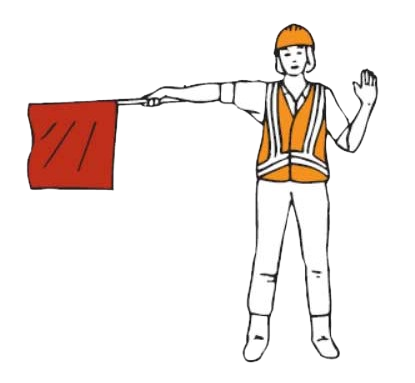 This signal means:
A
Stop
B
Move to the left
C
Slow down
D
Proceed
No explanation available.
Question 36:
What should you do if one of your tires blows out?
A
Hold the steering wheel tight and brake immediately to avoid the risk of skidding.
B
Leave the road immediately.
C
Hold the steering wheel tight and slowly take your foot off the gas pedal.
No explanation available.
Question 37:
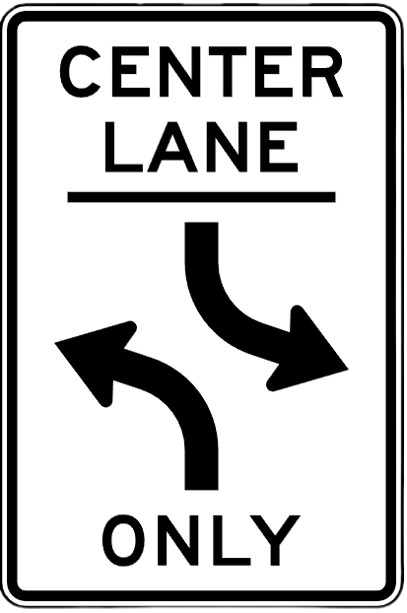 This road sign means:
A
Vehicles may only travel in the center lane.
B
The center lane is shared for left turns in both directions of travel.
C
The center lane in both directions of travel will soon turn left.
No explanation available.
Question 38:
 This sign means:
A
You may make a U-turn.
B
Hairpin corner ahead.
C
You must make a U-turn.
No explanation available.
Question 39:
 This sign warns ____________ ahead.
A
of two-way traffic
B
of a reduction of lanes
C
that a divided highway ends
No explanation available.
Question 40:
If you must drive during ice or snow storms, you should:
A
All the other answers are correct.
B
clear the ice and snow from your vehicle.
C
make sure the windshield washer reservoir is filled with a cleaning solution that resists freezing.
D
drive slowly.
No explanation available.