Question 1:
If you miss your exit on a freeway, you should:
A
go to the next exit, get back on the freeway in the opposite direction and return to the exit you want.
B
signal other drivers to stop so you can turn.
C
make a quick U-turn from your lane of travel.
D
turn around or back up.
Answer Explanation
Defensive driving guidelines state that: go to the next exit, get back on the freeway in the opposite direction and return to the exit you want. Anticipating road hazards and communicating maneuvers keeps traffic predictable and safe.
Defensive driving guidelines state that: go to the next exit, get back on the freeway in the opposite direction and return to the exit you want. Anticipating road hazards and communicating maneuvers keeps traffic predictable and safe.
Question 2:
If you remain in the back blind spot of a large vehicle:
A
you increase the chance of a crash.
B
the large vehicle will take much longer to stop.
C
you can reduce fuel consumption.
Answer Explanation
Large commercial trucks have extensive blind spots on all four sides called the 'No-Zone': you increase the chance of a crash. If you cannot see the truck driver in their side mirrors, they cannot see you.
Large commercial trucks have extensive blind spots on all four sides called the 'No-Zone': you increase the chance of a crash. If you cannot see the truck driver in their side mirrors, they cannot see you.
Question 3:
What should you do if your brakes fail?
A
Hook your shoe under the pedal and see if you can free it.
B
Turn on your cruise control.
C
Try pumping the brake pedal to increase pressure.
Answer Explanation
The correct driving rule is: Try pumping the brake pedal to increase pressure. Following standard DMV road rules and practicing defensive driving ensures safety for all road users.
The correct driving rule is: Try pumping the brake pedal to increase pressure. Following standard DMV road rules and practicing defensive driving ensures safety for all road users.
Question 4:
On what three conditions does your blood alcohol content (BAC) depend?
A
Your weight. How much alcohol you drink. How much time passes between drinks.
B
Your weight. The type of beverage you drink. How fit you are.
C
Your height. How much alcohol you drink. The type of beverage you drink.
Answer Explanation
Under state DUI and traffic safety laws: Your weight. How much alcohol you drink. How much time passes between drinks. Alcohol degrades judgment, slows reaction times, and distorts depth perception.
Under state DUI and traffic safety laws: Your weight. How much alcohol you drink. How much time passes between drinks. Alcohol degrades judgment, slows reaction times, and distorts depth perception.
Question 5:
Which of the following is true about the Anti-Locking Brake System?
A
It prevents skidding.
B
It allows drivers to steer during an emergency braking situation.
C
All of the above.
Answer Explanation
All of the listed points are essential driving requirements: It prevents skidding; It allows drivers to steer during an emergency braking situation. Practicing each ensures compliance with DMV safety laws.
All of the listed points are essential driving requirements: It prevents skidding; It allows drivers to steer during an emergency braking situation. Practicing each ensures compliance with DMV safety laws.
Question 6:
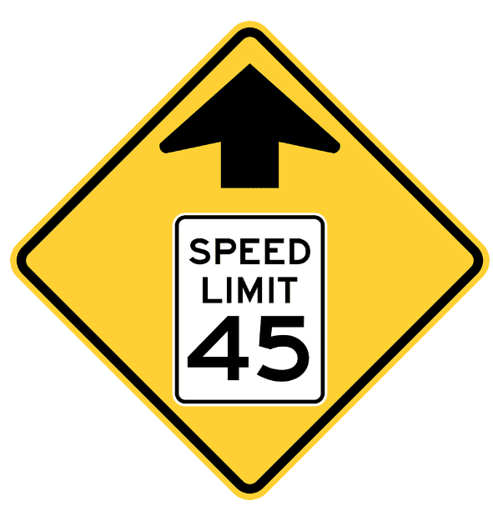 This warning sign:
A
provides advance notice to upcoming speed limit change.
B
shows the current speed limit that all vehicles traveling in the direction of the arrow must not exceed.
C
indicates the suggested highest safe speed.
Answer Explanation
This traffic sign indicates: provides advance notice to upcoming speed limit change. Observing and obeying all roadway signs ensures safe traffic flow and legal driving.
This traffic sign indicates: provides advance notice to upcoming speed limit change. Observing and obeying all roadway signs ensures safe traffic flow and legal driving.
Question 7:
___________ are green with white letters and symbols.
A
Warning signs
B
Destination signs (guide signs)
C
Regulation signs (regulatory signs)
Answer Explanation
The correct driving rule is: Destination signs (guide signs). Following standard DMV road rules and practicing defensive driving ensures safety for all road users.
The correct driving rule is: Destination signs (guide signs). Following standard DMV road rules and practicing defensive driving ensures safety for all road users.
Question 8:
You face a green light, but traffic on the other side of the intersection does not allow you to travel all the way through the intersection. What must you do?
A
Enter the intersection and wait until traffic ahead clears.
B
Wait for the next green light.
C
Wait until traffic ahead clears, so you do not block the intersection.
Answer Explanation
According to standard right-of-way regulations: wait until traffic ahead clears, so you do not block the intersection. Yielding appropriately prevents intersection collisions and maintains safe traffic flow.
According to standard right-of-way regulations: wait until traffic ahead clears, so you do not block the intersection. Yielding appropriately prevents intersection collisions and maintains safe traffic flow.
Question 9:
A good indication that it is safe to return to the right lane after passing a vehicle is when the vehicle that was passed:
A
is in your blind spot.
B
is on your left.
C
is not visible in the rearview mirror.
D
is visible in the rearview mirror.
Answer Explanation
Defensive driving guidelines state that: is visible in the rearview mirror. Anticipating road hazards and communicating maneuvers keeps traffic predictable and safe.
Defensive driving guidelines state that: is visible in the rearview mirror. Anticipating road hazards and communicating maneuvers keeps traffic predictable and safe.
Question 10:
 This sign indicates the _______________ vehicles can safely travel in this area.
A
suggested speed
B
maximum speed
C
minimum speed
Answer Explanation
This traffic sign indicates: maximum speed. Observing and obeying all roadway signs ensures safe traffic flow and legal driving.
This traffic sign indicates: maximum speed. Observing and obeying all roadway signs ensures safe traffic flow and legal driving.
Question 11:
A yellow arrow means:
A
Do not go in the direction of the arrow.
B
If you intend to turn in the direction of the arrow, be prepared to stop.
C
The same as a steady yellow light.
Answer Explanation
The correct driving rule is: If you intend to turn in the direction of the arrow, be prepared to stop. Following standard DMV road rules and practicing defensive driving ensures safety for all road users.
The correct driving rule is: If you intend to turn in the direction of the arrow, be prepared to stop. Following standard DMV road rules and practicing defensive driving ensures safety for all road users.
Question 12:
You must come to a full stop at a yield sign:
A
Always.
B
Never.
C
If traffic conditions require it.
Answer Explanation
The correct driving rule is: If traffic conditions require it. Following standard DMV road rules and practicing defensive driving ensures safety for all road users.
The correct driving rule is: If traffic conditions require it. Following standard DMV road rules and practicing defensive driving ensures safety for all road users.
Question 13:
 When you approach this sign, you must:
A
stop if necessary.
B
watch for workers crossing the road.
C
None of the above.
Answer Explanation
This traffic sign indicates: stop if necessary. Observing and obeying all roadway signs ensures safe traffic flow and legal driving.
This traffic sign indicates: stop if necessary. Observing and obeying all roadway signs ensures safe traffic flow and legal driving.
Question 14:
A first conviction for driving under the influence of alcohol or any drug can result in a license suspension for at least:
A
180 days.
B
2 years.
C
30 days.
D
1 year.
Answer Explanation
Under state DUI and traffic safety laws: 1 year. Alcohol degrades judgment, slows reaction times, and distorts depth perception.
Under state DUI and traffic safety laws: 1 year. Alcohol degrades judgment, slows reaction times, and distorts depth perception.
Question 15:
Your car stalls on the tracks at a railroad crossing, and a collision with a train is imminent. After getting yourself and your passengers out of the car, you should:
A
run toward the train but stay off the tracks.
B
signal the train to stop.
C
cross the tracks.
Answer Explanation
The correct driving rule is: run toward the train but stay off the tracks. Following standard DMV road rules and practicing defensive driving ensures safety for all road users.
The correct driving rule is: run toward the train but stay off the tracks. Following standard DMV road rules and practicing defensive driving ensures safety for all road users.
Question 16:
 This sign warns drivers of:
A
a side road.
B
a sharp turn.
C
a cross road.
Answer Explanation
This traffic sign indicates: a sharp turn. Observing and obeying all roadway signs ensures safe traffic flow and legal driving.
This traffic sign indicates: a sharp turn. Observing and obeying all roadway signs ensures safe traffic flow and legal driving.
Question 17:
Drivers can not pass a vehicle on the left if:
A
they approach the top of a hill on a two-way road and can not see over it.
B
they can not safely return to the right lane before they reach a solid yellow center line for the right lane.
C
All of the above.
Answer Explanation
All of the listed points are essential driving requirements: they approach the top of a hill on a two-way road and can not see over it; they can not safely return to the right lane before they reach a solid yellow center line for the right lane. Practicing each ensures compliance with DMV safety laws.
All of the listed points are essential driving requirements: they approach the top of a hill on a two-way road and can not see over it; they can not safely return to the right lane before they reach a solid yellow center line for the right lane. Practicing each ensures compliance with DMV safety laws.
Question 18:
If you are blinded by headlights on an approaching vehicle, you should:
A
avoid looking directly at the bright lights.
B
glance toward the side of the road, then look quickly ahead to determine the other vehicle’s position.
C
All of the above.
Answer Explanation
All of the listed points are essential driving requirements: avoid looking directly at the bright lights; glance toward the side of the road, then look quickly ahead to determine the other vehicle’s position. Practicing each ensures compliance with DMV safety laws.
All of the listed points are essential driving requirements: avoid looking directly at the bright lights; glance toward the side of the road, then look quickly ahead to determine the other vehicle’s position. Practicing each ensures compliance with DMV safety laws.
Question 19:
After parking, are you allowed to open a door on the road side of your vehicle?
A
Yes, always.
B
Yes, but only if it does not interfere with bicyclists and other traffic.
C
No, never.
Answer Explanation
Under standard parking and curb regulations: Yes, but only if it does not interfere with bicyclists and other traffic. Following parking distance clearances keeps roadways unobstructed and emergency lanes accessible.
Under standard parking and curb regulations: Yes, but only if it does not interfere with bicyclists and other traffic. Following parking distance clearances keeps roadways unobstructed and emergency lanes accessible.
Question 20:
What type of pavement marking shows you which lane you must use for a turn?
A
Edge line
B
Diamond
C
Crosswalk Lines
D
Arrows
Answer Explanation
This traffic sign indicates: Arrows. Observing and obeying all roadway signs ensures safe traffic flow and legal driving.
This traffic sign indicates: Arrows. Observing and obeying all roadway signs ensures safe traffic flow and legal driving.
Question 21:
Air bags are meant to _________ seat belts.
A
work with
B
fix
C
replace
Answer Explanation
The correct driving rule is: work with. Following standard DMV road rules and practicing defensive driving ensures safety for all road users.
The correct driving rule is: work with. Following standard DMV road rules and practicing defensive driving ensures safety for all road users.
Question 22:
Double solid lines on the roadway mean:
A
you cannot pass.
B
you can not go across the lines except to turn left to enter or leave the highway.
C
All of the above.
Answer Explanation
All of the listed points are essential driving requirements: you cannot pass; you can not go across the lines except to turn left to enter or leave the highway. Practicing each ensures compliance with DMV safety laws.
All of the listed points are essential driving requirements: you cannot pass; you can not go across the lines except to turn left to enter or leave the highway. Practicing each ensures compliance with DMV safety laws.
Question 23:
Which of the following must you obey over the others?
A
Red light
B
Stop sign
C
Police officer
Answer Explanation
The correct driving rule is: Police officer. Following standard DMV road rules and practicing defensive driving ensures safety for all road users.
The correct driving rule is: Police officer. Following standard DMV road rules and practicing defensive driving ensures safety for all road users.
Question 24:
When following a motorcycle, drivers must remember that motorcycles can ____________ than other vehicles.
A
accelerate much faster
B
stop much more quickly
C
stop much more slowly
Answer Explanation
Motorcycles can stop rapidly and are easily hidden in vehicle blind spots: stop much more quickly. Always allow an increased following distance of at least 3 to 4 seconds.
Motorcycles can stop rapidly and are easily hidden in vehicle blind spots: stop much more quickly. Always allow an increased following distance of at least 3 to 4 seconds.
Question 25:
Where are yield signs usually placed?
A
At intersections, if there is no marked stop line.
B
Where auxiliary roads lead into major roads.
C
Where major roads lead into auxiliary roads.
Answer Explanation
The correct driving rule is: Where auxiliary roads lead into major roads. Following standard DMV road rules and practicing defensive driving ensures safety for all road users.
The correct driving rule is: Where auxiliary roads lead into major roads. Following standard DMV road rules and practicing defensive driving ensures safety for all road users.
Question 26:
You should never depend on your mirrors when you prepare to change lanes. Why?
A
Mirrors leave “blind spots” behind both sides of vehicles.
B
Mirrors need to be adjusted.
C
Mirrors are useless.
Answer Explanation
The correct driving rule is: Mirrors leave “blind spots” behind both sides of vehicles. Following standard DMV road rules and practicing defensive driving ensures safety for all road users.
The correct driving rule is: Mirrors leave “blind spots” behind both sides of vehicles. Following standard DMV road rules and practicing defensive driving ensures safety for all road users.
Question 27:
Your BAC depends on:
A
how fit you are.
B
the type of beverage you drink.
C
the amount of alcohol you drink.
Answer Explanation
Under state DUI and traffic safety laws: the amount of alcohol you drink. Alcohol degrades judgment, slows reaction times, and distorts depth perception.
Under state DUI and traffic safety laws: the amount of alcohol you drink. Alcohol degrades judgment, slows reaction times, and distorts depth perception.
Question 28:
When entering traffic from a private driveway:
A
you have the right-of-way over other vehicles.
B
wait for the flagger to stop the traffic on the main road.
C
always wait for the traffic light to turn green.
D
yield to all vehicles on the main road.
Answer Explanation
The correct driving rule is: yield to all vehicles on the main road. Following standard DMV road rules and practicing defensive driving ensures safety for all road users.
The correct driving rule is: yield to all vehicles on the main road. Following standard DMV road rules and practicing defensive driving ensures safety for all road users.
Question 29:
If another vehicle passes you on the left, you must:
A
increase your speed slightly and keep to the right.
B
decrease your speed, then pull over to the right and stop.
C
decrease your speed slightly and keep to the right.
Answer Explanation
The correct driving rule is: decrease your speed slightly and keep to the right. Following standard DMV road rules and practicing defensive driving ensures safety for all road users.
The correct driving rule is: decrease your speed slightly and keep to the right. Following standard DMV road rules and practicing defensive driving ensures safety for all road users.
Question 30:
When other drivers around you are acting in anger, you should:
A
slow down or move over safely.
B
distance yourself from the situation.
C
avoid making eye contact.
D
All of the above.
Answer Explanation
All of the listed points are essential driving requirements: slow down or move over safely; distance yourself from the situation; avoid making eye contact. Practicing each ensures compliance with DMV safety laws.
All of the listed points are essential driving requirements: slow down or move over safely; distance yourself from the situation; avoid making eye contact. Practicing each ensures compliance with DMV safety laws.
Question 31:
 This road sign means:
A
Crossroads ahead
B
Side Road
C
Turn right or go through
D
Flagger ahead
Answer Explanation
This traffic sign indicates: Crossroads ahead. Observing and obeying all roadway signs ensures safe traffic flow and legal driving.
This traffic sign indicates: Crossroads ahead. Observing and obeying all roadway signs ensures safe traffic flow and legal driving.
Question 32:
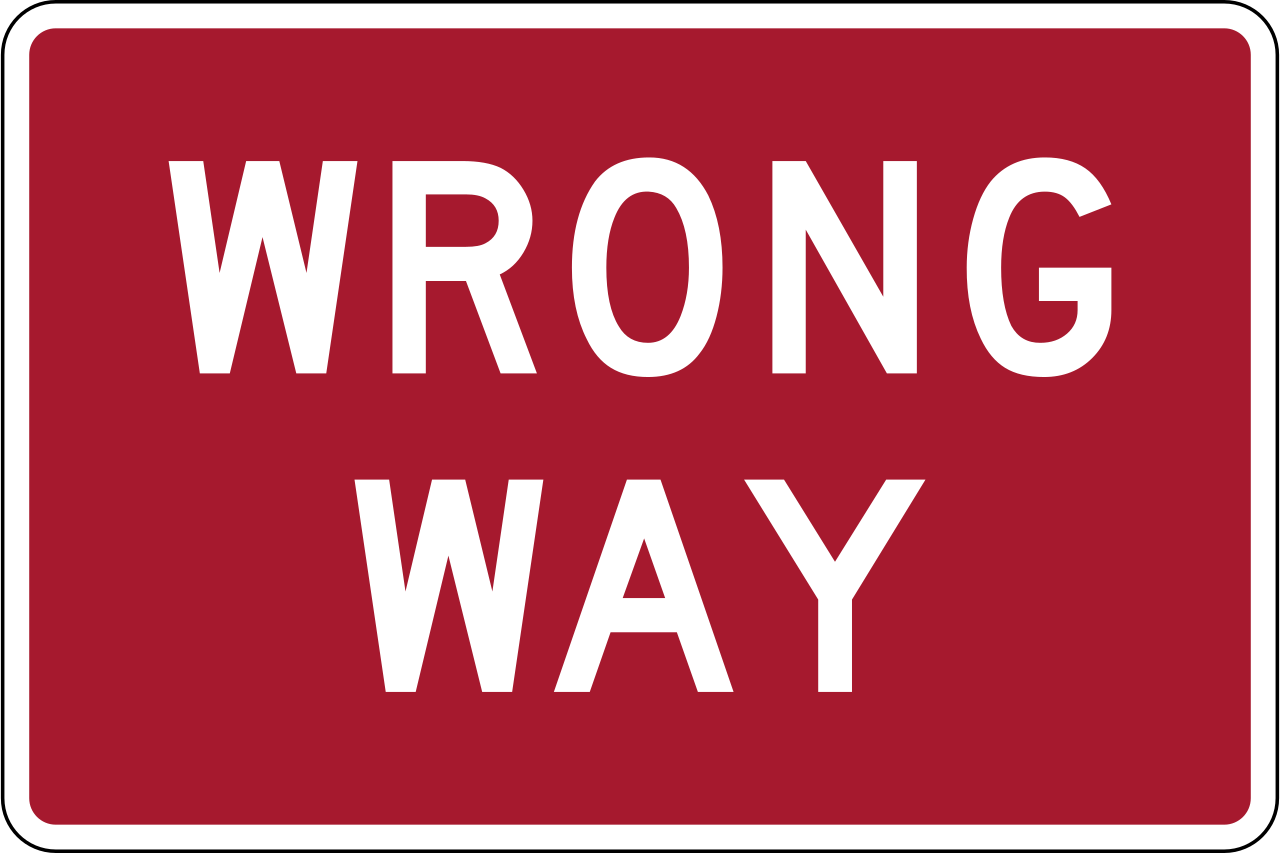 When drivers see this road sign:
A
they must come to a complete stop and call the police.
B
they must not drive past this sign.
C
they must turn around immediately.
Answer Explanation
This traffic sign indicates: they must turn around immediately. Observing and obeying all roadway signs ensures safe traffic flow and legal driving.
This traffic sign indicates: they must turn around immediately. Observing and obeying all roadway signs ensures safe traffic flow and legal driving.
Question 33:
When you need to enter a freeway exit ramp:
A
don't slow down on the freeway itself. Wait until you are in the deceleration lane.
B
pass slower vehicles on the right.
C
slow down before entering the exit ramp.
D
don't slow down on the freeway itself, and maintain your speed once in the exit ramp.
Answer Explanation
Defensive driving guidelines state that: don't slow down on the freeway itself. Wait until you are in the deceleration lane. Anticipating road hazards and communicating maneuvers keeps traffic predictable and safe.
Defensive driving guidelines state that: don't slow down on the freeway itself. Wait until you are in the deceleration lane. Anticipating road hazards and communicating maneuvers keeps traffic predictable and safe.
Question 34:
Following another vehicle too closely is known as:
A
speedgating.
B
closetailing.
C
tailgating.
Answer Explanation
The correct driving rule is: tailgating. Following standard DMV road rules and practicing defensive driving ensures safety for all road users.
The correct driving rule is: tailgating. Following standard DMV road rules and practicing defensive driving ensures safety for all road users.
Question 35:
 What does a flashing red light mean?
A
NO TURN ON RED.
B
The same thing as a stop sign.
C
Drivers may move forward with caution.
Answer Explanation
When an emergency vehicle approaches with flashing lights or sirens, you must safely pull over to the right curb and stop completely until it passes.
When an emergency vehicle approaches with flashing lights or sirens, you must safely pull over to the right curb and stop completely until it passes.
Question 36:
Examples of proper glass maintenance include:
A
Replacing worn wiper blades.
B
Keeping your windows clean and clear.
C
All of the above.
Answer Explanation
All of the listed points are essential driving requirements: Replacing worn wiper blades; Keeping your windows clean and clear. Practicing each ensures compliance with DMV safety laws.
All of the listed points are essential driving requirements: Replacing worn wiper blades; Keeping your windows clean and clear. Practicing each ensures compliance with DMV safety laws.
Question 37:
What should you do when an aggressive driver confronts you?
A
Avoid eye contact with the aggressive driver.
B
Make eye contact.
C
Challenge the aggressive driver with increased speed.
Answer Explanation
The correct driving rule is: avoid eye contact with the aggressive driver. Following standard DMV road rules and practicing defensive driving ensures safety for all road users.
The correct driving rule is: avoid eye contact with the aggressive driver. Following standard DMV road rules and practicing defensive driving ensures safety for all road users.
Question 38:
What should you do if you see smoke come from under the hood?
A
Call the fire department and then pull off the road and park your vehicle.
B
Pull off the road and park your vehicle. Turn off the ignition, get away from the car and call the fire department.
C
Try to fight the fire yourself.
Answer Explanation
The correct driving rule is: pull off the road and park your vehicle. Turn off the ignition, get away from the car and call the fire department. Following standard DMV road rules and practicing defensive driving ensures safety for all road users.
The correct driving rule is: pull off the road and park your vehicle. Turn off the ignition, get away from the car and call the fire department. Following standard DMV road rules and practicing defensive driving ensures safety for all road users.
Question 39:
When driving at night, you should slow down and:
A
use high beams whenever possible, but never when there's oncoming traffic.
B
use high beams until other drivers dim their lights.
C
follow the vehicle ahead more closely to avoid glare from oncoming headlights.
D
come to a complete stop whenever there's oncoming traffic.
Answer Explanation
The correct driving rule is: use high beams whenever possible, but never when there's oncoming traffic. Following standard DMV road rules and practicing defensive driving ensures safety for all road users.
The correct driving rule is: use high beams whenever possible, but never when there's oncoming traffic. Following standard DMV road rules and practicing defensive driving ensures safety for all road users.
Question 40:
Braking distance is:
A
usually 50 feet.
B
how far a vehicle will travel, in ideal conditions, while the driver is braking.
C
the total distance a vehicle has traveled until it comes to a complete stop.
D
how far a vehicle will continue to travel before the driver hits the brakes.
Answer Explanation
For safe speed and stopping control: how far a vehicle will travel, in ideal conditions, while the driver is braking. Adjusting speed to match visibility and road traction prevents loss of steering grip.
For safe speed and stopping control: how far a vehicle will travel, in ideal conditions, while the driver is braking. Adjusting speed to match visibility and road traction prevents loss of steering grip.