You reach an intersection that is not controlled at the same time as a driver on your right, and both of you prepare to go straight. Who has the right-of-way?
A)You.
B)No one.
C)The other driver.
2.
If cars approaching from opposite directions reach an intersection at the same time:
A)a car that moves straight must yield to cars that turn left.
B)a car that turns left must yield to cars that move straight or turn right.
C)a car that turns right must yield to cars that move straight or turn left.
3.
Blind spots are:
A)Dangerous intersection where the maximum speed limit is 15 MPH or less.
B)At night, the darkest areas of a road, where emergency flashers should be used.
C)Areas to the side or rear of a vehicle that the driver cannot see with use of mirrors.
4.
At a stop sign there is no stop line, you must stop:
A)before you enter the intersection.
B)before you enter the crosswalk.
C)after you enter the crosswalk.
5.
A pedestrian in the crosswalk when the 'DON’T WALK' signal begins flashing must:
A)stop immediately.
B)go back and wait the “WALK” light
C)finish crossing the street.
6.
To turn right at an intersection with a steady red light, you should:
A)signal and wait until the light turns green.
B)slow down and look for traffic before turning.
C)stop, signal, then turn if it is safe to do so and there’s no sign prohibiting the turn on red.
D)wait until you have a green turn arrow.
7.
To drive defensively, you must:
A)anticipate errors by other drivers.
B)assume that a driver who approaches a STOP sign on a side road is actually going to stop.
C)not check behind you through your mirrors.
8.
Yellow traffic signs:
A)guide drivers.
B)when combined with an octagonal shape, tell drivers they must come to a complete stop at the marked stop line.
C)warn drivers.
9.
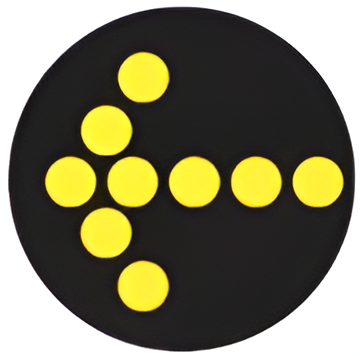
What does a flashing left yellow arrow mean?
A)Vehicles turning left must stop if they can. The light will soon be red.
B)Only right turns are allowed.
C)Left turns are allowed. Yield to oncoming traffic and pedestrians.
D)None of the above.
10.
Green and white signs:
A)give information about directions and distances.
B)are mainly used at intersections and driveways.
C)warn drivers of unexpected road conditions.
11.
Which shape is a railroad advance warning sign?
A)Crossbuck
B)Round
C)Pentagon
12.
__________ are blue with white letters and symbols.
A)Warning signs
B)Service signs
C)Destination signs (guide signs)
13.
Which of the following is a defensive driving skill/technique?
A)Maintain the correct speed.
B)Do not drive if you are very weary.
C)All of the above.
14.
Regulatory signs are:
A)Suggestions
B)Warnings
C)Law
15.
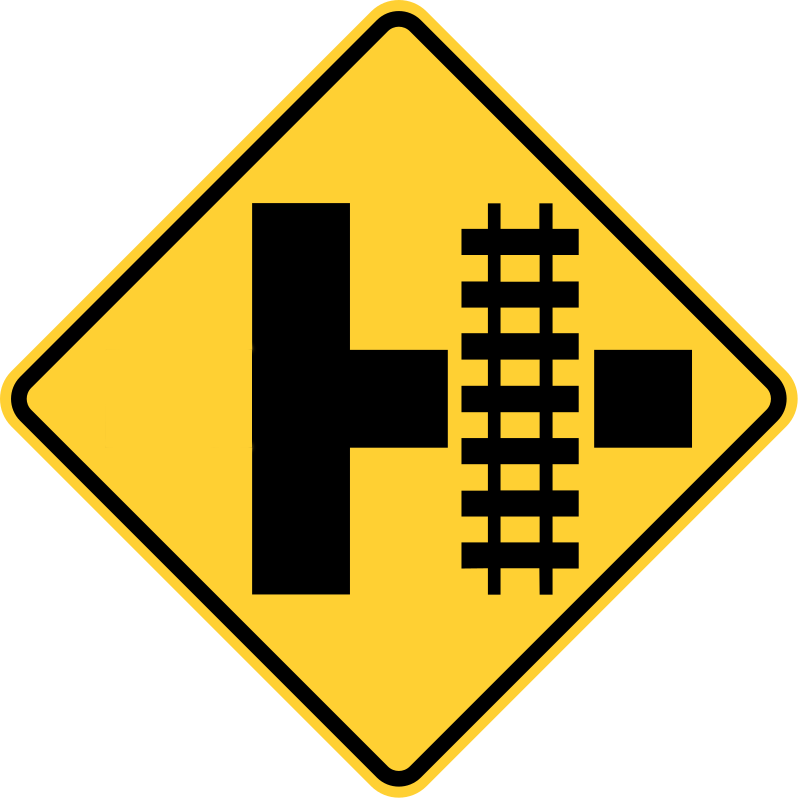
What does this sign indicate?
A)Parallel railroad crossing (side road)
B)Low ground clearance railroad crossing
C)Parallel railroad crossing (crossroad)
16.
What is the first thing you should do if your wheels move off the pavement?
A)Pull the steering wheel back.
B)Pull over to the right and sound your horn to warn the other drivers.
C)Ease your foot off the gas pedal and brake gently.
17.
What does it mean If an oncoming driver flashes headlights at you during a period of low visibility?
A)Your headlights are too bright. You should turn them off.
B)Your vehicle was difficult to see. You should turn on your headlights.
C)Your headlights are too bright. You should use parking lights instead.
18.
The yield sign means:
A)Drive with caution in wet weather.
B)You must come to a complete stop.
C)Slow down and give vehicles crossing your path the right-of-way.
19.
Drivers entering an intersection to turn left:
A)must wait for the green arrow before turning left.
B)can wait in the intersection until they can get through it.
C)can wait in the intersection until they can turn left.
D)must not enter the intersection unless they can get through it without having to stop.
20.
At a stop sign there is no stop line or crosswalk. You must stop:
A)before you enter the intersection.
B)at the next crosswalk.
C)after you enter the intersection, if you have a clear view of traffic on the intersecting roadway.
21.
Alcohol:
A)makes drivers more prone to take chances.
B)increases reaction time.
C)All of the above.
22.
This road sign warns drivers that:
A)left turns are not allowed at the intersection.
B)the road will make a sharp turn to the right.
C)another road enters the highway from the direction shown.
23.
This sign means:
A)You can only park between 8:30 AM and 5:30 PM.
B)Parking is not allowed at 8:30 AM and at 5:30 PM
C)No parking between 8:30 AM and 5:30 PM.
24.
A thumping sound can be a warning:
A)that a tire blowout is about to occur.
B)of a steering failure.
C)of a brake failure.
25.
One broken line indicates:
A)You can pass other vehicles and change lanes, if it is safe.
B)You can not pass other vehicles or go across the line.
C)You can change lanes, but only when traffic conditions or obstructions in the road make it necessary.
26.
This road sign means:
A)School zone ahead
B)Pedestrians must not cross here
C)Pedestrian crossing ahead
27.
You are driving and you are feeling drowsy. You should:
A)avoid drinking coffee.
B)turn on the radio to keep you awake.
C)find a safe place to stop for a break.
28.
Your BAC depends on:
A)how much alcohol you drink.
B)how much time passes between drinks.
C)All of the above.
29.
Which shape is a stop sign?
A)Diamond
B)Octagon
C)Upside-down triangle
30.
Mature drivers should NOT:
A)listen to loud music while driving.
B)drive at all.
C)get power steering when turning the steering wheel gets harder due to age.
D)watch the entire road, from their front bumper to 12 seconds ahead of them.
31.
When you prepare to make a left turn from a one-way road into a two-way road, you must:
A)enter the two-way road to the left of its center line.
B)approach the turn in the right lane or from the right side of a single lane.
C)approach the turn in the left lane or from the left side of a single lane.
32.
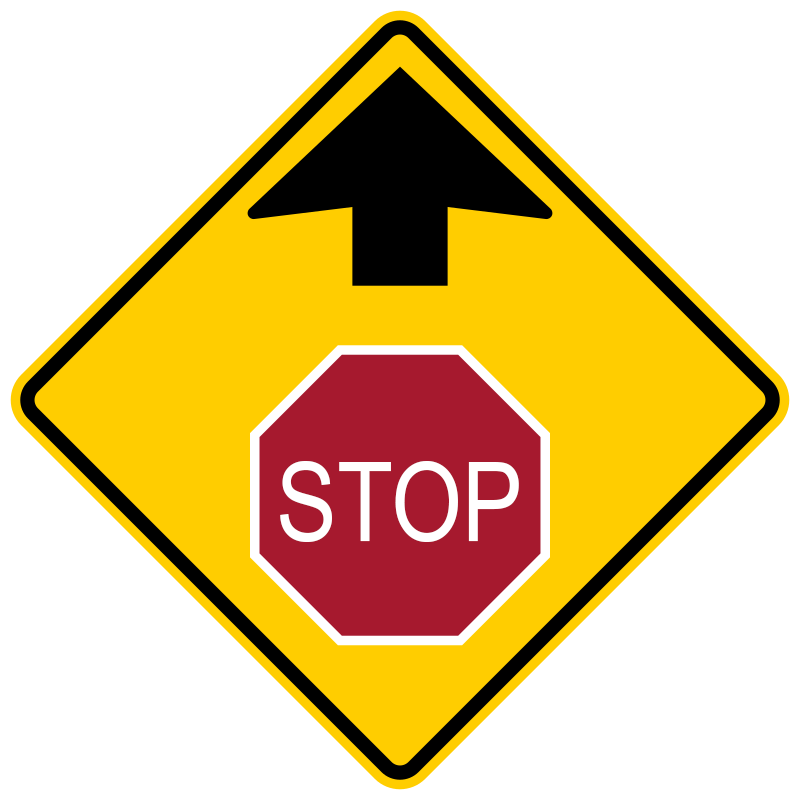
When drivers come to this sign, they must:
A)be ready to stop at the stop sign.
B)warn other drivers that a stop sign is ahead.
C)brake sharply and come to a complete stop.
33.
When driving, it is important to keep a space cushion _______ of your vehicle.
A)only on the left and right side
B)only in back
C)on all sides
D)only in front
34.
What happens if two vehicles reach at the same time an intersection with four-way stop signs?
A)The driver on the right yields to the driver on the left.
B)The driver on the left yields to the driver on the right.
C)The first vehicle to reach the intersection must yield.
35.
The effect that lack of sleep has on your safe driving ability is the same as:
A)the effect that amphetamines have.
B)the effect that alcohol has.
C)the effect that aggressive driving has.
D)the effect that lack of coffee has.
36.
When they see this sign, drivers should:
A)be ready to brake sharply and stop.
B)be ready to shift to lower gear.
C)yield to trucks coming from the hill on the right.
37.
This sign means:
A)Reversible lane ahead.
B)The divided highway ends ahead.
C)Drivers are coming to a point where another traffic lane joins the one they are on.
38.
You must use your low beams when you’re within ______ of the vehicle you’re following.
A)50 feet
B)300 feet
C)250 feet
D)500 feet
39.
This sign means:
A)You must yield the right-of-way ahead
B)Traffic signals ahead
C)You must stop ahead
D)Speeding is not allowed
40.
Pentagonal signs are used to indicate:
A)possible hazards on roadways.
B)no passing zones.
C)school crossings.
ANSWER KEYCheck answers after completing the test.