Pregunta 1:
 Este letrero indica a los conductores:
A
deben esperar a que el semáforo se ponga verde antes de girar a la derecha o a la izquierda.
B
no pueden girar a la derecha ni a la izquierda durante el semáforo en rojo.
C
Todo lo anterior.
Esta señal alerta a los conductores sobre varios requisitos obligatorios: deben esperar a que el semáforo se ponga verde antes de girar a la derecha o a la izquierda, no pueden girar a la derecha o a la izquierda durante el semáforo en rojo. La ley exige obedecer todas las instrucciones de control de tráfico publicadas.
Pregunta 2:
Los conductores no pueden cruzar ______________ a menos que giren a la izquierda cuando sea seguro hacerlo.
A
líneas amarillas continuas dobles
B
líneas rojas
C
líneas amarillas discontinuas
D
líneas blancas continuas dobles
La regla de conducción correcta es: líneas amarillas continuas dobles. Seguir las reglas de tránsito estándar del DMV y practicar la conducción defensiva garantiza la seguridad de todos los usuarios de la vía.
Pregunta 3:
Al acercarse a cualquier intersección o camino de entrada, los conductores deben:
A
Mire a ambos lados y prepárese para detenerse.
B
Pase a otros vehículos y luego deténgase.
C
conduzca a la velocidad más rápida justo antes de entrar a la intersección.
De acuerdo con las normas estándar de derecho de paso: mire a ambos lados y esté preparado para detenerse. Ceder el paso adecuadamente previene colisiones en las intersecciones y mantiene un flujo de tráfico seguro.
Pregunta 4:
Al rebasar un camión, los conductores deben:
A
reduzca su velocidad si adelanta al camión en una pendiente.
B
pase por la derecha.
C
deténgase frente al camión antes de que puedan ver la cabina.
D
Haga saber al conductor del camión que está pasando haciendo parpadear las luces delanteras.
Cuando comparta la carretera con otros vehículos: informe al conductor del camión que está pasando haciendo parpadear las luces delanteras. Dar a los vehículos grandes y a los usuarios vulnerables el espacio libre adecuado evita accidentes peligrosos.
Pregunta 5:
Las personas que conducen después de beber tienen riesgo:
A
tasas de seguro más altas, sentencias de cárcel.
B
fuertes multas, pérdida de la licencia.
C
heridos y muertos.
D
Todo lo anterior.
Todos los puntos enumerados son requisitos esenciales para conducir: tasas de seguro más altas, sentencias de cárcel; fuertes multas, pérdida de la licencia; heridos y muertos. Practicar cada uno garantiza el cumplimiento de las leyes de seguridad del DMV.
Pregunta 6:
A 40 MPH, el tiempo de reacción promedio del conductor equivale a __ pies recorridos.
A
111
B
88
C
44
D
22
La regla de conducción correcta es: 44. Seguir las reglas de tránsito estándar del DMV y practicar la conducción defensiva garantiza la seguridad de todos los usuarios de la vía.
Pregunta 7:
Señales de rampa:
A
Controlar la velocidad de los vehículos que ingresan a una autopista.
B
No se consideran dispositivos de control de tráfico.
C
Controlar el peso de los camiones que entran a una autopista.
D
Controlar la velocidad de los vehículos que ingresan a una autopista.
La regla de conducción correcta es: controlar el ritmo de los vehículos que entran en una autopista. Seguir las reglas de tránsito estándar del DMV y practicar la conducción defensiva garantiza la seguridad de todos los usuarios de la vía.
Pregunta 8:
 Esto es:
A
una señal de tráfico lateral.
B
una señal de tráfico de incorporación.
C
una señal de curva a la derecha.
La regla de conducción correcta es: una señal de tráfico lateral. Seguir las reglas de tránsito estándar del DMV y practicar la conducción defensiva garantiza la seguridad de todos los usuarios de la vía.
Pregunta 9:
¿Cuál de los siguientes NO es un consejo para conducir a la defensiva?
A
Es mejor salirse de la carretera que patinar para evitar un accidente.
B
Chocar contra un automóvil que se mueve en la misma dirección que usted es mejor que chocar contra un automóvil de frente.
C
Golpear un poste es mejor que golpear un arbusto.
D
Es mejor virar a la derecha en lugar de girar hacia el tráfico que viene en sentido contrario para evitar un choque.
La regla de conducción correcta es: chocar contra un poste es mejor que chocar contra un arbusto. Seguir las reglas de tránsito estándar del DMV y practicar la conducción defensiva garantiza la seguridad de todos los usuarios de la vía.
Pregunta 10:
 Esta señal advierte a los conductores que:
A
la carretera que hay adelante está dividida en dos vías de un solo sentido. Los conductores deben mantenerse a la derecha.
B
hay un lugar bajo en el camino.
C
hay un camino sinuoso por delante.
D
hay un doble
Esta señal de tráfico indica: hay un dou. Observar y obedecer todas las señales en la carretera garantiza un flujo de tráfico seguro y una conducción legal.
Pregunta 11:
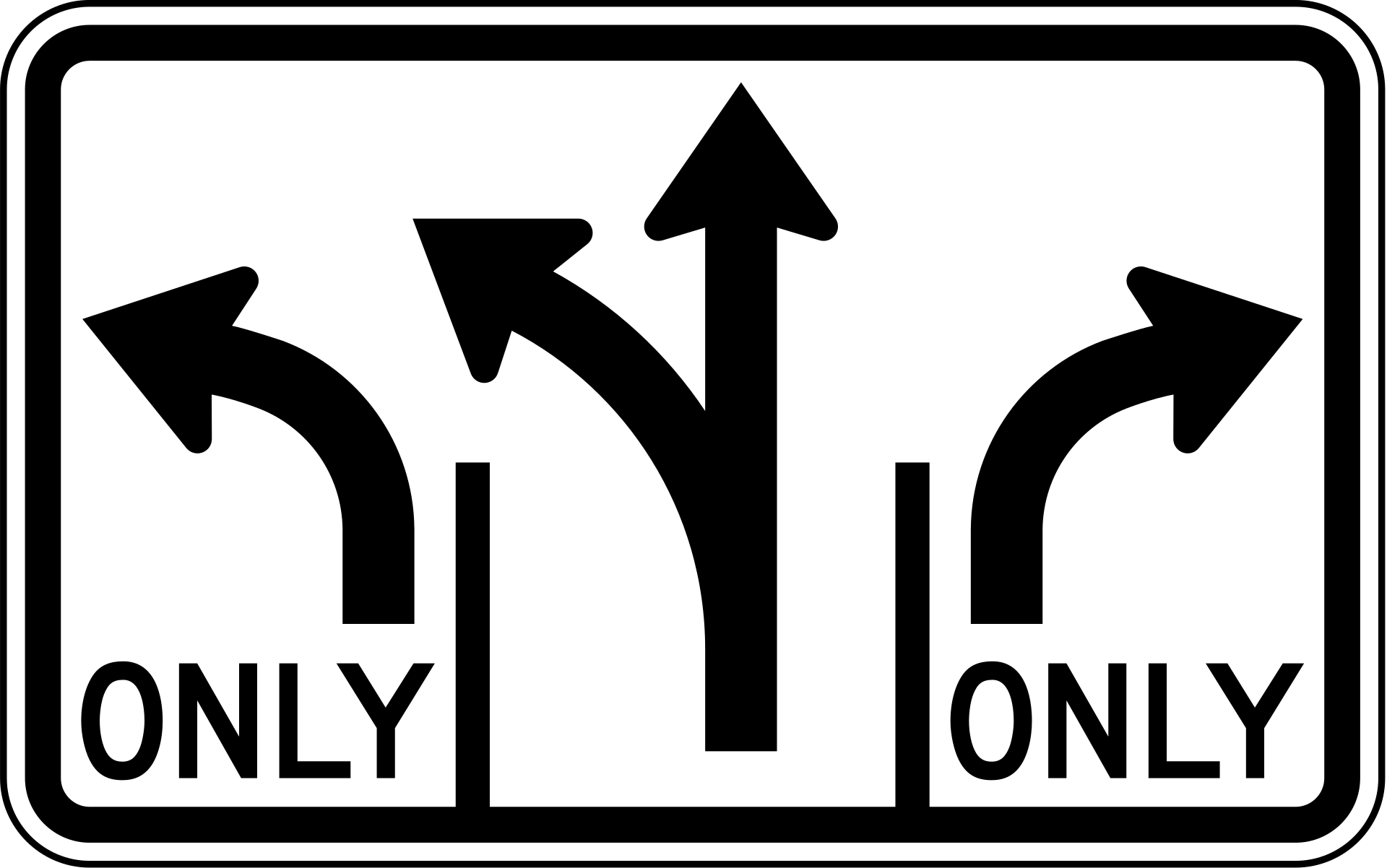 Esta señal reglamentaria indica a los conductores que:
A
El tráfico en el carril izquierdo debe girar a la izquierda en la intersección más adelante.
B
todos los vehículos deben girar a la izquierda inmediatamente.
C
el tráfico en el carril derecho debe seguir recto.
Esta señal de tráfico indica: el tráfico en el carril izquierdo debe girar a la izquierda en la intersección más adelante. Observar y obedecer todas las señales en la carretera garantiza un flujo de tráfico seguro y una conducción legal.
Pregunta 12:
Cuando conduce por una carretera de varios carriles, si otro vehículo se mueve hacia su carril justo delante de usted y le corta el paso, debe:
A
Frene sólo si es necesario para evitar un choque y siga de cerca al otro vehículo durante un rato.
B
Toque la bocina y frene con firmeza para alejarse rápidamente del otro vehículo.
C
Mantén la calma. Reduzca la velocidad si es necesario para evitar un choque y retroceda suavemente hasta una distancia de seguimiento segura.
D
frenar bruscamente.
La regla de conducción correcta es: mantener la calma. Reduzca la velocidad si es necesario para evitar un choque y retroceda suavemente hasta una distancia de seguimiento segura. Seguir las reglas de tránsito estándar del DMV y practicar la conducción defensiva garantiza la seguridad de todos los usuarios de la vía.
Pregunta 13:
Beber alcohol mientras se toman otras drogas podría causar:
A
problemas de salud graves.
B
los efectos del alcohol se multipliquen.
C
muerte.
D
Todo lo anterior.
El alcohol y las sustancias perjudiciales degradan todas las funciones críticas de la conducción: problemas de salud graves; los efectos del alcohol se multiplicarán; muerte. Conducir en estado de ebriedad conlleva graves sanciones penales y de seguridad.
Pregunta 14:
Cuando un autobús de transporte público que viaja en la misma dirección ha hecho señales y está reincorporándose al flujo de tráfico, los conductores deben:
A
ceda el paso al autobús.
B
Ninguna de las otras respuestas es correcta.
C
Pase el autobús a la derecha.
D
Pase el autobús a la izquierda.
Al compartir la vía con otros vehículos: ceder el paso al autobús. Dar a los vehículos grandes y a los usuarios vulnerables el espacio libre adecuado evita accidentes peligrosos.
Pregunta 15:
¿Qué significa "sobrepasar las luces delanteras"?
A
Conducir tan lento que las luces delanteras se ponen en modo de espera.
B
Conducir por un puente con las luces encendidas.
C
Conducir tan rápido que no pueda detenerse dentro del alcance de las luces.
D
Conducir tan rápido que podrías romper tus faros.
La regla de conducción correcta es: Conducir tan rápido que no pueda detenerse dentro del alcance de las luces. Seguir las reglas de tránsito estándar del DMV y practicar la conducción defensiva garantiza la seguridad de todos los usuarios de la vía.
Pregunta 16:
Conducir demasiado las luces delanteras es peligroso porque:
A
no puedes ver los próximos peligros en la carretera.
B
su distancia de frenado es mayor que la iluminación efectiva de sus faros.
C
Su distancia de frenado es demasiado corta.
D
Todo lo anterior.
Todos los puntos enumerados son requisitos de conducción esenciales: no se pueden ver los peligros próximos en la carretera; su distancia de frenado es mayor que la iluminación efectiva de sus faros; Su distancia de frenado es demasiado corta. Practicar cada uno garantiza el cumplimiento de las leyes de seguridad del DMV.
Pregunta 17:
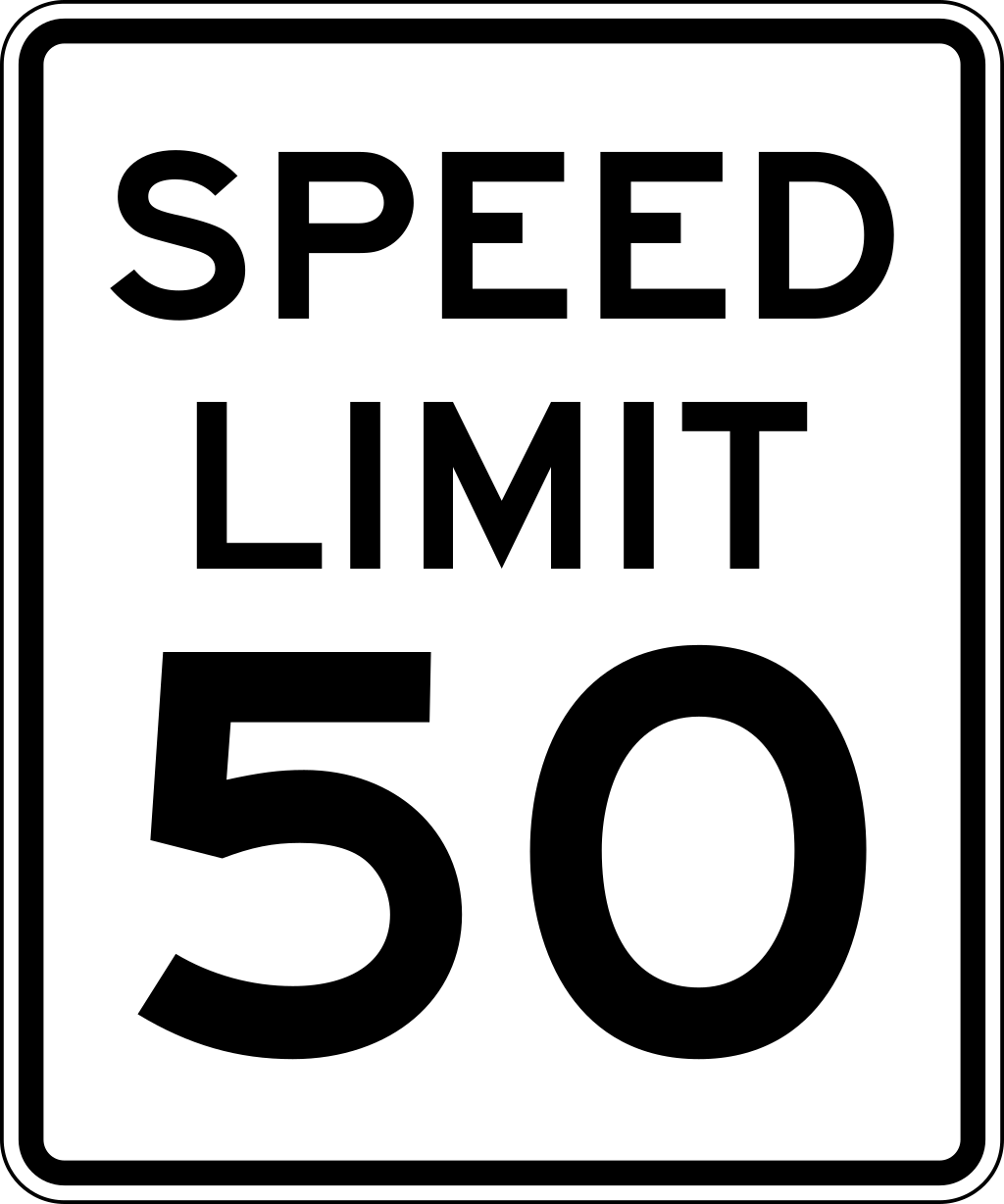 Esta señal indica que los vehículos _______________ pueden viajar con seguridad en esta área.
A
velocidad sugerida
B
velocidad máxima
C
velocidad mínima
Esta señal de tráfico indica: velocidad máxima. Observar y obedecer todas las señales en la carretera garantiza un flujo de tráfico seguro y una conducción legal.
Pregunta 18:
Se puede pintar una marca ____ en el pavimento en el acceso pavimentado a un cruce de ferrocarril:
A
TXC
B
SXS
C
RXC
D
RXR
Las señales circulares con una 'X' y una 'RR' indican una advertencia ferroviaria anticipada: RXR. Los conductores deben reducir la velocidad, mirar a ambos lados, escuchar si hay trenes y estar preparados para detenerse.
Pregunta 19:
La ley de Florida exige que los automovilistas dejen a los ciclistas un mínimo de ______ pies de distancia y reduzcan su velocidad.
A
nueve
B
tres
C
quince
D
diez
Para control seguro de velocidad y parada: tres. Ajustar la velocidad para que coincida con la visibilidad y la tracción en la carretera evita la pérdida de agarre de la dirección.
Pregunta 20:
Al seguir motocicletas, los conductores deben:
A
reduzca la distancia mínima de seguimiento.
B
Intente rebasarlos, ya que tienen capacidades de frenado diferentes a las de otros vehículos de motor.
C
mantener más espacio delante de su vehículo.
La regla de conducción correcta es: mantener más espacio delante de su vehículo. Seguir las reglas de tránsito estándar del DMV y practicar la conducción defensiva garantiza la seguridad de todos los usuarios de la vía.
Pregunta 21:
En una carretera de doble sentido con un carril central, los conductores de cualquier dirección pueden hacer ______ en el carril central.
A
giros a la derecha
B
giros repentinos
C
giros a la izquierda
D
Cambios de sentido
La regla de conducción correcta es: girar a la izquierda. Seguir las reglas de tránsito estándar del DMV y practicar la conducción defensiva garantiza la seguridad de todos los usuarios de la vía.
Pregunta 22:
__________________ son requeridos por ley al cambiar de carril o adelantar a un vehículo.
A
Señales de giro
B
Intermitentes de emergencia de cuatro direcciones
C
Señales de tráfico
D
Luces altas
Las pautas de conducción defensiva establecen que: señales de giro. Anticipar los peligros en la carretera y comunicar las maniobras mantiene el tráfico predecible y seguro.
Pregunta 23:
¿En qué condiciones se permite a los conductores girar a la derecha con un semáforo en rojo?
A
Después de una parada completa.
B
Después de ceder el paso a los peatones en los cruces peatonales y a los vehículos que aún se encuentran en la intersección.
C
En la mayoría de las intersecciones, después de detenerse, si el camino está despejado.
D
Todo lo anterior.
La navegación segura en las intersecciones requiere seguir todas las reglas establecidas: Después de una parada completa; Después de ceder el paso a los peatones en los cruces peatonales y a los vehículos que aún se encuentran en la intersección; En la mayoría de las intersecciones, después de detenerse, si el camino está despejado. Ceda siempre el paso adecuadamente para evitar colisiones.
Pregunta 24:
La duración de una suspensión de puntos es de 3 meses para:
A
9 puntos en un período de 18 meses.
B
18 puntos en un período de 18 meses.
C
24 puntos en un período de 24 meses.
D
12 puntos en un período de 12 meses.
La regla de conducción correcta es: 18 puntos en un período de 18 meses. Seguir las reglas de tránsito estándar del DMV y practicar la conducción defensiva garantiza la seguridad de todos los usuarios de la vía.
Pregunta 25:
¿Cuál de las siguientes es una sanción por una primera condena por DUI?
A
Libertad condicional - No más de 1 año
B
Revocación de licencia - Mínimo 1 año
C
Terminación del permiso de conducir
D
Obligatorio 30 días de cárcel
Según las leyes estatales de DUI y seguridad vial: Libertad condicional: no más de 1 año. El alcohol degrada el juicio, ralentiza los tiempos de reacción y distorsiona la percepción de profundidad.
Pregunta 26:
 Este signo significa:
A
Un camino cruza la carretera principal más adelante.
B
Más adelante termina la autovía por la que circulan los conductores.
C
Los conductores llegan a un punto en el que otro carril de circulación se une al que transitan.
Esta señal de tráfico indica: los conductores están llegando a un punto donde otro carril de circulación se une al que transitan. Observar y obedecer todas las señales en la carretera garantiza un flujo de tráfico seguro y una conducción legal.
Pregunta 27:
¿Cuál de las siguientes opciones se recomienda para conductores maduros?
A
Parar a descansar cada dos horas en viajes largos.
B
Instalación de pequeños espejos laterales para mejorar la visibilidad.
C
No usar cinturones de seguridad cuando se esté fatigado.
D
Ninguno de los anteriores.
La regla de conducción correcta es: Parar a descansar cada dos horas en viajes largos. Seguir las reglas de tránsito estándar del DMV y practicar la conducción defensiva garantiza la seguridad de todos los usuarios de la vía.
Pregunta 28:
Un vehículo de emergencia se acerca con las luces intermitentes encendidas. Debes:
A
deténgase inmediatamente y deténgase hasta que haya pasado el vehículo de emergencia.
B
Reduzca la velocidad y deténgase en la siguiente intersección.
C
Deténgase y bloquee la intersección si es necesario.
D
Aumente la velocidad y deténgase en la siguiente zona de aparcamiento.
Cuando comparta la carretera con otros vehículos: deténgase inmediatamente y deténgase hasta que haya pasado el vehículo de emergencia. Dar a los vehículos grandes y a los usuarios vulnerables el espacio libre adecuado evita accidentes peligrosos.
Pregunta 29:
Cualquier conductor menor de 21 años con un nivel de alcohol en el aliento o en la sangre de __ o superior debe asistir a un curso de abuso de sustancias.
A
0,08
B
0,2
C
0,5
D
0,05
Según las leyes estatales de DUI y seguridad vial: 0,05. El alcohol degrada el juicio, ralentiza los tiempos de reacción y distorsiona la percepción de profundidad.
Pregunta 30:
¿Cuáles de los siguientes están permitidos en las autopistas?
A
Scooters con cilindrada superior a 150 centímetros cúbicos
B
Bicicletas impulsadas por motor
C
Bicicletas
D
Todo lo anterior.
La regla de conducción correcta es: Motonetas de cilindrada superior a 150 centímetros cúbicos. Seguir las reglas de tránsito estándar del DMV y practicar la conducción defensiva garantiza la seguridad de todos los usuarios de la vía.
Pregunta 31:
Está conduciendo por una carretera con varios carriles de circulación en la misma dirección y se está acercando a un vehículo de emergencia estacionado a lo largo de la carretera. Debes:
A
Salga del carril más cercano a la emergencia tan pronto como sea seguro hacerlo, o reduzca la velocidad a una velocidad de 20 MPH por debajo del límite de velocidad indicado.
B
Ceda el paso al vehículo de emergencia.
C
Si está en el carril más cercano al vehículo de emergencia, deténgase por completo inmediatamente y pregunte si necesita ayuda.
D
Todo lo anterior.
Cuando comparta la carretera con otros vehículos: abandone el carril más cercano a la emergencia tan pronto como sea seguro hacerlo, o reduzca la velocidad a una velocidad de 20 MPH por debajo del límite de velocidad indicado. Dar a los vehículos grandes y a los usuarios vulnerables el espacio libre adecuado evita accidentes peligrosos.
Pregunta 32:
Los puntos ciegos son:
A
Intersección peligrosa donde el límite de velocidad máxima es de 15 MPH o menos.
B
Por la noche, las zonas más oscuras de una carretera, donde se deben utilizar las luces intermitentes de emergencia.
C
Áreas al costado o trasera de un vehículo que el conductor no puede ver con el uso de espejos.
La regla de conducción correcta es: Áreas al costado o trasera de un vehículo que el conductor no puede ver con el uso de espejos. Seguir las reglas de tránsito estándar del DMV y practicar la conducción defensiva garantiza la seguridad de todos los usuarios de la vía.
Pregunta 33:
El seguro de automóvil es importante porque:
A
Protege tu coche.
B
Puedes conducir más rápido si tienes la cobertura de seguro adecuada.
C
te protege a ti mismo y a los demás.
D
puede ser requerido por ley.
La regla de conducción correcta es: protegerse a sí mismo y a los demás. Seguir las reglas de tránsito estándar del DMV y practicar la conducción defensiva garantiza la seguridad de todos los usuarios de la vía.
Pregunta 34:
 Este signo significa:
A
Puede hacer un cambio de sentido.
B
Curva cerrada más adelante.
C
Debes hacer un cambio de sentido.
Esta señal de tráfico indica: debes hacer un cambio de sentido. Observar y obedecer todas las señales en la carretera garantiza un flujo de tráfico seguro y una conducción legal.
Pregunta 35:
Cuando se ve un peligro más adelante, distancia de reacción:
A
es la suma de la distancia de percepción y la distancia de frenado.
B
es igual a la distancia total de frenado menos la distancia de percepción.
C
es la distancia que seguirá viajando un vehículo, en condiciones ideales, antes de que el conductor pise el freno.
Para un control seguro de la velocidad y la parada: es la distancia que seguirá viajando un vehículo, en condiciones ideales, antes de que el conductor pise los frenos. Ajustar la velocidad para que coincida con la visibilidad y la tracción en la carretera evita la pérdida de agarre de la dirección.
Pregunta 36:
Los conductores que giran deben _____________ en las intersecciones y entradas de vehículos:
A
hacer cambios de sentido
B
bloquear el paso de peatones cuando se detiene en un semáforo en rojo
C
parada para peatones
D
hacer un giro que haga que los peatones se detengan
La regla de conducción correcta es: detenerse para los peatones. Seguir las reglas de tránsito estándar del DMV y practicar la conducción defensiva garantiza la seguridad de todos los usuarios de la vía.
Pregunta 37:
Mientras su vehículo esté inutilizado en la carretera o en el arcén, el conductor debe utilizar:
A
un paraguas si está lloviendo.
B
Intermitentes de emergencia de cuatro direcciones.
C
señales de giro izquierda y derecha juntas.
D
un giro de tres puntos.
Los espejos retrovisores no muestran vehículos en puntos ciegos: luces intermitentes de emergencia de cuatro direcciones. Mire siempre por encima del hombro antes de incorporarse o cambiar de carril.
Pregunta 38:
Tolerancia al alcohol:
A
no cambia con la edad.
B
aumenta con la edad.
C
es menor cuando bebes whisky.
D
disminuye con la edad.
Según las leyes estatales de DUI y de seguridad vial: disminuye con la edad. El alcohol degrada el juicio, ralentiza los tiempos de reacción y distorsiona la percepción de profundidad.
Pregunta 39:
Cuando el pedal del acelerador está atascado, los conductores NO deben:
A
pisar el pedal del acelerador con el pie.
B
mantener la vista en el camino.
C
Bombee el pedal del freno con fuerza y rapidez.
D
cambie a neutral.
La regla de conducción correcta es: pisar el pedal del freno con fuerza y rapidez. Seguir las reglas de tránsito estándar del DMV y practicar la conducción defensiva garantiza la seguridad de todos los usuarios de la vía.
Pregunta 40:
Si otro automóvil se ha detenido en un carril adyacente en el mismo sentido de marcha, usted debe:
A
Acelere y rebase al vehículo por la derecha.
B
Pase el coche por la izquierda.
C
tenga cuidado en caso de que el otro vehículo se haya detenido ante un peatón.
D
toque la bocina para avisar al otro conductor que está rebasando.
La regla de conducción correcta es: tener cuidado en caso de que el otro vehículo se haya detenido ante un peatón. Seguir las reglas de tránsito estándar del DMV y practicar la conducción defensiva garantiza la seguridad de todos los usuarios de la vía.
Pregunta 41:
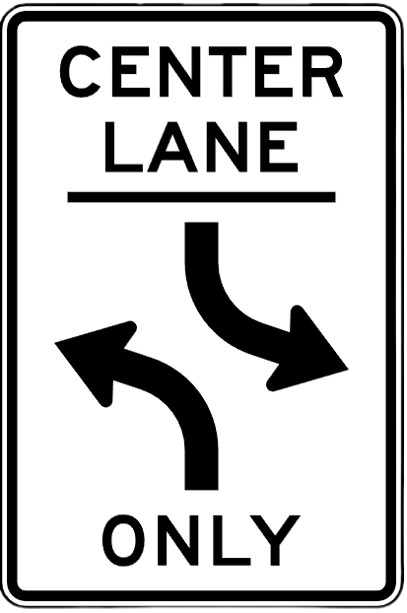 Esta señal de tráfico significa:
A
Los vehículos sólo podrán circular por el carril central.
B
El carril central se comparte para girar a la izquierda en ambas direcciones de circulación.
C
El carril central en ambos sentidos de circulación pronto girará a la izquierda.
Esta señal de tráfico indica: El carril central se comparte para girar a la izquierda en ambas direcciones de circulación. Observar y obedecer todas las señales en la carretera garantiza un flujo de tráfico seguro y una conducción legal.
Pregunta 42:
 Abandonar la escena de un accidente que involucra lesiones comete un delito grave de ____ grado.
A
primero
B
segundo
C
cuarto
D
tercero
La regla de conducción correcta es: tercera. Seguir las reglas de tránsito estándar del DMV y practicar la conducción defensiva garantiza la seguridad de todos los usuarios de la vía.
Pregunta 43:
Una marca en forma de diamante en el carril izquierdo muestra que:
A
el carril está reservado para vehículos de uso compartido.
B
el carril está reservado para vehículos estatales.
C
el carril está reservado para camiones y vehículos pesados.
D
Este es un carril sólo de emergencia.
La regla de conducción correcta es: el carril está reservado para vehículos de uso compartido. Seguir las reglas de tránsito estándar del DMV y practicar la conducción defensiva garantiza la seguridad de todos los usuarios de la vía.
Pregunta 44:
¿Cuál es el límite de velocidad para los coches en una zona residencial?
A
30 MPH
B
55 MPH
C
20 MPH
D
15 MPH
Para un control seguro de velocidad y parada: 30 MPH. Ajustar la velocidad para que coincida con la visibilidad y la tracción en la carretera evita la pérdida de agarre de la dirección.
Pregunta 45:
En la mayoría de las intersecciones, después de detenerse, los conductores pueden __________ en rojo si el camino está despejado.
A
girar a la izquierda
B
tomar una siesta
C
girar a la derecha
D
cruzar la intersección
La regla de conducción correcta es: girar a la derecha. Seguir las reglas de tránsito estándar del DMV y practicar la conducción defensiva garantiza la seguridad de todos los usuarios de la vía.
Pregunta 46:
Si un oficial de policía sospecha que el equipo de su vehículo no recibe el mantenimiento adecuado, el oficial:
A
puede obligarte a leer el manual 'Perfect Car'.
B
puede detener su vehículo en cualquier momento para una inspección del mismo.
C
puede suspender su licencia de conducir.
D
puede enviarte a la cárcel.
La regla de conducción correcta es: puede detener su vehículo en cualquier momento para una inspección del mismo. Seguir las reglas de tránsito estándar del DMV y practicar la conducción defensiva garantiza la seguridad de todos los usuarios de la vía.
Pregunta 47:
 Esta señal advierte a los conductores sobre:
A
baja holgura.
B
un puente estrecho más adelante.
C
un lugar bajo en el camino.
Esta señal de tráfico indica: un puente estrecho más adelante. Observar y obedecer todas las señales en la carretera garantiza un flujo de tráfico seguro y una conducción legal.
Pregunta 48:
Cuando se pisa el freno de pie, ¿qué luz debe encenderse?
A
Dos semáforos en rojo.
B
Luces intermitentes de emergencia.
C
Una luz de freno roja.
D
Dos luces altas, visibles desde 1000 pies.
La regla de conducción correcta es: Dos semáforos en rojo. Seguir las reglas de tránsito estándar del DMV y practicar la conducción defensiva garantiza la seguridad de todos los usuarios de la vía.
Pregunta 49:
El período de cuenta regresiva para peatones _____ al comienzo de la fase de NO ARRANCAR o de la mano parpadeante y _____ con un cero y NO CAMINAR o de la mano roja fija.
A
termina; comienza
B
comienza; termina
C
termina; termina
D
Ninguno de los anteriores.
Los conductores siempre deben ceder el paso a los peatones que cruzan en las intersecciones y cruces de peatones: salidas; termina. Deténgase y permítales despejar el carril de manera segura.
Pregunta 50:
Si usted es conductor o propietario de un vehículo que sufre un accidente por su culpa y no cuenta con un seguro para cumplir con la Ley de Responsabilidad Financiera, usted:
A
puede ser enviado a la cárcel.
B
Puede ser multado con hasta $1,000 o encarcelado hasta 60 días.
C
Es posible que deba pagar los daños antes de que se restablezca su privilegio de conducir.
D
debe comprar una póliza con una cobertura mínima de $50,000 dentro de los 60 días.
La regla de conducción correcta es: es posible que deba pagar los daños antes de que se restablezca su privilegio de conducir. Seguir las reglas de tránsito estándar del DMV y practicar la conducción defensiva garantiza la seguridad de todos los usuarios de la vía.