DriveQuiz drivequiz.com

WA DMV PERMİT PRACTİCE TEST 5

Washington
Duration: 36 min
|
Questions: 40
Student Name:
Date:
Correct:      Incorrect:      Score:      
1.
If you miss your exit on a freeway, you should:
A) go to the next exit, get back on the freeway in the opposite direction and return to the exit you want.
B) signal other drivers to stop so you can turn.
C) make a quick U-turn from your lane of travel.
D) turn around or back up.
2.
If you remain in the back blind spot of a large vehicle:
A) you increase the chance of a crash.
B) the large vehicle will take much longer to stop.
C) you can reduce fuel consumption.
3.
What should you do if your brakes fail?
A) Hook your shoe under the pedal and see if you can free it.
B) Turn on your cruise control.
C) Try pumping the brake pedal to increase pressure.
4.
On what three conditions does your blood alcohol content (BAC) depend?
A) Your weight. How much alcohol you drink. How much time passes between drinks.
B) Your weight. The type of beverage you drink. How fit you are.
C) Your height. How much alcohol you drink. The type of beverage you drink.
5.
Which of the following is true about the Anti-Locking Brake System?
A) It prevents skidding.
B) It allows drivers to steer during an emergency braking situation.
C) All of the above.
6.
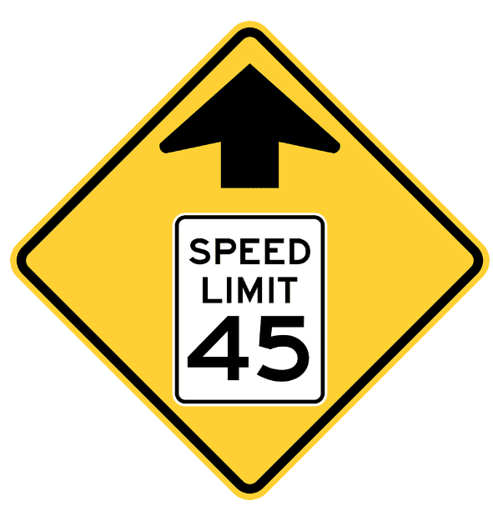
Recommended safe maximum driving speed in ideal conditions for an upcoming curve, ramp, or hazardous stretch of road.
This warning sign:
A) provides advance notice to upcoming speed limit change.
B) shows the current speed limit that all vehicles traveling in the direction of the arrow must not exceed.
C) indicates the suggested highest safe speed.
7.
___________ are green with white letters and symbols.
A) Warning signs
B) Destination signs (guide signs)
C) Regulation signs (regulatory signs)
8.
You face a green light, but traffic on the other side of the intersection does not allow you to travel all the way through the intersection. What must you do?
A) Enter the intersection and wait until traffic ahead clears.
B) Wait for the next green light.
C) Wait until traffic ahead clears, so you do not block the intersection.
9.
A good indication that it is safe to return to the right lane after passing a vehicle is when the vehicle that was passed:
A) is in your blind spot.
B) is on your left.
C) is not visible in the rearview mirror.
D) is visible in the rearview mirror.
10.
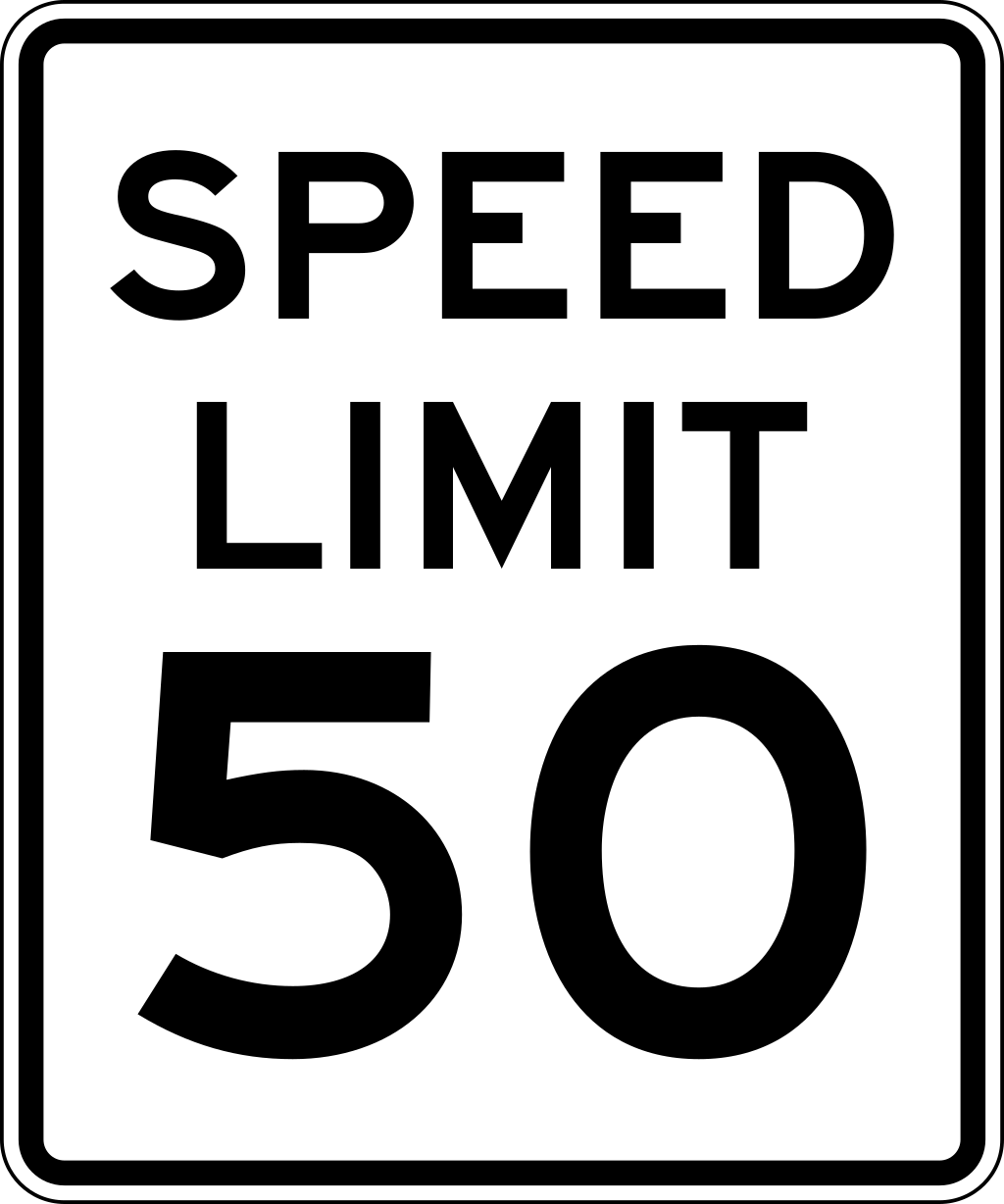
The maximum legal speed under ideal driving conditions is 50 miles per hour. Always adjust speed downward for adverse weather, traffic, or road conditions.
This sign indicates the _______________ vehicles can safely travel in this area.
A) suggested speed
B) maximum speed
C) minimum speed
11.
A yellow arrow means:
A) Do not go in the direction of the arrow.
B) If you intend to turn in the direction of the arrow, be prepared to stop.
C) The same as a steady yellow light.
12.
You must come to a full stop at a yield sign:
A) Always.
B) Never.
C) If traffic conditions require it.
13.
Designated school crosswalk location. You must yield to all schoolchildren and pedestrians in the crossing.
When you approach this sign, you must:
A) stop if necessary.
B) watch for workers crossing the road.
C) None of the above.
14.
A first conviction for driving under the influence of alcohol or any drug can result in a license suspension for at least:
A) 180 days.
B) 2 years.
C) 30 days.
D) 1 year.
15.
Your car stalls on the tracks at a railroad crossing, and a collision with a train is imminent. After getting yourself and your passengers out of the car, you should:
A) run toward the train but stay off the tracks.
B) signal the train to stop.
C) cross the tracks.
16.
The road makes a sharp 90-degree right turn ahead. Slow down considerably before entering the turn.
This sign warns drivers of:
A) a side road.
B) a sharp turn.
C) a cross road.
17.
Drivers can not pass a vehicle on the left if:
A) they approach the top of a hill on a two-way road and can not see over it.
B) they can not safely return to the right lane before they reach a solid yellow center line for the right lane.
C) All of the above.
18.
If you are blinded by headlights on an approaching vehicle, you should:
A) avoid looking directly at the bright lights.
B) glance toward the side of the road, then look quickly ahead to determine the other vehicle’s position.
C) All of the above.
19.
After parking, are you allowed to open a door on the road side of your vehicle?
A) Yes, always.
B) Yes, but only if it does not interfere with bicyclists and other traffic.
C) No, never.
20.
What type of pavement marking shows you which lane you must use for a turn?
A) Edge line
B) Diamond
C) Crosswalk Lines
D) Arrows
21.
Air bags are meant to _________ seat belts.
A) work with
B) fix
C) replace
22.
Double solid lines on the roadway mean:
A) you cannot pass.
B) you can not go across the lines except to turn left to enter or leave the highway.
C) All of the above.
23.
Which of the following must you obey over the others?
A) Red light
B) Stop sign
C) Police officer
24.
When following a motorcycle, drivers must remember that motorcycles can ____________ than other vehicles.
A) accelerate much faster
B) stop much more quickly
C) stop much more slowly
25.
Where are yield signs usually placed?
A) At intersections, if there is no marked stop line.
B) Where auxiliary roads lead into major roads.
C) Where major roads lead into auxiliary roads.
26.
You should never depend on your mirrors when you prepare to change lanes. Why?
A) Mirrors leave “blind spots” behind both sides of vehicles.
B) Mirrors need to be adjusted.
C) Mirrors are useless.
27.
Your BAC depends on:
A) how fit you are.
B) the type of beverage you drink.
C) the amount of alcohol you drink.
28.
When entering traffic from a private driveway:
A) you have the right-of-way over other vehicles.
B) wait for the flagger to stop the traffic on the main road.
C) always wait for the traffic light to turn green.
D) yield to all vehicles on the main road.
29.
If another vehicle passes you on the left, you must:
A) increase your speed slightly and keep to the right.
B) decrease your speed, then pull over to the right and stop.
C) decrease your speed slightly and keep to the right.
30.
When other drivers around you are acting in anger, you should:
A) slow down or move over safely.
B) distance yourself from the situation.
C) avoid making eye contact.
D) All of the above.
31.
Another road crosses the highway ahead. Look left and right for crossing or entering vehicles.
This road sign means:
A) Crossroads ahead
B) Side Road
C) Turn right or go through
D) Flagger ahead
32.
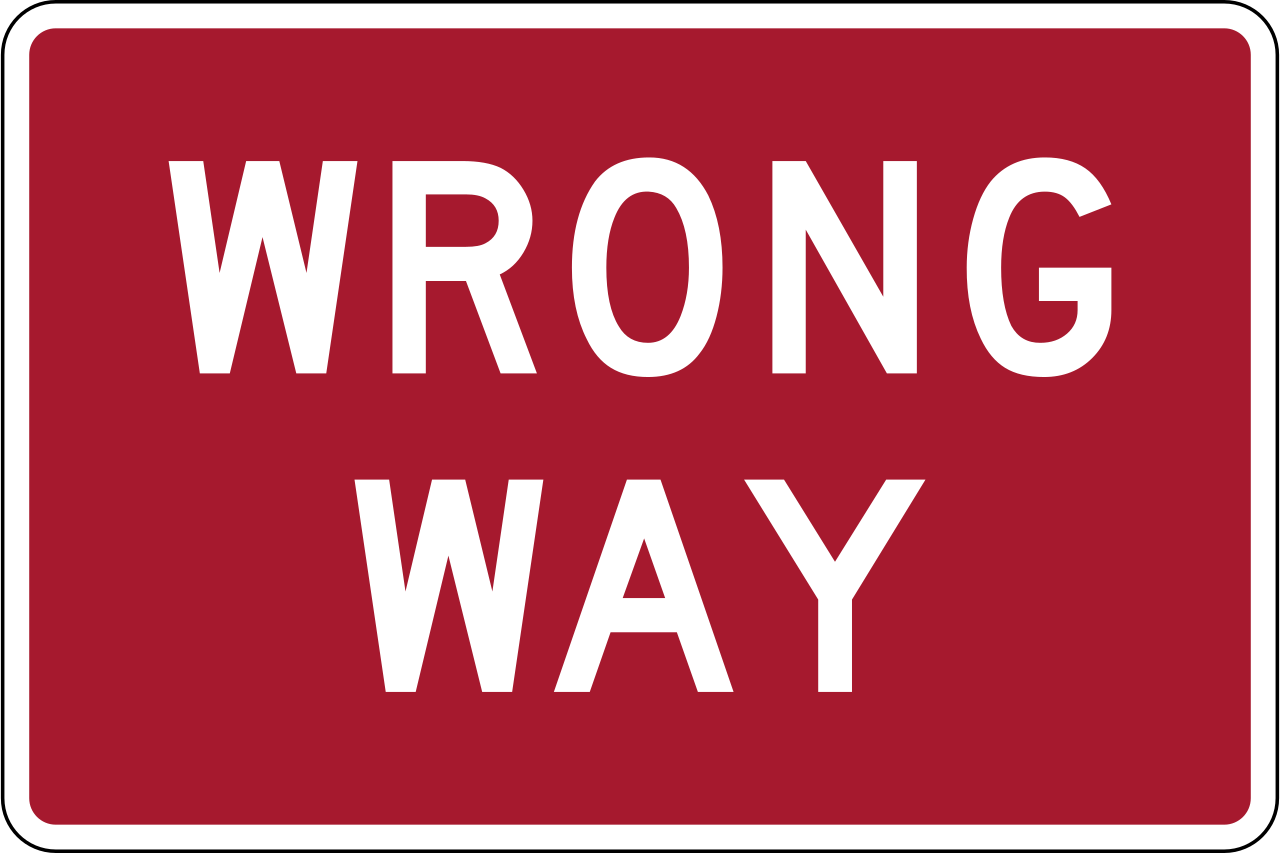
You are driving against the legal flow of traffic on a one-way street or freeway ramp. Immediately pull over, stop safely, and turn around when clear.
When drivers see this road sign:
A) they must come to a complete stop and call the police.
B) they must not drive past this sign.
C) they must turn around immediately.
33.
When you need to enter a freeway exit ramp:
A) don't slow down on the freeway itself. Wait until you are in the deceleration lane.
B) pass slower vehicles on the right.
C) slow down before entering the exit ramp.
D) don't slow down on the freeway itself, and maintain your speed once in the exit ramp.
34.
Following another vehicle too closely is known as:
A) speedgating.
B) closetailing.
C) tailgating.
35.
Treat the flashing red signal exactly like a STOP sign: come to a complete stop, yield to cross traffic and pedestrians, then proceed when safe.
What does a flashing red light mean?
A) NO TURN ON RED.
B) The same thing as a stop sign.
C) Drivers may move forward with caution.
36.
Examples of proper glass maintenance include:
A) Replacing worn wiper blades.
B) Keeping your windows clean and clear.
C) All of the above.
37.
What should you do when an aggressive driver confronts you?
A) Avoid eye contact with the aggressive driver.
B) Make eye contact.
C) Challenge the aggressive driver with increased speed.
38.
What should you do if you see smoke come from under the hood?
A) Call the fire department and then pull off the road and park your vehicle.
B) Pull off the road and park your vehicle. Turn off the ignition, get away from the car and call the fire department.
C) Try to fight the fire yourself.
39.
When driving at night, you should slow down and:
A) use high beams whenever possible, but never when there's oncoming traffic.
B) use high beams until other drivers dim their lights.
C) follow the vehicle ahead more closely to avoid glare from oncoming headlights.
D) come to a complete stop whenever there's oncoming traffic.
40.
Braking distance is:
A) usually 50 feet.
B) how far a vehicle will travel, in ideal conditions, while the driver is braking.
C) the total distance a vehicle has traveled until it comes to a complete stop.
D) how far a vehicle will continue to travel before the driver hits the brakes.
ANSWER KEY Check answers after completing the test.
1 A
2 A
3 C
4 A
5 C
6 A
7 B
8 C
9 D
10 B
11 B
12 C
13 A
14 D
15 A
16 B
17 C
18 C
19 B
20 D
21 A
22 C
23 C
24 B
25 B
26 A
27 C
28 D
29 C
30 D
31 A
32 C
33 A
34 C
35 B
36 C
37 A
38 B
39 A
40 B