Question 1:
At intersections where two or more drivers stop at STOP signs at the same time and they are at right angles:
A
the driver on the left must yield to the driver on the right.
B
the driver who is late for work has the right-of-way.
C
the driver on the right must yield to the driver on the left.
Answer Explanation
The correct driving rule is: the driver on the left must yield to the driver on the right. Following standard DMV road rules and practicing defensive driving ensures safety for all road users.
The correct driving rule is: the driver on the left must yield to the driver on the right. Following standard DMV road rules and practicing defensive driving ensures safety for all road users.
Question 2:
 This road sign means:
A
No left turn
B
No right turn
C
No U-turns
Answer Explanation
This traffic sign indicates: No right turn. Observing and obeying all roadway signs ensures safe traffic flow and legal driving.
This traffic sign indicates: No right turn. Observing and obeying all roadway signs ensures safe traffic flow and legal driving.
Question 3:
The driver of an emergency vehicle that uses lights and a siren can legally:
A
pass red lights.
B
exceed the speed limit
C
All of the above.
Answer Explanation
Sharing the road safely requires mutual awareness and respect: pass red lights; exceed the speed limit. Maintaining safe space cushions protects all roadway users.
Sharing the road safely requires mutual awareness and respect: pass red lights; exceed the speed limit. Maintaining safe space cushions protects all roadway users.
Question 4:
A driver approaching a flashing red traffic signal must:
A
merge to the left.
B
stop before the intersection.
C
carefully drive through the intersection without stopping.
D
slow down at the traffic signal.
Answer Explanation
This traffic sign indicates: stop before the intersection. Observing and obeying all roadway signs ensures safe traffic flow and legal driving.
This traffic sign indicates: stop before the intersection. Observing and obeying all roadway signs ensures safe traffic flow and legal driving.
Question 5:
When driving in work zones, drivers should:
A
tailgate the vehicle ahead while reducing their speed.
B
pass the vehicle ahead when safe.
C
keep a safe following distance.
Answer Explanation
The correct driving rule is: keep a safe following distance. Following standard DMV road rules and practicing defensive driving ensures safety for all road users.
The correct driving rule is: keep a safe following distance. Following standard DMV road rules and practicing defensive driving ensures safety for all road users.
Question 6:
When merging onto an interstate highway, drivers should:
A
always stop before entering the highway.
B
select a safe gap and merge into the lane of traffic.
C
turn on their emergency flashers right before merging.
Answer Explanation
Defensive driving guidelines state that: select a safe gap and merge into the lane of traffic. Anticipating road hazards and communicating maneuvers keeps traffic predictable and safe.
Defensive driving guidelines state that: select a safe gap and merge into the lane of traffic. Anticipating road hazards and communicating maneuvers keeps traffic predictable and safe.
Question 7:
Regulatory signs are:
A
white.
B
yellow.
C
green.
Answer Explanation
The correct driving rule is: white. Following standard DMV road rules and practicing defensive driving ensures safety for all road users.
The correct driving rule is: white. Following standard DMV road rules and practicing defensive driving ensures safety for all road users.
Question 8:
 This road sign means:
A
School zone ahead
B
Pedestrians must not cross here
C
Pedestrian crossing ahead
Answer Explanation
This traffic sign indicates: Pedestrian crossing ahead. Observing and obeying all roadway signs ensures safe traffic flow and legal driving.
This traffic sign indicates: Pedestrian crossing ahead. Observing and obeying all roadway signs ensures safe traffic flow and legal driving.
Question 9:
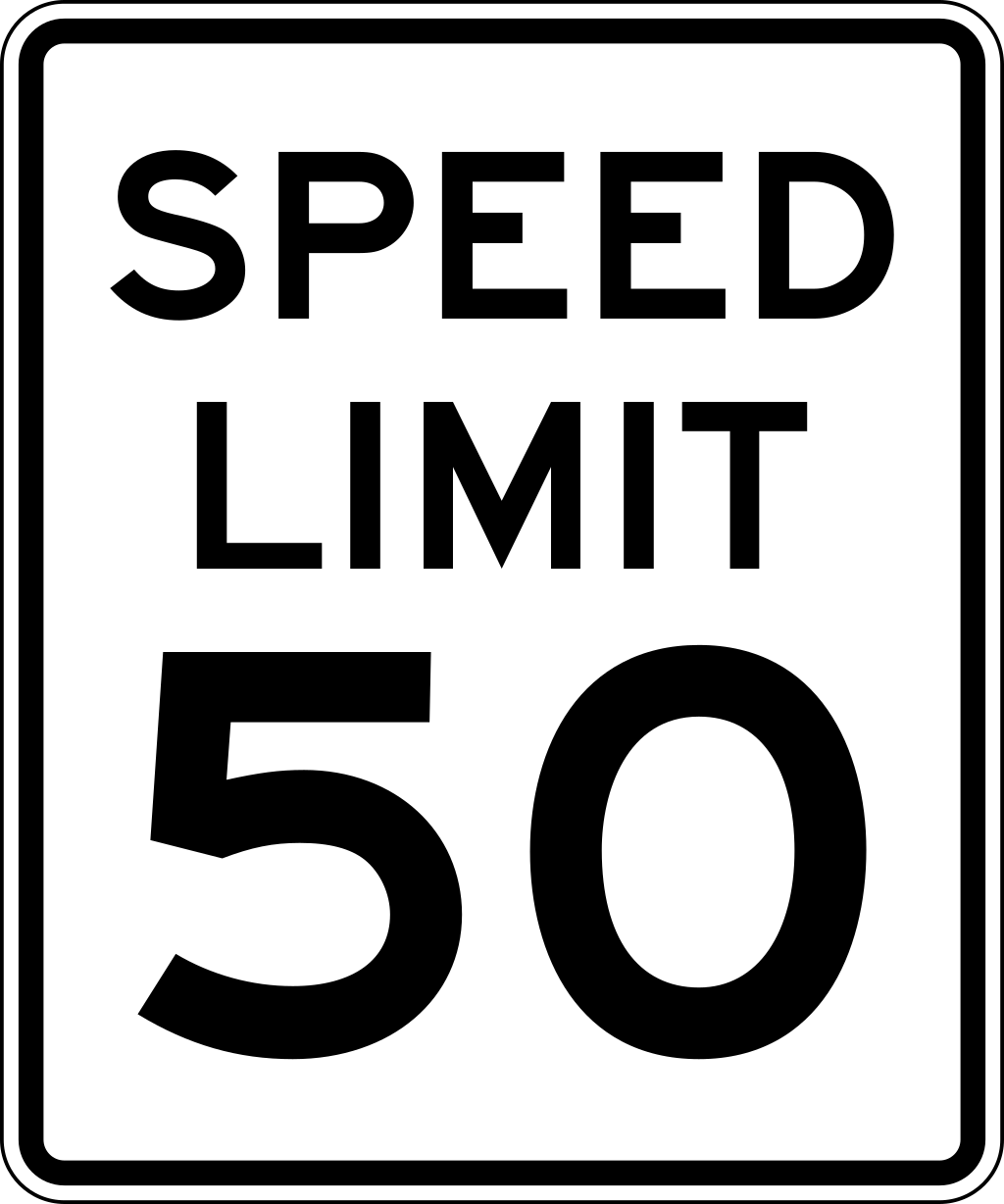 This road sign means:
A
You must travel at the speed indicated
B
The maximum speed limit under ideal conditions
C
None of the above
Answer Explanation
This traffic sign indicates: The maximum speed limit under ideal conditions. Observing and obeying all roadway signs ensures safe traffic flow and legal driving.
This traffic sign indicates: The maximum speed limit under ideal conditions. Observing and obeying all roadway signs ensures safe traffic flow and legal driving.
Question 10:
A driver who approaches an intersection:
A
must yield the right-of-way to traffic already in the intersection.
B
must drive straight through the intersection, even if another vehicle is already in the intersection.
C
has the right-of-way over traffic already in the intersection.
Answer Explanation
According to standard right-of-way regulations: must yield the right-of-way to traffic already in the intersection. Yielding appropriately prevents intersection collisions and maintains safe traffic flow.
According to standard right-of-way regulations: must yield the right-of-way to traffic already in the intersection. Yielding appropriately prevents intersection collisions and maintains safe traffic flow.
Question 11:
When driving in snow, you should:
A
use your cruise control if possible.
B
slowly increase your speed for better traction.
C
make speed and directional changes more gradually.
Answer Explanation
For safe speed and stopping control: make speed and directional changes more gradually. Adjusting speed to match visibility and road traction prevents loss of steering grip.
For safe speed and stopping control: make speed and directional changes more gradually. Adjusting speed to match visibility and road traction prevents loss of steering grip.
Question 12:
Green and white signs:
A
give information about directions and distances.
B
are mainly used at intersections and driveways.
C
warn drivers of unexpected road conditions.
Answer Explanation
The correct driving rule is: give information about directions and distances. Following standard DMV road rules and practicing defensive driving ensures safety for all road users.
The correct driving rule is: give information about directions and distances. Following standard DMV road rules and practicing defensive driving ensures safety for all road users.
Question 13:
You are approaching an intersection when the signal turns yellow. You should:
A
speed up to get through the intersection before the red light comes on.
B
stop then enter the intersection when safe to do so.
C
slow down and proceed with caution through the intersection.
Answer Explanation
According to standard right-of-way regulations: stop then enter the intersection when safe to do so. Yielding appropriately prevents intersection collisions and maintains safe traffic flow.
According to standard right-of-way regulations: stop then enter the intersection when safe to do so. Yielding appropriately prevents intersection collisions and maintains safe traffic flow.
Question 14:
While driving, it is important to slow down:
A
when the road is wet.
B
on narrow roads.
C
at intersections.
D
All of the above.
Answer Explanation
All of the listed points are essential driving requirements: when the road is wet; on narrow roads; at intersections. Practicing each ensures compliance with DMV safety laws.
All of the listed points are essential driving requirements: when the road is wet; on narrow roads; at intersections. Practicing each ensures compliance with DMV safety laws.
Question 15:
On average, how long does it take your body to remove the alcohol contained in 5 ounces of wine?
A
one hour.
B
30 minutes.
C
3 hours.
Answer Explanation
Under state DUI and traffic safety laws: one hour. Alcohol degrades judgment, slows reaction times, and distorts depth perception.
Under state DUI and traffic safety laws: one hour. Alcohol degrades judgment, slows reaction times, and distorts depth perception.
Question 16:
You should never depend on your mirrors when you prepare to change lanes. Why?
A
Mirrors leave “blind spots” behind both sides of vehicles.
B
Mirrors need to be adjusted.
C
Mirrors are useless.
Answer Explanation
The correct driving rule is: Mirrors leave “blind spots” behind both sides of vehicles. Following standard DMV road rules and practicing defensive driving ensures safety for all road users.
The correct driving rule is: Mirrors leave “blind spots” behind both sides of vehicles. Following standard DMV road rules and practicing defensive driving ensures safety for all road users.
Question 17:
Vehicle stopping distance never depends on:
A
the condition of your vehicle's brakes.
B
your own reaction time.
C
the time of day.
D
the condition and type of vehicle tires.
Answer Explanation
For safe speed and stopping control: the time of day. Adjusting speed to match visibility and road traction prevents loss of steering grip.
For safe speed and stopping control: the time of day. Adjusting speed to match visibility and road traction prevents loss of steering grip.
Question 18:
A broken white line:
A
means passing or crossing is prohibited in that lane.
B
separates two lanes traveling in the same direction.
C
marks the right edge of the roadway.
Answer Explanation
The correct driving rule is: separates two lanes traveling in the same direction. Following standard DMV road rules and practicing defensive driving ensures safety for all road users.
The correct driving rule is: separates two lanes traveling in the same direction. Following standard DMV road rules and practicing defensive driving ensures safety for all road users.
Question 19:
This sign tells drivers that:
A
they must make a left turn at the intersection.
B
U-turns are not allowed.
C
they must not make a right turn.
D
None of the above.
Answer Explanation
This traffic sign indicates: they must not make a right turn. Observing and obeying all roadway signs ensures safe traffic flow and legal driving.
This traffic sign indicates: they must not make a right turn. Observing and obeying all roadway signs ensures safe traffic flow and legal driving.
Question 20:
A thumping sound can be a warning:
A
that a tire blowout is about to occur.
B
of a steering failure.
C
of a brake failure.
Answer Explanation
The correct driving rule is: that a tire blowout is about to occur. Following standard DMV road rules and practicing defensive driving ensures safety for all road users.
The correct driving rule is: that a tire blowout is about to occur. Following standard DMV road rules and practicing defensive driving ensures safety for all road users.
Question 21:
If you see a “lane closed ahead” sign you should:
A
make a U-turn. You are on the wrong side of the road.
B
merge into the correct lane when it is safe.
C
speed to the end of the closed lane and try to get into the other lane.
Answer Explanation
The correct driving rule is: merge into the correct lane when it is safe. Following standard DMV road rules and practicing defensive driving ensures safety for all road users.
The correct driving rule is: merge into the correct lane when it is safe. Following standard DMV road rules and practicing defensive driving ensures safety for all road users.
Question 22:
 The octagonal shape is used:
A
for stop signs and railroad advance warning signs.
B
exclusively for stop signs.
C
to warn drivers of existing or possible hazards on roadways.
Answer Explanation
An octagonal Stop sign requires a full and complete stop before the stop line or crosswalk: exclusively for stop signs. Proceed only after yielding to all cross traffic and pedestrians.
An octagonal Stop sign requires a full and complete stop before the stop line or crosswalk: exclusively for stop signs. Proceed only after yielding to all cross traffic and pedestrians.
Question 23:
When preparing to drive, you should:
A
adjust your seat and mirrors.
B
shift the transmission to neutral.
C
pump the brakes.
Answer Explanation
The correct driving rule is: adjust your seat and mirrors. Following standard DMV road rules and practicing defensive driving ensures safety for all road users.
The correct driving rule is: adjust your seat and mirrors. Following standard DMV road rules and practicing defensive driving ensures safety for all road users.
Question 24:
When approaching someone using a white cane or guide dog, drivers should:
A
carefully drive around them.
B
stop until the person is well away from the roadway or path of travel.
C
honk their horn as they proceed past them.
Answer Explanation
The correct driving rule is: stop until the person is well away from the roadway or path of travel. Following standard DMV road rules and practicing defensive driving ensures safety for all road users.
The correct driving rule is: stop until the person is well away from the roadway or path of travel. Following standard DMV road rules and practicing defensive driving ensures safety for all road users.