Question 1:
If a traffic signal light is green and a police officer signals you to stop:
A
you must stop.
B
you must go.
This traffic sign indicates: you must stop. Observing and obeying all roadway signs ensures safe traffic flow and legal driving.
Question 2:
When driving on wet roads, you should remember:
A
driving on wet roads can cause hydroplaning.
B
you should give yourself additional time to stop.
C
to stay farther behind the vehicle ahead of you.
D
All of the above.
All of the listed points are essential driving requirements: driving on wet roads can cause hydroplaning; you should give yourself additional time to stop; to stay farther behind the vehicle ahead of you. Practicing each ensures compliance with DMV safety laws.
Question 3:
Your first response to reduced visibility should be:
A
to look for road edge markings to guide you.
B
to turn on your windshield wipers.
C
to reduce your speed.
D
to turn on your headlights.
The correct driving rule is: to reduce your speed. Following standard DMV road rules and practicing defensive driving ensures safety for all road users.
Question 4:
Roads with double solid yellow lines in the center indicate that passing is:
A
not allowed in either direction.
B
allowed only in your direction of travel.
C
allowed in both directions.
Defensive driving guidelines state that: not allowed in either direction. Anticipating road hazards and communicating maneuvers keeps traffic predictable and safe.
Question 5:
You are approaching an intersection with a yellow flashing light. You should:
A
stop and wait for the light to change.
B
speed up to beat the red light.
C
prepare to stop; the light is about to turn red.
D
proceed with caution through the intersection.
This traffic sign indicates: proceed with caution through the intersection. Observing and obeying all roadway signs ensures safe traffic flow and legal driving.
Question 6:
When you are in a line of traffic that is crossing a railroad track that has no signals or gates:
A
you may pass slower drivers crossing the track.
B
before you start to cross, you need to make sure there is space to get all the way across the tracks without stopping.
C
you have the right of way and do not need to check for trains.
D
All of the above.
The correct driving rule is: before you start to cross, you need to make sure there is space to get all the way across the tracks without stopping. Following standard DMV road rules and practicing defensive driving ensures safety for all road users.
Question 7:
An aggressive driver:
A
competes with other traffic.
B
weaves in and out of traffic.
C
shows little or no respect for traffic laws.
D
All of the above.
All of the listed points are essential driving requirements: competes with other traffic; weaves in and out of traffic; shows little or no respect for traffic laws. Practicing each ensures compliance with DMV safety laws.
Question 8:
To drive defensively you should:
A
always put one car length between you and the car ahead.
B
keep your eyes moving to look for possible hazards.
C
look only at the car in front of you while driving.
The correct driving rule is: keep your eyes moving to look for possible hazards. Following standard DMV road rules and practicing defensive driving ensures safety for all road users.
Question 9:
Excessive speed:
A
helps you to maneuver around obstacles.
B
saves time so you can get to your destination more quickly.
C
increases the likelihood of serious bodily injuries and death.
For safe speed and stopping control: increases the likelihood of serious bodily injuries and death. Adjusting speed to match visibility and road traction prevents loss of steering grip.
Question 10:
A red traffic sign means?
A
Do not enter.
B
Stop.
C
All of the above.
This sign alerts drivers to several mandatory requirements: Do not enter, Stop. Obeying all posted traffic control instructions is required by law.
Question 11:
If a traffic officer signals you to drive through a red light:
A
you must do it.
B
you must wait for the red light to turn green.
C
you must not obey the officer. Signs and signals take precedence over directions given by traffic officers.
According to standard right-of-way regulations: you must do it. Yielding appropriately prevents intersection collisions and maintains safe traffic flow.
Question 12:
To reduce road rage, you should:
A
always signal your intention when changing lanes.
B
use your horn frequently to warn other drivers.
C
talk on your cell phone while driving.
The correct driving rule is: always signal your intention when changing lanes. Following standard DMV road rules and practicing defensive driving ensures safety for all road users.
Question 13:
 This sign means:
A
Merge left
B
Merge right
C
Divided highway begins
This traffic sign indicates: merge left. Observing and obeying all roadway signs ensures safe traffic flow and legal driving.
Question 14:
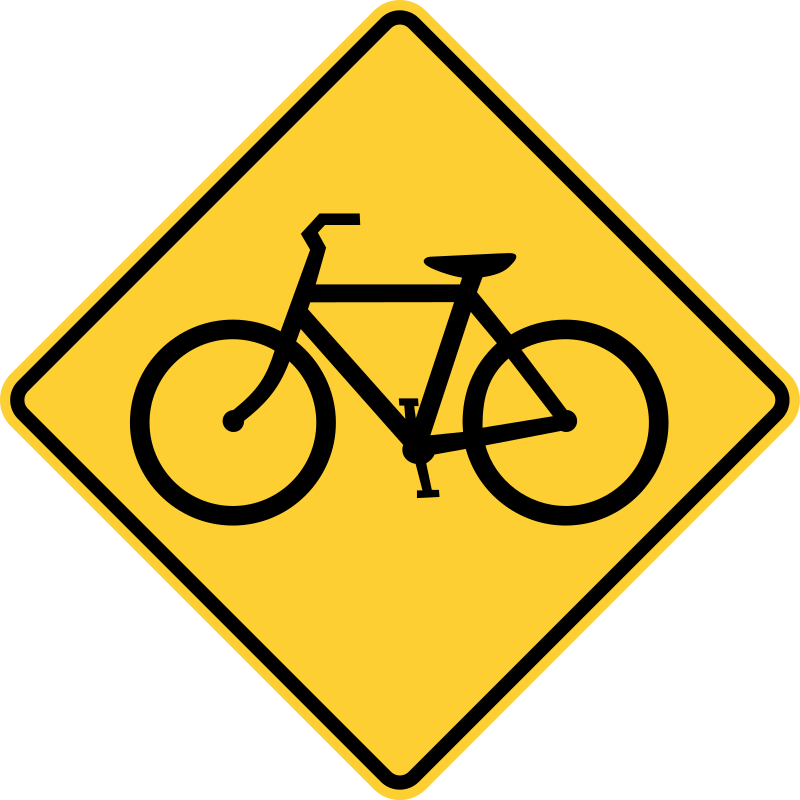 This road sign means:
A
Watch for bicycles
B
Bicycle parking ahead
C
Bicycles are not allowed in this area
This traffic sign indicates: watch for bicycles. Observing and obeying all roadway signs ensures safe traffic flow and legal driving.
Question 15:
Don't be afraid to sound a sharp blast on your horn when:
A
when a child is about to run into the street.
B
another vehicle is in danger of hitting you.
C
All of the above.
All of the listed points are essential driving requirements: when a child is about to run into the street; another vehicle is in danger of hitting you. Practicing each ensures compliance with DMV safety laws.
Question 16:
Anything that requires you to _______ could cause you to crash.
A
take your hands off the wheel
B
take your attention away from driving
C
take your eyes off the road
D
All of the above.
All of the listed points are essential driving requirements: take your hands off the wheel; take your attention away from driving; take your eyes off the road. Practicing each ensures compliance with DMV safety laws.
Question 17:
If you park facing uphill where there is NO curb, you should set the parking brake and:
A
turn the wheels toward the curb.
B
leave the wheels straight.
C
turn the wheels toward the edge of the road.
When parking uphill with a curb: turn the wheels toward the edge of the road. Turn wheels away from the curb (left) so the back of the front tire catches the curb if brakes slip.
Question 18:
 This sign warns drivers that:
A
the highway ahead is divided into two one-way roadways. Drivers should keep to the right.
B
there is a winding road ahead.
C
there is a double curve ahead.
This traffic sign indicates: there is a double curve ahead. Observing and obeying all roadway signs ensures safe traffic flow and legal driving.
Question 19:
When you make a left turn from a one-way road into a two-way road, you must:
A
enter the two-way road to the left of its center line.
B
make a U-turn into the two-way road.
C
enter the two-way road to the right of its center line.
The correct driving rule is: enter the two-way road to the right of its center line. Following standard DMV road rules and practicing defensive driving ensures safety for all road users.
Question 20:
Which of the following is NOT true about ABS?
A
It improves the vehicle stability.
B
It helps increase your stopping distance.
C
It improves the steering ability.
The correct driving rule is: it helps increase your stopping distance. Following standard DMV road rules and practicing defensive driving ensures safety for all road users.
Question 21:
You may pass another vehicle:
A
when there is a solid yellow line on your side.
B
on a curve or a hill.
C
on the shoulder of the highway.
D
None of the above.
None of the provided options represent the legal or safe driving procedure. Always consult official DMV handbook guidelines for this scenario.
Question 22:
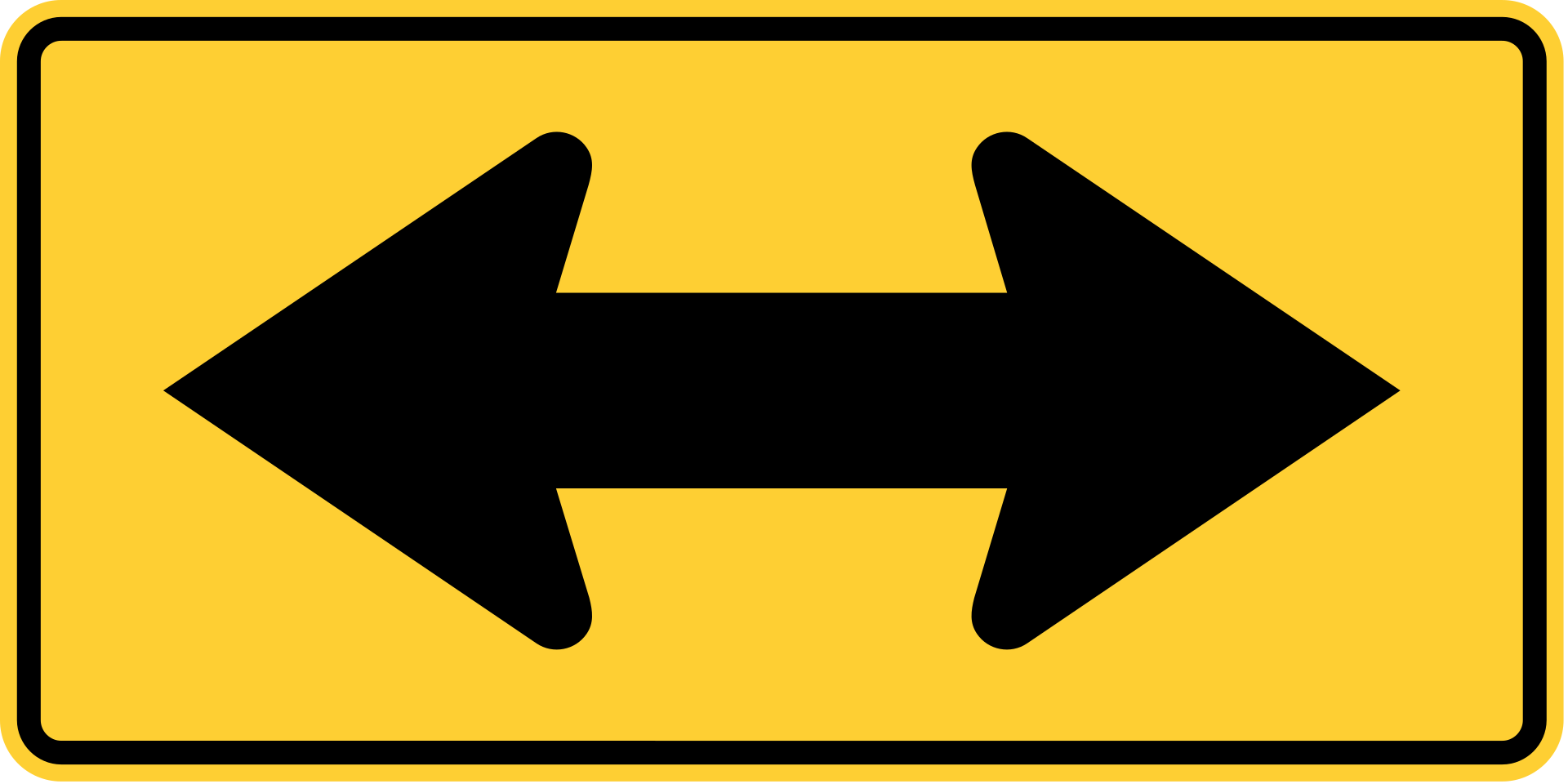 This road sign tells drivers that:
A
they must change lane immediately.
B
they must turn either to the right or left.
C
the one-way street or roadway ahead ends.
D
None of the above.
This traffic sign indicates: they must turn either to the right or left. Observing and obeying all roadway signs ensures safe traffic flow and legal driving.
Question 23:
Drivers must yield to pedestrians:
A
Always.
B
when pedestrians are crossing within a marked or unmarked crosswalk.
C
by slowing down and making sure they are being seen by pedestrians.
D
under no circumstances.
The correct driving rule is: when pedestrians are crossing within a marked or unmarked crosswalk. Following standard DMV road rules and practicing defensive driving ensures safety for all road users.
Question 24:
If a vehicle using high beams comes toward you, look towards __________ of the road.
A
either side
B
the center
C
the right side
D
the left side
The correct driving rule is: the right side. Following standard DMV road rules and practicing defensive driving ensures safety for all road users.
Question 25:
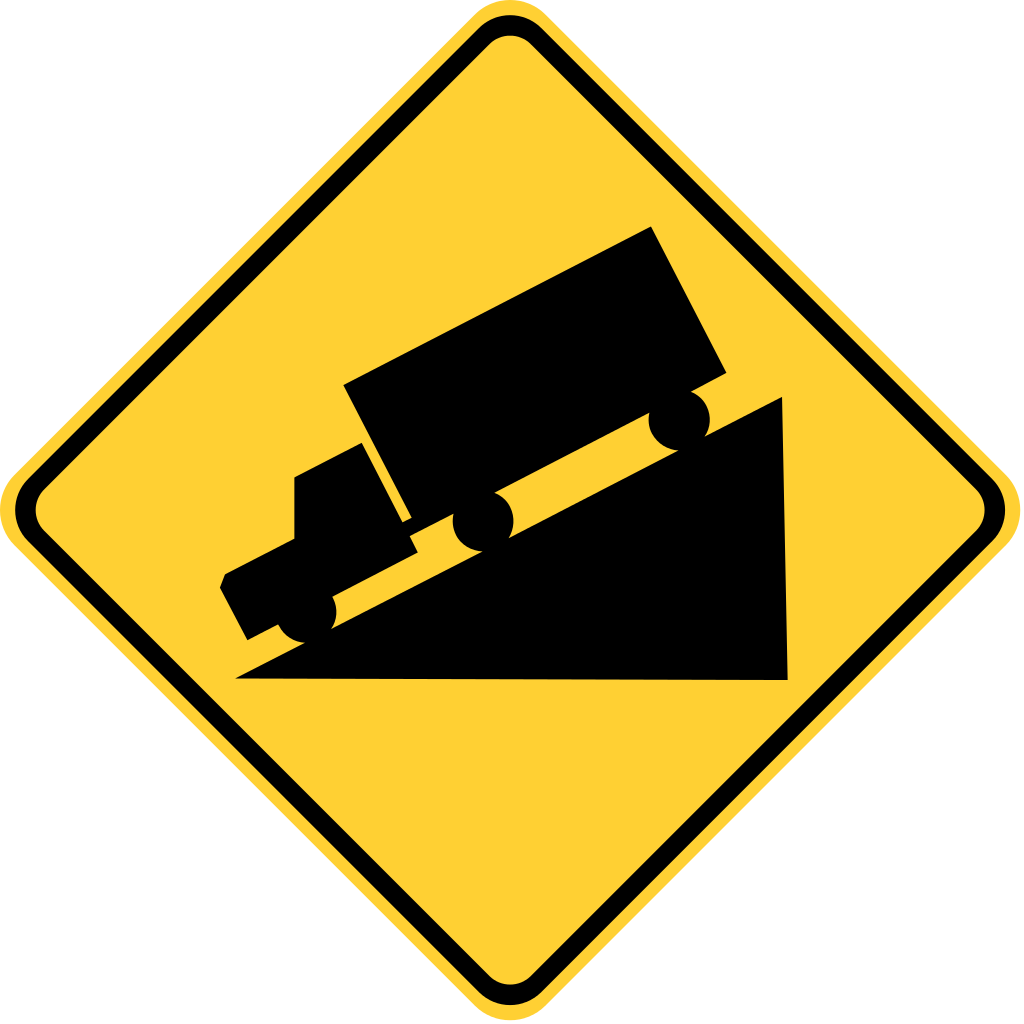 This road sign means:
A
Do not pass trucks
B
Truck must back up
C
Steep downgrade ahead
This traffic sign indicates: Steep downgrade ahead. Observing and obeying all roadway signs ensures safe traffic flow and legal driving.