Question 1:
At times even driving 10 MPH is too fast for existing conditions.
A
True
B
False
The correct driving rule is: True. Following standard DMV road rules and practicing defensive driving ensures safety for all road users.
Question 2:
 This road sign means:
A
Low clearance
B
Do not enter
C
A steep grade is ahead
This traffic sign indicates: Low clearance. Observing and obeying all roadway signs ensures safe traffic flow and legal driving.
Question 3:
On slippery roads, drivers should:
A
leave more space in front of their vehicle.
B
increase their speed to avoid hydroplaning.
C
come to a complete stop.
For safe speed and stopping control: leave more space in front of their vehicle. Adjusting speed to match visibility and road traction prevents loss of steering grip.
Question 4:
A yellow arrow on a traffic signal means:
A
Drivers are not required to signal before turning from that lane.
B
Be prepared to stop and give the right-of-way to oncoming vehicles.
C
Increase your speed to make the turn before the light changes.
This traffic sign indicates: Be prepared to stop and give the right-of-way to oncoming vehicles. Observing and obeying all roadway signs ensures safe traffic flow and legal driving.
Question 5:
Service signs are ____ with ____ letters and symbols.
A
blue; white
B
white; black
C
green; white
The correct driving rule is: blue; white. Following standard DMV road rules and practicing defensive driving ensures safety for all road users.
Question 6:
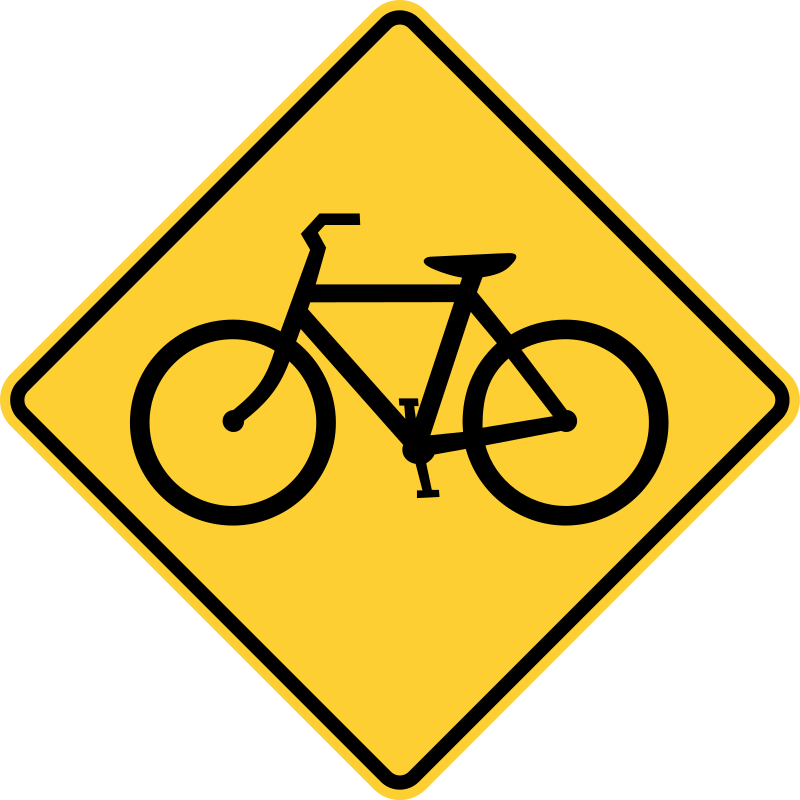 This road sign means:
A
Yield right-of-way to bicycles
B
Bicycles cross or ride beside traffic
C
Yield to motorcyles, but not to bicycles
D
Bicycles have the same rights as other vehicles
This traffic sign indicates: Bicycles cross or ride beside traffic. Observing and obeying all roadway signs ensures safe traffic flow and legal driving.
Question 7:
Drivers should use the horn:
A
if a driver is moving slowly, and you want them to drive faster.
B
only when necessary, to avoid collisions.
C
when feeling angry or upset.
D
to alert other drivers that they made a mistake.
The correct driving rule is: only when necessary, to avoid collisions. Following standard DMV road rules and practicing defensive driving ensures safety for all road users.
Question 8:
In general, you should pass vehicles going in the same direction as you are going:
A
only if the other driver signals it is safe.
B
whenever you have the opportunity to do so.
C
on the right.
D
on the left.
The correct driving rule is: on the left. Following standard DMV road rules and practicing defensive driving ensures safety for all road users.
Question 9:
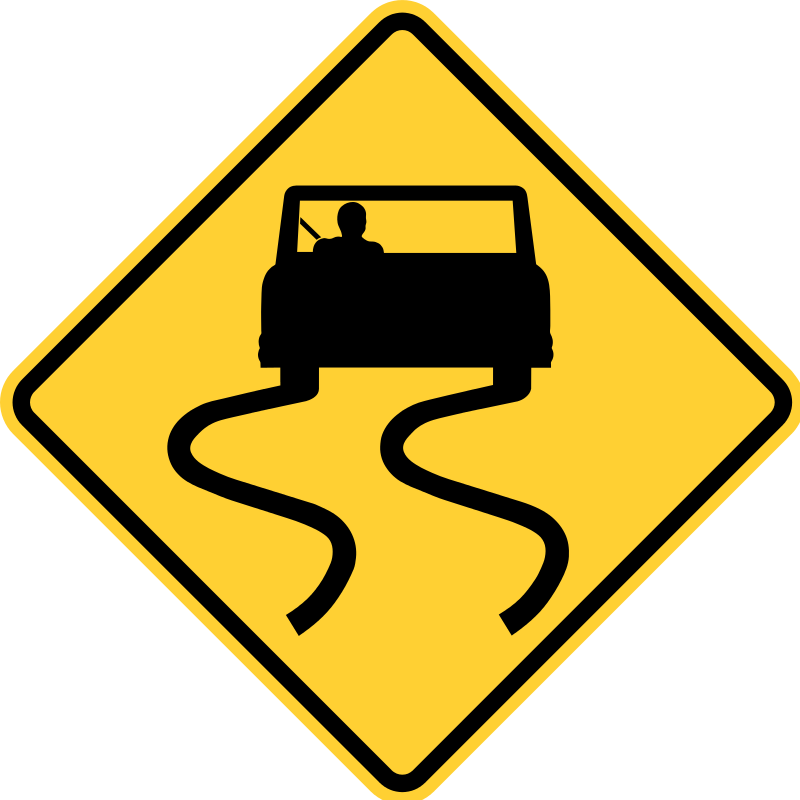 This road sign means:
A
Winding road ahead
B
Warning, slippery when wet
C
Railroad Warning
D
Stop Sign Ahead
This traffic sign indicates: Warning, slippery when wet. Observing and obeying all roadway signs ensures safe traffic flow and legal driving.
Question 10:
When driving in travel lanes on the roadway:
A
you may make a U-turn if you get on the wrong entrance ramp of the freeway.
B
you may stop to let out passengers.
C
do not stop for any reason, keep moving until you can safely pull off the road.
D
you may make back up quickly if there are no vehicles behind.
The correct driving rule is: do not stop for any reason, keep moving until you can safely pull off the road. Following standard DMV road rules and practicing defensive driving ensures safety for all road users.
Question 11:
 This road sign means:
A
Railroad Crossing
B
One Way
C
Limited parking
Circular signs with an 'X' and 'RR' designate a Railroad Advance Warning: Railroad Crossing. Drivers must slow down, look both ways, listen for trains, and be prepared to stop.
Question 12:
Are bicyclists required to obey traffic laws and signs?
A
No, bicyclists are considered pedestrians when it comes to the rules of the road.
B
Yes.
C
Yes, but only if they are riding in a bicycle lane.
The correct driving rule is: Yes. Following standard DMV road rules and practicing defensive driving ensures safety for all road users.
Question 13:
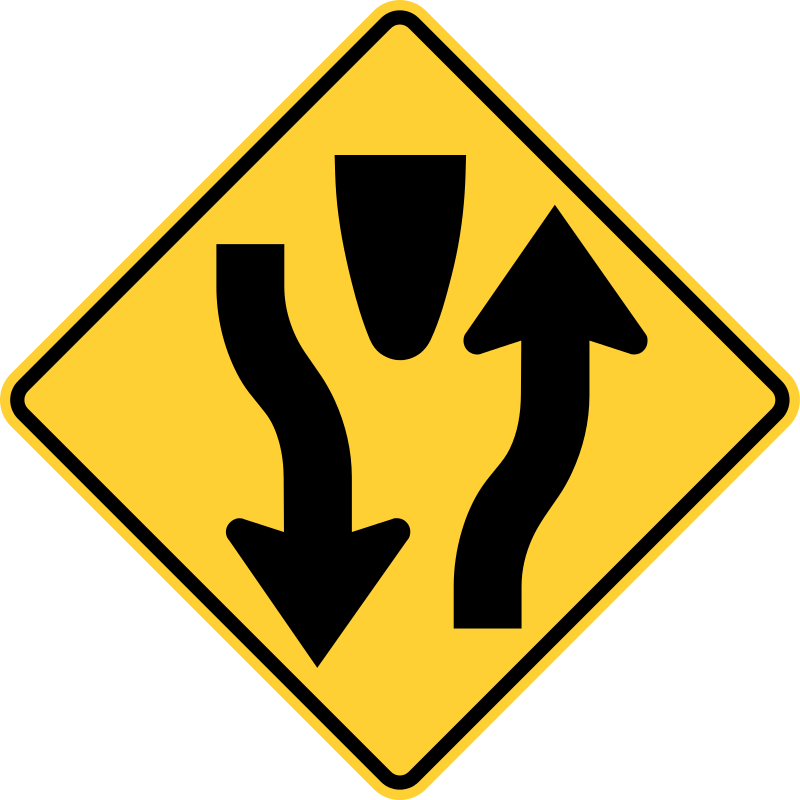 This road sign means:
A
Divided highway ahead - stay to the right
B
Do not enter
C
Do not pass
This traffic sign indicates: Divided highway ahead - stay to the right. Observing and obeying all roadway signs ensures safe traffic flow and legal driving.
Question 14:
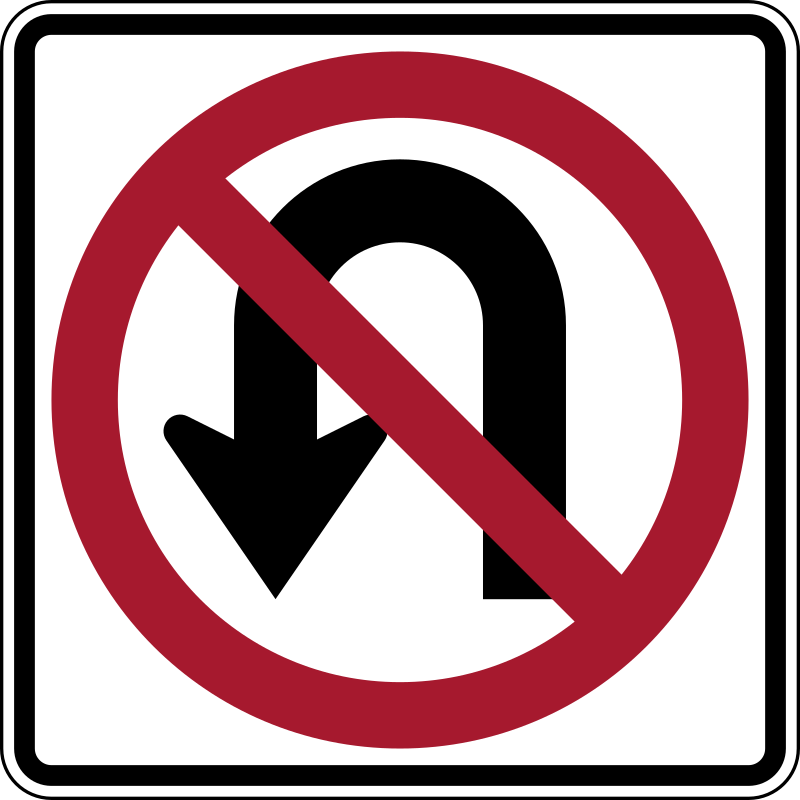 This road sign means:
A
No left turn
B
No U-turn
C
Detour ahead
This traffic sign indicates: No U-turn. Observing and obeying all roadway signs ensures safe traffic flow and legal driving.
Question 15:
When passing another vehicle, you should return to your lane if:
A
you have passed the other vehicle’s front bumper.
B
you are at least 25 feet in front of the passed vehicle.
C
you can see both headlights in the rearview mirror.
Defensive driving guidelines state that: you can see both headlights in the rearview mirror. Anticipating road hazards and communicating maneuvers keeps traffic predictable and safe.
Question 16:
To keep your vehicle from rolling into traffic when parked on a hill, if you are facing uphill you should:
A
turn the front wheels away from the curb or edge of the road.
B
turn the back wheels towards the curb or edge of the road.
C
set the parking brake and keep the front wheels straight.
D
turn the front wheels towards the curb or edge of the road.
Under standard parking and curb regulations: turn the front wheels away from the curb or edge of the road. Following parking distance clearances keeps roadways unobstructed and emergency lanes accessible.
Question 17:
When two cars arrive at an intersection with no signs or signals at the same time, which car has the right-of-way?
A
The car that is traveling faster.
B
The car approaching from the right.
C
The car approaching from the left.
D
The car in which the driver sounds the horn.
According to standard right-of-way regulations: The car approaching from the right. Yielding appropriately prevents intersection collisions and maintains safe traffic flow.
Question 18:
 This road sign means:
A
The left lane ends soon
B
one-way street ahead.
C
The right lane ends soon
D
Highway entrance ramp ahead
This traffic sign indicates: The right lane ends soon. Observing and obeying all roadway signs ensures safe traffic flow and legal driving.
Question 19:
Roads are most slippery:
A
just before it rains.
B
when it stops raining.
C
when it first starts to rain.
For safe speed and stopping control: when it first starts to rain. Adjusting speed to match visibility and road traction prevents loss of steering grip.
Question 20:
If you meet a stopped school bus with the lights flashing and the signal arm extended, you should:
A
proceed at 15 MPH or less, if no children are present.
B
stop.
C
watch for children and proceed at normal speed.
When a school bus displays flashing red lights and extended stop sign: stop. Traffic in both directions must come to a full stop on undivided roads until children are clear.
Question 21:
You are driving on a four-lane divided highway, two vehicles are driving side by side ahead of you, and you are in a hurry. You should:
A
drive closely behind the vehicles ahead changing lanes frequently.
B
drive in either lane with at least a two-second time interval behind the vehicle ahead.
C
drive closely behind the vehicle in the left lane and flash your headlights.
D
drive closely behind the vehicle in the right lane.
Defensive driving guidelines state that: drive in either lane with at least a two-second time interval behind the vehicle ahead. Anticipating road hazards and communicating maneuvers keeps traffic predictable and safe.
Question 22:
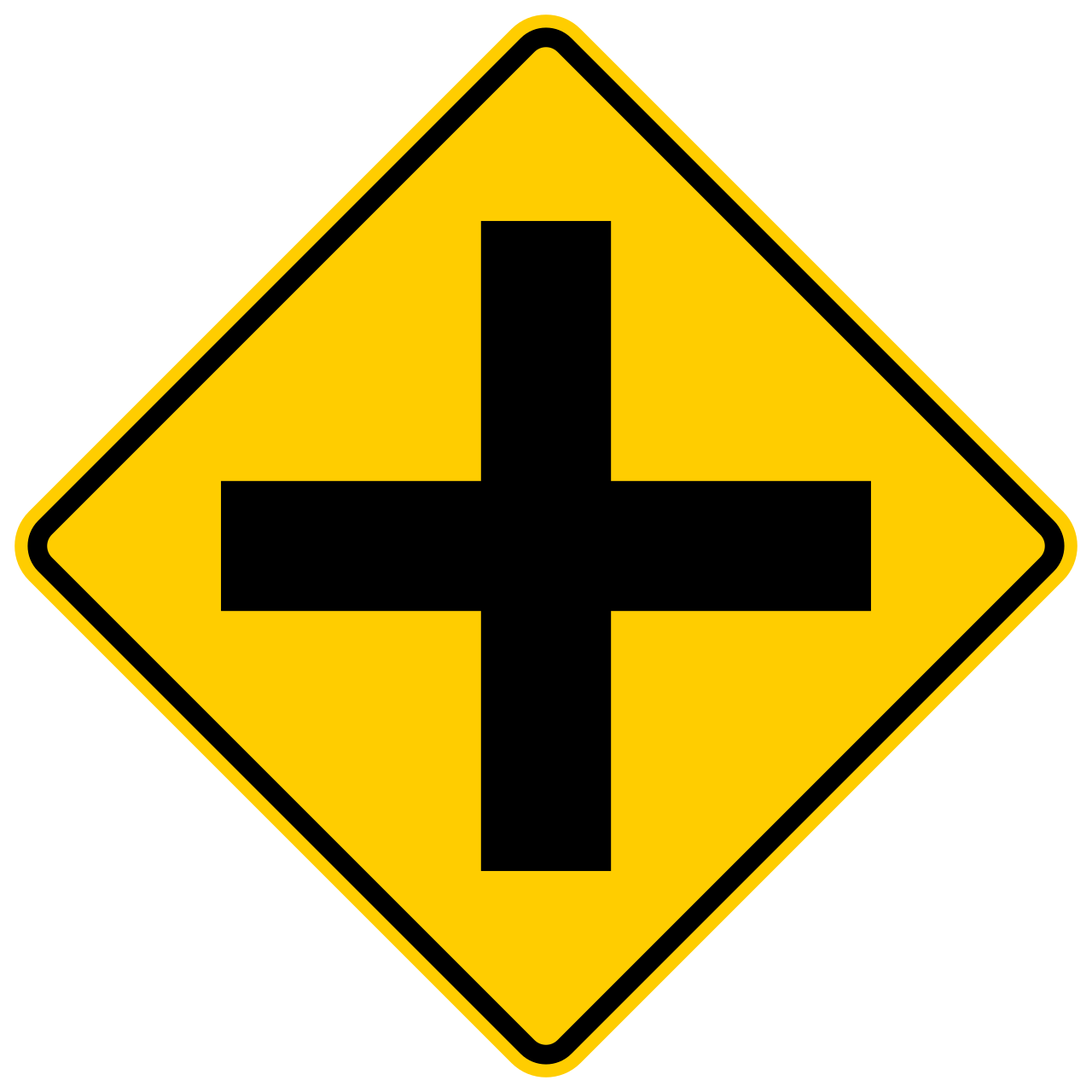 This sign indicates:
A
a side road.
B
a cross road.
C
a church zone ahead.
This traffic sign indicates: a cross road. Observing and obeying all roadway signs ensures safe traffic flow and legal driving.
Question 23:
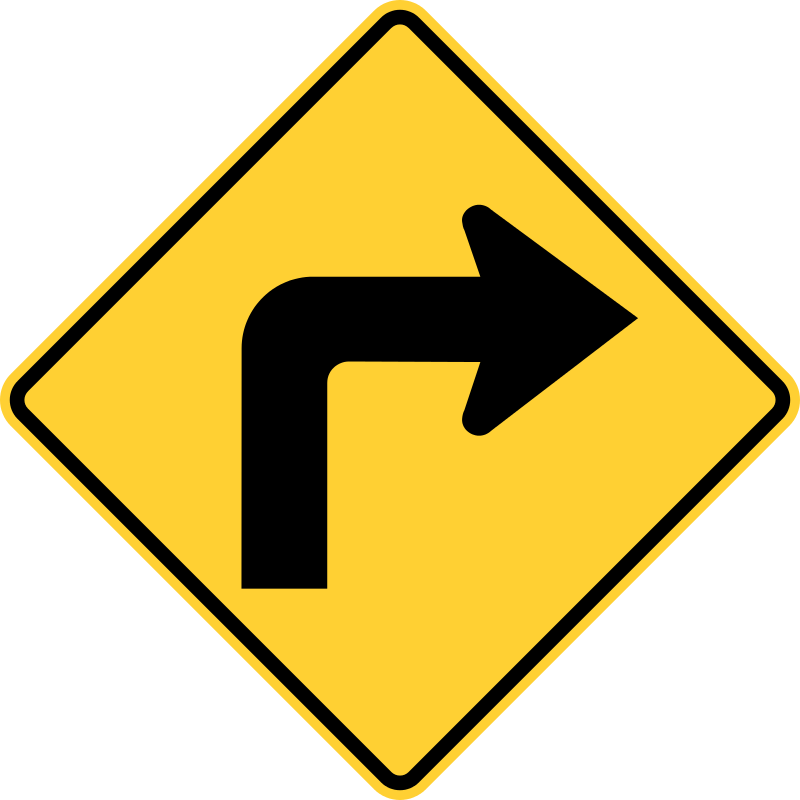 This road sign means:
A
One way
B
No right turn
C
Exit
D
Sharp right turn ahead
This traffic sign indicates: Sharp right turn ahead. Observing and obeying all roadway signs ensures safe traffic flow and legal driving.
Question 24:
Roads are the most slippery:
A
the first rain after a dry spell.
B
after it has been raining for an hour or more.
C
for the first 2 hours of a rain storm.
For safe speed and stopping control: the first rain after a dry spell. Adjusting speed to match visibility and road traction prevents loss of steering grip.
Question 25:
 What does this sign indicate?
A
The highway ahead is divided into two one-way roadways.
B
Winding road ahead. Drive with caution.
C
Drivers will soon be on a roadway with two-way traffic.
This traffic sign indicates: drivers will soon be on a roadway with two-way traffic. Observing and obeying all roadway signs ensures safe traffic flow and legal driving.