DriveQuiz drivequiz.com

NM DMV PERMİT PRACTİCE TEST 12

New Mexico
Duration: 22 min
|
Questions: 24
Student Name:
Date:
Correct:      Incorrect:      Score:      
1.
At intersections where two or more drivers stop at STOP signs at the same time and they are at right angles:
A) the driver on the left must yield to the driver on the right.
B) the driver who is late for work has the right-of-way.
C) the driver on the right must yield to the driver on the left.
2.
Right turns are strictly prohibited at this intersection under all circumstances.
This road sign means:
A) No left turn
B) No right turn
C) No U-turns
3.
The driver of an emergency vehicle that uses lights and a siren can legally:
A) pass red lights.
B) exceed the speed limit
C) All of the above.
4.
A driver approaching a flashing red traffic signal must:
A) merge to the left.
B) stop before the intersection.
C) carefully drive through the intersection without stopping.
D) slow down at the traffic signal.
5.
When driving in work zones, drivers should:
A) tailgate the vehicle ahead while reducing their speed.
B) pass the vehicle ahead when safe.
C) keep a safe following distance.
6.
When merging onto an interstate highway, drivers should:
A) always stop before entering the highway.
B) select a safe gap and merge into the lane of traffic.
C) turn on their emergency flashers right before merging.
7.
Regulatory signs are:
A) white.
B) yellow.
C) green.
8.
Yellow diamond warning that pedestrians may be crossing ahead. Exercise caution and yield.
This road sign means:
A) School zone ahead
B) Pedestrians must not cross here
C) Pedestrian crossing ahead
9.
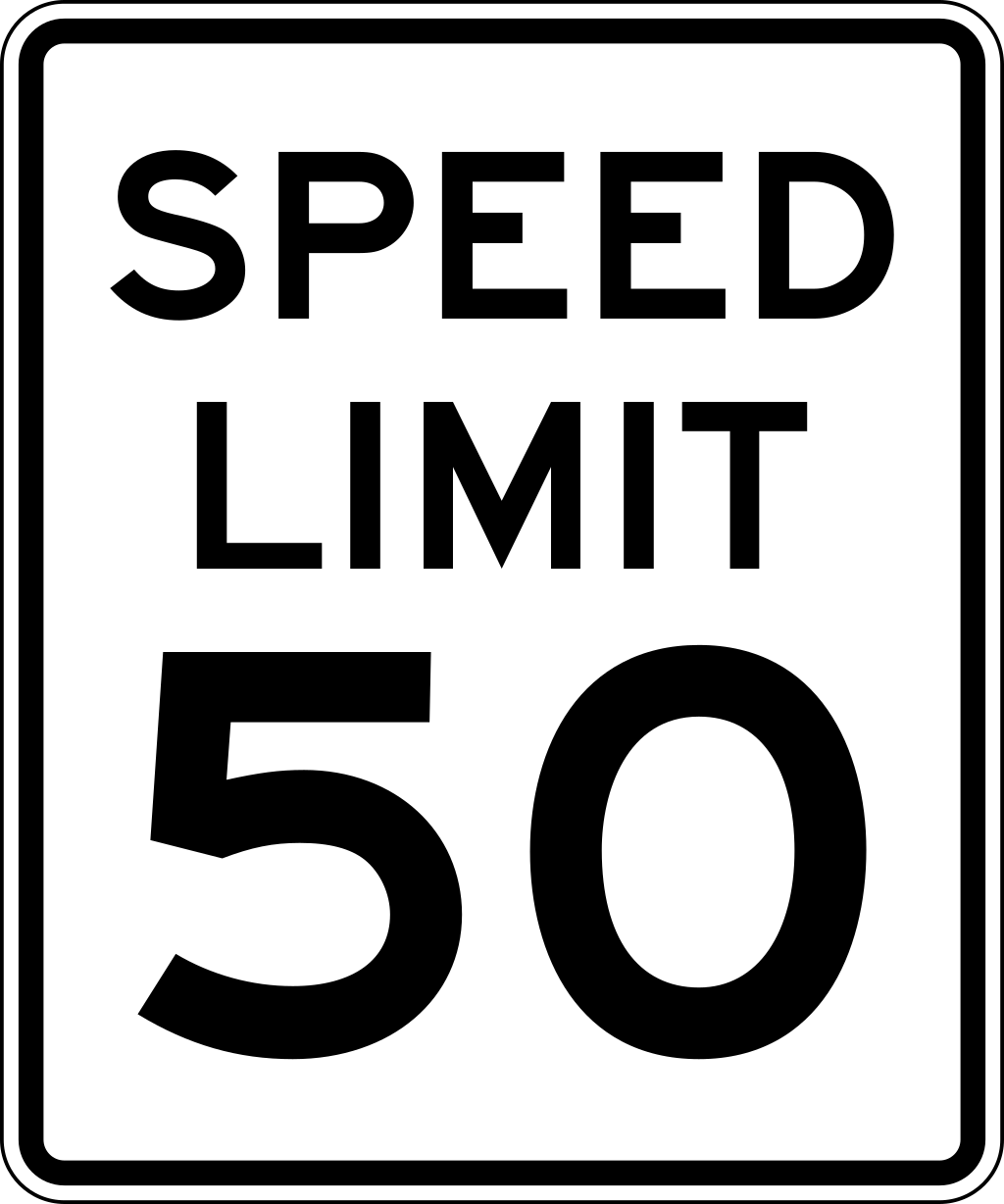
The maximum legal speed under ideal driving conditions is 50 miles per hour. Always adjust speed downward for adverse weather, traffic, or road conditions.
This road sign means:
A) You must travel at the speed indicated
B) The maximum speed limit under ideal conditions
C) None of the above
10.
A driver who approaches an intersection:
A) must yield the right-of-way to traffic already in the intersection.
B) must drive straight through the intersection, even if another vehicle is already in the intersection.
C) has the right-of-way over traffic already in the intersection.
11.
When driving in snow, you should:
A) use your cruise control if possible.
B) slowly increase your speed for better traction.
C) make speed and directional changes more gradually.
12.
Green and white signs:
A) give information about directions and distances.
B) are mainly used at intersections and driveways.
C) warn drivers of unexpected road conditions.
13.
You are approaching an intersection when the signal turns yellow. You should:
A) speed up to get through the intersection before the red light comes on.
B) stop then enter the intersection when safe to do so.
C) slow down and proceed with caution through the intersection.
14.
While driving, it is important to slow down:
A) when the road is wet.
B) on narrow roads.
C) at intersections.
D) All of the above.
15.
On average, how long does it take your body to remove the alcohol contained in 5 ounces of wine?
A) one hour.
B) 30 minutes.
C) 3 hours.
16.
You should never depend on your mirrors when you prepare to change lanes. Why?
A) Mirrors leave “blind spots” behind both sides of vehicles.
B) Mirrors need to be adjusted.
C) Mirrors are useless.
17.
Vehicle stopping distance never depends on:
A) the condition of your vehicle's brakes.
B) your own reaction time.
C) the time of day.
D) the condition and type of vehicle tires.
18.
A broken white line:
A) means passing or crossing is prohibited in that lane.
B) separates two lanes traveling in the same direction.
C) marks the right edge of the roadway.
19.
Right turns are strictly prohibited at this intersection under all circumstances.
This sign tells drivers that:
A) they must make a left turn at the intersection.
B) U-turns are not allowed.
C) they must not make a right turn.
D) None of the above.
20.
A thumping sound can be a warning:
A) that a tire blowout is about to occur.
B) of a steering failure.
C) of a brake failure.
21.
If you see a “lane closed ahead” sign you should:
A) make a U-turn. You are on the wrong side of the road.
B) merge into the correct lane when it is safe.
C) speed to the end of the closed lane and try to get into the other lane.
22.
The octagonal (8-sided) shape is exclusively reserved for STOP signs so drivers can identify it immediately even in poor visibility or from behind.
The octagonal shape is used:
A) for stop signs and railroad advance warning signs.
B) exclusively for stop signs.
C) to warn drivers of existing or possible hazards on roadways.
23.
When preparing to drive, you should:
A) adjust your seat and mirrors.
B) shift the transmission to neutral.
C) pump the brakes.
24.
When approaching someone using a white cane or guide dog, drivers should:
A) carefully drive around them.
B) stop until the person is well away from the roadway or path of travel.
C) honk their horn as they proceed past them.
ANSWER KEY Check answers after completing the test.
1 A
2 B
3 C
4 B
5 C
6 B
7 A
8 C
9 B
10 A
11 C
12 A
13 B
14 D
15 A
16 A
17 C
18 B
19 C
20 A
21 B
22 B
23 A
24 B