Question 1:
You want to make a right turn at the corner. A pedestrian with a guide dog is at the corner ready to cross the street in front of you. Before making your right turn, you should:
A
wait until the person crosses the street.
B
turn off your engine until the person crosses the street.
C
tell the pedestrian when to cross the street.
Answer Explanation
Drivers must always yield the right-of-way to pedestrians crossing at intersections and crosswalks: wait until the person crosses the street. Stop and allow them to clear the lane safely.
Drivers must always yield the right-of-way to pedestrians crossing at intersections and crosswalks: wait until the person crosses the street. Stop and allow them to clear the lane safely.
Question 2:
When a ‘Road Closed’ sign is displayed, drivers must:
A
make a U-turn.
B
look for a detour or another route.
C
come to a complete stop and wait for the lights to turn green.
Answer Explanation
The correct driving rule is: look for a detour or another route. Following standard DMV road rules and practicing defensive driving ensures safety for all road users.
The correct driving rule is: look for a detour or another route. Following standard DMV road rules and practicing defensive driving ensures safety for all road users.
Question 3:
 What does this sign indicate?
A
The highway ahead is divided into two one-way roadways.
B
Winding road ahead. Drive with caution.
C
Drivers will soon be on a roadway with two-way traffic.
Answer Explanation
This traffic sign indicates: drivers will soon be on a roadway with two-way traffic. Observing and obeying all roadway signs ensures safe traffic flow and legal driving.
This traffic sign indicates: drivers will soon be on a roadway with two-way traffic. Observing and obeying all roadway signs ensures safe traffic flow and legal driving.
Question 4:
Driving along the right-rear side of another vehicle is:
A
dangerous because you’re probably in one of the driver’s blind spots.
B
a good way to maintain a space cushion on your left side.
C
a good defensive driving technique to avoid drivers’ blind spots.
Answer Explanation
The correct driving rule is: dangerous because you’re probably in one of the driver’s blind spots. Following standard DMV road rules and practicing defensive driving ensures safety for all road users.
The correct driving rule is: dangerous because you’re probably in one of the driver’s blind spots. Following standard DMV road rules and practicing defensive driving ensures safety for all road users.
Question 5:
Flash your brake lights or turn on your emergency flashers if you:
A
are backing out of a parking space.
B
are temporarily parked in a traffic lane to make a delivery.
C
need to warn other drivers of a collision ahead.
Answer Explanation
The correct driving rule is: need to warn other drivers of a collision ahead. Following standard DMV road rules and practicing defensive driving ensures safety for all road users.
The correct driving rule is: need to warn other drivers of a collision ahead. Following standard DMV road rules and practicing defensive driving ensures safety for all road users.
Question 6:
 This sign warns drivers of:
A
a reduction of lanes.
B
a dip in the road. Drivers should be ready to stop if the dip is filled with water.
C
a bridge ahead, wide enough to accommodate two lanes of traffic, but with very little clearance.
Answer Explanation
This traffic sign indicates: a bridge ahead, wide enough to accommodate two lanes of traffic, but with very little clearance. Observing and obeying all roadway signs ensures safe traffic flow and legal driving.
This traffic sign indicates: a bridge ahead, wide enough to accommodate two lanes of traffic, but with very little clearance. Observing and obeying all roadway signs ensures safe traffic flow and legal driving.
Question 7:
You are on a two-way road and the vehicle ahead of you is turning left into a driveway. You may legally pass the vehicle on the right:
A
if there’s enough road between the curb and the vehicle.
B
even if you must cross a solid white line painted on the road.
C
even if you must drive in a bicycle lane to do so.
Answer Explanation
The correct driving rule is: if there’s enough road between the curb and the vehicle. Following standard DMV road rules and practicing defensive driving ensures safety for all road users.
The correct driving rule is: if there’s enough road between the curb and the vehicle. Following standard DMV road rules and practicing defensive driving ensures safety for all road users.
Question 8:
If you are continually being passed on the right, you should:
A
move into the right lane and allow other vehicles to pass you on the left.
B
move into the left lane and allow other vehicles to pass you on the right.
C
increase your speed immediately.
Answer Explanation
The correct driving rule is: move into the right lane and allow other vehicles to pass you on the left. Following standard DMV road rules and practicing defensive driving ensures safety for all road users.
The correct driving rule is: move into the right lane and allow other vehicles to pass you on the left. Following standard DMV road rules and practicing defensive driving ensures safety for all road users.
Question 9:
 The yield sign means:
A
Drive with caution in wet weather.
B
You must come to a complete stop.
C
Slow down and give vehicles crossing your path the right-of-way.
Answer Explanation
A triangular Yield sign requires drivers to slow down and give right-of-way to other traffic: slow down and give vehicles crossing your path the right-of-way. Proceed only when there is a safe opening.
A triangular Yield sign requires drivers to slow down and give right-of-way to other traffic: slow down and give vehicles crossing your path the right-of-way. Proceed only when there is a safe opening.
Question 10:
You should allow a four-second or more cushion when:
A
The driver behind you wants to pass.
B
Being crowded by a tailgater.
C
All of the above.
Answer Explanation
All of the listed points are essential driving requirements: The driver behind you wants to pass; Being crowded by a tailgater. Practicing each ensures compliance with DMV safety laws.
All of the listed points are essential driving requirements: The driver behind you wants to pass; Being crowded by a tailgater. Practicing each ensures compliance with DMV safety laws.
Question 11:
Which of these statements is true about changing lanes:
A
Look over your right shoulder for a right lane change and your left shoulder for a left lane change.
B
Vehicles with two outside mirrors do not have blinds.
C
You only need to turn and look over your right shoulder for lane changes to the right or left.
Answer Explanation
The correct driving rule is: look over your right shoulder for a right lane change and your left shoulder for a left lane change. Following standard DMV road rules and practicing defensive driving ensures safety for all road users.
The correct driving rule is: look over your right shoulder for a right lane change and your left shoulder for a left lane change. Following standard DMV road rules and practicing defensive driving ensures safety for all road users.
Question 12:
Driving slower than the traffic flow tends to:
A
make a collision less likely to happen.
B
make a collision more likely to happen.
C
not change the chances of having a collision.
Answer Explanation
The correct driving rule is: make a collision more likely to happen. Following standard DMV road rules and practicing defensive driving ensures safety for all road users.
The correct driving rule is: make a collision more likely to happen. Following standard DMV road rules and practicing defensive driving ensures safety for all road users.
Question 13:
You should increase the distance between your vehicle and the vehicle ahead when you:
A
are being tailgated by another driver.
B
drive slower than the posted speed limit.
C
follow a small passenger vehicle.
Answer Explanation
The correct driving rule is: are being tailgated by another driver. Following standard DMV road rules and practicing defensive driving ensures safety for all road users.
The correct driving rule is: are being tailgated by another driver. Following standard DMV road rules and practicing defensive driving ensures safety for all road users.
Question 14:
To turn left from a one-way street with multiple lanes onto a two-way street, start the turn in:
A
any lane.
B
the lane closest to the right curb.
C
the far left lane.
Answer Explanation
According to standard right-of-way regulations: the far left lane. Yielding appropriately prevents intersection collisions and maintains safe traffic flow.
According to standard right-of-way regulations: the far left lane. Yielding appropriately prevents intersection collisions and maintains safe traffic flow.
Question 15:
Two sets of solid double yellow lines spaced 2 feet or more apart:
A
may be used to begin or end left-hand turns.
B
mark traffic lanes going in the same direction.
C
are considered a barrier.
Answer Explanation
The correct driving rule is: are considered a barrier. Following standard DMV road rules and practicing defensive driving ensures safety for all road users.
The correct driving rule is: are considered a barrier. Following standard DMV road rules and practicing defensive driving ensures safety for all road users.
Question 16:
Which of the following is a defensive driving skill/technique?
A
Maintain the correct speed.
B
Do not drive if you are very weary.
C
All of the above.
Answer Explanation
All of the listed points are essential driving requirements: Maintain the correct speed; Do not drive if you are very weary. Practicing each ensures compliance with DMV safety laws.
All of the listed points are essential driving requirements: Maintain the correct speed; Do not drive if you are very weary. Practicing each ensures compliance with DMV safety laws.
Question 17:
When approaching a crosswalk where a blind pedestrian is waiting to cross, you must stop:
A
at the crosswalk and wait for the pedestrian to cross the street.
B
more than five feet from the crosswalk so the pedestrian will not be distracted by the sound of the engine.
C
at the crosswalk and then tell the pedestrian when to cross the street.
Answer Explanation
Drivers must always yield the right-of-way to pedestrians crossing at intersections and crosswalks: at the crosswalk and wait for the pedestrian to cross the street. Stop and allow them to clear the lane safely.
Drivers must always yield the right-of-way to pedestrians crossing at intersections and crosswalks: at the crosswalk and wait for the pedestrian to cross the street. Stop and allow them to clear the lane safely.
Question 18:
If you are towing another vehicle or trailer on a freeway with four lanes in your direction, you may travel in:
A
the far right lane only.
B
any of the traffic lanes in your direction.
C
either of the two right lanes.
Answer Explanation
Defensive driving guidelines state that: either of the two right lanes. Anticipating road hazards and communicating maneuvers keeps traffic predictable and safe.
Defensive driving guidelines state that: either of the two right lanes. Anticipating road hazards and communicating maneuvers keeps traffic predictable and safe.
Question 19:
When is it legal to use a cellphone without a hands-free device while driving?
A
Never.
B
When making a call while stopped at a red light.
C
When making a call for emergency assistance.
Answer Explanation
The correct driving rule is: When making a call for emergency assistance. Following standard DMV road rules and practicing defensive driving ensures safety for all road users.
The correct driving rule is: When making a call for emergency assistance. Following standard DMV road rules and practicing defensive driving ensures safety for all road users.
Question 20:
Which of these is a legal U-turn:
A
on a divided highway where there is a paved opening for a turn.
B
over two sets of double yellow lines in the roadway.
C
150 feet away from a hill or curve.
Answer Explanation
According to standard right-of-way regulations: on a divided highway where there is a paved opening for a turn. Yielding appropriately prevents intersection collisions and maintains safe traffic flow.
According to standard right-of-way regulations: on a divided highway where there is a paved opening for a turn. Yielding appropriately prevents intersection collisions and maintains safe traffic flow.
Question 21:
 What does a flashing red light mean?
A
NO TURN ON RED.
B
The same thing as a stop sign.
C
Drivers may move forward with caution.
Answer Explanation
When an emergency vehicle approaches with flashing lights or sirens, you must safely pull over to the right curb and stop completely until it passes.
When an emergency vehicle approaches with flashing lights or sirens, you must safely pull over to the right curb and stop completely until it passes.
Question 22:
Unless otherwise posted, school zone speed limits are ___ or under.
A
25 MPH
B
35 MPH
C
15 MPH
Answer Explanation
For safe speed and stopping control: 25 MPH. Adjusting speed to match visibility and road traction prevents loss of steering grip.
For safe speed and stopping control: 25 MPH. Adjusting speed to match visibility and road traction prevents loss of steering grip.
Question 23:
A flashing yellow traffic signal at an intersection means:
A
Slow down and be alert at the upcoming intersection.
B
Stop. Yield to all cross traffic before crossing the intersection.
C
The same thing as a stop sign.
Answer Explanation
This traffic sign indicates: slow down and be alert at the upcoming intersection. Observing and obeying all roadway signs ensures safe traffic flow and legal driving.
This traffic sign indicates: slow down and be alert at the upcoming intersection. Observing and obeying all roadway signs ensures safe traffic flow and legal driving.
Question 24:
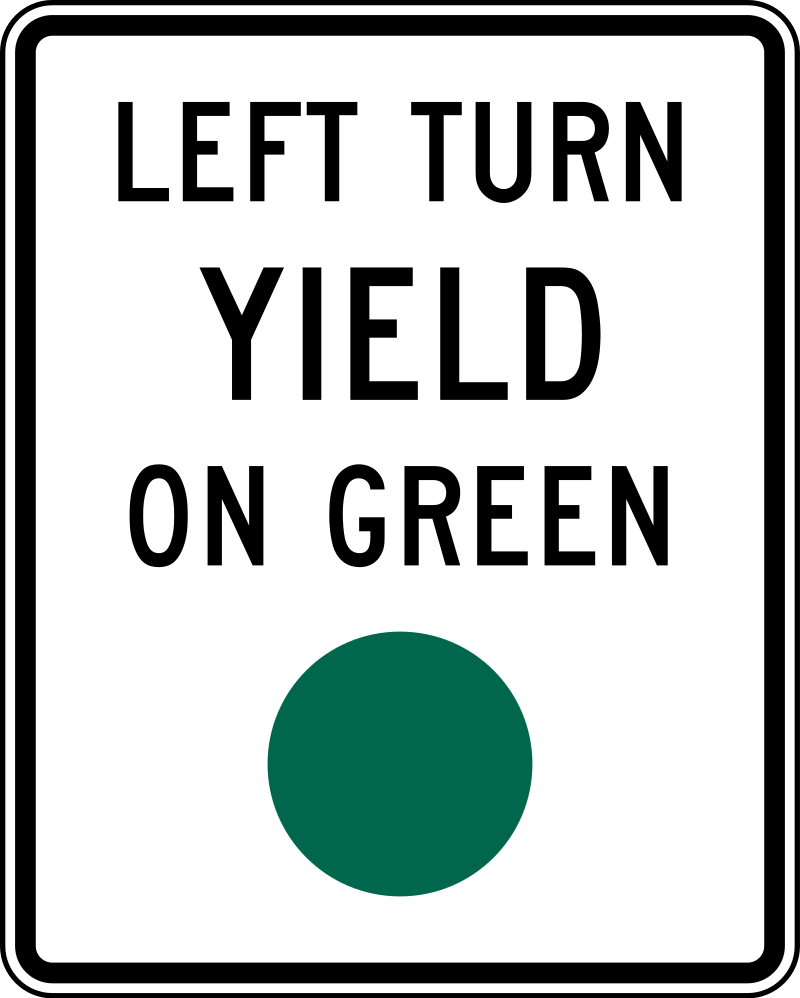 This white sign means drivers:
A
must wait for the solid green light before they turn left.
B
may turn left only on a green arrow.
C
may turn left on a green light when it is safe to do so.
Answer Explanation
This traffic sign indicates: may turn left on a green light when it is safe to do so. Observing and obeying all roadway signs ensures safe traffic flow and legal driving.
This traffic sign indicates: may turn left on a green light when it is safe to do so. Observing and obeying all roadway signs ensures safe traffic flow and legal driving.
Question 25:
You should use your brakes to slow your vehicle on a sharp curve:
A
as you drive through a curve.
B
right after entering the curve.
C
before you enter the curve.
Answer Explanation
The correct driving rule is: before you enter the curve. Following standard DMV road rules and practicing defensive driving ensures safety for all road users.
The correct driving rule is: before you enter the curve. Following standard DMV road rules and practicing defensive driving ensures safety for all road users.
Question 26:
 This sign indicates:
A
A slow-moving vehicle
B
A no-passing zone
C
Yield
Answer Explanation
This traffic sign indicates: A slow-moving vehicle. Observing and obeying all roadway signs ensures safe traffic flow and legal driving.
This traffic sign indicates: A slow-moving vehicle. Observing and obeying all roadway signs ensures safe traffic flow and legal driving.
Question 27:
Your driving lane is next to a bicycle lane. You want to make a right turn at the upcoming intersection. You:
A
may not enter the bicycle lane to make your turn.
B
should only merge into the bicycle lane if you stop before turning.
C
must merge into the bicycle lane before making your turn.
Answer Explanation
According to standard right-of-way regulations: must merge into the bicycle lane before making your turn. Yielding appropriately prevents intersection collisions and maintains safe traffic flow.
According to standard right-of-way regulations: must merge into the bicycle lane before making your turn. Yielding appropriately prevents intersection collisions and maintains safe traffic flow.
Question 28:
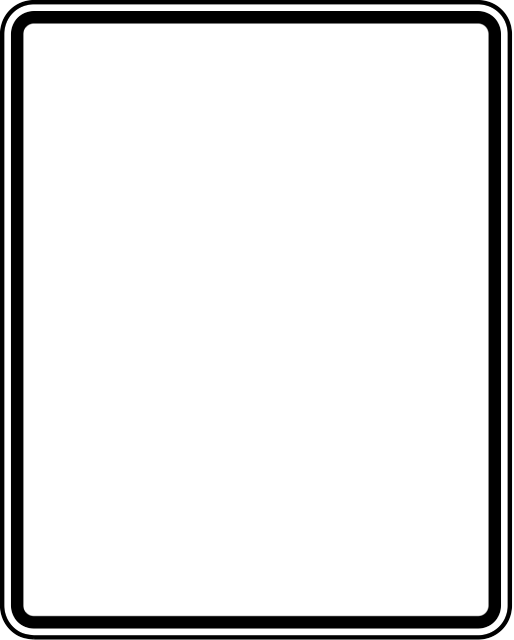 Vertical rectangles tell drivers:
A
the law.
B
what is not allowed.
C
the direction they should travel.
Answer Explanation
The correct driving rule is: the law. Following standard DMV road rules and practicing defensive driving ensures safety for all road users.
The correct driving rule is: the law. Following standard DMV road rules and practicing defensive driving ensures safety for all road users.
Question 29:
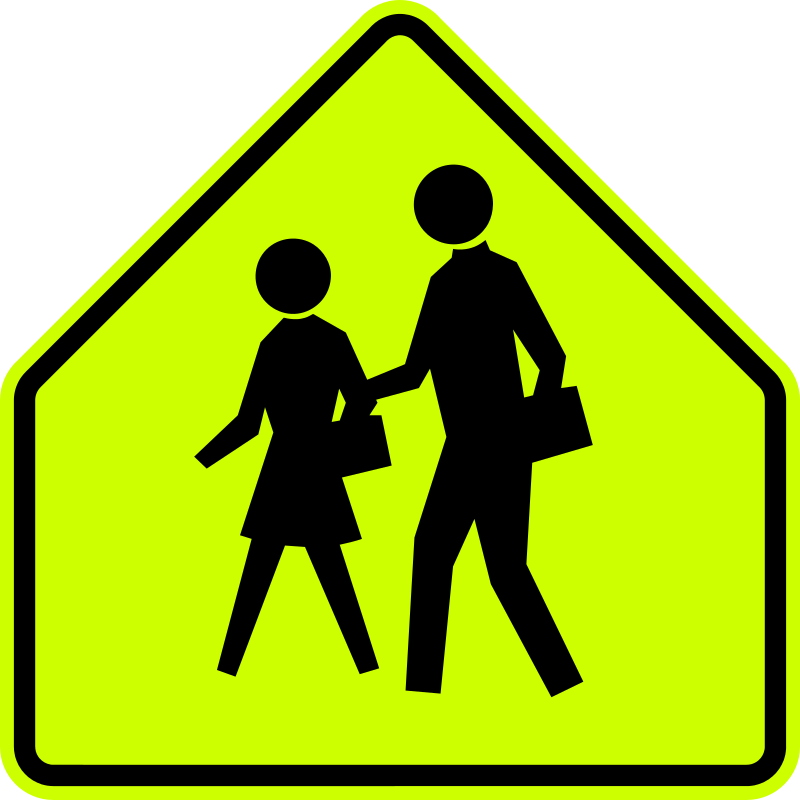 This sign means:
A
Business area nearby. Watch for business people.
B
There is a work zone ahead. Watch for workers.
C
The driver is near a school and should watch for children.
Answer Explanation
Pentagonal (5-sided) signs are exclusively reserved for school zones and school crossings: The driver is near a school and should watch for children. Drivers must reduce speed and yield right-of-way to all crossing children.
Pentagonal (5-sided) signs are exclusively reserved for school zones and school crossings: The driver is near a school and should watch for children. Drivers must reduce speed and yield right-of-way to all crossing children.
Question 30:
If you are involved in a collision, you must exchange with the person(s) involved your driver license information and:
A
proof of insurance, vehicle registration, and current address.
B
proof of insurance and current address only.
C
vehicle registration only.
Answer Explanation
The correct driving rule is: proof of insurance, vehicle registration, and current address. Following standard DMV road rules and practicing defensive driving ensures safety for all road users.
The correct driving rule is: proof of insurance, vehicle registration, and current address. Following standard DMV road rules and practicing defensive driving ensures safety for all road users.
Question 31:
 This sign means:
A
Narrow bridge ahead. Slow down and drive with caution.
B
Do not to enter if your vehicle is taller than the height listed on the sign.
C
No passing zone ahead.
Answer Explanation
This traffic sign indicates: Do not to enter if your vehicle is taller than the height listed on the sign. Observing and obeying all roadway signs ensures safe traffic flow and legal driving.
This traffic sign indicates: Do not to enter if your vehicle is taller than the height listed on the sign. Observing and obeying all roadway signs ensures safe traffic flow and legal driving.
Question 32:
Orange-colored road signs warn you of:
A
a school zone ahead.
B
road workers or road equipment ahead.
C
a traffic signal ahead.
Answer Explanation
The correct driving rule is: road workers or road equipment ahead. Following standard DMV road rules and practicing defensive driving ensures safety for all road users.
The correct driving rule is: road workers or road equipment ahead. Following standard DMV road rules and practicing defensive driving ensures safety for all road users.
Question 33:
The ‘Slower Traffic Keep Right’ sign is used:
A
at most intersections.
B
on multiple lane highways.
C
in school zones.
Answer Explanation
The correct driving rule is: on multiple lane highways. Following standard DMV road rules and practicing defensive driving ensures safety for all road users.
The correct driving rule is: on multiple lane highways. Following standard DMV road rules and practicing defensive driving ensures safety for all road users.
Question 34:
To turn left from a multilane one-way street onto a one-way street, you should start your turn from:
A
Any lane, as long as it is safe.
B
The lane in the center of the road.
C
The lane closest to the left curb
Answer Explanation
According to standard right-of-way regulations: The lane closest to the left curb. Yielding appropriately prevents intersection collisions and maintains safe traffic flow.
According to standard right-of-way regulations: The lane closest to the left curb. Yielding appropriately prevents intersection collisions and maintains safe traffic flow.
Question 35:
 This sign tells drivers that:
A
left and right turns are not allowed.
B
a divided highway is ahead.
C
they cannot go straight ahead.
Answer Explanation
This traffic sign indicates: they cannot go straight ahead. Observing and obeying all roadway signs ensures safe traffic flow and legal driving.
This traffic sign indicates: they cannot go straight ahead. Observing and obeying all roadway signs ensures safe traffic flow and legal driving.
Question 36:
 This sign means:
A
The road will curve to the right.
B
Left turns are not allowed at the intersection.
C
Do not turn right.
Answer Explanation
This traffic sign indicates: The road will curve to the right. Observing and obeying all roadway signs ensures safe traffic flow and legal driving.
This traffic sign indicates: The road will curve to the right. Observing and obeying all roadway signs ensures safe traffic flow and legal driving.