Question 1:
Near streetcars, trolleys, or buses, the passing speed limit, when safe to pass, is:
A
10 MPH
B
20 MPH
C
15 MPH
For safe speed and stopping control: 10 MPH. Adjusting speed to match visibility and road traction prevents loss of steering grip.
Question 2:
Collisions tend to happen when:
A
one lane of traffic is traveling much slower than the others.
B
all vehicles are travelling near or at the same speed.
C
one vehicle is traveling faster or slower than the flow of traffic.
The correct driving rule is: one vehicle is traveling faster or slower than the flow of traffic. Following standard DMV road rules and practicing defensive driving ensures safety for all road users.
Question 3:
What is the best advice for driving when heavy fog or dust occurs?
A
Consider postponing your trip until the conditions improve.
B
Slow down and come to a complete stop.
C
Do not drive too slowly, because other drivers may hit you.
For safe speed and stopping control: Consider postponing your trip until the conditions improve. Adjusting speed to match visibility and road traction prevents loss of steering grip.
Question 4:
You are driving on a city street and see an emergency vehicle with flashing lights behind you. What should you do?
A
Drive to the edge of the road and slow down.
B
Driver to the right edge of the road and stop.
C
Stay in your lane, slow down, and let it pass.
When sharing the road with other vehicles: Driver to the right edge of the road and stop. Giving large vehicles and vulnerable users adequate clearance prevents dangerous accidents.
Question 5:
If you cannot stop safely at a yellow traffic light, you should:
A
stop your vehicle in the intersection, then back up carefully.
B
stop your vehicle before entering the intersection.
C
enter the intersection with caution and continue across.
The correct driving rule is: enter the intersection with caution and continue across. Following standard DMV road rules and practicing defensive driving ensures safety for all road users.
Question 6:
You may drive off of the paved roadway to pass another vehicle:
A
Under no circumstances
B
If the vehicle ahead of you is turning left.
C
If the shoulder is wide enough to accommodate your vehicle
The correct driving rule is: Under no circumstances. Following standard DMV road rules and practicing defensive driving ensures safety for all road users.
Question 7:
If another driver does not dim his or her lights, you should:
A
look directly into the oncoming headlights.
B
watch the oncoming vehicle out of the corner of your eye.
C
look toward the left edge of your lane.
The correct driving rule is: watch the oncoming vehicle out of the corner of your eye. Following standard DMV road rules and practicing defensive driving ensures safety for all road users.
Question 8:
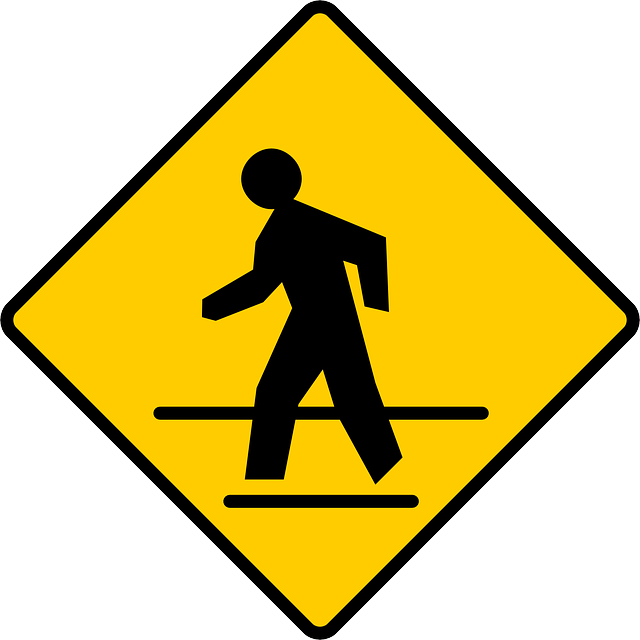 This sign means:
A
Pedestrian sidewalk ahead.
B
Pedestrians must yield the right-of-way ahead.
C
Pedestrian crossing ahead.
This traffic sign indicates: Pedestrian crossing ahead. Observing and obeying all roadway signs ensures safe traffic flow and legal driving.
Question 9:
 A pedestrian in the crosswalk when the 'DON’T WALK' signal begins flashing must:
A
stop immediately.
B
go back and wait the “WALK” light
C
finish crossing the street.
Drivers must always yield the right-of-way to pedestrians crossing at intersections and crosswalks: finish crossing the street. Stop and allow them to clear the lane safely.
Question 10:
 When you see this sign you:
A
always stop at the upcoming railroad crossing.
B
are approaching a railroad crossing: prepare to stop.
C
stop and wait for a signal before crossing the railroad tracks.
Circular signs with an 'X' and 'RR' designate a Railroad Advance Warning: are approaching a railroad crossing: prepare to stop. Drivers must slow down, look both ways, listen for trains, and be prepared to stop.
Question 11:
 This sign means:
A
Hairpin corner ahead.
B
Warning: U-turn ahead.
C
Sharp right turn ahead.
This traffic sign indicates: Hairpin corner ahead. Observing and obeying all roadway signs ensures safe traffic flow and legal driving.
Question 12:
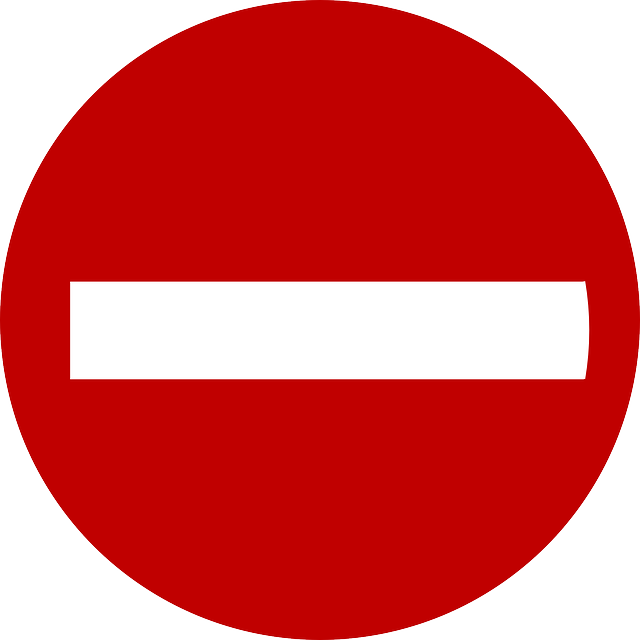 The picture represents a _________ sign:
A
Do Not Pass
B
Do Not Enter
C
Wrong Way
The correct driving rule is: Do Not Enter. Following standard DMV road rules and practicing defensive driving ensures safety for all road users.
Question 13:
 The yield sign means:
A
Go. The light will soon be red.
B
If the way is clear, you may move forward slowly without stopping.
C
Stop if you can.
A triangular Yield sign requires drivers to slow down and give right-of-way to other traffic: If the way is clear, you may move forward slowly without stopping. Proceed only when there is a safe opening.
Question 14:
If a driver follows you too closely, you should:
A
move to another lane if possible.
B
activate your stop lights.
C
brake suddenly.
The correct driving rule is: move to another lane if possible. Following standard DMV road rules and practicing defensive driving ensures safety for all road users.
Question 15:
You should allow a four-second or more cushion when:
A
The driver behind you wants to pass.
B
Being crowded by a tailgater.
C
All of the above.
All of the listed points are essential driving requirements: The driver behind you wants to pass; Being crowded by a tailgater. Practicing each ensures compliance with DMV safety laws.
Question 16:
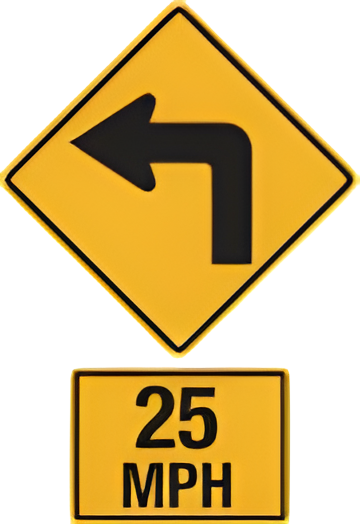 This sign indicates that:
A
the highest safe speed drivers should travel around the curve ahead is 25 MPH.
B
the safe speed around the curve ahead is at least 25 MPH.
C
drivers may not turn right if traveling at 25 MPH or less.
This traffic sign indicates: the highest safe speed drivers should travel around the curve ahead is 25 MPH. Observing and obeying all roadway signs ensures safe traffic flow and legal driving.
Question 17:
Even if you know your vehicle can maneuver a sharp curve at the legal speed limit, you should still slow down because:
A
there may be a stalled vehicle or collision ahead that you can’t see.
B
the strong inward pull on your vehicle can be dangerous.
C
you must legally drive below the speed limit on sharp curves.
For safe speed and stopping control: there may be a stalled vehicle or collision ahead that you can’t see. Adjusting speed to match visibility and road traction prevents loss of steering grip.
Question 18:
Are bicyclists required to obey traffic laws and signs?
A
No, bicyclists are considered pedestrians when it comes to the rules of the road.
B
Yes.
C
Yes, but only if they are riding in a bicycle lane.
The correct driving rule is: Yes. Following standard DMV road rules and practicing defensive driving ensures safety for all road users.
Question 19:
You were parked and have been waiting a long time with your turn signal on to re-enter traffic. However, traffic is heavy. You should:
A
drive on the shoulder until a gap in traffic appears.
B
slowly inch your vehicle into the traffic lane.
C
continue waiting and yielding to traffic in the lane.
State laws require signaling your intention: continue waiting and yielding to traffic in the lane. Signal at least 100 feet before making a turn or changing lanes.
Question 20:
You may cross double yellow lines to pass another vehicle if the:
A
yellow line next to the other side of the road is broken.
B
yellow line next to your side of the road is broken.
C
vehicle in front of you moves to the right to let you pass.
The correct driving rule is: yellow line next to your side of the road is broken. Following standard DMV road rules and practicing defensive driving ensures safety for all road users.
Question 21:
Backing your vehicle is:
A
dangerous if you have a helper.
B
always dangerous to do.
C
only dangerous in large vehicles.
The correct driving rule is: always dangerous to do. Following standard DMV road rules and practicing defensive driving ensures safety for all road users.
Question 22:
You should never depend on your mirrors when you prepare to change lanes. Why?
A
Mirrors leave “blind spots” behind both sides of vehicles.
B
Mirrors need to be adjusted.
C
Mirrors are useless.
The correct driving rule is: Mirrors leave “blind spots” behind both sides of vehicles. Following standard DMV road rules and practicing defensive driving ensures safety for all road users.
Question 23:
If the road is wet from a heavy rain, you should:
A
drive one vehicle-length behind the vehicle ahead.
B
increase the distance between your vehicle and the vehicle ahead.
C
use the “two second” following distance rule.
For safe speed and stopping control: increase the distance between your vehicle and the vehicle ahead. Adjusting speed to match visibility and road traction prevents loss of steering grip.
Question 24:
You are driving on a divided street with multiple lanes in your direction. If you need to make a U-turn, where should you start?
A
On the shoulder.
B
In the left lane.
C
In the median.
According to standard right-of-way regulations: In the left lane. Yielding appropriately prevents intersection collisions and maintains safe traffic flow.
Question 25:
If you have trouble seeing other vehicles because of dust or smoke blowing across the roadway, you should drive slower and turn on your:
A
emergency flashers.
B
parking lights.
C
headlights.
The correct driving rule is: headlights. Following standard DMV road rules and practicing defensive driving ensures safety for all road users.
Question 26:
Drivers can not pass a vehicle on the left if:
A
they approach the top of a hill on a two-way road and can not see over it.
B
they can not safely return to the right lane before they reach a solid yellow center line for the right lane.
C
All of the above.
All of the listed points are essential driving requirements: they approach the top of a hill on a two-way road and can not see over it; they can not safely return to the right lane before they reach a solid yellow center line for the right lane. Practicing each ensures compliance with DMV safety laws.
Question 27:
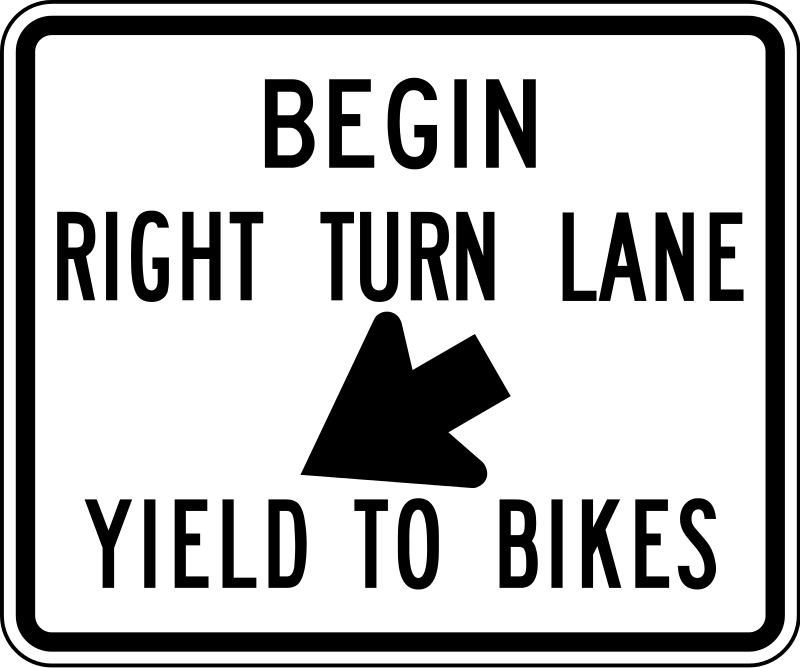 What does this road sign indicate?
A
Drivers have the right of way over bikes turning left.
B
Vehicles turning left must yield to bikes entering a right turn lane.
C
Motor vehicles entering an exclusive right-turn lane must weave across bicycle traffic in bicycle lanes.
This traffic sign indicates: Motor vehicles entering an exclusive right-turn lane must weave across bicycle traffic in bicycle lanes. Observing and obeying all roadway signs ensures safe traffic flow and legal driving.
Question 28:
Which of the following is NOT true about safety belts?
A
They can trap you inside a vehicle.
B
They can keep you from being thrown into the path of another vehicle.
C
They can reduce injuries.
The correct driving rule is: they can trap you inside a vehicle. Following standard DMV road rules and practicing defensive driving ensures safety for all road users.
Question 29:
When two vehicles meet on a steep road where neither vehicle can pass, which one must yield the right-of-way?
A
The vehicle facing downhill
B
The vehicle with the most passengers.
C
The vehicle going uphill
According to standard right-of-way regulations: The vehicle facing downhill. Yielding appropriately prevents intersection collisions and maintains safe traffic flow.
Question 30:
While inside the roundabout, you should:
A
remain in your lane until you are ready to exit.
B
change lanes before you check for vehicles behind you.
C
use your left turn signal if you are in position to exit now.
Vehicles entering a roundabout must yield right-of-way to circulating traffic already inside: remain in your lane until you are ready to exit. Wait for a safe gap before entering.
Question 31:
If a traffic officer signals you to drive through a red light:
A
you must do it.
B
you must wait for the red light to turn green.
C
you must not obey the officer. Signs and signals take precedence over directions given by traffic officers.
According to standard right-of-way regulations: you must do it. Yielding appropriately prevents intersection collisions and maintains safe traffic flow.
Question 32:
You are driving and there are oncoming vehicles on your left and a row of parked vehicles on your right. You should steer:
A
a middle course between the oncoming and parked vehicles.
B
closer to the oncoming vehicles than the parked vehicles.
C
closer to the parked vehicles than the oncoming vehicles.
The correct driving rule is: a middle course between the oncoming and parked vehicles. Following standard DMV road rules and practicing defensive driving ensures safety for all road users.
Question 33:
Which of the following is true about roadways on bridges and overpasses in cold, wet weather?
A
They do not freeze because they are made of concrete.
B
They tend to freeze before the rest of the road does.
C
They tend to freeze after the rest of the road does.
The correct driving rule is: they tend to freeze before the rest of the road does. Following standard DMV road rules and practicing defensive driving ensures safety for all road users.
Question 34:
On average, how long does it take your body to remove the alcohol contained in 5 ounces of wine?
A
one hour.
B
30 minutes.
C
3 hours.
Under state DUI and traffic safety laws: one hour. Alcohol degrades judgment, slows reaction times, and distorts depth perception.
Question 35:
Alcohol:
A
makes drivers more prone to take chances.
B
increases reaction time.
C
All of the above.
Alcohol and impairing substances degrade all critical driving functions: makes drivers more prone to take chances; increases reaction time. Driving while impaired carries severe criminal and safety penalties.
Question 36:
Which signs have black letters on a yellow or orange background?
A
Warning signs (diamond)
B
Regulatory signs (vertical rectangle)
C
Railroad advance warning signs (round)
The correct driving rule is: Warning signs (diamond). Following standard DMV road rules and practicing defensive driving ensures safety for all road users.