Question 1:
In heavy rain, tires can begin to ride on the water that is on top of the road pavement. This is called:
A
rideplaning.
B
hydroplaning.
C
pavement-planing.
D
waterplaning.
Answer Explanation
When hydroplaning on water: hydroplaning. Gently ease off the accelerator and hold the steering wheel straight without sudden braking.
When hydroplaning on water: hydroplaning. Gently ease off the accelerator and hold the steering wheel straight without sudden braking.
Question 2:
 This sign means:
A
A road crosses the main highway ahead.
B
The divided highway on which drivers are traveling ends ahead.
C
Drivers are coming to a point where another traffic lane joins the one they are on.
Answer Explanation
This traffic sign indicates: drivers are coming to a point where another traffic lane joins the one they are on. Observing and obeying all roadway signs ensures safe traffic flow and legal driving.
This traffic sign indicates: drivers are coming to a point where another traffic lane joins the one they are on. Observing and obeying all roadway signs ensures safe traffic flow and legal driving.
Question 3:
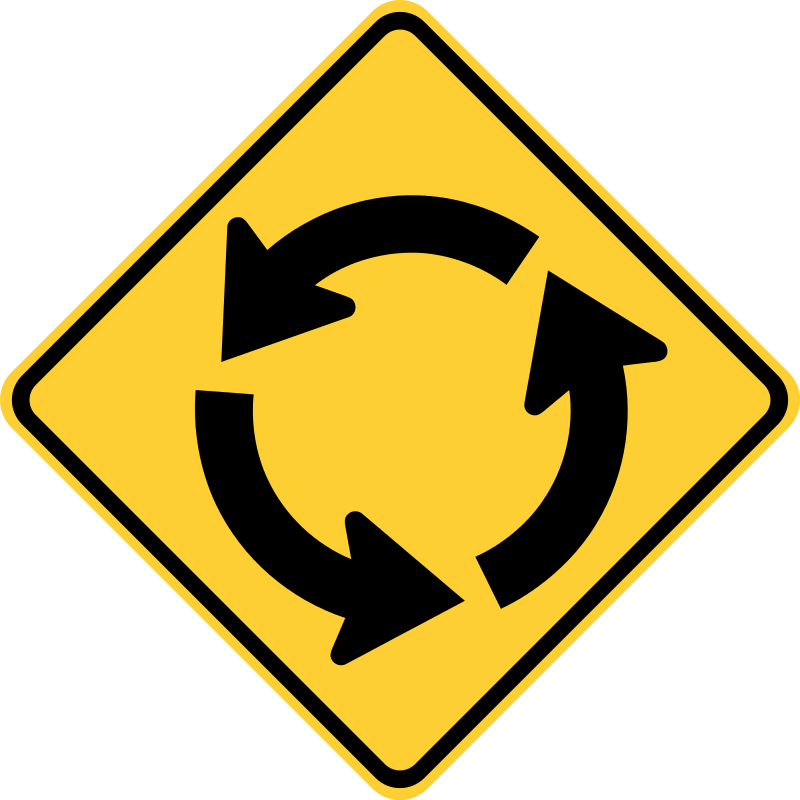 This road sign:
A
warns drivers of a sharp turn left. Drivers should slow their speed and keep to the left.
B
provides an advance notice of a roundabout.
C
warns drivers that U-turns are not permitted.
D
is a no-right-turns sign.
Answer Explanation
This traffic sign indicates: provides an advance notice of a roundabout. Observing and obeying all roadway signs ensures safe traffic flow and legal driving.
This traffic sign indicates: provides an advance notice of a roundabout. Observing and obeying all roadway signs ensures safe traffic flow and legal driving.
Question 4:
Which of these statements is true about motorcycles:
A
motorcycles should be followed at a 4 second following distance.
B
motorcycles are small and can easily be seen by drivers.
C
motorcycles may not share traffic lanes.
Answer Explanation
The correct driving rule is: motorcycles should be followed at a 4 second following distance. Following standard DMV road rules and practicing defensive driving ensures safety for all road users.
The correct driving rule is: motorcycles should be followed at a 4 second following distance. Following standard DMV road rules and practicing defensive driving ensures safety for all road users.
Question 5:
 When they see this sign, drivers should:
A
be ready to brake sharply and stop.
B
be ready to shift to lower gear.
C
yield to trucks coming from the hill on the right.
Answer Explanation
This traffic sign indicates: be ready to shift to lower gear. Observing and obeying all roadway signs ensures safe traffic flow and legal driving.
This traffic sign indicates: be ready to shift to lower gear. Observing and obeying all roadway signs ensures safe traffic flow and legal driving.
Question 6:
 This sign warns drivers of:
A
low clearance.
B
a narrow bridge ahead.
C
a low place in the road.
Answer Explanation
This traffic sign indicates: a narrow bridge ahead. Observing and obeying all roadway signs ensures safe traffic flow and legal driving.
This traffic sign indicates: a narrow bridge ahead. Observing and obeying all roadway signs ensures safe traffic flow and legal driving.
Question 7:
You drive defensively when you:
A
Keep your eyes moving to look for possible hazards.
B
Always put one car length between you and the car ahead.
C
Look only at the car in front of you while driving.
Answer Explanation
The correct driving rule is: keep your eyes moving to look for possible hazards. Following standard DMV road rules and practicing defensive driving ensures safety for all road users.
The correct driving rule is: keep your eyes moving to look for possible hazards. Following standard DMV road rules and practicing defensive driving ensures safety for all road users.
Question 8:
Two sets of solid, double, yellow lines that are two or more feet apart:
A
should be treated as a separate traffic lane.
B
may be crossed to enter or exit a private driveway.
C
may not be crossed for any reason.
Answer Explanation
The correct driving rule is: may not be crossed for any reason. Following standard DMV road rules and practicing defensive driving ensures safety for all road users.
The correct driving rule is: may not be crossed for any reason. Following standard DMV road rules and practicing defensive driving ensures safety for all road users.
Question 9:
Before a school bus stops to load passengers, the driver will usually flash:
A
yellow warning lights.
B
red warning lights.
C
red lights.
Answer Explanation
When a school bus displays flashing red lights and extended stop sign: yellow warning lights. Traffic in both directions must come to a full stop on undivided roads until children are clear.
When a school bus displays flashing red lights and extended stop sign: yellow warning lights. Traffic in both directions must come to a full stop on undivided roads until children are clear.
Question 10:
Your cell phone rings while you are driving and you do not have a hands-free device. You should:
A
not answer the call.
B
check the incoming number before answering the call.
C
answer the call because if it's an important one.
Answer Explanation
The correct driving rule is: not answer the call. Following standard DMV road rules and practicing defensive driving ensures safety for all road users.
The correct driving rule is: not answer the call. Following standard DMV road rules and practicing defensive driving ensures safety for all road users.
Question 11:
What is the best advice for driving in the fog?
A
Turn on your windshield wipers.
B
DON’T. Consider postponing your trip until the fog clears.
C
Drive slow.
Answer Explanation
For safe speed and stopping control: DON’T. Consider postponing your trip until the fog clears. Adjusting speed to match visibility and road traction prevents loss of steering grip.
For safe speed and stopping control: DON’T. Consider postponing your trip until the fog clears. Adjusting speed to match visibility and road traction prevents loss of steering grip.
Question 12:
You are driving on the freeway. The vehicle in front of you is a large truck. You should drive:
A
No more than one car length behind the truck so the driver can see you.
B
Closely behind the truck in bad weather because the driver can see farther ahead.
C
Farther behind the truck than you would for a passenger vehicle.
Answer Explanation
When sharing the road with other vehicles: Farther behind the truck than you would for a passenger vehicle. Giving large vehicles and vulnerable users adequate clearance prevents dangerous accidents.
When sharing the road with other vehicles: Farther behind the truck than you would for a passenger vehicle. Giving large vehicles and vulnerable users adequate clearance prevents dangerous accidents.
Question 13:
When you park alongside a curb on a level street, the front and back wheels must be parallel and within __ inches of the curb.
A
18
B
36
C
32
Answer Explanation
Under standard parking and curb regulations: 18. Following parking distance clearances keeps roadways unobstructed and emergency lanes accessible.
Under standard parking and curb regulations: 18. Following parking distance clearances keeps roadways unobstructed and emergency lanes accessible.
Question 14:
 This sign means:
A
slower traffic must exit on the right.
B
you should slow down and move to the right lane.
C
stay in the right lane if you are driving slower than other traffic.
Answer Explanation
This traffic sign indicates: stay in the right lane if you are driving slower than other traffic. Observing and obeying all roadway signs ensures safe traffic flow and legal driving.
This traffic sign indicates: stay in the right lane if you are driving slower than other traffic. Observing and obeying all roadway signs ensures safe traffic flow and legal driving.
Question 15:
All passengers ___ years of age or older must wear seat belts.
A
eight
B
six
C
ten
Answer Explanation
The correct driving rule is: eight. Following standard DMV road rules and practicing defensive driving ensures safety for all road users.
The correct driving rule is: eight. Following standard DMV road rules and practicing defensive driving ensures safety for all road users.
Question 16:
What should you do in case of a brake failure?
A
Pull off the road into an open space, if available.
B
Apply the parking brake slowly.
C
All of the above.
Answer Explanation
All of the listed points are essential driving requirements: Pull off the road into an open space, if available; Apply the parking brake slowly. Practicing each ensures compliance with DMV safety laws.
All of the listed points are essential driving requirements: Pull off the road into an open space, if available; Apply the parking brake slowly. Practicing each ensures compliance with DMV safety laws.
Question 17:
You are driving in the far right lane of a four-lane freeway and notice thick broken white lines on the left side of your lane. You are driving in:
A
a special lane for slow moving vehicles.
B
an exit lane.
C
the carpool lane and must merge into the next lane.
Answer Explanation
Defensive driving guidelines state that: an exit lane. Anticipating road hazards and communicating maneuvers keeps traffic predictable and safe.
Defensive driving guidelines state that: an exit lane. Anticipating road hazards and communicating maneuvers keeps traffic predictable and safe.
Question 18:
Blind spots are:
A
Dangerous intersection where the maximum speed limit is 15 MPH or less.
B
At night, the darkest areas of a road, where emergency flashers should be used.
C
Areas to the side or rear of a vehicle that the driver cannot see with use of mirrors.
Answer Explanation
The correct driving rule is: Areas to the side or rear of a vehicle that the driver cannot see with use of mirrors. Following standard DMV road rules and practicing defensive driving ensures safety for all road users.
The correct driving rule is: Areas to the side or rear of a vehicle that the driver cannot see with use of mirrors. Following standard DMV road rules and practicing defensive driving ensures safety for all road users.
Question 19:
If you approach the top of a hill and you do not have a clear view of the road ahead, you should:
A
pull over and wait for the conditions to improve.
B
slow down so you can stop if necessary.
C
use your high beam lights to be more visible.
Answer Explanation
The correct driving rule is: slow down so you can stop if necessary. Following standard DMV road rules and practicing defensive driving ensures safety for all road users.
The correct driving rule is: slow down so you can stop if necessary. Following standard DMV road rules and practicing defensive driving ensures safety for all road users.
Question 20:
Roads are most slippery:
A
just before it rains.
B
when it stops raining.
C
when it first starts to rain.
Answer Explanation
For safe speed and stopping control: when it first starts to rain. Adjusting speed to match visibility and road traction prevents loss of steering grip.
For safe speed and stopping control: when it first starts to rain. Adjusting speed to match visibility and road traction prevents loss of steering grip.
Question 21:
A white-painted curb means:
A
Loading zone for passengers or mail only.
B
Loading zone for freight only.
C
Loading zone for freight or passengers.
Answer Explanation
Under standard parking and curb regulations: Loading zone for passengers or mail only. Following parking distance clearances keeps roadways unobstructed and emergency lanes accessible.
Under standard parking and curb regulations: Loading zone for passengers or mail only. Following parking distance clearances keeps roadways unobstructed and emergency lanes accessible.
Question 22:
You ________ traffic headed toward you when you turn left.
A
must not yield to
B
must interrupt
C
must yield to
Answer Explanation
According to standard right-of-way regulations: must yield to. Yielding appropriately prevents intersection collisions and maintains safe traffic flow.
According to standard right-of-way regulations: must yield to. Yielding appropriately prevents intersection collisions and maintains safe traffic flow.
Question 23:
 This sign warns ____________ ahead.
A
of two-way traffic
B
of a reduction of lanes
C
that a divided highway ends
Answer Explanation
This traffic sign indicates: of two-way traffic. Observing and obeying all roadway signs ensures safe traffic flow and legal driving.
This traffic sign indicates: of two-way traffic. Observing and obeying all roadway signs ensures safe traffic flow and legal driving.
Question 24:
The left or “fast” lane is also called:
A
Number 3 Lane.
B
Number 1 Lane.
C
Number 2 Lane.
Answer Explanation
The correct driving rule is: Number 1 Lane. Following standard DMV road rules and practicing defensive driving ensures safety for all road users.
The correct driving rule is: Number 1 Lane. Following standard DMV road rules and practicing defensive driving ensures safety for all road users.
Question 25:
The speed limit at an uncontrolled crossing is:
A
20 MPH
B
15 MPH
C
25 MPH
Answer Explanation
For safe speed and stopping control: 15 MPH. Adjusting speed to match visibility and road traction prevents loss of steering grip.
For safe speed and stopping control: 15 MPH. Adjusting speed to match visibility and road traction prevents loss of steering grip.
Question 26:
Road signs that direct drivers to services are:
A
brown and white.
B
blue and white.
C
green and white.
Answer Explanation
The correct driving rule is: blue and white. Following standard DMV road rules and practicing defensive driving ensures safety for all road users.
The correct driving rule is: blue and white. Following standard DMV road rules and practicing defensive driving ensures safety for all road users.
Question 27:
You exit a freeway on a ramp that curves downhill. You should:
A
wait until you have entered the curve to begin braking.
B
slow to a safe speed before the curve.
C
slow to the posted speed limit for the freeway.
Answer Explanation
When parking downhill (with or without a curb): slow to a safe speed before the curve. Turn front wheels toward the curb or road edge (right) so the vehicle rolls safely off the roadway if it slips.
When parking downhill (with or without a curb): slow to a safe speed before the curve. Turn front wheels toward the curb or road edge (right) so the vehicle rolls safely off the roadway if it slips.
Question 28:
On what three conditions does your blood alcohol content (BAC) depend?
A
Your weight. How much alcohol you drink. How much time passes between drinks.
B
Your weight. The type of beverage you drink. How fit you are.
C
Your height. How much alcohol you drink. The type of beverage you drink.
Answer Explanation
Under state DUI and traffic safety laws: Your weight. How much alcohol you drink. How much time passes between drinks. Alcohol degrades judgment, slows reaction times, and distorts depth perception.
Under state DUI and traffic safety laws: Your weight. How much alcohol you drink. How much time passes between drinks. Alcohol degrades judgment, slows reaction times, and distorts depth perception.
Question 29:
If you see a pedestrian using a guide dog or carrying a white cane:
A
the pedestrian must yield the right-of-way.
B
you must yield the right-of-way to them.
C
sound your horn to warn them.
Answer Explanation
Drivers must always yield the right-of-way to pedestrians crossing at intersections and crosswalks: you must yield the right-of-way to them. Stop and allow them to clear the lane safely.
Drivers must always yield the right-of-way to pedestrians crossing at intersections and crosswalks: you must yield the right-of-way to them. Stop and allow them to clear the lane safely.
Question 30:
Which of the following is true about railroad crossings:
A
Watch for vehicles that must stop before they cross train tracks.
B
Wait until you can completely cross the tracks before proceeding.
C
All of the above.
Answer Explanation
All of the listed points are essential driving requirements: Watch for vehicles that must stop before they cross train tracks; Wait until you can completely cross the tracks before proceeding. Practicing each ensures compliance with DMV safety laws.
All of the listed points are essential driving requirements: Watch for vehicles that must stop before they cross train tracks; Wait until you can completely cross the tracks before proceeding. Practicing each ensures compliance with DMV safety laws.
Question 31:
 The white sign means:
A
Railroad crossing is controlled - continue at your regular speed.
B
Stop at the railroad tracks and wait for a signal before crossing.
C
Look, listen, and prepare to stop at the crossing, if necessary.
Answer Explanation
This traffic sign indicates: Look, listen, and prepare to stop at the crossing, if necessary. Observing and obeying all roadway signs ensures safe traffic flow and legal driving.
This traffic sign indicates: Look, listen, and prepare to stop at the crossing, if necessary. Observing and obeying all roadway signs ensures safe traffic flow and legal driving.
Question 32:
When you make a left turn from a one-way road into a one-way road, if the road you enter has two lanes, you:
A
must turn into its right lane.
B
can not turn left.
C
must turn into its left lane.
Answer Explanation
The correct driving rule is: must turn into its left lane. Following standard DMV road rules and practicing defensive driving ensures safety for all road users.
The correct driving rule is: must turn into its left lane. Following standard DMV road rules and practicing defensive driving ensures safety for all road users.
Question 33:
You are on the freeway and traffic is merging into your lane. You should:
A
Make room for the merging traffic, if possible.
B
Assert your right-of-way by driving faster.
C
Always slow down and maintain your position.
Answer Explanation
Defensive driving guidelines state that: make room for the merging traffic, if possible. Anticipating road hazards and communicating maneuvers keeps traffic predictable and safe.
Defensive driving guidelines state that: make room for the merging traffic, if possible. Anticipating road hazards and communicating maneuvers keeps traffic predictable and safe.
Question 34:
You are at a red traffic signal. The traffic light turns green, but there are still other vehicles in the intersection. You should:
A
wait until the vehicles clear the intersection before entering.
B
enter the intersection and wait for traffic to clear.
C
move ahead only if you can go around the other vehicles safely.
Answer Explanation
This traffic sign indicates: wait until the vehicles clear the intersection before entering. Observing and obeying all roadway signs ensures safe traffic flow and legal driving.
This traffic sign indicates: wait until the vehicles clear the intersection before entering. Observing and obeying all roadway signs ensures safe traffic flow and legal driving.
Question 35:
When you enter traffic from a stop, you:
A
need a large enough gap to get up to the speed of traffic.
B
should drive slower than other traffic for 200 feet.
C
should wait for the first vehicle to pass, then pull into the lane.
Answer Explanation
The correct driving rule is: need a large enough gap to get up to the speed of traffic. Following standard DMV road rules and practicing defensive driving ensures safety for all road users.
The correct driving rule is: need a large enough gap to get up to the speed of traffic. Following standard DMV road rules and practicing defensive driving ensures safety for all road users.
Question 36:
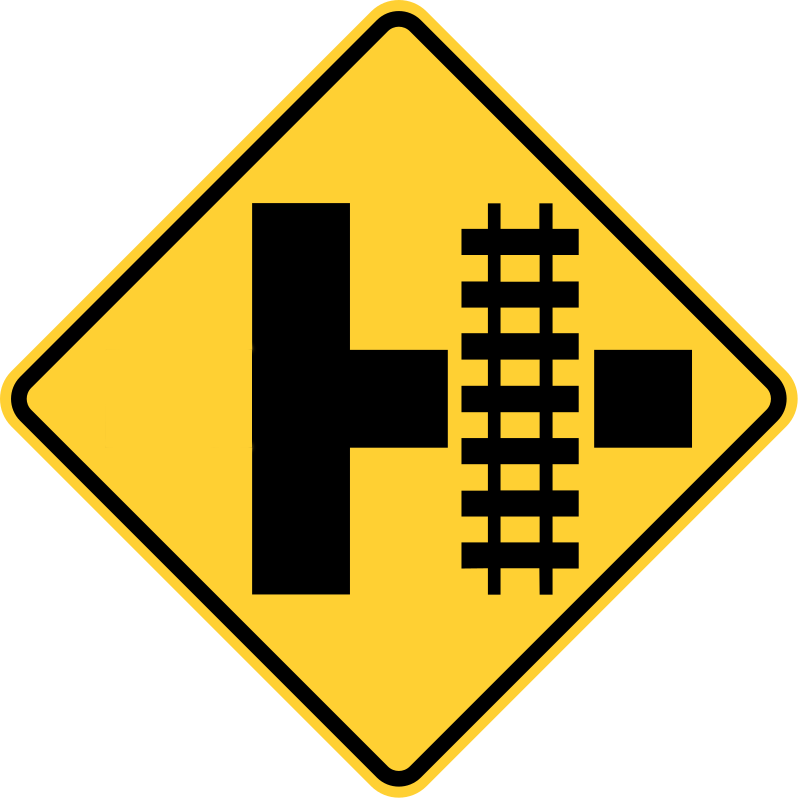 What does this sign indicate?
A
Parallel railroad crossing (side road)
B
Low ground clearance railroad crossing
C
Parallel railroad crossing (crossroad)
Answer Explanation
Circular signs with an 'X' and 'RR' designate a Railroad Advance Warning: Parallel railroad crossing (side road). Drivers must slow down, look both ways, listen for trains, and be prepared to stop.
Circular signs with an 'X' and 'RR' designate a Railroad Advance Warning: Parallel railroad crossing (side road). Drivers must slow down, look both ways, listen for trains, and be prepared to stop.