Question 1:
After an emergency vehicle passes you with its siren on, you must:
A
drive as fast as the emergency vehicle.
B
reduce your speed and drive near the curb.
C
drive closely to emergency vehicle.
D
avoid driving closer than 500 feet behind the emergency vehicle.
Answer Explanation
When sharing the road with other vehicles: avoid driving closer than 500 feet behind the emergency vehicle. Giving large vehicles and vulnerable users adequate clearance prevents dangerous accidents.
When sharing the road with other vehicles: avoid driving closer than 500 feet behind the emergency vehicle. Giving large vehicles and vulnerable users adequate clearance prevents dangerous accidents.
Question 2:
A steady red “X” light above the pavement means:
A
Do not drive in this lane.
B
This lane can only be used for a left turn.
C
Move from this lane.
D
This lane can only be used for a right turn.
Answer Explanation
The correct driving rule is: Do not drive in this lane. Following standard DMV road rules and practicing defensive driving ensures safety for all road users.
The correct driving rule is: Do not drive in this lane. Following standard DMV road rules and practicing defensive driving ensures safety for all road users.
Question 3:
 This sign warns drivers that:
A
the highway ahead is divided into two one-way roadways. Drivers should keep to the right.
B
there is a low place in the road.
C
there is a winding road ahead.
D
there is a dou
Answer Explanation
This traffic sign indicates: there is a dou. Observing and obeying all roadway signs ensures safe traffic flow and legal driving.
This traffic sign indicates: there is a dou. Observing and obeying all roadway signs ensures safe traffic flow and legal driving.
Question 4:
Courts must order all drivers convicted of DWI or AGG-DWI to:
A
install and maintain an ignition interlock on any vehicle owned or operated by such driver.
B
attend a Safe Driving Course.
C
attend an approved driver education course.
D
drink no alcohol at all for 6 months.
Answer Explanation
Under state DUI and traffic safety laws: install and maintain an ignition interlock on any vehicle owned or operated by such driver. Alcohol degrades judgment, slows reaction times, and distorts depth perception.
Under state DUI and traffic safety laws: install and maintain an ignition interlock on any vehicle owned or operated by such driver. Alcohol degrades judgment, slows reaction times, and distorts depth perception.
Question 5:
To avoid a rear-end collision with the car in front of you, you should:
A
use the four-second rule.
B
look for problems ahead.
C
watch for brake lights.
D
All of the above.
Answer Explanation
All of the listed points are essential driving requirements: use the four-second rule; look for problems ahead; watch for brake lights. Practicing each ensures compliance with DMV safety laws.
All of the listed points are essential driving requirements: use the four-second rule; look for problems ahead; watch for brake lights. Practicing each ensures compliance with DMV safety laws.
Question 6:
When driving to an unfamiliar area you:
A
should plan your trip.
B
only have to know generally where your destination is.
C
can depend on road signs to find your way.
D
should always choose the most direct route.
Answer Explanation
The correct driving rule is: should plan your trip. Following standard DMV road rules and practicing defensive driving ensures safety for all road users.
The correct driving rule is: should plan your trip. Following standard DMV road rules and practicing defensive driving ensures safety for all road users.
Question 7:
 This road sign means:
A
Winding Road Ahead
B
Persons with Disabilities Parking
C
Merge
Answer Explanation
This traffic sign indicates: merge. Observing and obeying all roadway signs ensures safe traffic flow and legal driving.
This traffic sign indicates: merge. Observing and obeying all roadway signs ensures safe traffic flow and legal driving.
Question 8:
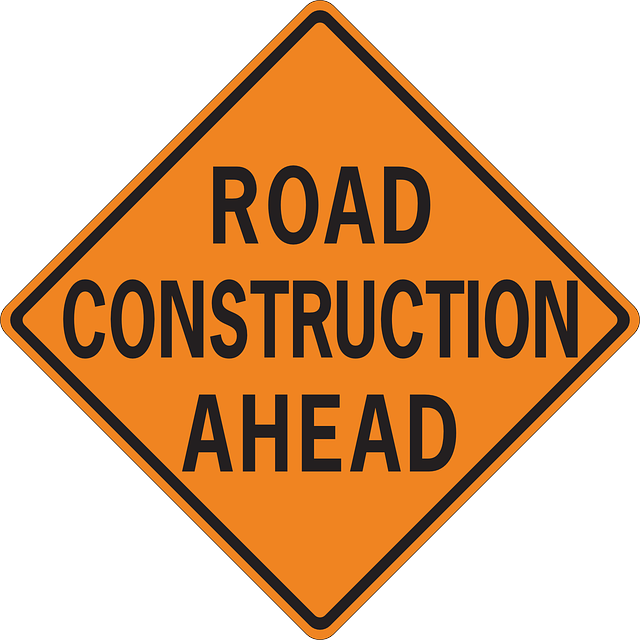 This road sign means:
A
There is a detour ahead
B
The highway ahead is being repaired
C
Crossroads ahead
Answer Explanation
This traffic sign indicates: The highway ahead is being repaired. Observing and obeying all roadway signs ensures safe traffic flow and legal driving.
This traffic sign indicates: The highway ahead is being repaired. Observing and obeying all roadway signs ensures safe traffic flow and legal driving.
Question 9:
The golden rule of driving is to:
A
treat others the way you want to be treated.
B
put on your emergency flashers when driving at night.
C
drive faster than the vehicle behind you.
Answer Explanation
The correct driving rule is: treat others the way you want to be treated. Following standard DMV road rules and practicing defensive driving ensures safety for all road users.
The correct driving rule is: treat others the way you want to be treated. Following standard DMV road rules and practicing defensive driving ensures safety for all road users.
Question 10:
Drivers should make room for cars entering freeways by:
A
maintaining their speed and position.
B
moving over a lane if there is no other vehicle next to them.
C
slowing down.
Answer Explanation
The correct driving rule is: moving over a lane if there is no other vehicle next to them. Following standard DMV road rules and practicing defensive driving ensures safety for all road users.
The correct driving rule is: moving over a lane if there is no other vehicle next to them. Following standard DMV road rules and practicing defensive driving ensures safety for all road users.
Question 11:
You are driving in the left lane and want to change to the right lane. Before changing lanes, you should check your mirrors, signal and:
A
look over your left shoulder.
B
look over both shoulders for vehicles in front of you.
C
accelerate slightly before looking around your vehicle.
D
look over your right shoulder.
Answer Explanation
State laws require signaling your intention: look over your right shoulder. Signal at least 100 feet before making a turn or changing lanes.
State laws require signaling your intention: look over your right shoulder. Signal at least 100 feet before making a turn or changing lanes.
Question 12:
The minimum and maximum speed limits on Missouri interstate highways are:
A
40/70.
B
30/70.
C
25/75.
D
45/55.
Answer Explanation
For safe speed and stopping control: 40/70. Adjusting speed to match visibility and road traction prevents loss of steering grip.
For safe speed and stopping control: 40/70. Adjusting speed to match visibility and road traction prevents loss of steering grip.
Question 13:
When a vehicle is hydroplaning:
A
the windshield wipers cannot keep the windshield clear of rain.
B
the spray from large trucks reduces visibility.
C
the tires lose contact with the road surface.
D
All of the above.
Answer Explanation
The correct driving rule is: the tires lose contact with the road surface. Following standard DMV road rules and practicing defensive driving ensures safety for all road users.
The correct driving rule is: the tires lose contact with the road surface. Following standard DMV road rules and practicing defensive driving ensures safety for all road users.
Question 14:
If a broken yellow line is on your side of the center line:
A
you may not pass other vehicles.
B
you may cross the line to pass other vehicles.
C
you are driving in the left lane.
D
you have the right-of-way when turning left.
Answer Explanation
The correct driving rule is: you may cross the line to pass other vehicles. Following standard DMV road rules and practicing defensive driving ensures safety for all road users.
The correct driving rule is: you may cross the line to pass other vehicles. Following standard DMV road rules and practicing defensive driving ensures safety for all road users.
Question 15:
Parking is not allowed within __ feet of a railroad crossing.
A
100
B
200
C
30
D
50
Answer Explanation
Under standard parking and curb regulations: 50. Following parking distance clearances keeps roadways unobstructed and emergency lanes accessible.
Under standard parking and curb regulations: 50. Following parking distance clearances keeps roadways unobstructed and emergency lanes accessible.
Question 16:
For all turning vehicles, the rear wheels follow ____________ the front wheels.
A
a shorter path than
B
a longer path than
C
a different path than
D
the same path as
Answer Explanation
The correct driving rule is: a shorter path than. Following standard DMV road rules and practicing defensive driving ensures safety for all road users.
The correct driving rule is: a shorter path than. Following standard DMV road rules and practicing defensive driving ensures safety for all road users.
Question 17:
 This road sign means:
A
The left lane ends soon
B
one-way street ahead.
C
The right lane ends soon
D
Highway entrance ramp ahead
Answer Explanation
This traffic sign indicates: The right lane ends soon. Observing and obeying all roadway signs ensures safe traffic flow and legal driving.
This traffic sign indicates: The right lane ends soon. Observing and obeying all roadway signs ensures safe traffic flow and legal driving.
Question 18:
When you prepare to make a left turn from a one-way road into a one-way road, you must:
A
move into the right lane, or to the left side of a single lane.
B
move into the right lane, or to the right side of a single lane.
C
move into the left lane, or to the left side of a single lane.
Answer Explanation
The correct driving rule is: move into the left lane, or to the left side of a single lane. Following standard DMV road rules and practicing defensive driving ensures safety for all road users.
The correct driving rule is: move into the left lane, or to the left side of a single lane. Following standard DMV road rules and practicing defensive driving ensures safety for all road users.
Question 19:
Parking is not allowed within __ feet of a traffic light, STOP sign or YIELD sign.
A
50
B
10
C
30
D
20
Answer Explanation
Under standard parking and curb regulations: 30. Following parking distance clearances keeps roadways unobstructed and emergency lanes accessible.
Under standard parking and curb regulations: 30. Following parking distance clearances keeps roadways unobstructed and emergency lanes accessible.
Question 20:
When driving in a construction zone you should:
A
slightly increase your speed.
B
come to a complete stop and check road conditions.
C
expect the unexpected.
Answer Explanation
The correct driving rule is: expect the unexpected. Following standard DMV road rules and practicing defensive driving ensures safety for all road users.
The correct driving rule is: expect the unexpected. Following standard DMV road rules and practicing defensive driving ensures safety for all road users.
Question 21:
More than half of the crashes that cause injury or death happen at speeds less than __ MPH and within __ miles from home.
A
25; 40
B
40; 25
C
30; 50
D
90; 20
Answer Explanation
The correct driving rule is: 40; 25. Following standard DMV road rules and practicing defensive driving ensures safety for all road users.
The correct driving rule is: 40; 25. Following standard DMV road rules and practicing defensive driving ensures safety for all road users.
Question 22:
When it starts to snow while you are driving, you should:
A
increase your following distance
B
keep your windshield and mirrors clear.
C
All of the above.
Answer Explanation
Hazardous road and weather conditions require extra caution: increase your following distance; keep your windshield and mirrors clear. Reducing speed and expanding following distance preserves control.
Hazardous road and weather conditions require extra caution: increase your following distance; keep your windshield and mirrors clear. Reducing speed and expanding following distance preserves control.
Question 23:
What should drivers do in case of a brake failure?
A
Shift to a lower gear.
B
Tie a white cloth on the left door handle.
C
Brake lightly.
Answer Explanation
The correct driving rule is: shift to a lower gear. Following standard DMV road rules and practicing defensive driving ensures safety for all road users.
The correct driving rule is: shift to a lower gear. Following standard DMV road rules and practicing defensive driving ensures safety for all road users.
Question 24:
Highways are typically most slippery:
A
after it has been raining for a long time.
B
during a heavy rainstorm in the middle of the summer.
C
when it first starts to rain after a dry spell.
Answer Explanation
For safe speed and stopping control: when it first starts to rain after a dry spell. Adjusting speed to match visibility and road traction prevents loss of steering grip.
For safe speed and stopping control: when it first starts to rain after a dry spell. Adjusting speed to match visibility and road traction prevents loss of steering grip.
Question 25:
It is illegal to park within _____ feet of a fire hydrant.
A
25
B
15
C
10
D
20
Answer Explanation
State and municipal laws prohibit parking within 15 feet of a fire hydrant to ensure emergency fire crews have clear, unobstructed access.
State and municipal laws prohibit parking within 15 feet of a fire hydrant to ensure emergency fire crews have clear, unobstructed access.
Question 26:
Drivers who flee to avoid arrest:
A
could have their operators license revoked.
B
can be charged with a misdemeanor or felony offense.
C
All of the above.
Answer Explanation
All of the listed points are essential driving requirements: could have their operators license revoked; can be charged with a misdemeanor or felony offense. Practicing each ensures compliance with DMV safety laws.
All of the listed points are essential driving requirements: could have their operators license revoked; can be charged with a misdemeanor or felony offense. Practicing each ensures compliance with DMV safety laws.
Question 27:
 This road sign means:
A
Slow down and be prepared to stop if necessary
B
You must come to a complete stop
C
You may proceed at regular speed through the intersection
D
Wrong Way
Answer Explanation
This traffic sign indicates: slow down and be prepared to stop if necessary. Observing and obeying all roadway signs ensures safe traffic flow and legal driving.
This traffic sign indicates: slow down and be prepared to stop if necessary. Observing and obeying all roadway signs ensures safe traffic flow and legal driving.
Question 28:
Drivers cannot pass safely unless:
A
they can return to their lane before meeting oncoming vehicles.
B
they can see far enough ahead.
C
their vehicle is capable of the speed necessary to pass.
D
All of the above.
Answer Explanation
All of the listed points are essential driving requirements: they can return to their lane before meeting oncoming vehicles; they can see far enough ahead; their vehicle is capable of the speed necessary to pass. Practicing each ensures compliance with DMV safety laws.
All of the listed points are essential driving requirements: they can return to their lane before meeting oncoming vehicles; they can see far enough ahead; their vehicle is capable of the speed necessary to pass. Practicing each ensures compliance with DMV safety laws.
Question 29:
Parking is allowed:
A
within intersections.
B
on crosswalks.
C
on public roads.
D
within 15 feet of a fire hydrant.
Answer Explanation
Under standard parking and curb regulations: on public roads. Following parking distance clearances keeps roadways unobstructed and emergency lanes accessible.
Under standard parking and curb regulations: on public roads. Following parking distance clearances keeps roadways unobstructed and emergency lanes accessible.
Question 30:
Lane signals are used:
A
to show when pedestrians may begin crossing the street.
B
to alert drivers to a warning sign.
C
to show which lanes are opened or closed.
D
None of the above.
Answer Explanation
The correct driving rule is: to show which lanes are opened or closed. Following standard DMV road rules and practicing defensive driving ensures safety for all road users.
The correct driving rule is: to show which lanes are opened or closed. Following standard DMV road rules and practicing defensive driving ensures safety for all road users.
Question 31:
A licensed driver (Class E or higher) who is under the age of 17 years of age may not operate a motor vehicle between ___________, unless accompanied by a driver who is 21 years of age or older and holds a valid driver license (Class E or higher)
A
9:00 p.m. and 8:00 a.m.
B
11:00 p.m. and 6:00 a.m.
C
1:00 a.m. and 5:00 a.m.
D
2:00 a.m. and 4:00 a.m.
Answer Explanation
The correct driving rule is: 11:00 p.m. and 6:00 a.m. Following standard DMV road rules and practicing defensive driving ensures safety for all road users.
The correct driving rule is: 11:00 p.m. and 6:00 a.m. Following standard DMV road rules and practicing defensive driving ensures safety for all road users.
Question 32:
This sign means:
A
A road crosses the main highway ahead.
B
The divided highway on which drivers are traveling ends ahead.
C
Drivers are coming to a point where another traffic lane joins the one they are on.
Answer Explanation
This traffic sign indicates: drivers are coming to a point where another traffic lane joins the one they are on. Observing and obeying all roadway signs ensures safe traffic flow and legal driving.
This traffic sign indicates: drivers are coming to a point where another traffic lane joins the one they are on. Observing and obeying all roadway signs ensures safe traffic flow and legal driving.
Question 33:
If you drive much slower than the posted speed limit you:
A
might cause a crash.
B
always have the right of way.
C
are driving safely and can avoid tailgaters.
D
are a defensive driver.
Answer Explanation
For safe speed and stopping control: always have the right of way. Adjusting speed to match visibility and road traction prevents loss of steering grip.
For safe speed and stopping control: always have the right of way. Adjusting speed to match visibility and road traction prevents loss of steering grip.
Question 34:
When approaching a curve, remember to:
A
accelerate slightly before entering the curve.
B
drive at the posted speed limit throughout the curve.
C
slow down before entering the curve.
D
drive at the posted speed limit as you enter the curve, then slow down gradually.
Answer Explanation
The correct driving rule is: slow down before entering the curve. Following standard DMV road rules and practicing defensive driving ensures safety for all road users.
The correct driving rule is: slow down before entering the curve. Following standard DMV road rules and practicing defensive driving ensures safety for all road users.
Question 35:
You may not enter an intersection unless there is enough space to allow passage of other vehicles.
A
True
B
False
Answer Explanation
According to standard right-of-way regulations: True. Yielding appropriately prevents intersection collisions and maintains safe traffic flow.
According to standard right-of-way regulations: True. Yielding appropriately prevents intersection collisions and maintains safe traffic flow.
Question 36:
If you hear an emergency vehicle heading toward your vehicle, in which case are you required to pull over and stop?
A
When the emergency vehicle is coming from the right.
B
When the emergency vehicle is coming from the left.
C
When the emergency vehicle is headed toward you in the opposite lane of a two-lane roadway.
D
Always.
Answer Explanation
When sharing the road with other vehicles: Always. Giving large vehicles and vulnerable users adequate clearance prevents dangerous accidents.
When sharing the road with other vehicles: Always. Giving large vehicles and vulnerable users adequate clearance prevents dangerous accidents.
Question 37:
What should you do if one of your tires blows out?
A
Hold the steering wheel tight and brake immediately to avoid the risk of skidding.
B
Leave the road immediately.
C
Hold the steering wheel tight and slowly take your foot off the gas pedal.
Answer Explanation
The correct driving rule is: Hold the steering wheel tight and slowly take your foot off the gas pedal. Following standard DMV road rules and practicing defensive driving ensures safety for all road users.
The correct driving rule is: Hold the steering wheel tight and slowly take your foot off the gas pedal. Following standard DMV road rules and practicing defensive driving ensures safety for all road users.
Question 38:
If the roadway is wet, you should:
A
increase your speed.
B
reduce your speed.
C
maintain the same speed.
Answer Explanation
The correct driving rule is: reduce your speed. Following standard DMV road rules and practicing defensive driving ensures safety for all road users.
The correct driving rule is: reduce your speed. Following standard DMV road rules and practicing defensive driving ensures safety for all road users.
Question 39:
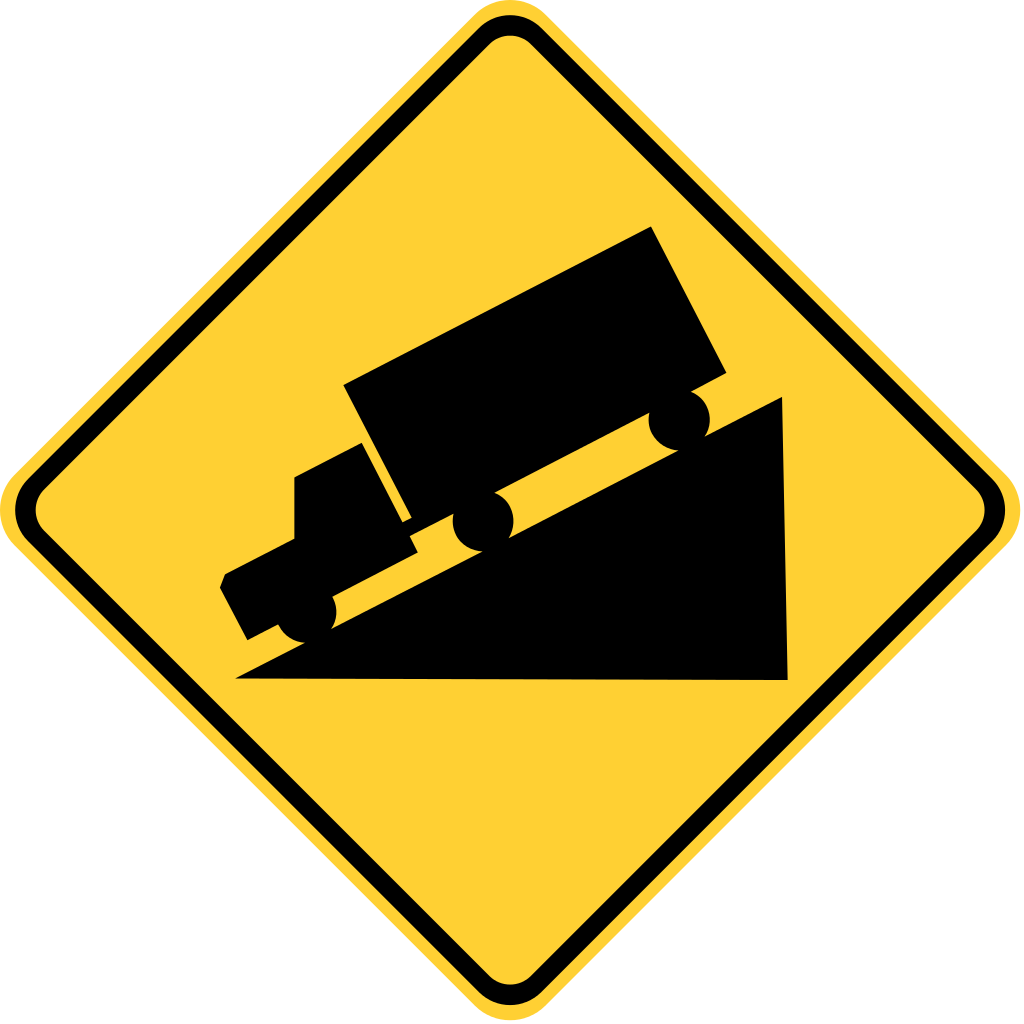 This sign indicates that:
A
there is a steep hill ahead.
B
trucks are merging from the right
C
there's a side road ahead
Answer Explanation
This traffic sign indicates: there is a steep hill ahead. Observing and obeying all roadway signs ensures safe traffic flow and legal driving.
This traffic sign indicates: there is a steep hill ahead. Observing and obeying all roadway signs ensures safe traffic flow and legal driving.
Question 40:
Signs and markings requiring that you obey the indicated instruction are known as _____ signs.
A
warning
B
guide
C
regulatory
D
information
Answer Explanation
The correct driving rule is: regulatory. Following standard DMV road rules and practicing defensive driving ensures safety for all road users.
The correct driving rule is: regulatory. Following standard DMV road rules and practicing defensive driving ensures safety for all road users.
Question 41:
 This sign means:
A
Narrow bridge ahead. Slow down and drive with caution.
B
Do not to enter if your vehicle is taller than the height listed on the sign.
C
No passing zone ahead.
Answer Explanation
This traffic sign indicates: Do not to enter if your vehicle is taller than the height listed on the sign. Observing and obeying all roadway signs ensures safe traffic flow and legal driving.
This traffic sign indicates: Do not to enter if your vehicle is taller than the height listed on the sign. Observing and obeying all roadway signs ensures safe traffic flow and legal driving.
Question 42:
An emergency vehicle approaches from behind with lights flashing. Drivers should:
A
slow down and proceed with caution.
B
turn on the headlights and continue to drive forward.
C
immediately pull over to the edge of the road and stop.
D
speed up to maintain a safe distance between them and the emergency vehicle.
Answer Explanation
When sharing the road with other vehicles: immediately pull over to the edge of the road and stop. Giving large vehicles and vulnerable users adequate clearance prevents dangerous accidents.
When sharing the road with other vehicles: immediately pull over to the edge of the road and stop. Giving large vehicles and vulnerable users adequate clearance prevents dangerous accidents.
Question 43:
On a four-lane highway, slower traffic should travel:
A
in the right lane.
B
in the left lane.
C
in the center lane.
Answer Explanation
Defensive driving guidelines state that: in the right lane. Anticipating road hazards and communicating maneuvers keeps traffic predictable and safe.
Defensive driving guidelines state that: in the right lane. Anticipating road hazards and communicating maneuvers keeps traffic predictable and safe.
Question 44:
When should you use hand-over-hand steering?
A
When performing sharp right turns.
B
When parking.
C
All of the above.
Answer Explanation
All of the listed points are essential driving requirements: When performing sharp right turns; When parking. Practicing each ensures compliance with DMV safety laws.
All of the listed points are essential driving requirements: When performing sharp right turns; When parking. Practicing each ensures compliance with DMV safety laws.
Question 45:
The maximum unposted speed limit in an urban district or residential area is 30 MPH.
A
False
B
True
Answer Explanation
For safe speed and stopping control: True. Adjusting speed to match visibility and road traction prevents loss of steering grip.
For safe speed and stopping control: True. Adjusting speed to match visibility and road traction prevents loss of steering grip.
Question 46:
Drivers convicted of fleeing in order to avoid arrest for the violation of any Nebraska law can have their license revoked.
A
False
B
True
Answer Explanation
The correct driving rule is: True. Following standard DMV road rules and practicing defensive driving ensures safety for all road users.
The correct driving rule is: True. Following standard DMV road rules and practicing defensive driving ensures safety for all road users.
Question 47:
If you are approaching an emergency vehicle that is stopped on the road, you:
A
must pull into an available lane not immediately adjacent to the emergency vehicle.
B
must increase your speed to get around the emergency vehicle as quickly as possible.
C
may not pass the emergency vehicle.
Answer Explanation
When sharing the road with other vehicles: must pull into an available lane not immediately adjacent to the emergency vehicle. Giving large vehicles and vulnerable users adequate clearance prevents dangerous accidents.
When sharing the road with other vehicles: must pull into an available lane not immediately adjacent to the emergency vehicle. Giving large vehicles and vulnerable users adequate clearance prevents dangerous accidents.
Question 48:
When coming to a place where you cannot see what is ahead - like a steep hill or a sharp curve, you should:
A
accelerate slightly before entering the curve.
B
give your horn a light tap, proceed slowly and stay close to the right edge of the road.
C
come to a complete stop and wait until visibility improves.
D
speed up to increase your visibility quickly.
Answer Explanation
The correct driving rule is: give your horn a light tap, proceed slowly and stay close to the right edge of the road. Following standard DMV road rules and practicing defensive driving ensures safety for all road users.
The correct driving rule is: give your horn a light tap, proceed slowly and stay close to the right edge of the road. Following standard DMV road rules and practicing defensive driving ensures safety for all road users.
Question 49:
Tennessee law requires you to notify the Department of Safety of your address change within:
A
10 days.
B
90 days.
C
45 days.
Answer Explanation
The correct driving rule is: 10 days. Following standard DMV road rules and practicing defensive driving ensures safety for all road users.
The correct driving rule is: 10 days. Following standard DMV road rules and practicing defensive driving ensures safety for all road users.
Question 50:
Which of these statements is true about child passengers:
A
Children 1 or older and over 20 pounds should ride in the front seat.
B
The front seat is generally the safest place in the vehicle for children six years of age and older.
C
Children under age one should not ride in the front seat in airbag-equipped vehicles.
Answer Explanation
The correct driving rule is: Children under age one should not ride in the front seat in airbag-equipped vehicles. Following standard DMV road rules and practicing defensive driving ensures safety for all road users.
The correct driving rule is: Children under age one should not ride in the front seat in airbag-equipped vehicles. Following standard DMV road rules and practicing defensive driving ensures safety for all road users.