Question 1:
 This road sign means:
A
Divided highway ahead - stay to the right
B
Do not enter
C
Do not pass
Answer Explanation
This traffic sign indicates: Divided highway ahead - stay to the right. Observing and obeying all roadway signs ensures safe traffic flow and legal driving.
This traffic sign indicates: Divided highway ahead - stay to the right. Observing and obeying all roadway signs ensures safe traffic flow and legal driving.
Question 2:
If a bus has signaled and is pulling back onto the roadway, you must:
A
yield.
B
honk to let them know you’re there.
C
move to the left lane.
D
speed up to pass.
Answer Explanation
The correct driving rule is: yield. Following standard DMV road rules and practicing defensive driving ensures safety for all road users.
The correct driving rule is: yield. Following standard DMV road rules and practicing defensive driving ensures safety for all road users.
Question 3:
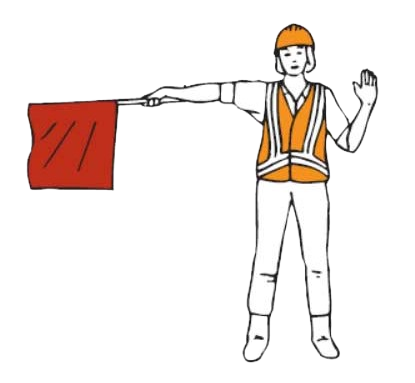 This signal means:
A
Stop
B
Move to the left
C
Slow down
D
Proceed
Answer Explanation
State laws require signaling your intention: stop. Signal at least 100 feet before making a turn or changing lanes.
State laws require signaling your intention: stop. Signal at least 100 feet before making a turn or changing lanes.
Question 4:
A vehicle is stopped at a crosswalk to permit a pedestrian to cross the roadway. The driver of the vehicle approaching from the rear should:
A
sound the horn.
B
overtake and pass the stopped vehicle.
C
not overtake and pass the stopped vehicle.
Answer Explanation
Drivers must always yield the right-of-way to pedestrians crossing at intersections and crosswalks: not overtake and pass the stopped vehicle. Stop and allow them to clear the lane safely.
Drivers must always yield the right-of-way to pedestrians crossing at intersections and crosswalks: not overtake and pass the stopped vehicle. Stop and allow them to clear the lane safely.
Question 5:
Double solid yellow lines mean:
A
the lane to the right may pass.
B
passing is not permitted in either direction.
C
the lane to the left may pass.
D
passing is permitted in either direction.
Answer Explanation
The correct driving rule is: passing is not permitted in either direction. Following standard DMV road rules and practicing defensive driving ensures safety for all road users.
The correct driving rule is: passing is not permitted in either direction. Following standard DMV road rules and practicing defensive driving ensures safety for all road users.
Question 6:
What should you do in case of a brake failure?
A
Pull off the road into an open space, if available.
B
Apply the parking brake slowly.
C
All of the above.
Answer Explanation
All of the listed points are essential driving requirements: Pull off the road into an open space, if available; Apply the parking brake slowly. Practicing each ensures compliance with DMV safety laws.
All of the listed points are essential driving requirements: Pull off the road into an open space, if available; Apply the parking brake slowly. Practicing each ensures compliance with DMV safety laws.
Question 7:
In general, you should pass vehicles going in the same direction as you are going:
A
only if the other driver signals it is safe.
B
whenever you have the opportunity to do so.
C
on the right.
D
on the left.
Answer Explanation
The correct driving rule is: on the left. Following standard DMV road rules and practicing defensive driving ensures safety for all road users.
The correct driving rule is: on the left. Following standard DMV road rules and practicing defensive driving ensures safety for all road users.
Question 8:
Emergency vehicles:
A
may follow each other.
B
may use a loudspeaker to give instructions.
C
have the right-of-way when using siren and red/blue lights.
D
All of the above.
Answer Explanation
All of the listed points are essential driving requirements: may follow each other; may use a loudspeaker to give instructions; have the right-of-way when using siren and red/blue lights. Practicing each ensures compliance with DMV safety laws.
All of the listed points are essential driving requirements: may follow each other; may use a loudspeaker to give instructions; have the right-of-way when using siren and red/blue lights. Practicing each ensures compliance with DMV safety laws.
Question 9:
Drivers who eat and drink while driving:
A
have no driving errors.
B
may have trouble controlling their vehicles.
C
must yield the right-of-way.
D
tend to be more aggressive.
Answer Explanation
The correct driving rule is: may have trouble controlling their vehicles. Following standard DMV road rules and practicing defensive driving ensures safety for all road users.
The correct driving rule is: may have trouble controlling their vehicles. Following standard DMV road rules and practicing defensive driving ensures safety for all road users.
Question 10:
Regulatory signs:
A
are diamond shaped and yellow or green.
B
warn drivers about road hazards.
C
provide information about the road rules and traffic laws.
D
regulate the flow of traffic at school zone.
Answer Explanation
The correct driving rule is: provide information about the road rules and traffic laws. Following standard DMV road rules and practicing defensive driving ensures safety for all road users.
The correct driving rule is: provide information about the road rules and traffic laws. Following standard DMV road rules and practicing defensive driving ensures safety for all road users.
Question 11:
Parking is not allowed:
A
on the road side of a parked vehicle.
B
in a tunnel.
C
All of the above.
Answer Explanation
Under standard parking and curb regulations: All of the above. Following parking distance clearances keeps roadways unobstructed and emergency lanes accessible.
Under standard parking and curb regulations: All of the above. Following parking distance clearances keeps roadways unobstructed and emergency lanes accessible.
Question 12:
Studies show that wearing seat belts:
A
reduces your chances of serious injury in a crash.
B
increases your chances of fatality in a crash.
C
reduces your chances of damaging your car in a crash.
D
All of the above.
Answer Explanation
The correct driving rule is: reduces your chances of serious injury in a crash. Following standard DMV road rules and practicing defensive driving ensures safety for all road users.
The correct driving rule is: reduces your chances of serious injury in a crash. Following standard DMV road rules and practicing defensive driving ensures safety for all road users.
Question 13:
If you drink alcohol socially, what helps insure safe driving?
A
Stop drinking one hour before driving.
B
Drink coffee before driving.
C
Take a cold shower before driving.
D
Ride home with a friend who has not been drinking.
Answer Explanation
Under state DUI and traffic safety laws: Ride home with a friend who has not been drinking. Alcohol degrades judgment, slows reaction times, and distorts depth perception.
Under state DUI and traffic safety laws: Ride home with a friend who has not been drinking. Alcohol degrades judgment, slows reaction times, and distorts depth perception.
Question 14:
Taking drugs and alcohol together:
A
helps you get rid of the effects of alcohol in your body.
B
has no effect on your general driving ability.
C
increase the risk of causing a crash.
D
is no more dangerous than alcohol by itself.
Answer Explanation
Under state DUI and traffic safety laws: increase the risk of causing a crash. Alcohol degrades judgment, slows reaction times, and distorts depth perception.
Under state DUI and traffic safety laws: increase the risk of causing a crash. Alcohol degrades judgment, slows reaction times, and distorts depth perception.
Question 15:
When driving behind a motorcycle, drivers must:
A
remembers that motorcyclists have the right to use a complete traffic lane.
B
pass the motorcycle in the same lane.
C
drive on the shoulder beside the motorcycle.
D
share the lane with the motorcycle.
Answer Explanation
Motorcycles can stop rapidly and are easily hidden in vehicle blind spots: remembers that motorcyclists have the right to use a complete traffic lane. Always allow an increased following distance of at least 3 to 4 seconds.
Motorcycles can stop rapidly and are easily hidden in vehicle blind spots: remembers that motorcyclists have the right to use a complete traffic lane. Always allow an increased following distance of at least 3 to 4 seconds.
Question 16:
 This sign means:
A
No traffic signal ahead
B
Traffic signal ahead
C
Open intersection ahead
Answer Explanation
This traffic sign indicates: traffic signal ahead. Observing and obeying all roadway signs ensures safe traffic flow and legal driving.
This traffic sign indicates: traffic signal ahead. Observing and obeying all roadway signs ensures safe traffic flow and legal driving.
Question 17:
 This road sign means:
A
You must turn right
B
Railroad crossing
C
Crossroad ahead
D
4-way stop
Answer Explanation
This traffic sign indicates: Crossroad ahead. Observing and obeying all roadway signs ensures safe traffic flow and legal driving.
This traffic sign indicates: Crossroad ahead. Observing and obeying all roadway signs ensures safe traffic flow and legal driving.
Question 18:
If you remain in the back blind spot of a large vehicle:
A
you increase the chance of a crash.
B
the large vehicle will take much longer to stop.
C
you can reduce fuel consumption.
Answer Explanation
Large commercial trucks have extensive blind spots on all four sides called the 'No-Zone': you increase the chance of a crash. If you cannot see the truck driver in their side mirrors, they cannot see you.
Large commercial trucks have extensive blind spots on all four sides called the 'No-Zone': you increase the chance of a crash. If you cannot see the truck driver in their side mirrors, they cannot see you.
Question 19:
More than one vehicle is approaching a four-way stop sign. Who has the right of way?
A
The first driver to reach the intersection and stop.
B
The driver on the left.
C
The last driver to reach the intersection.
Answer Explanation
At an uncontrolled intersection or 4-way stop where vehicles arrive at the same time: The first driver to reach the intersection and stop. The driver on the left must always yield to the driver on the right.
At an uncontrolled intersection or 4-way stop where vehicles arrive at the same time: The first driver to reach the intersection and stop. The driver on the left must always yield to the driver on the right.
Question 20:
_________________ your mirrors when you prepare to change lanes.
A
Never depend on
B
Never use
C
Always rely on
Answer Explanation
The correct driving rule is: Never depend on. Following standard DMV road rules and practicing defensive driving ensures safety for all road users.
The correct driving rule is: Never depend on. Following standard DMV road rules and practicing defensive driving ensures safety for all road users.
Question 21:
A green arrow used to control turns from a specific traffic lane:
A
means the same as a circular green light, but you must go only in the direction indicated by the arrow.
B
is used only on one-way streets.
C
provide directional and mileage information to specific destinations.
D
means that you may go only if the green arrow is accompanied by a green light.
Answer Explanation
The correct driving rule is: means the same as a circular green light, but you must go only in the direction indicated by the arrow. Following standard DMV road rules and practicing defensive driving ensures safety for all road users.
The correct driving rule is: means the same as a circular green light, but you must go only in the direction indicated by the arrow. Following standard DMV road rules and practicing defensive driving ensures safety for all road users.
Question 22:
Air bags are meant to _________ seat belts.
A
work with
B
fix
C
replace
Answer Explanation
The correct driving rule is: work with. Following standard DMV road rules and practicing defensive driving ensures safety for all road users.
The correct driving rule is: work with. Following standard DMV road rules and practicing defensive driving ensures safety for all road users.
Question 23:
 This road sign means:
A
The left lane ends soon
B
one-way street ahead.
C
The right lane ends soon
D
Highway entrance ramp ahead
Answer Explanation
This traffic sign indicates: The right lane ends soon. Observing and obeying all roadway signs ensures safe traffic flow and legal driving.
This traffic sign indicates: The right lane ends soon. Observing and obeying all roadway signs ensures safe traffic flow and legal driving.
Question 24:
Which of the following may result in an arrest for driving under the influence of intoxicants (DUII)?
A
A controlled substance, such as prescription medicines or illegal drugs.
B
An inhalant, such as glue or paint.
C
Alcohol
D
All of the above.
Answer Explanation
All of the listed points are essential driving requirements: A controlled substance, such as prescription medicines or illegal drugs; An inhalant, such as glue or paint; Alcohol. Practicing each ensures compliance with DMV safety laws.
All of the listed points are essential driving requirements: A controlled substance, such as prescription medicines or illegal drugs; An inhalant, such as glue or paint; Alcohol. Practicing each ensures compliance with DMV safety laws.
Question 25:
If your brakes are wet, you can dry them by:
A
riding the pedal lightly.
B
pull over to the right and wait until it stops raining.
C
having them checked by a mechanic.
Answer Explanation
The correct driving rule is: riding the pedal lightly. Following standard DMV road rules and practicing defensive driving ensures safety for all road users.
The correct driving rule is: riding the pedal lightly. Following standard DMV road rules and practicing defensive driving ensures safety for all road users.