Question 1:
 This road sign means:
A
Railroad Crossing
B
One Way
C
Limited parking
Answer Explanation
Circular signs with an 'X' and 'RR' designate a Railroad Advance Warning: Railroad Crossing. Drivers must slow down, look both ways, listen for trains, and be prepared to stop.
Circular signs with an 'X' and 'RR' designate a Railroad Advance Warning: Railroad Crossing. Drivers must slow down, look both ways, listen for trains, and be prepared to stop.
Question 2:
If you stop at a railroad crossing with more than one track:
A
proceed with caution until you see a train.
B
go through when one of the tracks is free.
C
go through as soon as the first train passes.
D
wait until you have a clear view of both tracks.
Answer Explanation
The correct driving rule is: wait until you have a clear view of both tracks. Following standard DMV road rules and practicing defensive driving ensures safety for all road users.
The correct driving rule is: wait until you have a clear view of both tracks. Following standard DMV road rules and practicing defensive driving ensures safety for all road users.
Question 3:
 This sign tells drivers that:
A
they must make a left turn at the intersection.
B
U-turns are not allowed.
C
they must not make a right turn.
D
None of the above.
Answer Explanation
This traffic sign indicates: they must not make a right turn. Observing and obeying all roadway signs ensures safe traffic flow and legal driving.
This traffic sign indicates: they must not make a right turn. Observing and obeying all roadway signs ensures safe traffic flow and legal driving.
Question 4:
A steady yellow light means that a ______ light will soon appear.
A
steady green
B
steady red
C
flashing yellow
D
flashing green
Answer Explanation
According to standard right-of-way regulations: steady red. Yielding appropriately prevents intersection collisions and maintains safe traffic flow.
According to standard right-of-way regulations: steady red. Yielding appropriately prevents intersection collisions and maintains safe traffic flow.
Question 5:
Motorcyclists are entitled to use the full width of a traffic lane; therefore, a driver should pass a motorcycle the same way as passing another vehicle.
A
False
B
True
Answer Explanation
Motorcycles can stop rapidly and are easily hidden in vehicle blind spots: True. Always allow an increased following distance of at least 3 to 4 seconds.
Motorcycles can stop rapidly and are easily hidden in vehicle blind spots: True. Always allow an increased following distance of at least 3 to 4 seconds.
Question 6:
 This road sign means:
A
A road joins from the left
B
The road ahead turns sharply right then sharply left
C
Sharp right turn
D
Winding road ahead
Answer Explanation
This traffic sign indicates: The road ahead turns sharply right then sharply left. Observing and obeying all roadway signs ensures safe traffic flow and legal driving.
This traffic sign indicates: The road ahead turns sharply right then sharply left. Observing and obeying all roadway signs ensures safe traffic flow and legal driving.
Question 7:
 This road sign means:
A
No left turn
B
No U-turn
C
Detour ahead
Answer Explanation
This traffic sign indicates: No U-turn. Observing and obeying all roadway signs ensures safe traffic flow and legal driving.
This traffic sign indicates: No U-turn. Observing and obeying all roadway signs ensures safe traffic flow and legal driving.
Question 8:
Your BAC depends on:
A
how fit you are.
B
the type of beverage you drink.
C
the amount of alcohol you drink.
Answer Explanation
Under state DUI and traffic safety laws: the amount of alcohol you drink. Alcohol degrades judgment, slows reaction times, and distorts depth perception.
Under state DUI and traffic safety laws: the amount of alcohol you drink. Alcohol degrades judgment, slows reaction times, and distorts depth perception.
Question 9:
A driver who approaches an intersection:
A
must yield the right-of-way to traffic already in the intersection.
B
must drive straight through the intersection, even if another vehicle is already in the intersection.
C
has the right-of-way over traffic already in the intersection.
Answer Explanation
According to standard right-of-way regulations: must yield the right-of-way to traffic already in the intersection. Yielding appropriately prevents intersection collisions and maintains safe traffic flow.
According to standard right-of-way regulations: must yield the right-of-way to traffic already in the intersection. Yielding appropriately prevents intersection collisions and maintains safe traffic flow.
Question 10:
The first sign drivers see when approaching a highway-rail intersection is usually:
A
a crossbuck sign.
B
an advance warning sign.
C
a speed limit sign.
Answer Explanation
According to standard right-of-way regulations: an advance warning sign. Yielding appropriately prevents intersection collisions and maintains safe traffic flow.
According to standard right-of-way regulations: an advance warning sign. Yielding appropriately prevents intersection collisions and maintains safe traffic flow.
Question 11:
Which signs have black letters on a white background?
A
Warning signs (diamond)
B
Regulatory signs (vertical rectangle)
C
Guide signs (horizontal rectangle)
Answer Explanation
The correct driving rule is: Regulatory signs (vertical rectangle). Following standard DMV road rules and practicing defensive driving ensures safety for all road users.
The correct driving rule is: Regulatory signs (vertical rectangle). Following standard DMV road rules and practicing defensive driving ensures safety for all road users.
Question 12:
 This sign is used to warn drivers about:
A
road construction.
B
changes in traffic lanes.
C
curves ahead.
D
drowsy driving.
Answer Explanation
This traffic sign indicates: curves ahead. Observing and obeying all roadway signs ensures safe traffic flow and legal driving.
This traffic sign indicates: curves ahead. Observing and obeying all roadway signs ensures safe traffic flow and legal driving.
Question 13:
This sign means:
A
The road will curve to the right.
B
Left turns are not allowed at the intersection.
C
Do not turn right.
Answer Explanation
This traffic sign indicates: The road will curve to the right. Observing and obeying all roadway signs ensures safe traffic flow and legal driving.
This traffic sign indicates: The road will curve to the right. Observing and obeying all roadway signs ensures safe traffic flow and legal driving.
Question 14:
Your brake lights tell other drivers that you:
A
are changing lanes.
B
are slowing down or stopping.
C
are making a turn.
D
have your emergency brake on.
Answer Explanation
The correct driving rule is: are slowing down or stopping. Following standard DMV road rules and practicing defensive driving ensures safety for all road users.
The correct driving rule is: are slowing down or stopping. Following standard DMV road rules and practicing defensive driving ensures safety for all road users.
Question 15:
 This road sign means:
A
Traffic increases ahead
B
Steep grade ahead
C
Winding road ahead
D
Slippery road ahead
Answer Explanation
This traffic sign indicates: Slippery road ahead. Observing and obeying all roadway signs ensures safe traffic flow and legal driving.
This traffic sign indicates: Slippery road ahead. Observing and obeying all roadway signs ensures safe traffic flow and legal driving.
Question 16:
 This road sign means:
A
Slow down and be prepared to stop if necessary
B
You must come to a complete stop
C
You may proceed at regular speed through the intersection
D
Wrong Way
Answer Explanation
This traffic sign indicates: slow down and be prepared to stop if necessary. Observing and obeying all roadway signs ensures safe traffic flow and legal driving.
This traffic sign indicates: slow down and be prepared to stop if necessary. Observing and obeying all roadway signs ensures safe traffic flow and legal driving.
Question 17:
Are bicyclists required to obey traffic laws and signs?
A
No, bicyclists are considered pedestrians when it comes to the rules of the road.
B
Yes.
C
Yes, but only if they are riding in a bicycle lane.
Answer Explanation
The correct driving rule is: Yes. Following standard DMV road rules and practicing defensive driving ensures safety for all road users.
The correct driving rule is: Yes. Following standard DMV road rules and practicing defensive driving ensures safety for all road users.
Question 18:
A thumping sound can be a warning:
A
that a tire blowout is about to occur.
B
of a steering failure.
C
of a brake failure.
Answer Explanation
The correct driving rule is: that a tire blowout is about to occur. Following standard DMV road rules and practicing defensive driving ensures safety for all road users.
The correct driving rule is: that a tire blowout is about to occur. Following standard DMV road rules and practicing defensive driving ensures safety for all road users.
Question 19:
Regulation signs normally are ____ rectangles with ____ letters or symbols.
A
yellow; black
B
white; black
C
green; white
Answer Explanation
The correct driving rule is: white; black. Following standard DMV road rules and practicing defensive driving ensures safety for all road users.
The correct driving rule is: white; black. Following standard DMV road rules and practicing defensive driving ensures safety for all road users.
Question 20:
Where must a pedestrian walk when there are no sidewalks?
A
On the side of the road, in the same direction of traffic.
B
In the middle of the road, facing oncoming traffic.
C
On the side of the road, facing the traffic.
Answer Explanation
Drivers must always yield the right-of-way to pedestrians crossing at intersections and crosswalks: On the side of the road, facing the traffic. Stop and allow them to clear the lane safely.
Drivers must always yield the right-of-way to pedestrians crossing at intersections and crosswalks: On the side of the road, facing the traffic. Stop and allow them to clear the lane safely.
Question 21:
 This sign warns drivers that:
A
they cannot go straight ahead.
B
they will soon be facing oncoming traffic.
C
a shared lane starts ahead.
Answer Explanation
This traffic sign indicates: they will soon be facing oncoming traffic. Observing and obeying all roadway signs ensures safe traffic flow and legal driving.
This traffic sign indicates: they will soon be facing oncoming traffic. Observing and obeying all roadway signs ensures safe traffic flow and legal driving.
Question 22:
 This sign warns drivers of:
A
low clearance.
B
a narrow bridge ahead.
C
a low place in the road.
Answer Explanation
This traffic sign indicates: a narrow bridge ahead. Observing and obeying all roadway signs ensures safe traffic flow and legal driving.
This traffic sign indicates: a narrow bridge ahead. Observing and obeying all roadway signs ensures safe traffic flow and legal driving.
Question 23:
 This sign indicates the _______________ vehicles can safely travel in this area.
A
suggested speed
B
maximum speed
C
minimum speed
Answer Explanation
This traffic sign indicates: maximum speed. Observing and obeying all roadway signs ensures safe traffic flow and legal driving.
This traffic sign indicates: maximum speed. Observing and obeying all roadway signs ensures safe traffic flow and legal driving.
Question 24:
 This sign means:
A
U-turns are not allowed.
B
Parking is not allowed.
C
No parking on pavement.
Answer Explanation
This traffic sign indicates: Parking is not allowed. Observing and obeying all roadway signs ensures safe traffic flow and legal driving.
This traffic sign indicates: Parking is not allowed. Observing and obeying all roadway signs ensures safe traffic flow and legal driving.
Question 25:
 This road sign means:
A
Curves ahead
B
Divided highway ahead
C
Divided highway ends
Answer Explanation
This traffic sign indicates: Divided highway ends. Observing and obeying all roadway signs ensures safe traffic flow and legal driving.
This traffic sign indicates: Divided highway ends. Observing and obeying all roadway signs ensures safe traffic flow and legal driving.
Question 26:
What does it mean If an oncoming driver flashes headlights at you during a period of low visibility?
A
Your headlights are too bright. You should turn them off.
B
Your vehicle was difficult to see. You should turn on your headlights.
C
Your headlights are too bright. You should use parking lights instead.
Answer Explanation
The correct driving rule is: Your vehicle was difficult to see. You should turn on your headlights. Following standard DMV road rules and practicing defensive driving ensures safety for all road users.
The correct driving rule is: Your vehicle was difficult to see. You should turn on your headlights. Following standard DMV road rules and practicing defensive driving ensures safety for all road users.
Question 27:
To check your blind spot before changing lanes:
A
look into the right side mirror.
B
look into the rearview mirror.
C
look over your shoulder in the direction you plan to move.
D
look into the left side mirror.
Answer Explanation
Large commercial trucks have extensive blind spots on all four sides called the 'No-Zone': look over your shoulder in the direction you plan to move. If you cannot see the truck driver in their side mirrors, they cannot see you.
Large commercial trucks have extensive blind spots on all four sides called the 'No-Zone': look over your shoulder in the direction you plan to move. If you cannot see the truck driver in their side mirrors, they cannot see you.
Question 28:
 This road sign means:
A
Do not pass trucks
B
Truck must back up
C
Steep downgrade ahead
Answer Explanation
This traffic sign indicates: Steep downgrade ahead. Observing and obeying all roadway signs ensures safe traffic flow and legal driving.
This traffic sign indicates: Steep downgrade ahead. Observing and obeying all roadway signs ensures safe traffic flow and legal driving.
Question 29:
 This road sign means:
A
Yield the right-of-way to oncoming vehicles
B
Stop if necessary
C
You must make a complete stop
D
Slow down or stop
Answer Explanation
An octagonal Stop sign requires a full and complete stop before the stop line or crosswalk: you must make a complete stop. Proceed only after yielding to all cross traffic and pedestrians.
An octagonal Stop sign requires a full and complete stop before the stop line or crosswalk: you must make a complete stop. Proceed only after yielding to all cross traffic and pedestrians.
Question 30:
Blind spots around a large vehicle are _________________ than the blind spots around a car.
A
larger and deeper
B
less dangerous
C
narrower and shorter
Answer Explanation
The correct driving rule is: larger and deeper. Following standard DMV road rules and practicing defensive driving ensures safety for all road users.
The correct driving rule is: larger and deeper. Following standard DMV road rules and practicing defensive driving ensures safety for all road users.
Question 31:
_________________ your mirrors when you prepare to change lanes.
A
Never depend on
B
Never use
C
Always rely on
Answer Explanation
The correct driving rule is: Never depend on. Following standard DMV road rules and practicing defensive driving ensures safety for all road users.
The correct driving rule is: Never depend on. Following standard DMV road rules and practicing defensive driving ensures safety for all road users.
Question 32:
A steady yellow light means:
A
Be prepared to stop for the red light.
B
Drive with caution.
C
Be prepared to go. The light will soon be green.
Answer Explanation
According to standard right-of-way regulations: Be prepared to stop for the red light. Yielding appropriately prevents intersection collisions and maintains safe traffic flow.
According to standard right-of-way regulations: Be prepared to stop for the red light. Yielding appropriately prevents intersection collisions and maintains safe traffic flow.
Question 33:
You should never depend on your mirrors when you prepare to change lanes. Why?
A
Mirrors leave “blind spots” behind both sides of vehicles.
B
Mirrors need to be adjusted.
C
Mirrors are useless.
Answer Explanation
The correct driving rule is: Mirrors leave “blind spots” behind both sides of vehicles. Following standard DMV road rules and practicing defensive driving ensures safety for all road users.
The correct driving rule is: Mirrors leave “blind spots” behind both sides of vehicles. Following standard DMV road rules and practicing defensive driving ensures safety for all road users.
Question 34:
Drivers should be aware that a motorcyclist may:
A
decrease speed and rise off the seat when approaching a railroad crossing.
B
quickly change speed or lane position.
C
All of the above.
Answer Explanation
All of the listed points are essential driving requirements: decrease speed and rise off the seat when approaching a railroad crossing; quickly change speed or lane position. Practicing each ensures compliance with DMV safety laws.
All of the listed points are essential driving requirements: decrease speed and rise off the seat when approaching a railroad crossing; quickly change speed or lane position. Practicing each ensures compliance with DMV safety laws.
Question 35:
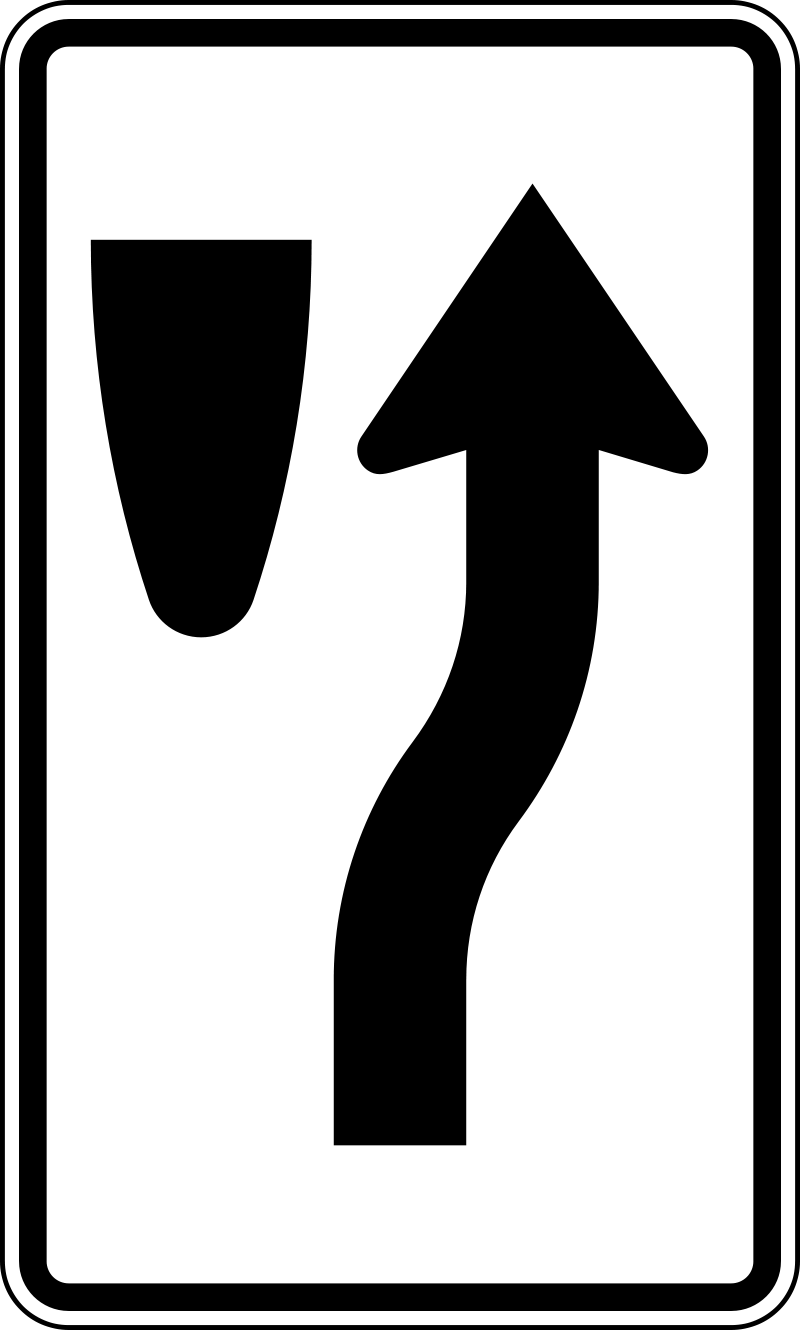 This sign tells drivers that:
A
there is a right turn ahead.
B
they must stay on the right side of the divider
C
a divided highway ends ahead.
Answer Explanation
This traffic sign indicates: they must stay on the right side of the divider. Observing and obeying all roadway signs ensures safe traffic flow and legal driving.
This traffic sign indicates: they must stay on the right side of the divider. Observing and obeying all roadway signs ensures safe traffic flow and legal driving.
Question 36:
When driving on slick roads, drivers should:
A
accelerate quickly.
B
take turns more slowly.
C
use alternate routes.
D
drive as they would on dry roads.
Answer Explanation
The correct driving rule is: take turns more slowly. Following standard DMV road rules and practicing defensive driving ensures safety for all road users.
The correct driving rule is: take turns more slowly. Following standard DMV road rules and practicing defensive driving ensures safety for all road users.
Question 37:
If you missed your exit on a freeway, you should:
A
use the right turn signal, check your mirrors and move to the right.
B
None of the above.
C
go to the next exit and come back to the exit you missed.
D
make a quick U-turn from your lane of travel.
Answer Explanation
Defensive driving guidelines state that: go to the next exit and come back to the exit you missed. Anticipating road hazards and communicating maneuvers keeps traffic predictable and safe.
Defensive driving guidelines state that: go to the next exit and come back to the exit you missed. Anticipating road hazards and communicating maneuvers keeps traffic predictable and safe.
Question 38:
 It's 10 AM. This sign tells you that:
A
you are allowed to park until 5:30 PM.
B
you must display a special permit in order to park here.
C
you are not allowed to park here.
Answer Explanation
This traffic sign indicates: you are not allowed to park here. Observing and obeying all roadway signs ensures safe traffic flow and legal driving.
This traffic sign indicates: you are not allowed to park here. Observing and obeying all roadway signs ensures safe traffic flow and legal driving.
Question 39:
If another car is in danger of hitting you, you should:
A
flash your brake lights.
B
sound your horn.
C
use your emergency lights.
D
flash your headlights.
Answer Explanation
The correct driving rule is: sound your horn. Following standard DMV road rules and practicing defensive driving ensures safety for all road users.
The correct driving rule is: sound your horn. Following standard DMV road rules and practicing defensive driving ensures safety for all road users.
Question 40:
 A four-way stop sign means:
A
traffic from all four directions must stop.
B
if two vehicles reach the intersection at the same time, the driver on the left yields to the driver on the right.
C
All of the above.
Answer Explanation
This sign alerts drivers to several mandatory requirements: traffic from all four directions must stop, if two vehicles reach the intersection at the same time, the driver on the left yields to the driver on the right. Obeying all posted traffic control instructions is required by law.
This sign alerts drivers to several mandatory requirements: traffic from all four directions must stop, if two vehicles reach the intersection at the same time, the driver on the left yields to the driver on the right. Obeying all posted traffic control instructions is required by law.