Question 1:
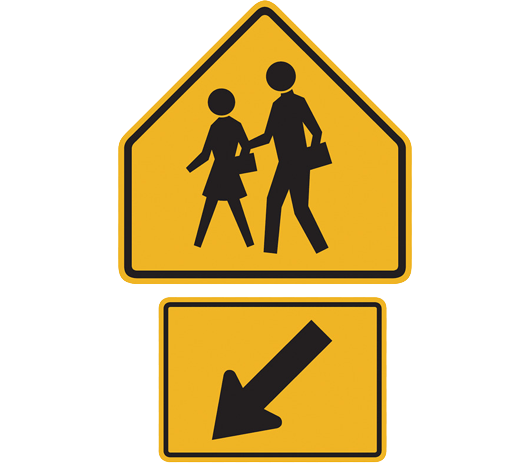 When they approach this sign, drivers must:
A
slow down and watch for children crossing the road.
B
obey signals from crossing guards.
C
stop if necessary.
D
All of the above.
No explanation available.
Question 2:
To keep your vehicle from rolling into traffic when parked on a hill, if you are facing uphill you should:
A
turn the front wheels away from the curb or edge of the road.
B
turn the back wheels towards the curb or edge of the road.
C
set the parking brake and keep the front wheels straight.
D
turn the front wheels towards the curb or edge of the road.
No explanation available.
Question 3:
A red traffic sign means?
A
Do not enter.
B
Stop.
C
All of the above.
No explanation available.
Question 4:
 This is:
A
a side road sign.
B
a merging traffic sign.
C
a right curve sign.
No explanation available.
Question 5:
You must pull over to the edge of the road and allow an emergency vehicle to pass:
A
only if the emergency vehicle is following you.
B
regardless of your direction.
C
only if the emergency vehicle is approaching.
D
None of the above.
No explanation available.
Question 6:
Drivers must be prepared for anything coming up in the road ahead. They should:
A
scan the road for traffic conditions and possible hazards.
B
drive with the right foot resting lightly on the brake pedal.
C
stare straight ahead at all times.
D
maintain focus toward the left of the road.
No explanation available.
Question 7:
When an approaching driver at night blinds you by failing to dim their high beams, you should look:
A
straight down the middle of the road.
B
towards the left side of the road.
C
None of the other answers is correct.
D
towards the right side of the road.
No explanation available.
Question 8:
Select the most effective safety restraint(s) in a traffic crash.
A
Lap and shoulder belt only
B
Air bag only
C
Pumping brakes.
D
A combination of lap/shoulder belt and air bag.
No explanation available.
Question 9:
___________ are green with white letters and symbols.
A
Warning signs
B
Destination signs (guide signs)
C
Regulation signs (regulatory signs)
No explanation available.
Question 10:
A steady green light at intersections means:
A
You may drive through the intersection if the road is clear
B
You must increase your speed
C
You may not turn right
No explanation available.
Question 11:
A flashing yellow light means:
A
Merging traffic ahead
B
Pedestrian crossing
C
Come to a full stop
D
Proceed with caution
No explanation available.
Question 12:
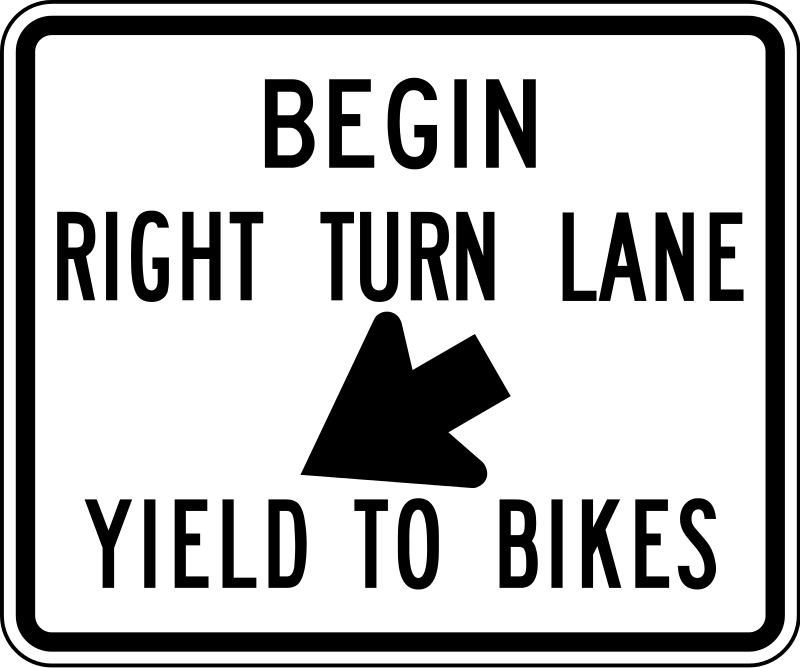 What does this road sign indicate?
A
Drivers have the right of way over bikes turning left.
B
Vehicles turning left must yield to bikes entering a right turn lane.
C
Motor vehicles entering an exclusive right-turn lane must weave across bicycle traffic in bicycle lanes.
No explanation available.
Question 13:
Drivers must yield for emergency vehicles:
A
Never.
B
only when other vehicles yield.
C
when they see a flashing red or blue light or hear a siren.
D
None of the above.
No explanation available.
Question 14:
A traffic sign with a red circle around and a slash over a symbol means:
A
the maneuver shown by the symbol is not allowed.
B
Do not drive faster than the posted speed limit.
C
the maneuver shown on the sign should be executed with extreme caution.
No explanation available.
Question 15:
To avoid being in a truck driver’s blind spot, you should:
A
never pass the truck and put your headlights on.
B
avoid driving on either side of the truck and don’t tailgate.
C
flash your lights.
D
sound your horn.
No explanation available.
Question 16:
 This road sign means:
A
Drive with caution and be ready to stop
B
Slow down or stop
C
You must come to a complete stop
No explanation available.
Question 17:
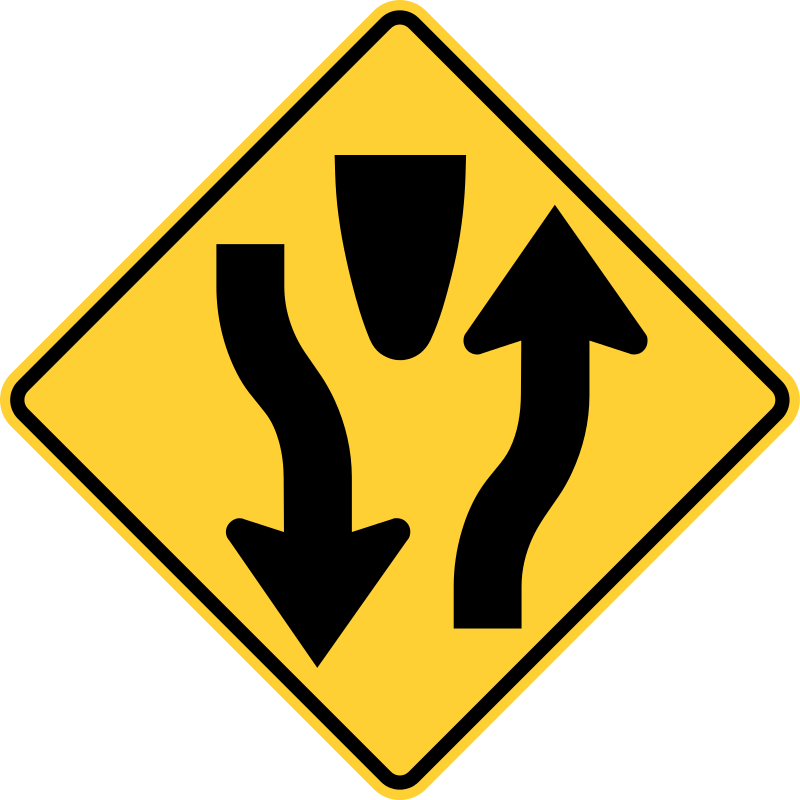 This sign means:
A
The highway ahead is divided into two one-way roadways.
B
Roundabout ahead. Slow down.
C
The divided highway on which drivers are traveling ends ahead.
No explanation available.
Question 18:
What do flashing red lights on a school bus indicate?
A
The bus is stopped to load or discharge passengers.
B
Traffic that approaches from either direction may proceed.
C
The bus is about to stop.
No explanation available.
Question 19:
If you hear a thumping sound while driving, you should:
A
hook your shoe under the gas pedal and see if you can free it.
B
get off the road and check your tires.
C
try your emergency lights.
No explanation available.
Question 20:
Alcohol causes:
A
poor judgment.
B
loss of concentration.
C
reduced perception.
D
All of the above.
No explanation available.
Question 21:
You may park or stop along the shoulder of the freeway:
A
if you need to check your smartphone for directions.
B
only if you have an emergency.
C
if no part of your vehicle is on the road.
D
as long as you turn on your emergency flashers.
No explanation available.
Question 22:
You can pass on the right:
A
when a vehicle ahead makes a right turn.
B
when a vehicle ahead makes a left turn.
C
when a vehicle that is approaching from the opposite direction is prepared to turn left.
No explanation available.
Question 23:
When a hazard is seen ahead, reaction distance:
A
is the sum of perception distance and braking distance.
B
equals total stopping distance minus perception distance.
C
is how far a vehicle will continue to travel, in ideal conditions, before the driver hits the brakes.
No explanation available.
Question 24:
What do warning signs mean?
A
Danger ahead.
B
Drivers are approaching a location where there is a special rule.
C
All of the above.
No explanation available.
Question 25:
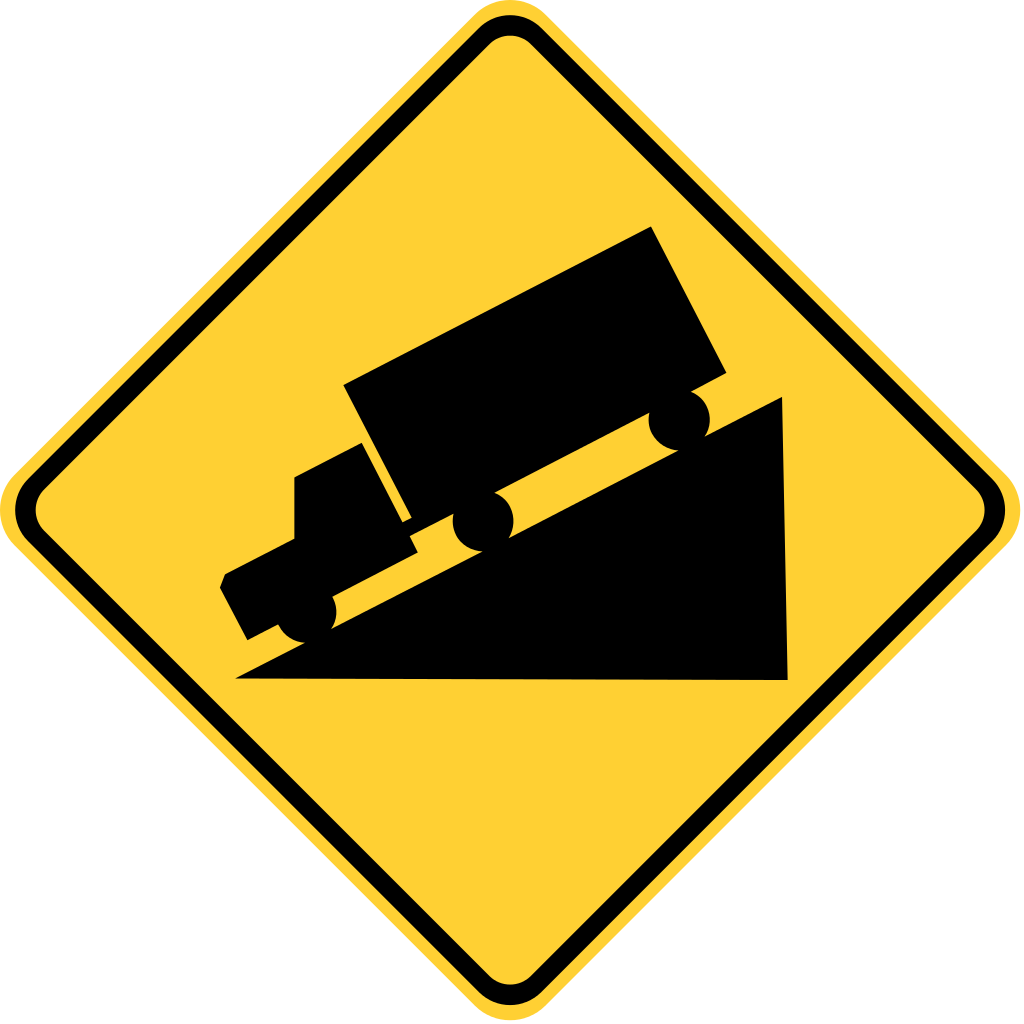 This traffic sign warns you about:
A
merging traffic.
B
a hill or a downgrade up ahead on the road.
C
an intersection ahead.
D
a winding road.
No explanation available.
Question 26:
Your blind spot is the area of the road:
A
you see in your rearview mirror.
B
directly behind your vehicle.
C
you cannot see without moving your head.
D
you see in your side mirror.
No explanation available.
Question 27:
Drivers may pass another vehicle if the line dividing two lanes is a ________ line.
A
broken white
B
double solid yellow
C
solid yellow
D
solid white
No explanation available.
Question 28:
You are stopped at a stop sign and you are going to go straight through the intersection. A car on the cross road has stopped at a stop sign on your right and is going to go straight. Who has the right-of-way?
A
Whoever enters the intersection first.
B
You.
C
The car on your right.
No explanation available.
Question 29:
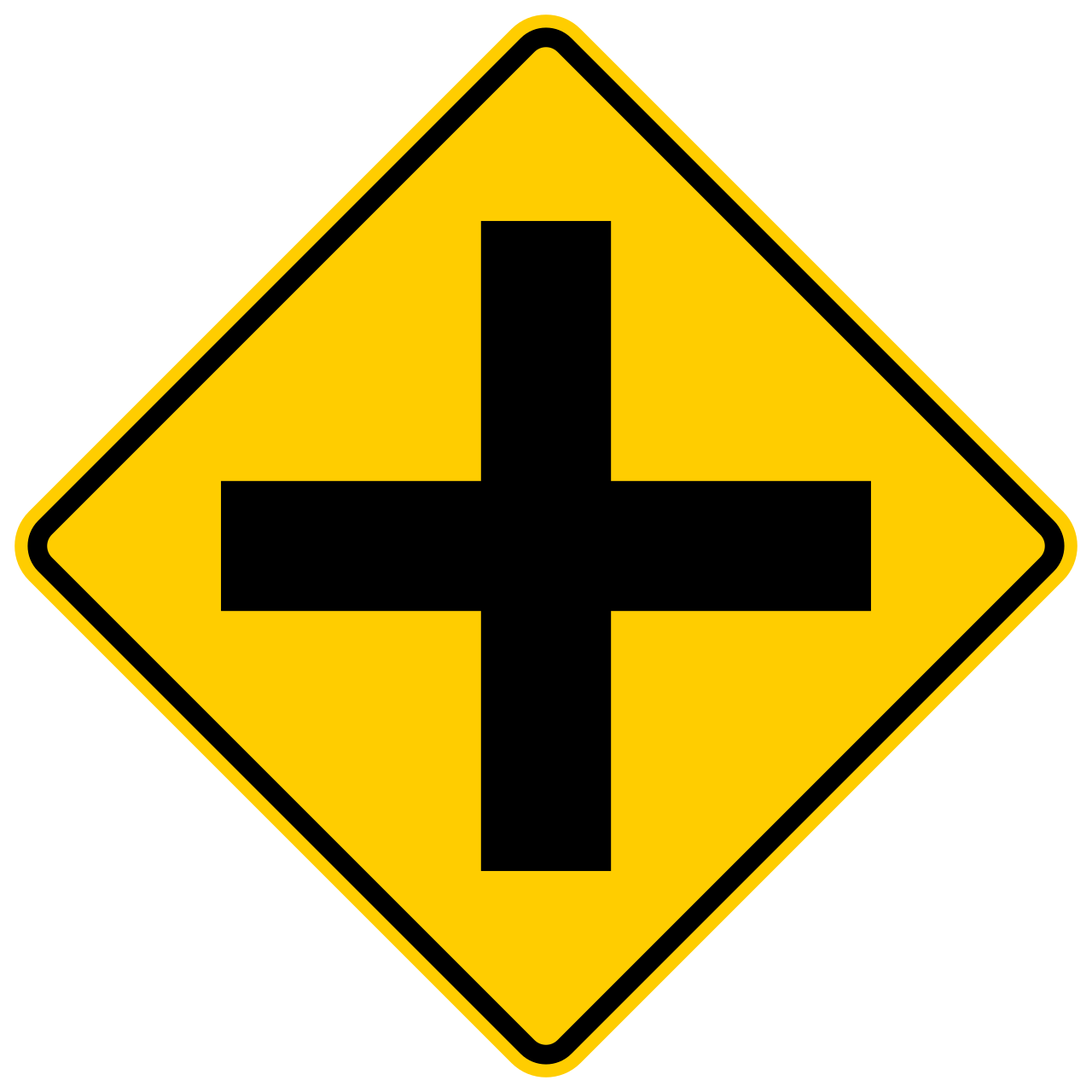 This road sign means:
A
Crossroads ahead
B
Side Road
C
Turn right or go through
D
Flagger ahead
No explanation available.
Question 30:
When driving on major highways you should:
A
be ready to react to road hazards.
B
stay alert.
C
keep your eyes moving.
D
All of the above.
No explanation available.
Question 31:
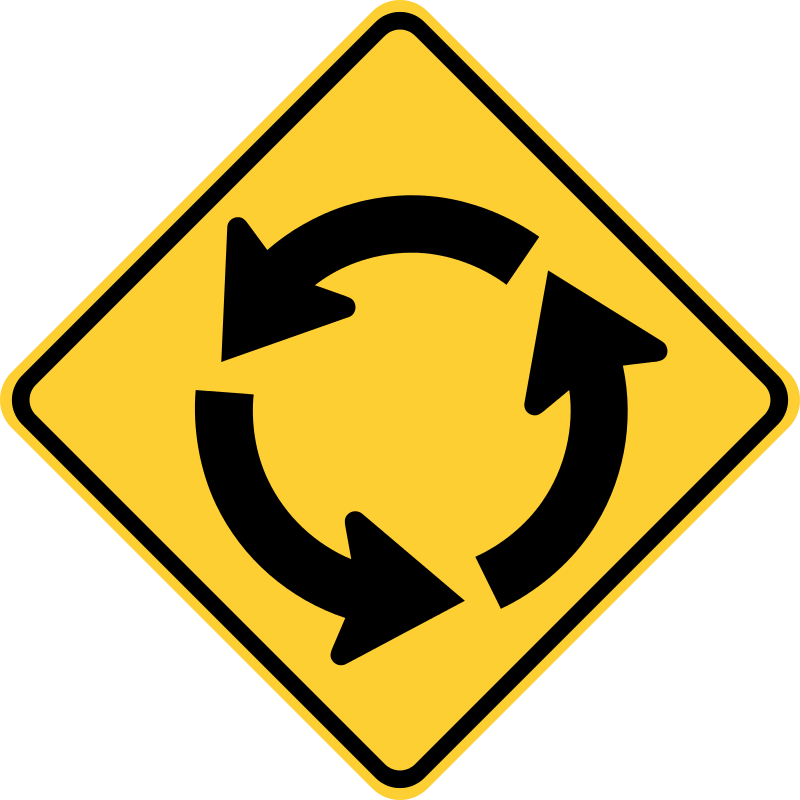 This road sign:
A
warns drivers of a sharp turn left. Drivers should slow their speed and keep to the left.
B
provides an advance notice of a roundabout.
C
warns drivers that U-turns are not permitted.
D
is a no-right-turns sign.
No explanation available.
Question 32:
Which shape is a warning sign?
A
Diamond
B
Triangle
C
Pennant
No explanation available.
Question 33:
If another vehicle is approaching you head-on in your lane, you should _______, sound your horn and brake.
A
steer right
B
None of the other answers is correct.
C
steer left
D
stay in the center of your lane
No explanation available.
Question 34:
A motorist arriving at the intersection must yield the right of way to motorists who arrived before him.
A
True
B
False
No explanation available.
Question 35:
 This road sign warns drivers that:
A
they are coming to a point where another traffic lane joins the one they are on.
B
a divided highway is ahead.
C
the one-way street or roadway is about to change to two-way traffic.
No explanation available.
Question 36:
You want to turn left at an intersection ahead. A car reaches the intersection from the opposite direction and moves straight ahead. You:
A
can turn left. You have the right of way.
B
must wait for the car to go through before you turn.
C
may not enter the intersection to prepare for your left turn if the light is green.
No explanation available.
Question 37:
 Vertical rectangles tell drivers:
A
the law.
B
what is not allowed.
C
the direction they should travel.
No explanation available.
Question 38:
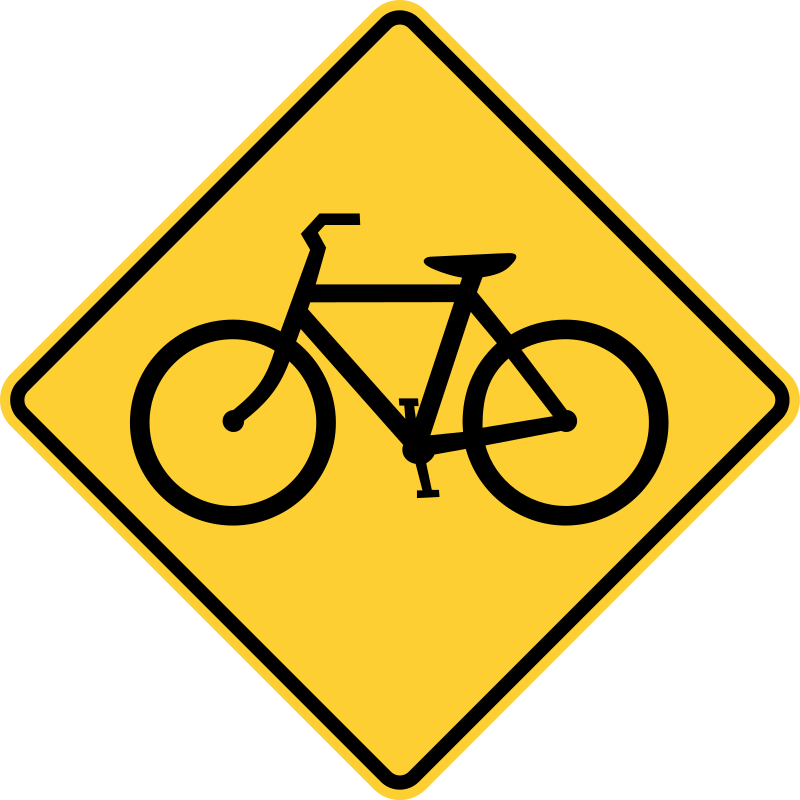 This sign means:
A
Bicycles should yield to vehicles ahead.
B
Warning: a bikeway crosses the roadway ahead.
C
The lane ahead is reserved for bicycles.
No explanation available.
Question 39:
To drive defensively, you must:
A
anticipate errors by other drivers.
B
assume that a driver who approaches a STOP sign on a side road is actually going to stop.
C
not check behind you through your mirrors.
No explanation available.
Question 40:
 This road sign means:
A
Merging traffic from the right
B
Sharp curves ahead
C
Intersection ahead
No explanation available.