Question 1:
 This is the shape and color of a ________ sign.
A
yield
B
stop
C
do not enter
Answer Explanation
The correct driving rule is: yield. Following standard DMV road rules and practicing defensive driving ensures safety for all road users.
The correct driving rule is: yield. Following standard DMV road rules and practicing defensive driving ensures safety for all road users.
Question 2:
 This road sign means:
A
Traffic signal ahead
B
Stop
C
Yield the right-of-way
Answer Explanation
This traffic sign indicates: traffic signal ahead. Observing and obeying all roadway signs ensures safe traffic flow and legal driving.
This traffic sign indicates: traffic signal ahead. Observing and obeying all roadway signs ensures safe traffic flow and legal driving.
Question 3:
 This sign warns that:
A
traffic must merge left.
B
the bridge ahead is wide enough for only one vehicle at a time.
C
traffic must merge right.
Answer Explanation
This traffic sign indicates: traffic must merge left. Observing and obeying all roadway signs ensures safe traffic flow and legal driving.
This traffic sign indicates: traffic must merge left. Observing and obeying all roadway signs ensures safe traffic flow and legal driving.
Question 4:
What is the most important rule to remember in any emergency?
A
Do not panic.
B
Run away.
C
Call the police.
Answer Explanation
The correct driving rule is: Do not panic. Following standard DMV road rules and practicing defensive driving ensures safety for all road users.
The correct driving rule is: Do not panic. Following standard DMV road rules and practicing defensive driving ensures safety for all road users.
Question 5:
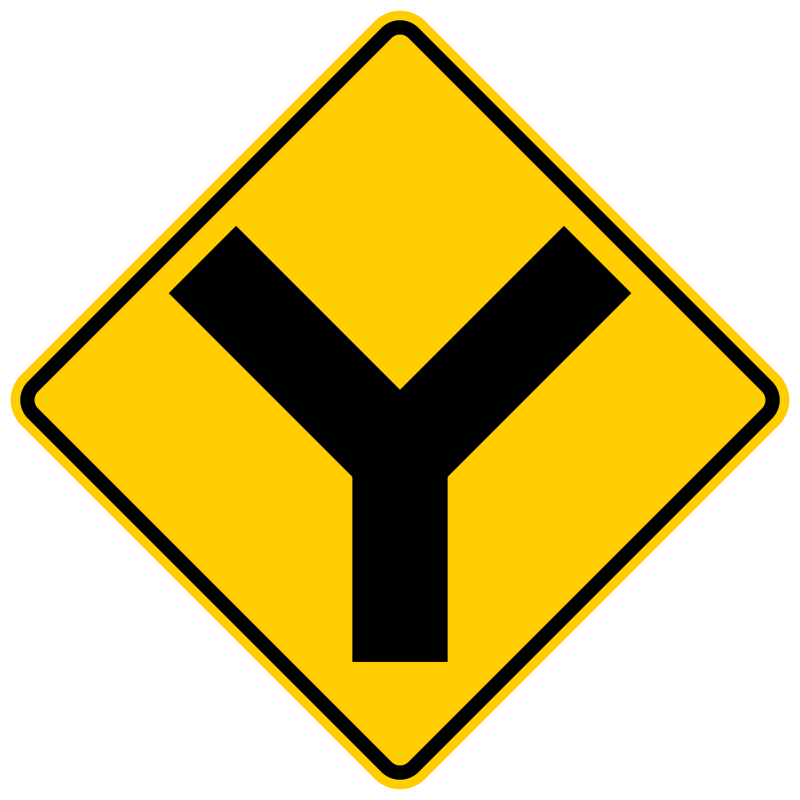 This road sign means:
A
A road joins from the left
B
You must bear either right or left
C
A 3-way intersection is ahead
Answer Explanation
This traffic sign indicates: you must bear either right or left. Observing and obeying all roadway signs ensures safe traffic flow and legal driving.
This traffic sign indicates: you must bear either right or left. Observing and obeying all roadway signs ensures safe traffic flow and legal driving.
Question 6:
This sign means:
A
No traffic signal ahead
B
Traffic signal ahead
C
Open intersection ahead
Answer Explanation
This traffic sign indicates: traffic signal ahead. Observing and obeying all roadway signs ensures safe traffic flow and legal driving.
This traffic sign indicates: traffic signal ahead. Observing and obeying all roadway signs ensures safe traffic flow and legal driving.
Question 7:
If your brakes are wet, you can dry them by:
A
riding the pedal lightly.
B
pull over to the right and wait until it stops raining.
C
having them checked by a mechanic.
Answer Explanation
The correct driving rule is: riding the pedal lightly. Following standard DMV road rules and practicing defensive driving ensures safety for all road users.
The correct driving rule is: riding the pedal lightly. Following standard DMV road rules and practicing defensive driving ensures safety for all road users.
Question 8:
Most signs used in street work areas are:
A
round.
B
diamond shaped.
C
rectangle shaped.
Answer Explanation
The correct driving rule is: diamond shaped. Following standard DMV road rules and practicing defensive driving ensures safety for all road users.
The correct driving rule is: diamond shaped. Following standard DMV road rules and practicing defensive driving ensures safety for all road users.
Question 9:
As you enter a roundabout you should slow down and:
A
yield to pedestrians and bicyclist crossing before entering the roundabout.
B
yield to any vehicle coming from your left in the roundabout.
C
All of the above.
Answer Explanation
Safe navigation at intersections requires following all established rules: yield to pedestrians and bicyclist crossing before entering the roundabout; yield to any vehicle coming from your left in the roundabout. Always yield right-of-way properly to prevent collisions.
Safe navigation at intersections requires following all established rules: yield to pedestrians and bicyclist crossing before entering the roundabout; yield to any vehicle coming from your left in the roundabout. Always yield right-of-way properly to prevent collisions.
Question 10:
 This road sign means:
A
Keep left
B
Divided highway begins
C
Lane ends
Answer Explanation
This traffic sign indicates: Divided highway begins. Observing and obeying all roadway signs ensures safe traffic flow and legal driving.
This traffic sign indicates: Divided highway begins. Observing and obeying all roadway signs ensures safe traffic flow and legal driving.
Question 11:
 This road sign means:
A
School zone ahead
B
Pedestrians must not cross here
C
Pedestrian crossing ahead
Answer Explanation
This traffic sign indicates: Pedestrian crossing ahead. Observing and obeying all roadway signs ensures safe traffic flow and legal driving.
This traffic sign indicates: Pedestrian crossing ahead. Observing and obeying all roadway signs ensures safe traffic flow and legal driving.
Question 12:
The only effective way to reduce your blood alcohol content (BAC) is:
A
drinking coffee.
B
fresh air.
C
not to drink over a period of time.
Answer Explanation
Under state DUI and traffic safety laws: not to drink over a period of time. Alcohol degrades judgment, slows reaction times, and distorts depth perception.
Under state DUI and traffic safety laws: not to drink over a period of time. Alcohol degrades judgment, slows reaction times, and distorts depth perception.
Question 13:
 This road sign means:
A
No left turn
B
No right turn
C
No U-turns
Answer Explanation
This traffic sign indicates: No right turn. Observing and obeying all roadway signs ensures safe traffic flow and legal driving.
This traffic sign indicates: No right turn. Observing and obeying all roadway signs ensures safe traffic flow and legal driving.
Question 14:
Which statement about blind spots is true?
A
Before changing lanes, you should check mirrors and look over your shoulder toward the rear.
B
Large trucks have smaller blind spots than most passenger vehicles.
C
If traffic conditions permit you should cruise in blind spot of the vehicle ahead.
Answer Explanation
The correct driving rule is: Before changing lanes, you should check mirrors and look over your shoulder toward the rear. Following standard DMV road rules and practicing defensive driving ensures safety for all road users.
The correct driving rule is: Before changing lanes, you should check mirrors and look over your shoulder toward the rear. Following standard DMV road rules and practicing defensive driving ensures safety for all road users.
Question 15:
 This road sign means:
A
Warning, crossroad ahead
B
All traffic must turn
C
Yield sign ahead
Answer Explanation
This traffic sign indicates: Warning, crossroad ahead. Observing and obeying all roadway signs ensures safe traffic flow and legal driving.
This traffic sign indicates: Warning, crossroad ahead. Observing and obeying all roadway signs ensures safe traffic flow and legal driving.
Question 16:
 This road sign means the road you're driving on:
A
turns sharply to the left and then right
B
turns to the right and then the left
C
turns only to the left
Answer Explanation
This traffic sign indicates: turns to the right and then the left. Observing and obeying all roadway signs ensures safe traffic flow and legal driving.
This traffic sign indicates: turns to the right and then the left. Observing and obeying all roadway signs ensures safe traffic flow and legal driving.
Question 17:
When the traffic light is green, but traffic is blocking the intersection, drivers should:
A
enter the intersection and wait for traffic to clear.
B
not enter the intersection until they can get completely across.
C
honk their horn to establish their right-of-way.
Answer Explanation
According to standard right-of-way regulations: not enter the intersection until they can get completely across. Yielding appropriately prevents intersection collisions and maintains safe traffic flow.
According to standard right-of-way regulations: not enter the intersection until they can get completely across. Yielding appropriately prevents intersection collisions and maintains safe traffic flow.
Question 18:
When dust is blowing across the roadway making it difficult to see other vehicles, you should drive slower and turn on your:
A
headlights.
B
parking lights.
C
emergency flashers.
Answer Explanation
The correct driving rule is: headlights. Following standard DMV road rules and practicing defensive driving ensures safety for all road users.
The correct driving rule is: headlights. Following standard DMV road rules and practicing defensive driving ensures safety for all road users.
Question 19:
To drive defensively, you must:
A
avoid scanning the road ahead.
B
keep one hand on the steering wheel.
C
keep your eyes moving.
Answer Explanation
The correct driving rule is: keep your eyes moving. Following standard DMV road rules and practicing defensive driving ensures safety for all road users.
The correct driving rule is: keep your eyes moving. Following standard DMV road rules and practicing defensive driving ensures safety for all road users.
Question 20:
Which of the following is a common cause of traffic collisions?
A
Scanning the road ahead and staying focused on the driving task.
B
Driving too fast for conditions.
C
Pedestrians being key participants in the transportation system.
Answer Explanation
The correct driving rule is: Driving too fast for conditions. Following standard DMV road rules and practicing defensive driving ensures safety for all road users.
The correct driving rule is: Driving too fast for conditions. Following standard DMV road rules and practicing defensive driving ensures safety for all road users.
Question 21:
When a hazard is seen ahead, reaction distance:
A
is the sum of perception distance and braking distance.
B
equals total stopping distance minus perception distance.
C
is how far a vehicle will continue to travel, in ideal conditions, before the driver hits the brakes.
Answer Explanation
For safe speed and stopping control: is how far a vehicle will continue to travel, in ideal conditions, before the driver hits the brakes. Adjusting speed to match visibility and road traction prevents loss of steering grip.
For safe speed and stopping control: is how far a vehicle will continue to travel, in ideal conditions, before the driver hits the brakes. Adjusting speed to match visibility and road traction prevents loss of steering grip.
Question 22:
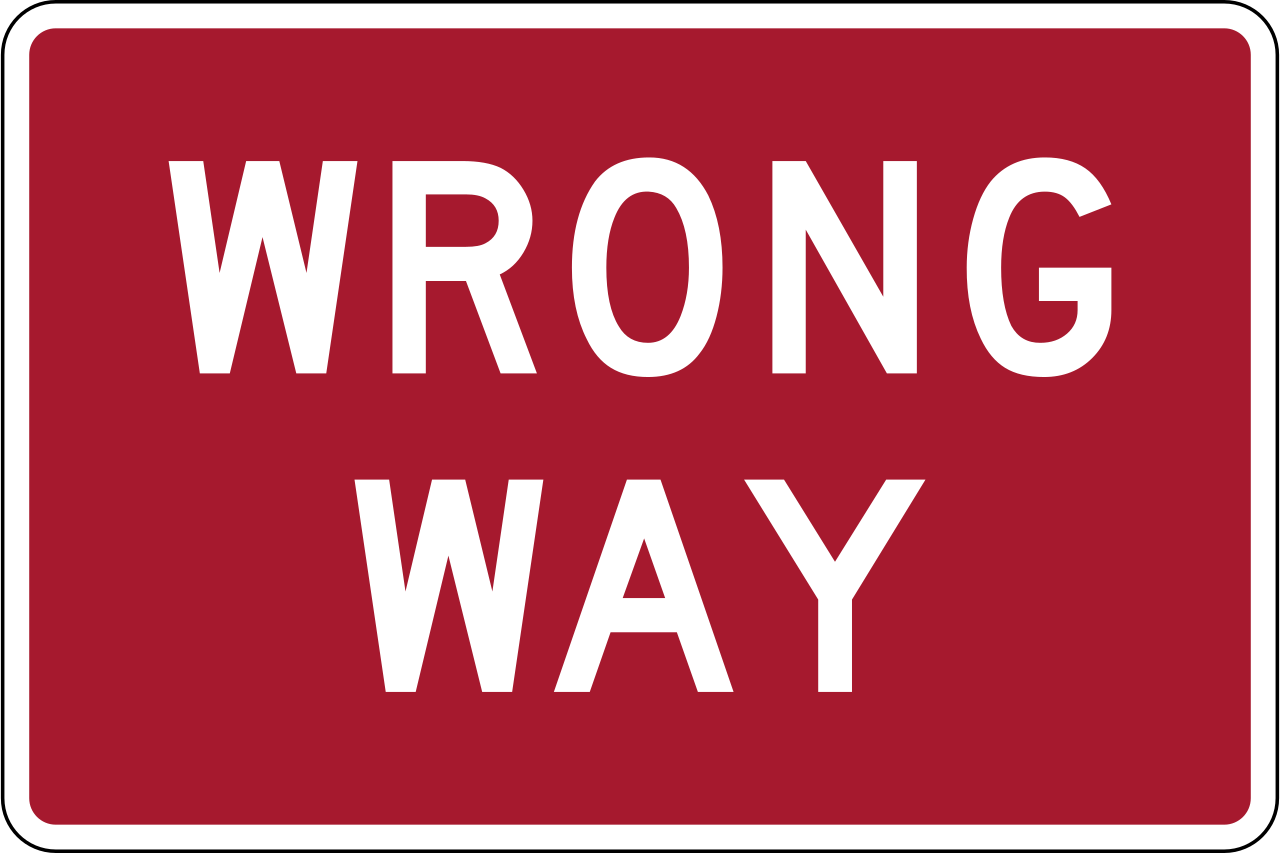 When drivers see this road sign:
A
they must come to a complete stop and call the police.
B
they must not drive past this sign.
C
they must turn around immediately.
Answer Explanation
This traffic sign indicates: they must turn around immediately. Observing and obeying all roadway signs ensures safe traffic flow and legal driving.
This traffic sign indicates: they must turn around immediately. Observing and obeying all roadway signs ensures safe traffic flow and legal driving.
Question 23:
Are drivers allowed to exceed the speed limit to pass other vehicles?
A
Yes, but only by 10 MPH or less.
B
No.
C
Yes, but only if they drive with caution.
Answer Explanation
For safe speed and stopping control: No. Adjusting speed to match visibility and road traction prevents loss of steering grip.
For safe speed and stopping control: No. Adjusting speed to match visibility and road traction prevents loss of steering grip.
Question 24:
When a pedestrian carrying a white cane is at the corner ready to cross the street in front of you, before making your right turn, you should:
A
use your horn to help the pedestrian cross the street.
B
turn off the ignition until the person crosses the street.
C
yield the right-of-way and wait until the pedestrian crosses the street.
Answer Explanation
Drivers must always yield the right-of-way to pedestrians crossing at intersections and crosswalks: yield the right-of-way and wait until the pedestrian crosses the street. Stop and allow them to clear the lane safely.
Drivers must always yield the right-of-way to pedestrians crossing at intersections and crosswalks: yield the right-of-way and wait until the pedestrian crosses the street. Stop and allow them to clear the lane safely.
Question 25:
You ________ traffic headed toward you when you turn left.
A
must not yield to
B
must interrupt
C
must yield to
Answer Explanation
According to standard right-of-way regulations: must yield to. Yielding appropriately prevents intersection collisions and maintains safe traffic flow.
According to standard right-of-way regulations: must yield to. Yielding appropriately prevents intersection collisions and maintains safe traffic flow.