Question 1:
Drinking alcohol affects:
A
Your coordination.
B
Your vision.
C
All of the above.
Answer Explanation
Alcohol and impairing substances degrade all critical driving functions: Your coordination; Your vision. Driving while impaired carries severe criminal and safety penalties.
Alcohol and impairing substances degrade all critical driving functions: Your coordination; Your vision. Driving while impaired carries severe criminal and safety penalties.
Question 2:
If the entrance lane is too short to allow acceleration to expressway speed, you should:
A
stop and wait for a large space in traffic.
B
enter the expressway and accelerate quickly.
C
reduce your speed to 15 MPH or less and blend with traffic.
Answer Explanation
For safe speed and stopping control: stop and wait for a large space in traffic. Adjusting speed to match visibility and road traction prevents loss of steering grip.
For safe speed and stopping control: stop and wait for a large space in traffic. Adjusting speed to match visibility and road traction prevents loss of steering grip.
Question 3:
 This road sign means:
A
Hill ahead
B
Trucks merging from the right
C
Side road ahead
D
Keep left
Answer Explanation
This traffic sign indicates: Hill ahead. Observing and obeying all roadway signs ensures safe traffic flow and legal driving.
This traffic sign indicates: Hill ahead. Observing and obeying all roadway signs ensures safe traffic flow and legal driving.
Question 4:
Road signs that point out scenic areas and parks are:
A
brown and white.
B
black and orange.
C
green and white.
Answer Explanation
The correct driving rule is: brown and white. Following standard DMV road rules and practicing defensive driving ensures safety for all road users.
The correct driving rule is: brown and white. Following standard DMV road rules and practicing defensive driving ensures safety for all road users.
Question 5:
Defensive driving is the operation of a motor vehicle in a manner that is likely to endanger persons or property.
A
True
B
False
Answer Explanation
The correct driving rule is: False. Following standard DMV road rules and practicing defensive driving ensures safety for all road users.
The correct driving rule is: False. Following standard DMV road rules and practicing defensive driving ensures safety for all road users.
Question 6:
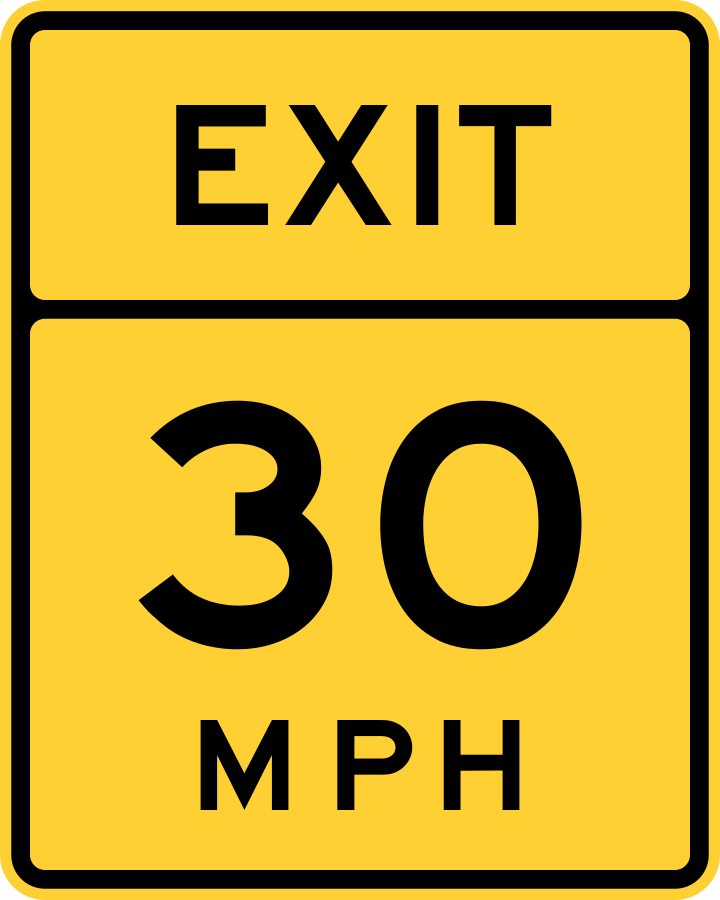 The sign in the picture:
A
shows the highest speed drivers can travel at the exit of the intersection.
B
is used to advise motorists of the appropriate ramp speed at the highway exit point.
C
indicates the minimum ramp speed at the highway exit point.
Answer Explanation
The correct driving rule is: is used to advise motorists of the appropriate ramp speed at the highway exit point. Following standard DMV road rules and practicing defensive driving ensures safety for all road users.
The correct driving rule is: is used to advise motorists of the appropriate ramp speed at the highway exit point. Following standard DMV road rules and practicing defensive driving ensures safety for all road users.
Question 7:
Drivers in a funeral procession should:
A
have their headlights and hazard lights turned on.
B
yield the right of way to all vehicles in the procession.
C
pass other vehicles in the procession.
Answer Explanation
The correct driving rule is: have their headlights and hazard lights turned on. Following standard DMV road rules and practicing defensive driving ensures safety for all road users.
The correct driving rule is: have their headlights and hazard lights turned on. Following standard DMV road rules and practicing defensive driving ensures safety for all road users.
Question 8:
Passing on a two-lane, two-way road is not allowed:
A
within 500 feet of an intersection or railroad crossing.
B
in an area marked by a broken yellow line on your side of the center of the road.
C
when a vehicle has stopped at an intersection to allow a pedestrian to cross.
Answer Explanation
Defensive driving guidelines state that: when a vehicle has stopped at an intersection to allow a pedestrian to cross. Anticipating road hazards and communicating maneuvers keeps traffic predictable and safe.
Defensive driving guidelines state that: when a vehicle has stopped at an intersection to allow a pedestrian to cross. Anticipating road hazards and communicating maneuvers keeps traffic predictable and safe.
Question 9:
Unless otherwise posted, the speed limit on interstates and tollways is:
A
55 MPH.
B
70 MPH.
C
45 MPH.
Answer Explanation
For safe speed and stopping control: 70 MPH. Adjusting speed to match visibility and road traction prevents loss of steering grip.
For safe speed and stopping control: 70 MPH. Adjusting speed to match visibility and road traction prevents loss of steering grip.
Question 10:
 This road sign means:
A
Winding road
B
Side road ahead
C
Slippery when wet
Answer Explanation
This traffic sign indicates: Slippery when wet. Observing and obeying all roadway signs ensures safe traffic flow and legal driving.
This traffic sign indicates: Slippery when wet. Observing and obeying all roadway signs ensures safe traffic flow and legal driving.
Question 11:
It is against the law to flash your turn signals as a “do pass” signal to other drivers.
A
True
B
False
Answer Explanation
State laws require signaling your intention: True. Signal at least 100 feet before making a turn or changing lanes.
State laws require signaling your intention: True. Signal at least 100 feet before making a turn or changing lanes.
Question 12:
The potential consequences of driving under the influence of alcohol or other drugs include:
A
a mandatory fine.
B
imprisonment.
C
All of the above.
Answer Explanation
Alcohol and impairing substances degrade all critical driving functions: a mandatory fine; imprisonment. Driving while impaired carries severe criminal and safety penalties.
Alcohol and impairing substances degrade all critical driving functions: a mandatory fine; imprisonment. Driving while impaired carries severe criminal and safety penalties.
Question 13:
 Vertical rectangles tell drivers:
A
the law.
B
what is not allowed.
C
the direction they should travel.
Answer Explanation
The correct driving rule is: the law. Following standard DMV road rules and practicing defensive driving ensures safety for all road users.
The correct driving rule is: the law. Following standard DMV road rules and practicing defensive driving ensures safety for all road users.
Question 14:
What should you do in case of a brake failure?
A
Pull off the road into an open space, if available.
B
Apply the parking brake slowly.
C
All of the above.
Answer Explanation
All of the listed points are essential driving requirements: Pull off the road into an open space, if available; Apply the parking brake slowly. Practicing each ensures compliance with DMV safety laws.
All of the listed points are essential driving requirements: Pull off the road into an open space, if available; Apply the parking brake slowly. Practicing each ensures compliance with DMV safety laws.
Question 15:
 This sign, displayed on the rear of a vehicle, indicates that:
A
the vehicle is traveling 25 MPH or less.
B
the vehicle makes sudden stops.
C
the vehicle is being drawn by an animal.
Answer Explanation
This traffic sign indicates: the vehicle is traveling 25 MPH or less. Observing and obeying all roadway signs ensures safe traffic flow and legal driving.
This traffic sign indicates: the vehicle is traveling 25 MPH or less. Observing and obeying all roadway signs ensures safe traffic flow and legal driving.
Question 16:
Orange signs alert drivers to possible dangers ahead due to construction and maintenance projects.
A
True
B
False
Answer Explanation
The correct driving rule is: True. Following standard DMV road rules and practicing defensive driving ensures safety for all road users.
The correct driving rule is: True. Following standard DMV road rules and practicing defensive driving ensures safety for all road users.
Question 17:
The yield sign is ___ and white, with ___ letters.
A
yellow; black
B
red; red
C
red; white
Answer Explanation
The correct driving rule is: red; red. Following standard DMV road rules and practicing defensive driving ensures safety for all road users.
The correct driving rule is: red; red. Following standard DMV road rules and practicing defensive driving ensures safety for all road users.
Question 18:
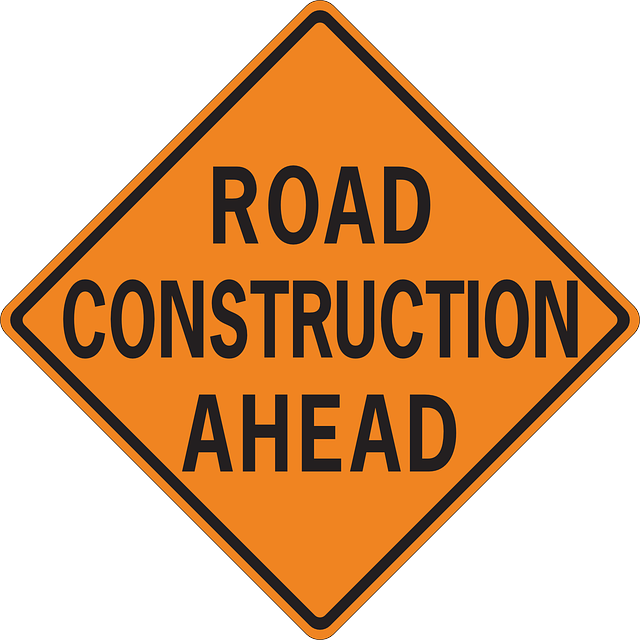 This road sign means:
A
No passing zone.
B
Drivers should drive with caution.
C
Sharp right turn ahead.
Answer Explanation
This traffic sign indicates: drivers should drive with caution. Observing and obeying all roadway signs ensures safe traffic flow and legal driving.
This traffic sign indicates: drivers should drive with caution. Observing and obeying all roadway signs ensures safe traffic flow and legal driving.
Question 19:
You are driving and you are feeling drowsy. You should:
A
avoid drinking coffee.
B
turn on the radio to keep you awake.
C
find a safe place to stop for a break.
Answer Explanation
Under state DUI and traffic safety laws: find a safe place to stop for a break. Alcohol degrades judgment, slows reaction times, and distorts depth perception.
Under state DUI and traffic safety laws: find a safe place to stop for a break. Alcohol degrades judgment, slows reaction times, and distorts depth perception.
Question 20:
 This road sign means:
A
Right turn permitted on red light
B
Drivers must turn right
C
No U-turns
D
No right turn permitted
Answer Explanation
This traffic sign indicates: No right turn permitted. Observing and obeying all roadway signs ensures safe traffic flow and legal driving.
This traffic sign indicates: No right turn permitted. Observing and obeying all roadway signs ensures safe traffic flow and legal driving.
Question 21:
Signs that alert you to pedestrian crossings and school zones are:
A
yellow.
B
orange.
C
yellow-green.
Answer Explanation
Drivers must always yield the right-of-way to pedestrians crossing at intersections and crosswalks: yellow-green. Stop and allow them to clear the lane safely.
Drivers must always yield the right-of-way to pedestrians crossing at intersections and crosswalks: yellow-green. Stop and allow them to clear the lane safely.
Question 22:
 This road sign means:
A
Slow down and yield to traffic on main road when merging
B
Always come to a complete stop
C
Lane reduction ahead
D
You must come to a complete stop and yield right-of-way
Answer Explanation
A triangular Yield sign requires drivers to slow down and give right-of-way to other traffic: slow down and yield to traffic on main road when merging. Proceed only when there is a safe opening.
A triangular Yield sign requires drivers to slow down and give right-of-way to other traffic: slow down and yield to traffic on main road when merging. Proceed only when there is a safe opening.
Question 23:
What should you do if a vehicle is approaching head-on in your lane?
A
Pull over to the left and use your emergency lights to stop the other driver.
B
Decrease speed, pull over to the right and sound your horn to warn the other driver.
C
Turn off the ignition if your vehicle has power steering.
Answer Explanation
The correct driving rule is: Decrease speed, pull over to the right and sound your horn to warn the other driver. Following standard DMV road rules and practicing defensive driving ensures safety for all road users.
The correct driving rule is: Decrease speed, pull over to the right and sound your horn to warn the other driver. Following standard DMV road rules and practicing defensive driving ensures safety for all road users.
Question 24:
Who is most at risk?
A
Drivers who are fatigued.
B
Drivers who are driving on long, boring roads.
C
All of the above.
Answer Explanation
All of the listed points are essential driving requirements: Drivers who are fatigued; Drivers who are driving on long, boring roads. Practicing each ensures compliance with DMV safety laws.
All of the listed points are essential driving requirements: Drivers who are fatigued; Drivers who are driving on long, boring roads. Practicing each ensures compliance with DMV safety laws.
Question 25:
If you are under age 21 and convicted of DUI, you face the revocation of your driving privileges for a minimum of ______________ for a first conviction.
A
two years
B
18 months
C
one year
Answer Explanation
Under state DUI and traffic safety laws: two years. Alcohol degrades judgment, slows reaction times, and distorts depth perception.
Under state DUI and traffic safety laws: two years. Alcohol degrades judgment, slows reaction times, and distorts depth perception.
Question 26:
Loads extending 4 feet or more to the rear of a vehicle must be marked with a red flag during the day.
A
True
B
False
Answer Explanation
The correct driving rule is: True. Following standard DMV road rules and practicing defensive driving ensures safety for all road users.
The correct driving rule is: True. Following standard DMV road rules and practicing defensive driving ensures safety for all road users.
Question 27:
Alcohol:
A
makes you less aware of what is happening to your driving abilities.
B
makes it easier to make correct decisions.
C
improves your reaction time.
Answer Explanation
Under state DUI and traffic safety laws: makes you less aware of what is happening to your driving abilities. Alcohol degrades judgment, slows reaction times, and distorts depth perception.
Under state DUI and traffic safety laws: makes you less aware of what is happening to your driving abilities. Alcohol degrades judgment, slows reaction times, and distorts depth perception.
Question 28:
If a vehicle starts to hydroplane, the driver should quickly apply the brakes.
A
False
B
True
Answer Explanation
The correct driving rule is: False. Following standard DMV road rules and practicing defensive driving ensures safety for all road users.
The correct driving rule is: False. Following standard DMV road rules and practicing defensive driving ensures safety for all road users.
Question 29:
An orange sign means drivers should be alert, adjust their speed and be prepared to stop if necessary.
A
True
B
False
Answer Explanation
This traffic sign indicates: True. Observing and obeying all roadway signs ensures safe traffic flow and legal driving.
This traffic sign indicates: True. Observing and obeying all roadway signs ensures safe traffic flow and legal driving.
Question 30:
Unless authorized to do so, drivers may not break into the line of a funeral procession.
A
True
B
False
Answer Explanation
The correct driving rule is: True. Following standard DMV road rules and practicing defensive driving ensures safety for all road users.
The correct driving rule is: True. Following standard DMV road rules and practicing defensive driving ensures safety for all road users.
Question 31:
An emergency vehicle that uses lights and a siren can be unpredictable. Why?
A
The driver can legally pass red lights.
B
Emergency vehicles must go faster than the posted speed limit when it is safe to do so.
C
Emergency vehicle drivers are not required to be careful.
Answer Explanation
When sharing the road with other vehicles: The driver can legally pass red lights. Giving large vehicles and vulnerable users adequate clearance prevents dangerous accidents.
When sharing the road with other vehicles: The driver can legally pass red lights. Giving large vehicles and vulnerable users adequate clearance prevents dangerous accidents.
Question 32:
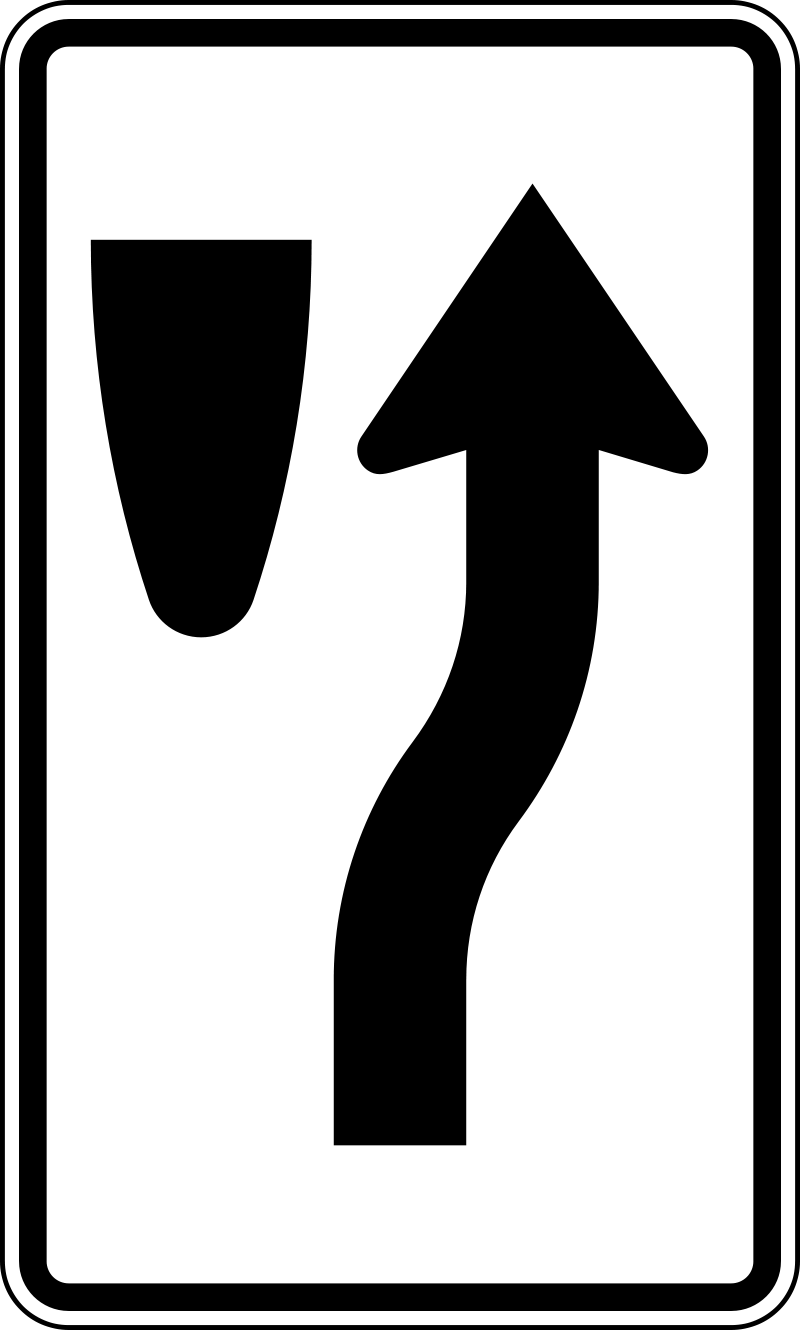 This sign tells drivers that:
A
there is a right turn ahead.
B
they must stay on the right side of the divider
C
a divided highway ends ahead.
Answer Explanation
This traffic sign indicates: they must stay on the right side of the divider. Observing and obeying all roadway signs ensures safe traffic flow and legal driving.
This traffic sign indicates: they must stay on the right side of the divider. Observing and obeying all roadway signs ensures safe traffic flow and legal driving.
Question 33:
You must yield the right-of-way to an approaching vehicle when you are:
A
Turning left.
B
Already in an intersection.
C
Already in a traffic circle.
Answer Explanation
According to standard right-of-way regulations: Turning left. Yielding appropriately prevents intersection collisions and maintains safe traffic flow.
According to standard right-of-way regulations: Turning left. Yielding appropriately prevents intersection collisions and maintains safe traffic flow.
Question 34:
Passing on a two-lane, two-way road is not allowed:
A
on a hill where it is not possible to see oncoming vehicles.
B
if there is a solid yellow line on your side of the center of the road.
C
All of the above.
Answer Explanation
Defensive driving best practices include: on a hill where it is not possible to see oncoming vehicles; if there is a solid yellow line on your side of the center of the road. Staying alert and maintaining spacing prevents unexpected hazards.
Defensive driving best practices include: on a hill where it is not possible to see oncoming vehicles; if there is a solid yellow line on your side of the center of the road. Staying alert and maintaining spacing prevents unexpected hazards.
Question 35:
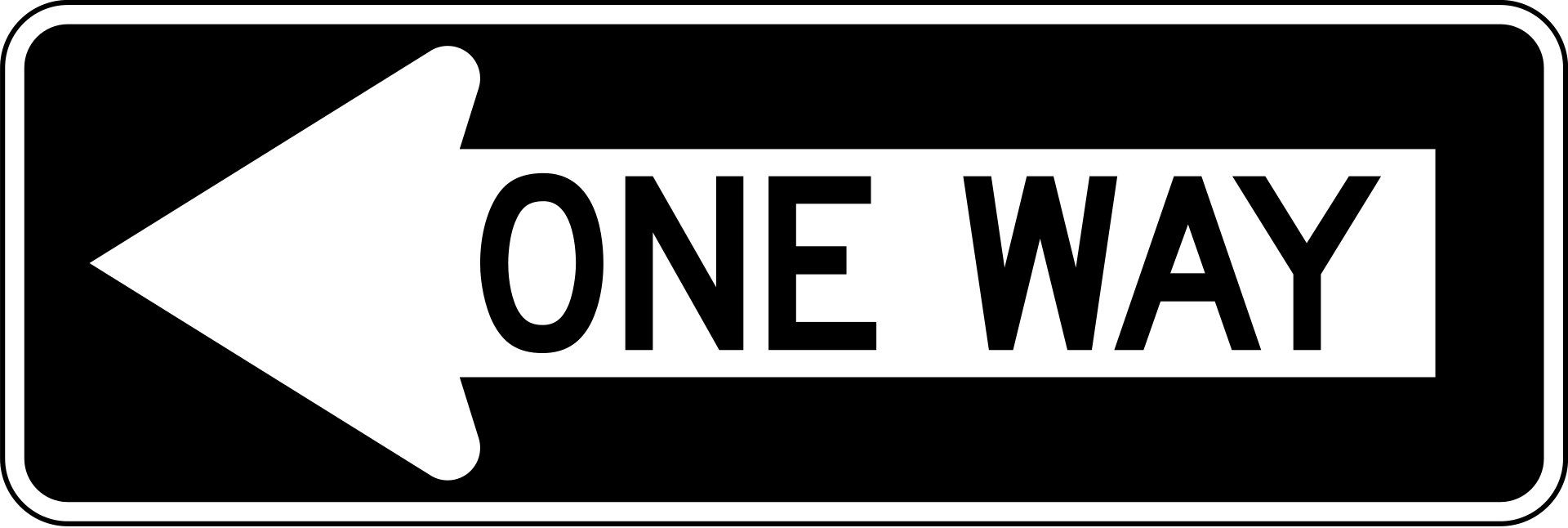 The ‘One Way’ sign means that:
A
only vehicles turning left may travel in the direction of the arrow.
B
there is only one road that turns left at the intersection.
C
drivers may travel only in the direction of the arrow.
Answer Explanation
This traffic sign indicates: drivers may travel only in the direction of the arrow. Observing and obeying all roadway signs ensures safe traffic flow and legal driving.
This traffic sign indicates: drivers may travel only in the direction of the arrow. Observing and obeying all roadway signs ensures safe traffic flow and legal driving.