Question 1:
What does a NO STOPPING sign mean?
A
You can not stop to prevent conflicts with other vehicles.
B
Drivers can stop only to obey a traffic sign, signal or officer.
C
Drivers must drop off passengers before leaving.
D
None of the above.
Answer Explanation
The correct driving rule is: drivers can stop only to obey a traffic sign, signal or officer. Following standard DMV road rules and practicing defensive driving ensures safety for all road users.
The correct driving rule is: drivers can stop only to obey a traffic sign, signal or officer. Following standard DMV road rules and practicing defensive driving ensures safety for all road users.
Question 2:
Bicyclists must:
A
ride in a bicycle lane, if available.
B
remain to the right when they prepare for a left turn.
C
remain near the left edge of the road.
Answer Explanation
The correct driving rule is: ride in a bicycle lane, if available. Following standard DMV road rules and practicing defensive driving ensures safety for all road users.
The correct driving rule is: ride in a bicycle lane, if available. Following standard DMV road rules and practicing defensive driving ensures safety for all road users.
Question 3:
When you prepare to make a left turn from a one-way road into a two-way road, you must:
A
enter the two-way road to the left of its center line.
B
approach the turn in the right lane or from the right side of a single lane.
C
approach the turn in the left lane or from the left side of a single lane.
Answer Explanation
The correct driving rule is: approach the turn in the left lane or from the left side of a single lane. Following standard DMV road rules and practicing defensive driving ensures safety for all road users.
The correct driving rule is: approach the turn in the left lane or from the left side of a single lane. Following standard DMV road rules and practicing defensive driving ensures safety for all road users.
Question 4:
A bicycle used at night must have a headlight visible from at least _____ ahead.
A
200 feet
B
100 feet
C
500 feet
D
1000 feet
Answer Explanation
State laws require motorists to provide a safe clearance buffer: 500 feet. Allow at least 3 feet of space when overtaking a bicyclist.
State laws require motorists to provide a safe clearance buffer: 500 feet. Allow at least 3 feet of space when overtaking a bicyclist.
Question 5:
What is the only effective method to reduce your BAC?
A
Eating before or while you drink.
B
Not drinking over a period of time.
C
Drinking coffee.
Answer Explanation
Under state DUI and traffic safety laws: Not drinking over a period of time. Alcohol degrades judgment, slows reaction times, and distorts depth perception.
Under state DUI and traffic safety laws: Not drinking over a period of time. Alcohol degrades judgment, slows reaction times, and distorts depth perception.
Question 6:
Personal vehicles driven by volunteer firefighters responding to alarms are allowed to display:
A
a fire brigade badge (fire-proof).
B
red lights
C
blue lights
D
a special firefighters sticker.
Answer Explanation
The correct driving rule is: blue lights. Following standard DMV road rules and practicing defensive driving ensures safety for all road users.
The correct driving rule is: blue lights. Following standard DMV road rules and practicing defensive driving ensures safety for all road users.
Question 7:
Alcohol:
A
makes you less aware of what is happening to your driving abilities.
B
makes it easier to make correct decisions.
C
improves your reaction time.
Answer Explanation
Under state DUI and traffic safety laws: makes you less aware of what is happening to your driving abilities. Alcohol degrades judgment, slows reaction times, and distorts depth perception.
Under state DUI and traffic safety laws: makes you less aware of what is happening to your driving abilities. Alcohol degrades judgment, slows reaction times, and distorts depth perception.
Question 8:
You are in an intersection, and you hear an emergency vehicle heading toward your vehicle. You must:
A
safely pull over and stop.
B
stop immediately.
C
drive out of the intersection before you pull over.
D
activate your emergency lights and then stop.
Answer Explanation
When an emergency vehicle approaches with flashing lights or sirens, you must safely pull over to the right curb and stop completely until it passes.
When an emergency vehicle approaches with flashing lights or sirens, you must safely pull over to the right curb and stop completely until it passes.
Question 9:
 What should drivers do when they see this road sign?
A
come to a complete stop and wait for a train to cross.
B
slow down, look for a train, and be prepared to stop.
C
look for a human flagger.
Answer Explanation
This traffic sign indicates: slow down, look for a train, and be prepared to stop. Observing and obeying all roadway signs ensures safe traffic flow and legal driving.
This traffic sign indicates: slow down, look for a train, and be prepared to stop. Observing and obeying all roadway signs ensures safe traffic flow and legal driving.
Question 10:
In New York State, leaving the scene of a traffic crash that involves property damage is:
A
a traffic violation.
B
required by law. Not leaving the scene will result in a license suspension.
C
recommended to allow law enforcement officers and rescue personnel to do their job.
D
a criminal violation.
Answer Explanation
The correct driving rule is: a traffic violation. Following standard DMV road rules and practicing defensive driving ensures safety for all road users.
The correct driving rule is: a traffic violation. Following standard DMV road rules and practicing defensive driving ensures safety for all road users.
Question 11:
If you hear an emergency vehicle heading toward your vehicle, you must:
A
pull over to the left edge of the road and stop.
B
wait until you can clearly see the emergency vehicle and then stop.
C
pull over immediately to the right edge of the road and stop.
D
pull over and stop, but only if the vehicle is headed toward you in the opposite lane of a two-lane roadway.
Answer Explanation
When sharing the road with other vehicles: pull over immediately to the right edge of the road and stop. Giving large vehicles and vulnerable users adequate clearance prevents dangerous accidents.
When sharing the road with other vehicles: pull over immediately to the right edge of the road and stop. Giving large vehicles and vulnerable users adequate clearance prevents dangerous accidents.
Question 12:
If another vehicle passes you on the left, you must:
A
increase your speed slightly and keep to the right.
B
decrease your speed, then pull over to the right and stop.
C
decrease your speed slightly and keep to the right.
Answer Explanation
The correct driving rule is: decrease your speed slightly and keep to the right. Following standard DMV road rules and practicing defensive driving ensures safety for all road users.
The correct driving rule is: decrease your speed slightly and keep to the right. Following standard DMV road rules and practicing defensive driving ensures safety for all road users.
Question 13:
The Move Over Act requires drivers to:
A
stay on the lane adjacent to an emergency vehicle that is parked with its emergency lights activated on interstate highways.
B
come to a complete stop as they approach an emergency vehicle with its emergency lights activated.
C
increase their speed and pass emergency vehicles on the left, if they have their emergency lights activated.
D
exercise care to avoid colliding with an emergency vehicle that is parked or stopped with its emergency lights activated.
Answer Explanation
The correct driving rule is: exercise care to avoid colliding with an emergency vehicle that is parked or stopped with its emergency lights activated. Following standard DMV road rules and practicing defensive driving ensures safety for all road users.
The correct driving rule is: exercise care to avoid colliding with an emergency vehicle that is parked or stopped with its emergency lights activated. Following standard DMV road rules and practicing defensive driving ensures safety for all road users.
Question 14:
A BAC of more than ___ percent is legal evidence that you are impaired.
A
0.008
B
0.08
C
0.05
D
0.18
Answer Explanation
Under state DUI and traffic safety laws: 0.05. Alcohol degrades judgment, slows reaction times, and distorts depth perception.
Under state DUI and traffic safety laws: 0.05. Alcohol degrades judgment, slows reaction times, and distorts depth perception.
Question 15:
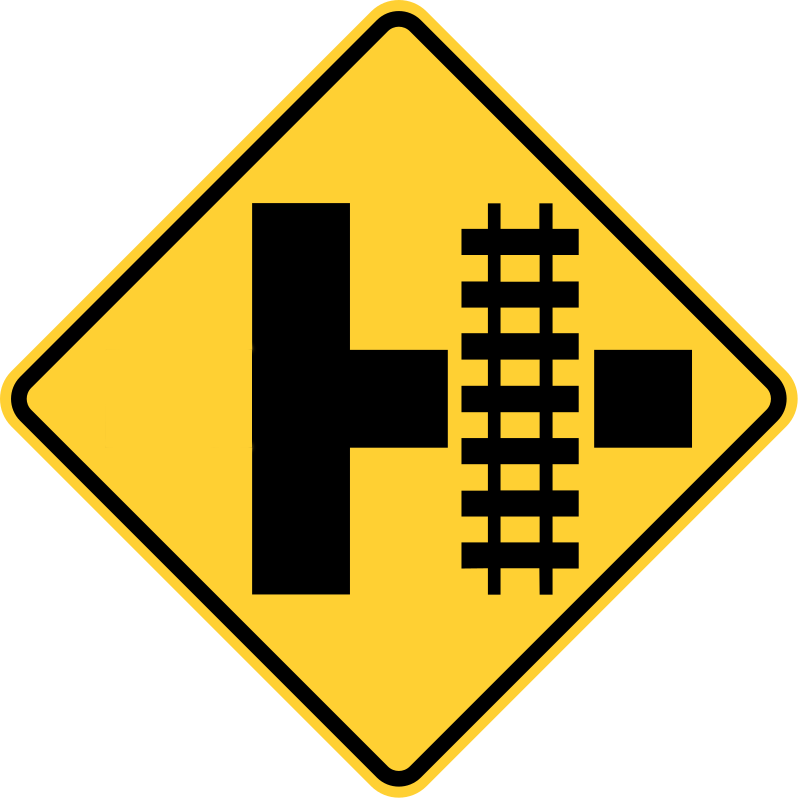 What does this sign indicate?
A
Parallel railroad crossing (side road)
B
Low ground clearance railroad crossing
C
Parallel railroad crossing (crossroad)
Answer Explanation
Circular signs with an 'X' and 'RR' designate a Railroad Advance Warning: Parallel railroad crossing (side road). Drivers must slow down, look both ways, listen for trains, and be prepared to stop.
Circular signs with an 'X' and 'RR' designate a Railroad Advance Warning: Parallel railroad crossing (side road). Drivers must slow down, look both ways, listen for trains, and be prepared to stop.
Question 16:
 What does this sign indicate?
A
The highway ahead is divided into two one-way roadways.
B
Winding road ahead. Drive with caution.
C
Drivers will soon be on a roadway with two-way traffic.
Answer Explanation
This traffic sign indicates: drivers will soon be on a roadway with two-way traffic. Observing and obeying all roadway signs ensures safe traffic flow and legal driving.
This traffic sign indicates: drivers will soon be on a roadway with two-way traffic. Observing and obeying all roadway signs ensures safe traffic flow and legal driving.
Question 17:
DMV will deny any application for reinstatement of a revoked license if the applicant has ____ or more alcohol or drug related driving convictions in the last ___ years, plus at least one other serious driving offense during that period.
A
three; 25
B
two; 15
C
four; 15
D
six; 20
Answer Explanation
Under state DUI and traffic safety laws: three; 25. Alcohol degrades judgment, slows reaction times, and distorts depth perception.
Under state DUI and traffic safety laws: three; 25. Alcohol degrades judgment, slows reaction times, and distorts depth perception.
Question 18:
What does a NO PARKING sign mean?
A
Drivers can make a temporary stop to load or discharge merchandise or passengers.
B
Drivers can stop only to obey a traffic sign.
C
Drivers are not allowed to stop to discharge passengers.
D
None of the above.
Answer Explanation
Under standard parking and curb regulations: drivers can make a temporary stop to load or discharge merchandise or passengers. Following parking distance clearances keeps roadways unobstructed and emergency lanes accessible.
Under standard parking and curb regulations: drivers can make a temporary stop to load or discharge merchandise or passengers. Following parking distance clearances keeps roadways unobstructed and emergency lanes accessible.
Question 19:
 This sign means:
A
Narrow bridge ahead. Slow down and drive with caution.
B
Do not to enter if your vehicle is taller than the height listed on the sign.
C
No passing zone ahead.
Answer Explanation
This traffic sign indicates: Do not to enter if your vehicle is taller than the height listed on the sign. Observing and obeying all roadway signs ensures safe traffic flow and legal driving.
This traffic sign indicates: Do not to enter if your vehicle is taller than the height listed on the sign. Observing and obeying all roadway signs ensures safe traffic flow and legal driving.
Question 20:
As you drive on an expressway, make sure to signal your exit at least ______ before you reach the exit ramp.
A
150 feet
B
250 feet
C
100 feet
D
500 feet
Answer Explanation
State laws require signaling your intention: 100 feet. Signal at least 100 feet before making a turn or changing lanes.
State laws require signaling your intention: 100 feet. Signal at least 100 feet before making a turn or changing lanes.