Question 1:
When you make a left turn from a one-way road into a one-way road, if the road you enter has two lanes, you:
A
must turn into its right lane.
B
can not turn left.
C
must turn into its left lane.
The correct driving rule is: must turn into its left lane. Following standard DMV road rules and practicing defensive driving ensures safety for all road users.
Question 2:
After parking, are you allowed to open a door on the road side of your vehicle?
A
Yes, always.
B
Yes, but only if it does not interfere with bicyclists and other traffic.
C
No, never.
Under standard parking and curb regulations: Yes, but only if it does not interfere with bicyclists and other traffic. Following parking distance clearances keeps roadways unobstructed and emergency lanes accessible.
Question 3:
What should you do if your brakes fail?
A
Hook your shoe under the pedal and see if you can free it.
B
Turn on your cruise control.
C
Try pumping the brake pedal to increase pressure.
The correct driving rule is: Try pumping the brake pedal to increase pressure. Following standard DMV road rules and practicing defensive driving ensures safety for all road users.
Question 4:
A flashing yellow 'X' light above the pavement means:
A
This lane can only be used for a left turn.
B
You can use this lane only if you need to turn right.
C
This is a reversed lane. Drive with caution.
D
None of the above.
The correct driving rule is: This lane can only be used for a left turn. Following standard DMV road rules and practicing defensive driving ensures safety for all road users.
Question 5:
You must come to a full stop at a yield sign:
A
Always.
B
Never.
C
If traffic conditions require it.
The correct driving rule is: If traffic conditions require it. Following standard DMV road rules and practicing defensive driving ensures safety for all road users.
Question 6:
Seat belt use is not required:
A
in emergency vehicles.
B
in taxis.
C
All of the above.
All of the listed points are essential driving requirements: in emergency vehicles; in taxis. Practicing each ensures compliance with DMV safety laws.
Question 7:
You are stopped at a stop sign and you are going to go straight through the intersection. A car on the cross road has stopped at a stop sign on your right and is going to go straight. Who has the right-of-way?
A
Whoever enters the intersection first.
B
You.
C
The car on your right.
According to standard right-of-way regulations: The car on your right. Yielding appropriately prevents intersection collisions and maintains safe traffic flow.
Question 8:
While inside the roundabout, you should:
A
remain in your lane until you are ready to exit.
B
change lanes before you check for vehicles behind you.
C
use your left turn signal if you are in position to exit now.
Vehicles entering a roundabout must yield right-of-way to circulating traffic already inside: remain in your lane until you are ready to exit. Wait for a safe gap before entering.
Question 9:
Traffic lights are normally ____________ from the top to bottom or left to right.
A
red, green and yellow
B
green, yellow and red
C
red, yellow and green
The correct driving rule is: red, yellow and green. Following standard DMV road rules and practicing defensive driving ensures safety for all road users.
Question 10:
What should drivers do when the red lights begin to flash?
A
Stop.
B
Yield.
C
Slow down.
The correct driving rule is: stop. Following standard DMV road rules and practicing defensive driving ensures safety for all road users.
Question 11:
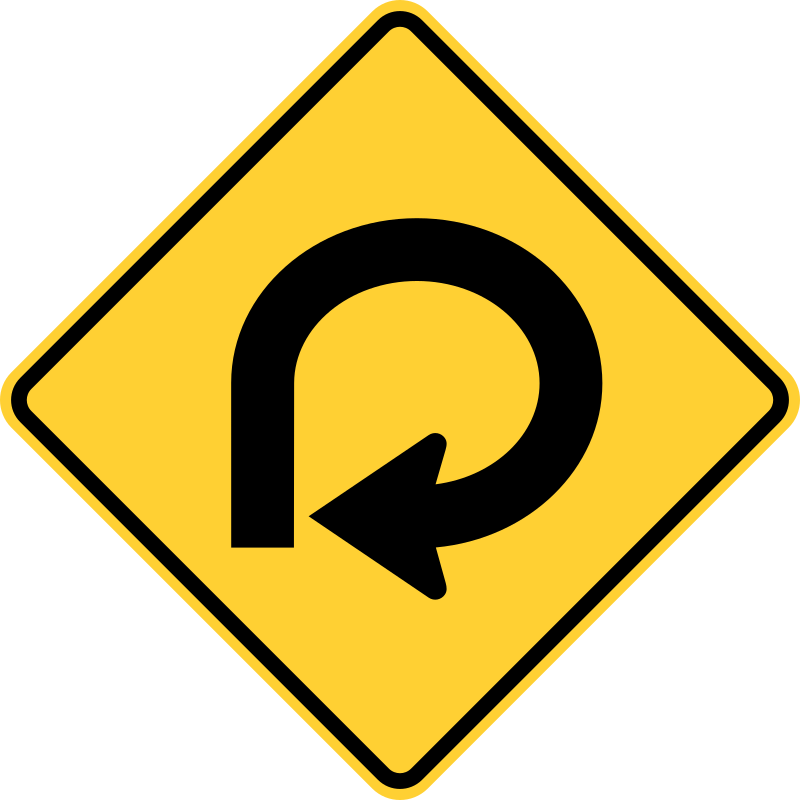 This sign means:
A
Roundabout ahead.
B
270 degree turn ahead.
C
Wrong way; Turn around immediately.
This traffic sign indicates: 270 degree turn ahead. Observing and obeying all roadway signs ensures safe traffic flow and legal driving.
Question 12:
To improve their visibility, motorcyclists are required to:
A
quickly change speed or lane position.
B
keep their headlights and taillights on at all times.
C
use a full lane.
D
wear approved helmets.
The correct driving rule is: keep their headlights and taillights on at all times. Following standard DMV road rules and practicing defensive driving ensures safety for all road users.
Question 13:
What should you do if you see smoke come from under the hood?
A
Call the fire department and then pull off the road and park your vehicle.
B
Pull off the road and park your vehicle. Turn off the ignition, get away from the car and call the fire department.
C
Try to fight the fire yourself.
The correct driving rule is: pull off the road and park your vehicle. Turn off the ignition, get away from the car and call the fire department. Following standard DMV road rules and practicing defensive driving ensures safety for all road users.
Question 14:
Bicyclists must:
A
keep at least one hand on the handlebars at all times.
B
signal turns and stops through the use of hand signals.
C
never carry an infant under a year old as a passenger.
D
All of the above.
All of the listed points are essential driving requirements: keep at least one hand on the handlebars at all times; signal turns and stops through the use of hand signals; never carry an infant under a year old as a passenger. Practicing each ensures compliance with DMV safety laws.
Question 15:
If you hear a thumping sound while driving, you should:
A
hook your shoe under the gas pedal and see if you can free it.
B
get off the road and check your tires.
C
try your emergency lights.
The correct driving rule is: get off the road and check your tires. Following standard DMV road rules and practicing defensive driving ensures safety for all road users.
Question 16:
BAC is expressed in:
A
percentage of alcohol to blood.
B
percentage of blood to alcohol.
C
ounces of alcohol in your blood.
Under state DUI and traffic safety laws: percentage of alcohol to blood. Alcohol degrades judgment, slows reaction times, and distorts depth perception.
Question 17:
A three-point turn is used:
A
to turn your car around in a small space.
B
on a curve, when a sign indicates that making a U-turn is prohibited.
C
to indicate your intention to turn.
D
whenever possible, to change lane.
The correct driving rule is: to turn your car around in a small space. Following standard DMV road rules and practicing defensive driving ensures safety for all road users.
Question 18:
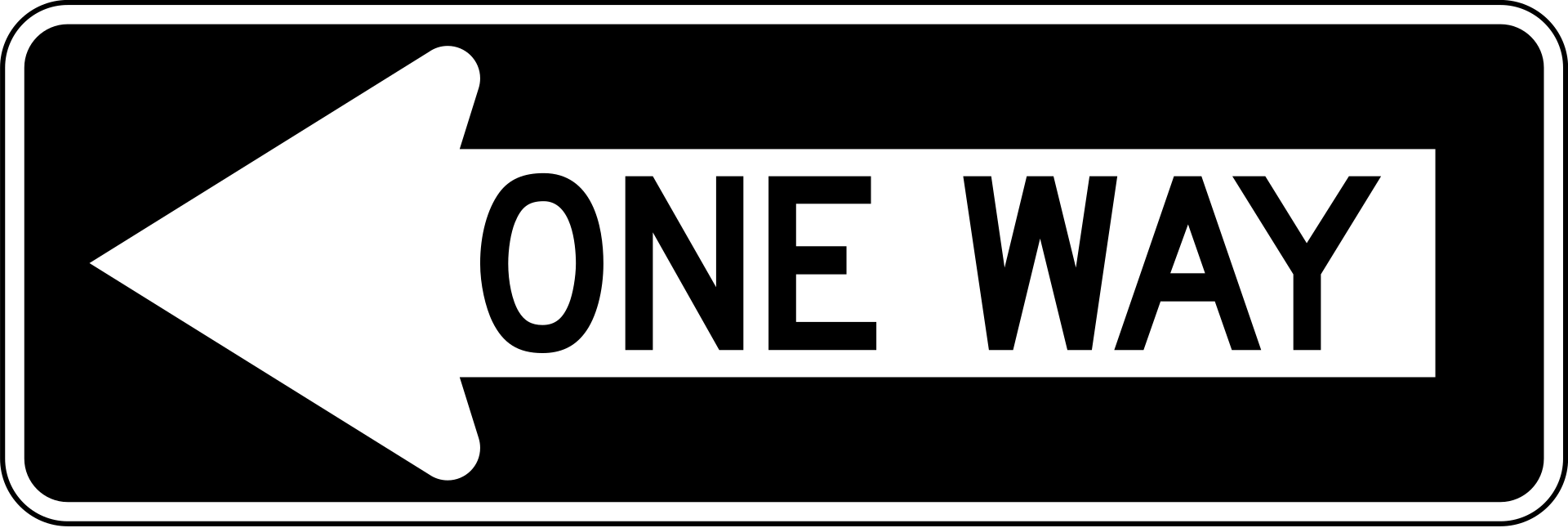 The ‘One Way’ sign means that:
A
only vehicles turning left may travel in the direction of the arrow.
B
there is only one road that turns left at the intersection.
C
drivers may travel only in the direction of the arrow.
This traffic sign indicates: drivers may travel only in the direction of the arrow. Observing and obeying all roadway signs ensures safe traffic flow and legal driving.
Question 19:
The shape of a route sign tells you:
A
the type of route you are on.
B
the speed limit on that route.
C
that the route you are on might be dangerous.
This traffic sign indicates: the type of route you are on. Observing and obeying all roadway signs ensures safe traffic flow and legal driving.
Question 20:
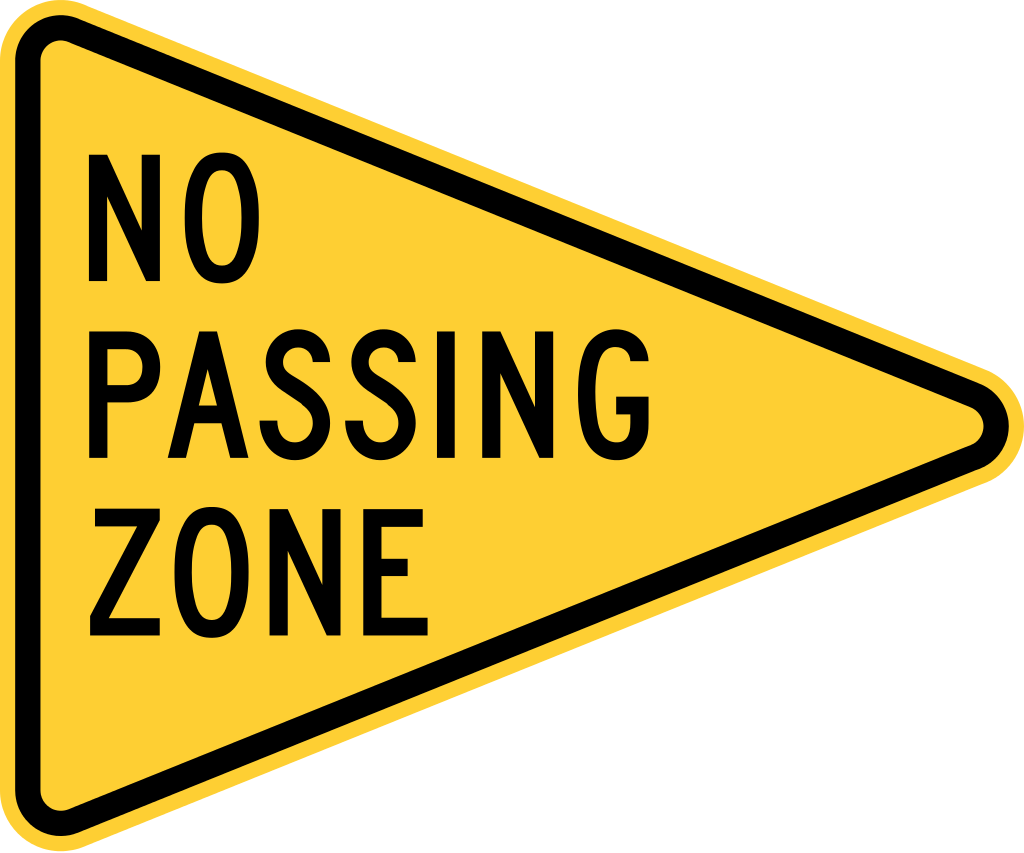 Where are pennant signs placed?
A
On the right side of the road, facing the driver.
B
On windy roads.
C
Where a highway is divided into two one-way roadways.
D
On the left side of the road, facing the driver.
The correct driving rule is: On the left side of the road, facing the driver. Following standard DMV road rules and practicing defensive driving ensures safety for all road users.