Question 1:
 This road sign means:
A
Traffic signal ahead
B
Stop
C
Yield the right-of-way
Answer Explanation
This traffic sign indicates: traffic signal ahead. Observing and obeying all roadway signs ensures safe traffic flow and legal driving.
This traffic sign indicates: traffic signal ahead. Observing and obeying all roadway signs ensures safe traffic flow and legal driving.
Question 2:
Distracted driving:
A
causes the driver to react more slowly to hazards.
B
is only dangerous for inexperienced drivers.
C
usually causes the driver to drive slower.
D
is never dangerous.
Answer Explanation
The correct driving rule is: causes the driver to react more slowly to hazards. Following standard DMV road rules and practicing defensive driving ensures safety for all road users.
The correct driving rule is: causes the driver to react more slowly to hazards. Following standard DMV road rules and practicing defensive driving ensures safety for all road users.
Question 3:
___________ are green with white letters and symbols.
A
Warning signs
B
Destination signs (guide signs)
C
Regulation signs (regulatory signs)
Answer Explanation
The correct driving rule is: Destination signs (guide signs). Following standard DMV road rules and practicing defensive driving ensures safety for all road users.
The correct driving rule is: Destination signs (guide signs). Following standard DMV road rules and practicing defensive driving ensures safety for all road users.
Question 4:
If you missed your exit on a freeway, you should:
A
use the right turn signal, check your mirrors and move to the right.
B
None of the above.
C
go to the next exit and come back to the exit you missed.
D
make a quick U-turn from your lane of travel.
Answer Explanation
Defensive driving guidelines state that: go to the next exit and come back to the exit you missed. Anticipating road hazards and communicating maneuvers keeps traffic predictable and safe.
Defensive driving guidelines state that: go to the next exit and come back to the exit you missed. Anticipating road hazards and communicating maneuvers keeps traffic predictable and safe.
Question 5:
 This sign warns drivers of:
A
a reduction of lanes.
B
a dip in the road. Drivers should be ready to stop if the dip is filled with water.
C
a bridge ahead, wide enough to accommodate two lanes of traffic, but with very little clearance.
Answer Explanation
This traffic sign indicates: a bridge ahead, wide enough to accommodate two lanes of traffic, but with very little clearance. Observing and obeying all roadway signs ensures safe traffic flow and legal driving.
This traffic sign indicates: a bridge ahead, wide enough to accommodate two lanes of traffic, but with very little clearance. Observing and obeying all roadway signs ensures safe traffic flow and legal driving.
Question 6:
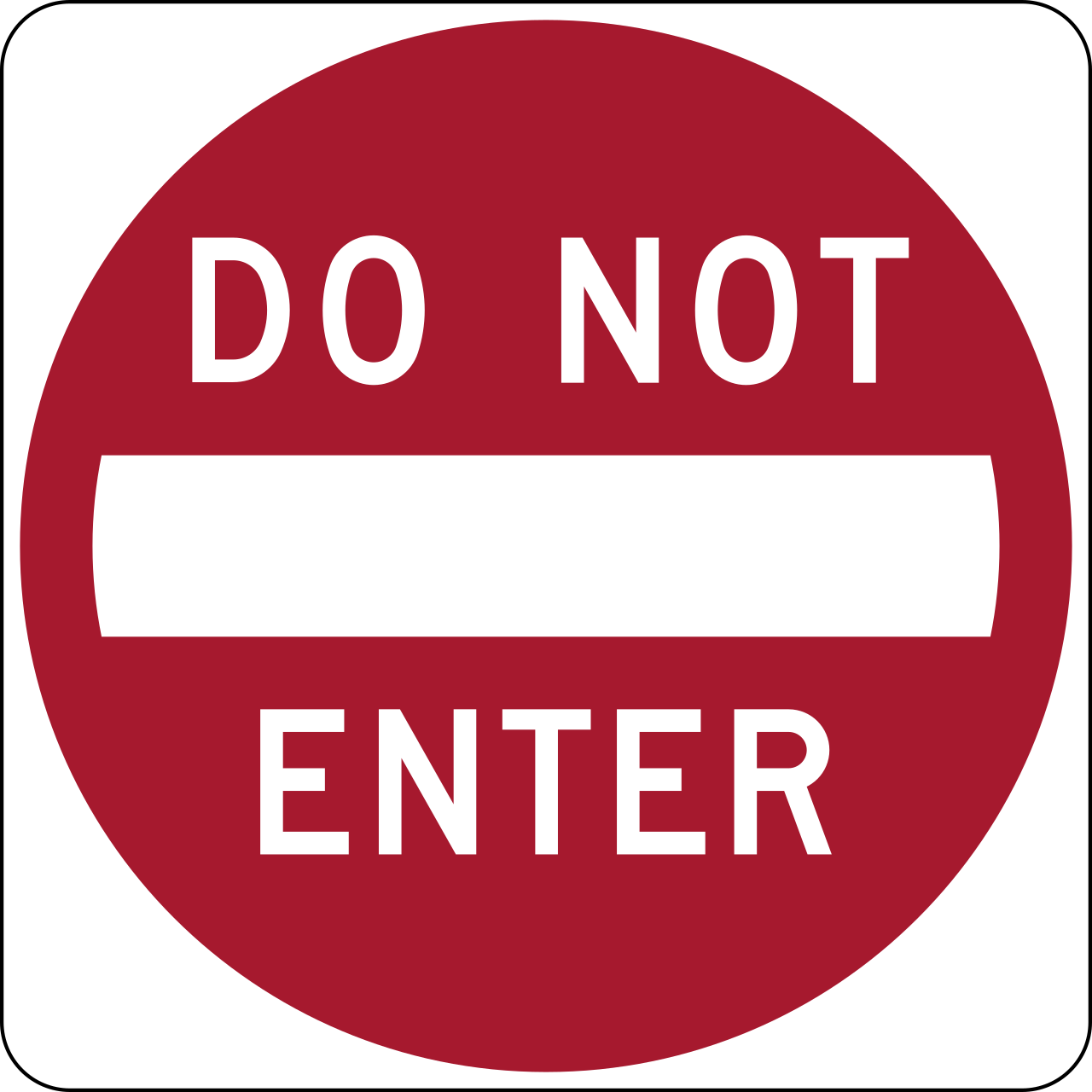 This sign indicates:
A
that you must not drive past this sign.
B
that you must yield the right-of-way.
C
the entrance to a construction site.
D
the entrance to a dead-end street.
Answer Explanation
This traffic sign indicates: that you must not drive past this sign. Observing and obeying all roadway signs ensures safe traffic flow and legal driving.
This traffic sign indicates: that you must not drive past this sign. Observing and obeying all roadway signs ensures safe traffic flow and legal driving.
Question 7:
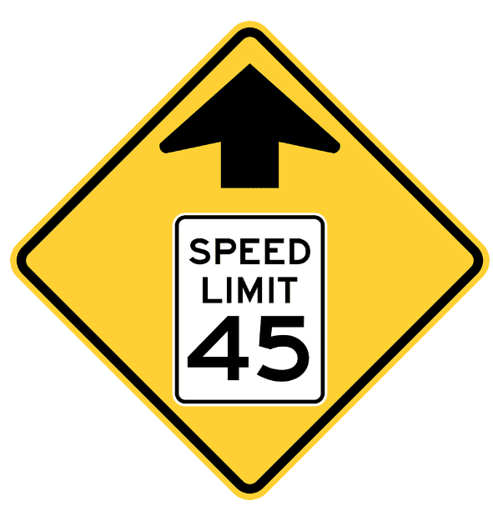 This warning sign:
A
provides advance notice to upcoming speed limit change.
B
shows the current speed limit that all vehicles traveling in the direction of the arrow must not exceed.
C
indicates the suggested highest safe speed.
Answer Explanation
This traffic sign indicates: provides advance notice to upcoming speed limit change. Observing and obeying all roadway signs ensures safe traffic flow and legal driving.
This traffic sign indicates: provides advance notice to upcoming speed limit change. Observing and obeying all roadway signs ensures safe traffic flow and legal driving.
Question 8:
When driving in work zones, drivers should:
A
closely follow the driver in front of them.
B
reduce their speed and be prepared to stop.
C
maintain their speed through the work zone.
Answer Explanation
The correct driving rule is: reduce their speed and be prepared to stop. Following standard DMV road rules and practicing defensive driving ensures safety for all road users.
The correct driving rule is: reduce their speed and be prepared to stop. Following standard DMV road rules and practicing defensive driving ensures safety for all road users.
Question 9:
You reach an intersection that is not controlled at the same time as a driver on your right, and both of you prepare to go straight. Who has the right-of-way?
A
You.
B
No one.
C
The other driver.
Answer Explanation
According to standard right-of-way regulations: The other driver. Yielding appropriately prevents intersection collisions and maintains safe traffic flow.
According to standard right-of-way regulations: The other driver. Yielding appropriately prevents intersection collisions and maintains safe traffic flow.
Question 10:
At a light rail intersection, you should always:
A
share the road with pedestrians and bicyclists.
B
look both ways before crossing the tracks.
C
be alert and obey all traffic signals.
D
All of the above.
Answer Explanation
Safe navigation at intersections requires following all established rules: share the road with pedestrians and bicyclists; look both ways before crossing the tracks; be alert and obey all traffic signals. Always yield right-of-way properly to prevent collisions.
Safe navigation at intersections requires following all established rules: share the road with pedestrians and bicyclists; look both ways before crossing the tracks; be alert and obey all traffic signals. Always yield right-of-way properly to prevent collisions.
Question 11:
How many drinks of alcohol does the human body generally get rid of each hour?
A
2 drinks.
B
1 drink.
C
4 drinks.
D
3 drinks.
Answer Explanation
Under state DUI and traffic safety laws: 1 drink. Alcohol degrades judgment, slows reaction times, and distorts depth perception.
Under state DUI and traffic safety laws: 1 drink. Alcohol degrades judgment, slows reaction times, and distorts depth perception.
Question 12:
What is the slow moving vehicle symbol?
A
A reflective yellow diamond
B
A reflective white triangle
C
A reflective orange triangle
Answer Explanation
The correct driving rule is: A reflective orange triangle. Following standard DMV road rules and practicing defensive driving ensures safety for all road users.
The correct driving rule is: A reflective orange triangle. Following standard DMV road rules and practicing defensive driving ensures safety for all road users.
Question 13:
Traffic lights are normally ____________ from the top to bottom or left to right.
A
red, green and yellow
B
green, yellow and red
C
red, yellow and green
Answer Explanation
The correct driving rule is: red, yellow and green. Following standard DMV road rules and practicing defensive driving ensures safety for all road users.
The correct driving rule is: red, yellow and green. Following standard DMV road rules and practicing defensive driving ensures safety for all road users.
Question 14:
You should use turn signals to indicate your intention with sufficient time to allow other drivers to see the signal:
A
if it’s raining.
B
AFTER you move.
C
BEFORE you move.
Answer Explanation
State laws require signaling your intention: BEFORE you move. Signal at least 100 feet before making a turn or changing lanes.
State laws require signaling your intention: BEFORE you move. Signal at least 100 feet before making a turn or changing lanes.
Question 15:
 This road sign means:
A
School zone ahead
B
Side road
C
Construction zone ahead
D
Sharp turn, slow down
Answer Explanation
This traffic sign indicates: Sharp turn, slow down. Observing and obeying all roadway signs ensures safe traffic flow and legal driving.
This traffic sign indicates: Sharp turn, slow down. Observing and obeying all roadway signs ensures safe traffic flow and legal driving.
Question 16:
When the road is slippery you should:
A
decrease the following distance.
B
slow and pro-ceed with caution.
C
check your brakes.
Answer Explanation
For safe speed and stopping control: slow and pro-ceed with caution. Adjusting speed to match visibility and road traction prevents loss of steering grip.
For safe speed and stopping control: slow and pro-ceed with caution. Adjusting speed to match visibility and road traction prevents loss of steering grip.
Question 17:
 This sign means:
A
Reversible lane ahead.
B
The divided highway ends ahead.
C
Drivers are coming to a point where another traffic lane joins the one they are on.
Answer Explanation
This traffic sign indicates: The divided highway ends ahead. Observing and obeying all roadway signs ensures safe traffic flow and legal driving.
This traffic sign indicates: The divided highway ends ahead. Observing and obeying all roadway signs ensures safe traffic flow and legal driving.
Question 18:
What is the most important rule to remember in any emergency?
A
Do not panic.
B
Run away.
C
Call the police.
Answer Explanation
The correct driving rule is: Do not panic. Following standard DMV road rules and practicing defensive driving ensures safety for all road users.
The correct driving rule is: Do not panic. Following standard DMV road rules and practicing defensive driving ensures safety for all road users.
Question 19:
It is illegal to drive below the speed limit:
A
when the pavement is wet.
B
only in residential areas.
C
when driving slowly disrupts the normal flow of traffic.
D
only in rural areas.
Answer Explanation
For safe speed and stopping control: when driving slowly disrupts the normal flow of traffic. Adjusting speed to match visibility and road traction prevents loss of steering grip.
For safe speed and stopping control: when driving slowly disrupts the normal flow of traffic. Adjusting speed to match visibility and road traction prevents loss of steering grip.
Question 20:
When changing lanes on a highway, drivers should:
A
glance over their shoulder to check their blind spots.
B
signal the lane change.
C
check the rearview and outside mirrors.
D
All of the above.
Answer Explanation
Defensive driving best practices include: glance over their shoulder to check their blind spots; signal the lane change; check the rearview and outside mirrors. Staying alert and maintaining spacing prevents unexpected hazards.
Defensive driving best practices include: glance over their shoulder to check their blind spots; signal the lane change; check the rearview and outside mirrors. Staying alert and maintaining spacing prevents unexpected hazards.
Question 21:
 This sign warns drivers that:
A
they must turn either to the right or left.
B
there is a double curve ahead.
C
there is a winding road ahead.
Answer Explanation
This traffic sign indicates: there is a winding road ahead. Observing and obeying all roadway signs ensures safe traffic flow and legal driving.
This traffic sign indicates: there is a winding road ahead. Observing and obeying all roadway signs ensures safe traffic flow and legal driving.
Question 22:
Where there is no bicycle lane, where on the road must a bicyclist ride?
A
on the left shoulder of the road.
B
near the right curb or edge of the road.
C
near the left edge of the road.
Answer Explanation
State laws require motorists to provide a safe clearance buffer: near the right curb or edge of the road. Allow at least 3 feet of space when overtaking a bicyclist.
State laws require motorists to provide a safe clearance buffer: near the right curb or edge of the road. Allow at least 3 feet of space when overtaking a bicyclist.
Question 23:
Motorcyclists are entitled to use the full width of a traffic lane; therefore, a driver should pass a motorcycle the same way as passing another vehicle.
A
False
B
True
Answer Explanation
Motorcycles can stop rapidly and are easily hidden in vehicle blind spots: True. Always allow an increased following distance of at least 3 to 4 seconds.
Motorcycles can stop rapidly and are easily hidden in vehicle blind spots: True. Always allow an increased following distance of at least 3 to 4 seconds.
Question 24:
Sudden wind gusts on highways:
A
are generally caused by dust and dirt blowing around.
B
can cause one to lose control of their vehicle.
C
only affect large vehicles.
Answer Explanation
The correct driving rule is: can cause one to lose control of their vehicle. Following standard DMV road rules and practicing defensive driving ensures safety for all road users.
The correct driving rule is: can cause one to lose control of their vehicle. Following standard DMV road rules and practicing defensive driving ensures safety for all road users.
Question 25:
This road sign means:
A
Curves ahead
B
Divided highway ahead
C
Divided highway ends
Answer Explanation
This traffic sign indicates: Divided highway ends. Observing and obeying all roadway signs ensures safe traffic flow and legal driving.
This traffic sign indicates: Divided highway ends. Observing and obeying all roadway signs ensures safe traffic flow and legal driving.