DriveQuiz drivequiz.com

NM DMV PERMİT PRACTİCE TEST 2

New Mexico
Duration: 23 min
|
Questions: 25
Student Name:
Date:
Correct:      Incorrect:      Score:      
1.

A signalized intersection is ahead. Prepare to stop if the light turns yellow or red.
This road sign means:
A) Traffic signal ahead
B) Stop
C) Yield the right-of-way
2.
Distracted driving:
A) causes the driver to react more slowly to hazards.
B) is only dangerous for inexperienced drivers.
C) usually causes the driver to drive slower.
D) is never dangerous.
3.
___________ are green with white letters and symbols.
A) Warning signs
B) Destination signs (guide signs)
C) Regulation signs (regulatory signs)
4.
If you missed your exit on a freeway, you should:
A) use the right turn signal, check your mirrors and move to the right.
B) None of the above.
C) go to the next exit and come back to the exit you missed.
D) make a quick U-turn from your lane of travel.
5.
The bridge ahead has narrower lanes or shoulders than the preceding road. Use caution when meeting oncoming vehicles.
This sign warns drivers of:
A) a reduction of lanes.
B) a dip in the road. Drivers should be ready to stop if the dip is filled with water.
C) a bridge ahead, wide enough to accommodate two lanes of traffic, but with very little clearance.
6.
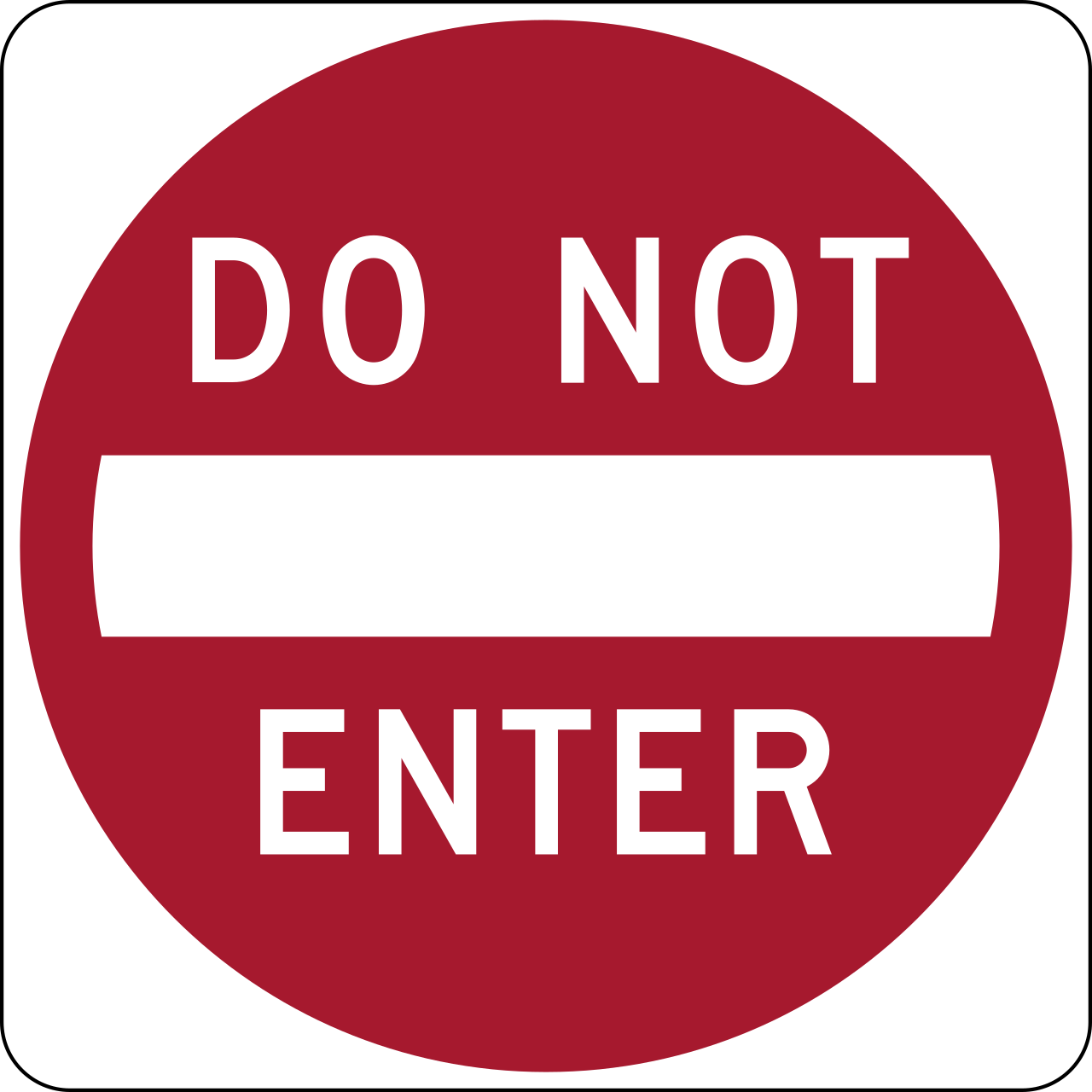
Marks a roadway or ramp where vehicular traffic is strictly forbidden to enter from your direction (such as freeway off-ramps or one-way streets).
This sign indicates:
A) that you must not drive past this sign.
B) that you must yield the right-of-way.
C) the entrance to a construction site.
D) the entrance to a dead-end street.
7.
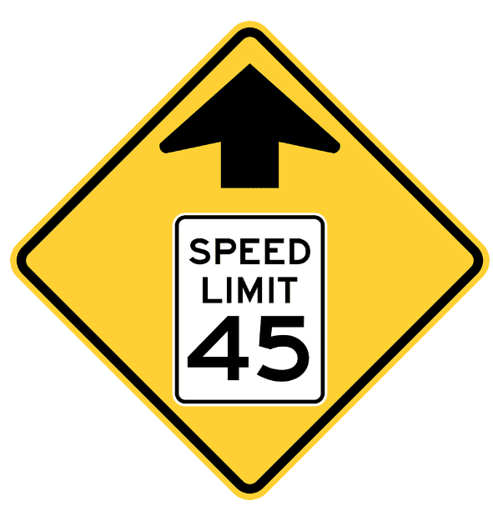
Recommended safe maximum driving speed in ideal conditions for an upcoming curve, ramp, or hazardous stretch of road.
This warning sign:
A) provides advance notice to upcoming speed limit change.
B) shows the current speed limit that all vehicles traveling in the direction of the arrow must not exceed.
C) indicates the suggested highest safe speed.
8.
When driving in work zones, drivers should:
A) closely follow the driver in front of them.
B) reduce their speed and be prepared to stop.
C) maintain their speed through the work zone.
9.
You reach an intersection that is not controlled at the same time as a driver on your right, and both of you prepare to go straight. Who has the right-of-way?
A) You.
B) No one.
C) The other driver.
10.
At a light rail intersection, you should always:
A) share the road with pedestrians and bicyclists.
B) look both ways before crossing the tracks.
C) be alert and obey all traffic signals.
D) All of the above.
11.
How many drinks of alcohol does the human body generally get rid of each hour?
A) 2 drinks.
B) 1 drink.
C) 4 drinks.
D) 3 drinks.
12.
What is the slow moving vehicle symbol?
A) A reflective yellow diamond
B) A reflective white triangle
C) A reflective orange triangle
13.
Traffic lights are normally ____________ from the top to bottom or left to right.
A) red, green and yellow
B) green, yellow and red
C) red, yellow and green
14.
You should use turn signals to indicate your intention with sufficient time to allow other drivers to see the signal:
A) if it’s raining.
B) AFTER you move.
C) BEFORE you move.
15.
The road makes a sharp 90-degree right turn ahead. Slow down considerably before entering the turn.
This road sign means:
A) School zone ahead
B) Side road
C) Construction zone ahead
D) Sharp turn, slow down
16.
When the road is slippery you should:
A) decrease the following distance.
B) slow and pro-ceed with caution.
C) check your brakes.
17.
The median divider ends ahead, and you are returning to a two-way, two-lane undivided roadway. Watch for oncoming traffic on your left.
This sign means:
A) Reversible lane ahead.
B) The divided highway ends ahead.
C) Drivers are coming to a point where another traffic lane joins the one they are on.
18.
What is the most important rule to remember in any emergency?
A) Do not panic.
B) Run away.
C) Call the police.
19.
It is illegal to drive below the speed limit:
A) when the pavement is wet.
B) only in residential areas.
C) when driving slowly disrupts the normal flow of traffic.
D) only in rural areas.
20.
When changing lanes on a highway, drivers should:
A) glance over their shoulder to check their blind spots.
B) signal the lane change.
C) check the rearview and outside mirrors.
D) All of the above.
21.
Indicates a series of three or more consecutive sharp turns or curves ahead. Reduce speed and maintain lane control.
This sign warns drivers that:
A) they must turn either to the right or left.
B) there is a double curve ahead.
C) there is a winding road ahead.
22.
Where there is no bicycle lane, where on the road must a bicyclist ride?
A) on the left shoulder of the road.
B) near the right curb or edge of the road.
C) near the left edge of the road.
23.
Motorcyclists are entitled to use the full width of a traffic lane; therefore, a driver should pass a motorcycle the same way as passing another vehicle.
A) False
B) True
24.
Sudden wind gusts on highways:
A) are generally caused by dust and dirt blowing around.
B) can cause one to lose control of their vehicle.
C) only affect large vehicles.
25.
The median divider ends ahead, and you are returning to a two-way, two-lane undivided roadway. Watch for oncoming traffic on your left.
This road sign means:
A) Curves ahead
B) Divided highway ahead
C) Divided highway ends
ANSWER KEY Check answers after completing the test.
1 A
2 A
3 B
4 C
5 C
6 A
7 A
8 B
9 C
10 D
11 B
12 C
13 C
14 C
15 D
16 B
17 B
18 A
19 C
20 D
21 C
22 B
23 B
24 B
25 C