Question 1:
To avoid the risk of being involved in an alcohol-related crash, you should:
A
decide before you start drinking that you are not going to drive.
B
say 'No, thanks' if someone offers you alcohol.
C
call a taxi if you've been drinking.
D
All of the above.
Answer Explanation
Alcohol and impairing substances degrade all critical driving functions: decide before you start drinking that you are not going to drive; say 'No, thanks' if someone offers you alcohol; call a taxi if you've been drinking. Driving while impaired carries severe criminal and safety penalties.
Alcohol and impairing substances degrade all critical driving functions: decide before you start drinking that you are not going to drive; say 'No, thanks' if someone offers you alcohol; call a taxi if you've been drinking. Driving while impaired carries severe criminal and safety penalties.
Question 2:
 A 4-way stop sign means:
A
The first vehicle to reach the intersection should move forward first.
B
Traffic from all four directions must stop.
C
There are four stop signs at the intersection.
D
All of the above.
Answer Explanation
This sign alerts drivers to several mandatory requirements: The first vehicle to reach the intersection should move forward first, Traffic from all four directions must stop, There are four stop signs at the intersection. Obeying all posted traffic control instructions is required by law.
This sign alerts drivers to several mandatory requirements: The first vehicle to reach the intersection should move forward first, Traffic from all four directions must stop, There are four stop signs at the intersection. Obeying all posted traffic control instructions is required by law.
Question 3:
If you stop at a railroad crossing with more than one track:
A
proceed with caution until you see a train.
B
go through when one of the tracks is free.
C
go through as soon as the first train passes.
D
wait until you have a clear view of both tracks.
Answer Explanation
The correct driving rule is: wait until you have a clear view of both tracks. Following standard DMV road rules and practicing defensive driving ensures safety for all road users.
The correct driving rule is: wait until you have a clear view of both tracks. Following standard DMV road rules and practicing defensive driving ensures safety for all road users.
Question 4:
What is the meaning of red traffic signs?
A
High emphasis warning.
B
Stop, do not enter or wrong way.
C
Regulatory.
Answer Explanation
The correct driving rule is: Stop, do not enter or wrong way. Following standard DMV road rules and practicing defensive driving ensures safety for all road users.
The correct driving rule is: Stop, do not enter or wrong way. Following standard DMV road rules and practicing defensive driving ensures safety for all road users.
Question 5:
While driving, it is important to slow down:
A
when the road is wet.
B
on narrow roads.
C
at intersections.
D
All of the above.
Answer Explanation
All of the listed points are essential driving requirements: when the road is wet; on narrow roads; at intersections. Practicing each ensures compliance with DMV safety laws.
All of the listed points are essential driving requirements: when the road is wet; on narrow roads; at intersections. Practicing each ensures compliance with DMV safety laws.
Question 6:
 It's 10 AM. This sign tells you that:
A
you are allowed to park until 5:30 PM.
B
you must display a special permit in order to park here.
C
you are not allowed to park here.
Answer Explanation
This traffic sign indicates: you are not allowed to park here. Observing and obeying all roadway signs ensures safe traffic flow and legal driving.
This traffic sign indicates: you are not allowed to park here. Observing and obeying all roadway signs ensures safe traffic flow and legal driving.
Question 7:
You should increase your following distance when:
A
exiting a freeway.
B
following a motorcycle.
C
driving behind a large vehicle that blocks your vision.
D
All of the above.
Answer Explanation
Defensive driving best practices include: exiting a freeway; following a motorcycle; driving behind a large vehicle that blocks your vision. Staying alert and maintaining spacing prevents unexpected hazards.
Defensive driving best practices include: exiting a freeway; following a motorcycle; driving behind a large vehicle that blocks your vision. Staying alert and maintaining spacing prevents unexpected hazards.
Question 8:
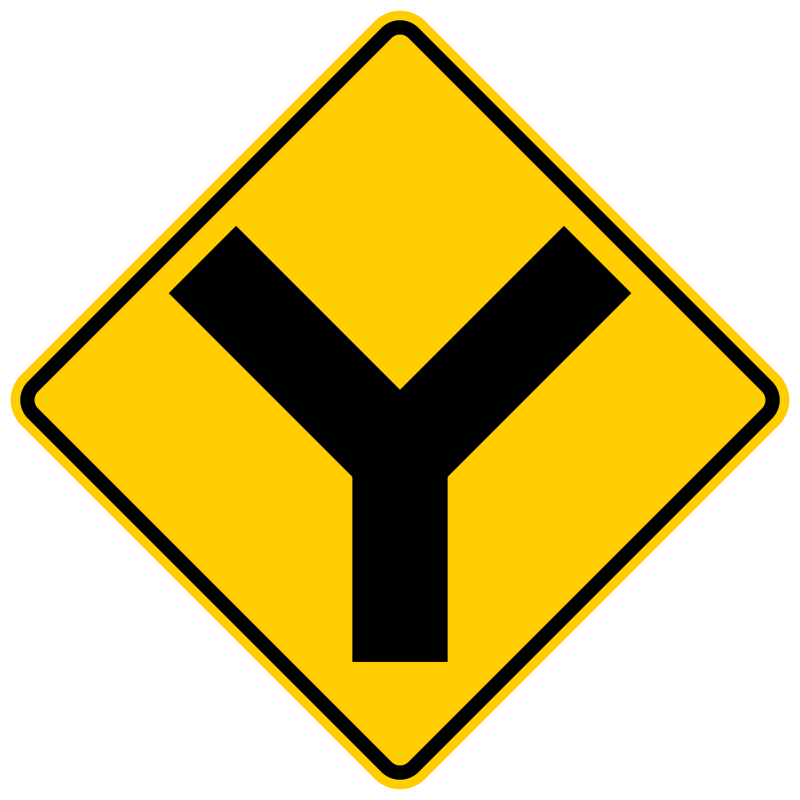 This road sign means:
A
The road ends ahead
B
A road joins from the right
C
A four-way intersection is ahead
D
'Y' intersection ahead
Answer Explanation
This traffic sign indicates: 'Y' intersection ahead. Observing and obeying all roadway signs ensures safe traffic flow and legal driving.
This traffic sign indicates: 'Y' intersection ahead. Observing and obeying all roadway signs ensures safe traffic flow and legal driving.
Question 9:
If you see a 'lane closed ahead' sign you should:
A
make a U-turn. You are on the wrong side of the road.
B
merge into the correct lane when it is safe.
C
speed to the end of the closed lane and try to get into the other lane.
D
None of the above.
Answer Explanation
The correct driving rule is: merge into the correct lane when it is safe. Following standard DMV road rules and practicing defensive driving ensures safety for all road users.
The correct driving rule is: merge into the correct lane when it is safe. Following standard DMV road rules and practicing defensive driving ensures safety for all road users.
Question 10:
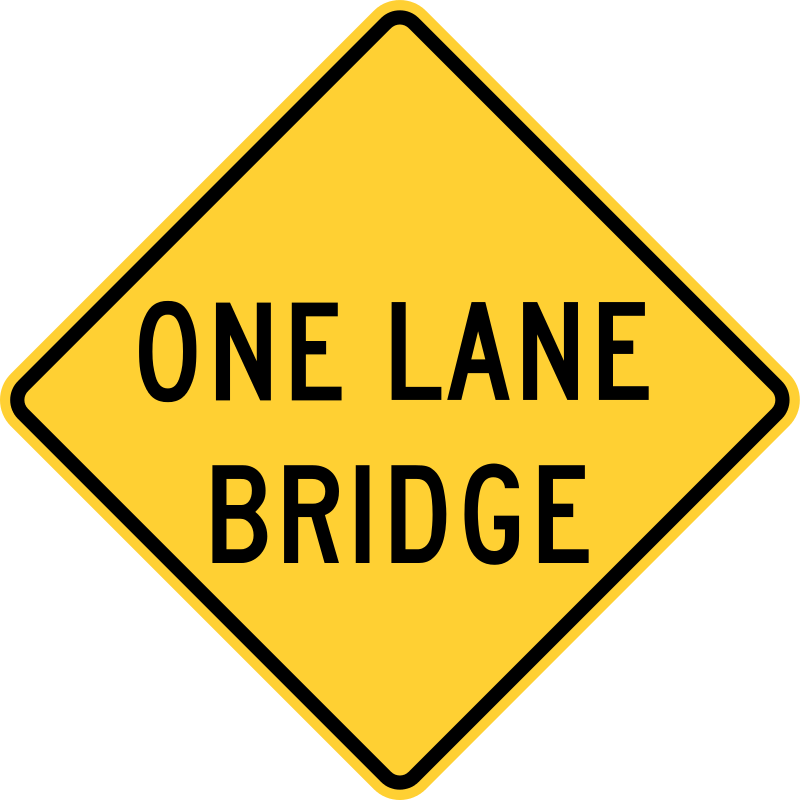 What should drivers do when they see this sign?
A
Make sure the bridge is clear of oncoming traffic before they cross.
B
Look to the left and right for other traffic.
C
Allow others to merge smoothly.
Answer Explanation
This traffic sign indicates: make sure the bridge is clear of oncoming traffic before they cross. Observing and obeying all roadway signs ensures safe traffic flow and legal driving.
This traffic sign indicates: make sure the bridge is clear of oncoming traffic before they cross. Observing and obeying all roadway signs ensures safe traffic flow and legal driving.
Question 11:
 This road sign means:
A
Traffic increases ahead
B
Steep grade ahead
C
Winding road ahead
D
Slippery road ahead
Answer Explanation
This traffic sign indicates: Slippery road ahead. Observing and obeying all roadway signs ensures safe traffic flow and legal driving.
This traffic sign indicates: Slippery road ahead. Observing and obeying all roadway signs ensures safe traffic flow and legal driving.
Question 12:
Your red traffic signal changes to green while a pedestrian is crossing in your traffic lane. The right of way should be given:
A
by the pedestrian, but only when vehicles are turning left.
B
by the pedestrian.
C
to the pedestrian.
Answer Explanation
Circular signs with an 'X' and 'RR' designate a Railroad Advance Warning: to the pedestrian. Drivers must slow down, look both ways, listen for trains, and be prepared to stop.
Circular signs with an 'X' and 'RR' designate a Railroad Advance Warning: to the pedestrian. Drivers must slow down, look both ways, listen for trains, and be prepared to stop.
Question 13:
Drivers must be prepared for anything coming up in the road ahead. They should:
A
scan the road for traffic conditions and possible hazards.
B
drive with the right foot resting lightly on the brake pedal.
C
stare straight ahead at all times.
D
maintain focus toward the left of the road.
Answer Explanation
The correct driving rule is: scan the road for traffic conditions and possible hazards. Following standard DMV road rules and practicing defensive driving ensures safety for all road users.
The correct driving rule is: scan the road for traffic conditions and possible hazards. Following standard DMV road rules and practicing defensive driving ensures safety for all road users.
Question 14:
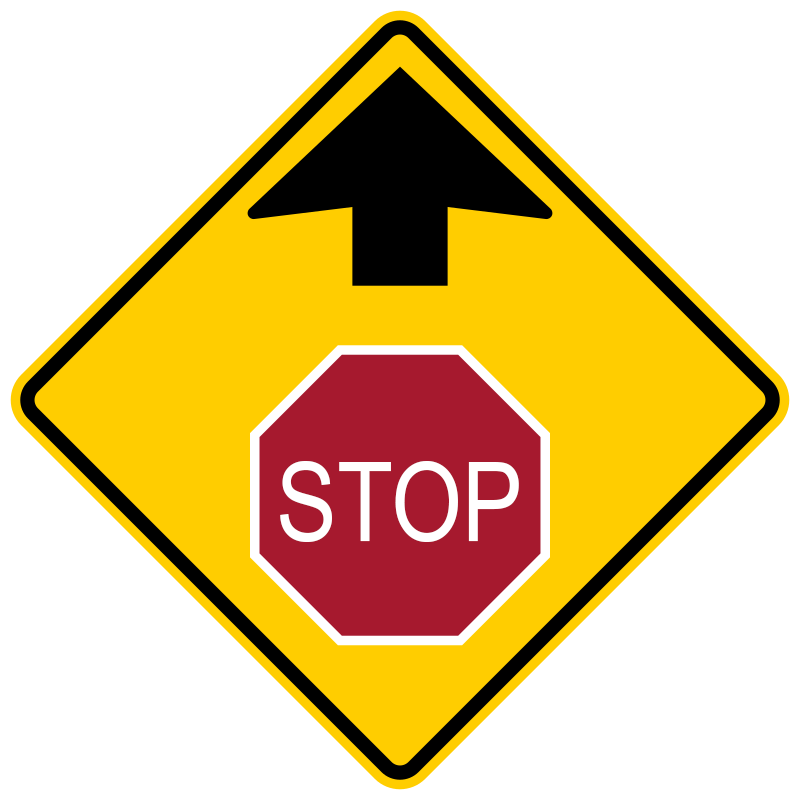 This road sign means:
A
Railroad Warning
B
Stop Sign Ahead
C
Lane ends
D
Stop if necessary
Answer Explanation
This traffic sign indicates: stop Sign Ahead. Observing and obeying all roadway signs ensures safe traffic flow and legal driving.
This traffic sign indicates: stop Sign Ahead. Observing and obeying all roadway signs ensures safe traffic flow and legal driving.
Question 15:
Which of the following is true about the Anti-Locking Brake System?
A
It prevents skidding.
B
It allows drivers to steer during an emergency braking situation.
C
All of the above.
Answer Explanation
All of the listed points are essential driving requirements: It prevents skidding; It allows drivers to steer during an emergency braking situation. Practicing each ensures compliance with DMV safety laws.
All of the listed points are essential driving requirements: It prevents skidding; It allows drivers to steer during an emergency braking situation. Practicing each ensures compliance with DMV safety laws.
Question 16:
Braking distance is affected by:
A
the condition of your brakes and tires.
B
pavement conditions.
C
the speed your vehicle is traveling.
D
All of the above.
Answer Explanation
Hazardous road and weather conditions require extra caution: the condition of your brakes and tires; pavement conditions; the speed your vehicle is traveling. Reducing speed and expanding following distance preserves control.
Hazardous road and weather conditions require extra caution: the condition of your brakes and tires; pavement conditions; the speed your vehicle is traveling. Reducing speed and expanding following distance preserves control.
Question 17:
 This is the shape and color of a ________ sign.
A
yield
B
stop
C
do not enter
Answer Explanation
The correct driving rule is: yield. Following standard DMV road rules and practicing defensive driving ensures safety for all road users.
The correct driving rule is: yield. Following standard DMV road rules and practicing defensive driving ensures safety for all road users.
Question 18:
 This road sign means:
A
A road joins from the left
B
The road ahead turns sharply right then sharply left
C
Sharp right turn
D
Winding road ahead
Answer Explanation
This traffic sign indicates: The road ahead turns sharply right then sharply left. Observing and obeying all roadway signs ensures safe traffic flow and legal driving.
This traffic sign indicates: The road ahead turns sharply right then sharply left. Observing and obeying all roadway signs ensures safe traffic flow and legal driving.
Question 19:
You go with a group of friends to a social event, and you plan to have a few drinks. You should:
A
make alcohol the focus of the event.
B
avoid alternating between drinks with alcohol and drinks without any alcohol.
C
arrange to ride home with a friend who does not drink.
Answer Explanation
The correct driving rule is: arrange to ride home with a friend who does not drink. Following standard DMV road rules and practicing defensive driving ensures safety for all road users.
The correct driving rule is: arrange to ride home with a friend who does not drink. Following standard DMV road rules and practicing defensive driving ensures safety for all road users.
Question 20:
Who is most at risk?
A
Drivers who are fatigued.
B
Drivers who are driving on long, boring roads.
C
All of the above.
Answer Explanation
All of the listed points are essential driving requirements: Drivers who are fatigued; Drivers who are driving on long, boring roads. Practicing each ensures compliance with DMV safety laws.
All of the listed points are essential driving requirements: Drivers who are fatigued; Drivers who are driving on long, boring roads. Practicing each ensures compliance with DMV safety laws.
Question 21:
What is the meaning of orange traffic signs?
A
Yield.
B
Warning of school, pedestrian, and bicycling activity.
C
Construction and maintenance warning.
Answer Explanation
The correct driving rule is: Construction and maintenance warning. Following standard DMV road rules and practicing defensive driving ensures safety for all road users.
The correct driving rule is: Construction and maintenance warning. Following standard DMV road rules and practicing defensive driving ensures safety for all road users.
Question 22:
What is the first thing you should do if your wheels move off the pavement?
A
Pull the steering wheel back.
B
Pull over to the right and sound your horn to warn the other drivers.
C
Ease your foot off the gas pedal and brake gently.
Answer Explanation
The correct driving rule is: Ease your foot off the gas pedal and brake gently. Following standard DMV road rules and practicing defensive driving ensures safety for all road users.
The correct driving rule is: Ease your foot off the gas pedal and brake gently. Following standard DMV road rules and practicing defensive driving ensures safety for all road users.
Question 23:
You may not pass another vehicle on either side of a _______ centerline.
A
solid or broken yellow
B
single broken white
C
double solid yellow
D
single broken yellow
Answer Explanation
The correct driving rule is: double solid yellow. Following standard DMV road rules and practicing defensive driving ensures safety for all road users.
The correct driving rule is: double solid yellow. Following standard DMV road rules and practicing defensive driving ensures safety for all road users.
Question 24:
Blind spots are:
A
Dangerous intersection where the maximum speed limit is 15 MPH or less.
B
At night, the darkest areas of a road, where emergency flashers should be used.
C
Areas to the side or rear of a vehicle that the driver cannot see with use of mirrors.
Answer Explanation
The correct driving rule is: Areas to the side or rear of a vehicle that the driver cannot see with use of mirrors. Following standard DMV road rules and practicing defensive driving ensures safety for all road users.
The correct driving rule is: Areas to the side or rear of a vehicle that the driver cannot see with use of mirrors. Following standard DMV road rules and practicing defensive driving ensures safety for all road users.
Question 25:
 This road sign means:
A
Left turns are not allowed where this sign is displayed.
B
Drivers cannot make a complete turn to go in the opposite direction.
C
Vehicles turning left must make a U-turn.
Answer Explanation
This traffic sign indicates: drivers cannot make a complete turn to go in the opposite direction. Observing and obeying all roadway signs ensures safe traffic flow and legal driving.
This traffic sign indicates: drivers cannot make a complete turn to go in the opposite direction. Observing and obeying all roadway signs ensures safe traffic flow and legal driving.
Question 26:
A flashing yellow light means:
A
The light will soon change from green to red.
B
Drive with caution.
C
Yield the right-of-way to other traffic at the intersection.
Answer Explanation
According to standard right-of-way regulations: drive with caution. Yielding appropriately prevents intersection collisions and maintains safe traffic flow.
According to standard right-of-way regulations: drive with caution. Yielding appropriately prevents intersection collisions and maintains safe traffic flow.
Question 27:
This road sign means:
A
No left turn
B
No U-turn
C
Detour ahead
Answer Explanation
This traffic sign indicates: No U-turn. Observing and obeying all roadway signs ensures safe traffic flow and legal driving.
This traffic sign indicates: No U-turn. Observing and obeying all roadway signs ensures safe traffic flow and legal driving.
Question 28:
When children are close, what should you do before you back out of a driveway?
A
Rely on your mirrors.
B
Get out of the car and check behind the car.
C
Look through your back window for children.
Answer Explanation
The correct driving rule is: Get out of the car and check behind the car. Following standard DMV road rules and practicing defensive driving ensures safety for all road users.
The correct driving rule is: Get out of the car and check behind the car. Following standard DMV road rules and practicing defensive driving ensures safety for all road users.
Question 29:
 This road sign means:
A
All traffic must turn right
B
Two one-way roads merge ahead
C
A side road enters ahead
D
No right turn
Answer Explanation
This traffic sign indicates: A side road enters ahead. Observing and obeying all roadway signs ensures safe traffic flow and legal driving.
This traffic sign indicates: A side road enters ahead. Observing and obeying all roadway signs ensures safe traffic flow and legal driving.
Question 30:
The yield sign means:
A
Go. The light will soon be red.
B
If the way is clear, you may move forward slowly without stopping.
C
Stop if you can.
Answer Explanation
A triangular Yield sign requires drivers to slow down and give right-of-way to other traffic: If the way is clear, you may move forward slowly without stopping. Proceed only when there is a safe opening.
A triangular Yield sign requires drivers to slow down and give right-of-way to other traffic: If the way is clear, you may move forward slowly without stopping. Proceed only when there is a safe opening.
Question 31:
Double solid yellow lines mean:
A
the lane to the right may pass.
B
passing is not permitted in either direction.
C
the lane to the left may pass.
D
passing is permitted in either direction.
Answer Explanation
The correct driving rule is: passing is not permitted in either direction. Following standard DMV road rules and practicing defensive driving ensures safety for all road users.
The correct driving rule is: passing is not permitted in either direction. Following standard DMV road rules and practicing defensive driving ensures safety for all road users.
Question 32:
If you remain in the back blind spot of a large vehicle:
A
you increase the chance of a crash.
B
the large vehicle will take much longer to stop.
C
you can reduce fuel consumption.
Answer Explanation
Large commercial trucks have extensive blind spots on all four sides called the 'No-Zone': you increase the chance of a crash. If you cannot see the truck driver in their side mirrors, they cannot see you.
Large commercial trucks have extensive blind spots on all four sides called the 'No-Zone': you increase the chance of a crash. If you cannot see the truck driver in their side mirrors, they cannot see you.
Question 33:
Drivers can not pass a vehicle on the left if:
A
they approach the top of a hill on a two-way road and can not see over it.
B
they can not safely return to the right lane before they reach a solid yellow center line for the right lane.
C
All of the above.
Answer Explanation
All of the listed points are essential driving requirements: they approach the top of a hill on a two-way road and can not see over it; they can not safely return to the right lane before they reach a solid yellow center line for the right lane. Practicing each ensures compliance with DMV safety laws.
All of the listed points are essential driving requirements: they approach the top of a hill on a two-way road and can not see over it; they can not safely return to the right lane before they reach a solid yellow center line for the right lane. Practicing each ensures compliance with DMV safety laws.
Question 34:
After stopping for a school bus that is unloading children you should:
A
accelerate quickly and pass.
B
put on your emergency flashers.
C
watch for children walking along the side of the road.
D
wait at least 4 minutes.
Answer Explanation
When a school bus displays flashing red lights and extended stop sign: watch for children walking along the side of the road. Traffic in both directions must come to a full stop on undivided roads until children are clear.
When a school bus displays flashing red lights and extended stop sign: watch for children walking along the side of the road. Traffic in both directions must come to a full stop on undivided roads until children are clear.
Question 35:
An edge line that angles toward the center of the road indicates that:
A
the road is narrower ahead.
B
there’s a narrow bridge ahead.
C
you must turn right.
Answer Explanation
The correct driving rule is: the road is narrower ahead. Following standard DMV road rules and practicing defensive driving ensures safety for all road users.
The correct driving rule is: the road is narrower ahead. Following standard DMV road rules and practicing defensive driving ensures safety for all road users.
Question 36:
When parking on a public road, drivers should:
A
move as far away from traffic as possible.
B
always park on the left side of the roadway.
C
All of the above.
Answer Explanation
Under standard parking and curb regulations: move as far away from traffic as possible. Following parking distance clearances keeps roadways unobstructed and emergency lanes accessible.
Under standard parking and curb regulations: move as far away from traffic as possible. Following parking distance clearances keeps roadways unobstructed and emergency lanes accessible.
Question 37:
When driving at night, you should slow down and:
A
use high beams whenever possible, but never when there's oncoming traffic.
B
use high beams until other drivers dim their lights.
C
follow the vehicle ahead more closely to avoid glare from oncoming headlights.
D
come to a complete stop whenever there's oncoming traffic.
Answer Explanation
The correct driving rule is: use high beams whenever possible, but never when there's oncoming traffic. Following standard DMV road rules and practicing defensive driving ensures safety for all road users.
The correct driving rule is: use high beams whenever possible, but never when there's oncoming traffic. Following standard DMV road rules and practicing defensive driving ensures safety for all road users.
Question 38:
Drivers under 21 years of age are considered to be driving under the influence if their blood alcohol concentration (BAC) is:
A
.10% or higher.
B
.05% or higher.
C
.08% or higher.
D
.02% or higher.
Answer Explanation
Under state DUI and traffic safety laws: .02% or higher. Alcohol degrades judgment, slows reaction times, and distorts depth perception.
Under state DUI and traffic safety laws: .02% or higher. Alcohol degrades judgment, slows reaction times, and distorts depth perception.
Question 39:
When making a turn, drivers must _____ their speed.
A
reduce
B
maintain
C
increase
D
double
Answer Explanation
For safe speed and stopping control: reduce. Adjusting speed to match visibility and road traction prevents loss of steering grip.
For safe speed and stopping control: reduce. Adjusting speed to match visibility and road traction prevents loss of steering grip.
Question 40:
 This road sign means:
A
Winding Road Ahead
B
No turns are allowed on this road
C
Right lane closed
D
Do Not Enter
Answer Explanation
This traffic sign indicates: Winding Road Ahead. Observing and obeying all roadway signs ensures safe traffic flow and legal driving.
This traffic sign indicates: Winding Road Ahead. Observing and obeying all roadway signs ensures safe traffic flow and legal driving.