DriveQuiz drivequiz.com

LA DMV PERMİT PRACTİCE TEST 10

Louisiana
Duration: 36 min
|
Questions: 40
Student Name:
Date:
Correct:      Incorrect:      Score:      
1.
To avoid the risk of being involved in an alcohol-related crash, you should:
A) decide before you start drinking that you are not going to drive.
B) say 'No, thanks' if someone offers you alcohol.
C) call a taxi if you've been drinking.
D) All of the above.
2.
All approaching traffic must stop completely. The first vehicle to reach the intersection and stop has right-of-way; if two vehicles arrive simultaneously, the vehicle on the right goes first.
A 4-way stop sign means:
A) The first vehicle to reach the intersection should move forward first.
B) Traffic from all four directions must stop.
C) There are four stop signs at the intersection.
D) All of the above.
3.
If you stop at a railroad crossing with more than one track:
A) proceed with caution until you see a train.
B) go through when one of the tracks is free.
C) go through as soon as the first train passes.
D) wait until you have a clear view of both tracks.
4.
What is the meaning of red traffic signs?
A) High emphasis warning.
B) Stop, do not enter or wrong way.
C) Regulatory.
5.
While driving, it is important to slow down:
A) when the road is wet.
B) on narrow roads.
C) at intersections.
D) All of the above.
6.
Parking is permitted only during specified hours and days as posted on the sign. Vehicles parked outside these hours are subject to ticketing or towing.
It's 10 AM. This sign tells you that:
A) you are allowed to park until 5:30 PM.
B) you must display a special permit in order to park here.
C) you are not allowed to park here.
7.
You should increase your following distance when:
A) exiting a freeway.
B) following a motorcycle.
C) driving behind a large vehicle that blocks your vision.
D) All of the above.
8.
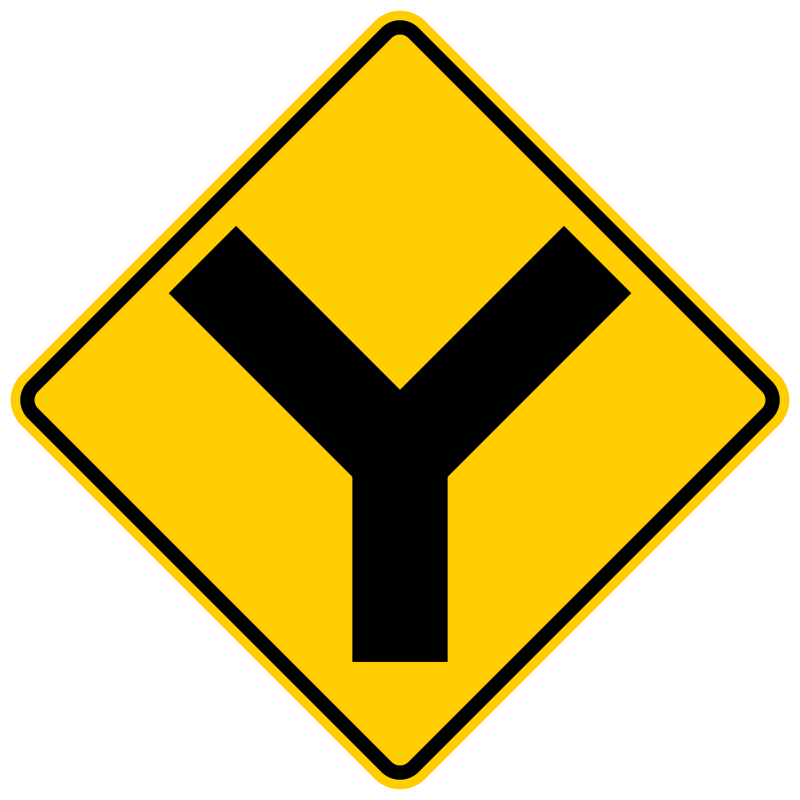
The road splits into a Y configuration ahead. Bear left or right depending on your destination and yield where marked.
This road sign means:
A) The road ends ahead
B) A road joins from the right
C) A four-way intersection is ahead
D) 'Y' intersection ahead
9.
If you see a 'lane closed ahead' sign you should:
A) make a U-turn. You are on the wrong side of the road.
B) merge into the correct lane when it is safe.
C) speed to the end of the closed lane and try to get into the other lane.
D) None of the above.
10.
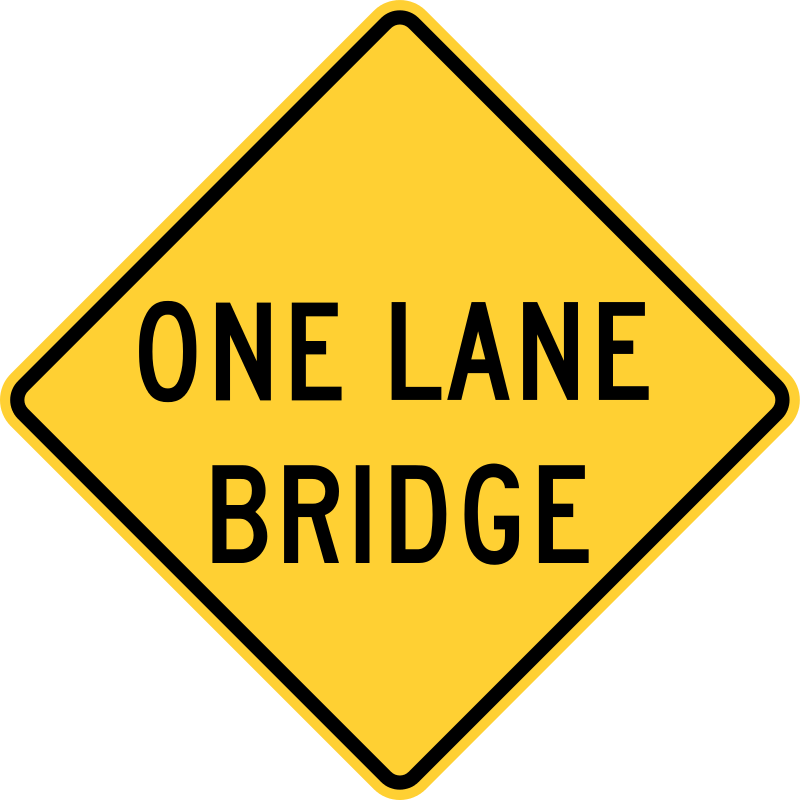
The bridge width allows only one vehicle to cross at a time. The vehicle reaching the bridge first has right-of-way; opposing traffic must wait.
What should drivers do when they see this sign?
A) Make sure the bridge is clear of oncoming traffic before they cross.
B) Look to the left and right for other traffic.
C) Allow others to merge smoothly.
11.
The roadway becomes particularly slippery during wet or rainy conditions. Reduce your speed, increase following distance, and avoid abrupt braking or steering.
This road sign means:
A) Traffic increases ahead
B) Steep grade ahead
C) Winding road ahead
D) Slippery road ahead
12.
Your red traffic signal changes to green while a pedestrian is crossing in your traffic lane. The right of way should be given:
A) by the pedestrian, but only when vehicles are turning left.
B) by the pedestrian.
C) to the pedestrian.
13.
Drivers must be prepared for anything coming up in the road ahead. They should:
A) scan the road for traffic conditions and possible hazards.
B) drive with the right foot resting lightly on the brake pedal.
C) stare straight ahead at all times.
D) maintain focus toward the left of the road.
14.
Warns of an upcoming STOP sign that may not be immediately visible. Begin slowing down to prepare for a complete stop.
This road sign means:
A) Railroad Warning
B) Stop Sign Ahead
C) Lane ends
D) Stop if necessary
15.
Which of the following is true about the Anti-Locking Brake System?
A) It prevents skidding.
B) It allows drivers to steer during an emergency braking situation.
C) All of the above.
16.
Braking distance is affected by:
A) the condition of your brakes and tires.
B) pavement conditions.
C) the speed your vehicle is traveling.
D) All of the above.
17.
Slow down and give right-of-way to all oncoming vehicles, cyclists, and pedestrians. Stop completely if necessary before entering the intersection or merging.
This is the shape and color of a ________ sign.
A) yield
B) stop
C) do not enter
18.
Warns of two consecutive curves in opposite directions (e.g., curves right then left). Slow down to maintain control.
This road sign means:
A) A road joins from the left
B) The road ahead turns sharply right then sharply left
C) Sharp right turn
D) Winding road ahead
19.
You go with a group of friends to a social event, and you plan to have a few drinks. You should:
A) make alcohol the focus of the event.
B) avoid alternating between drinks with alcohol and drinks without any alcohol.
C) arrange to ride home with a friend who does not drink.
20.
Who is most at risk?
A) Drivers who are fatigued.
B) Drivers who are driving on long, boring roads.
C) All of the above.
21.
What is the meaning of orange traffic signs?
A) Yield.
B) Warning of school, pedestrian, and bicycling activity.
C) Construction and maintenance warning.
22.
What is the first thing you should do if your wheels move off the pavement?
A) Pull the steering wheel back.
B) Pull over to the right and sound your horn to warn the other drivers.
C) Ease your foot off the gas pedal and brake gently.
23.
You may not pass another vehicle on either side of a _______ centerline.
A) solid or broken yellow
B) single broken white
C) double solid yellow
D) single broken yellow
24.
Blind spots are:
A) Dangerous intersection where the maximum speed limit is 15 MPH or less.
B) At night, the darkest areas of a road, where emergency flashers should be used.
C) Areas to the side or rear of a vehicle that the driver cannot see with use of mirrors.
25.
Prohibits drivers from making a 180-degree turn to travel in the opposite direction at this intersection or stretch of road.
This road sign means:
A) Left turns are not allowed where this sign is displayed.
B) Drivers cannot make a complete turn to go in the opposite direction.
C) Vehicles turning left must make a U-turn.
26.
A flashing yellow light means:
A) The light will soon change from green to red.
B) Drive with caution.
C) Yield the right-of-way to other traffic at the intersection.
27.
Prohibits drivers from making a 180-degree turn to travel in the opposite direction at this intersection or stretch of road.
This road sign means:
A) No left turn
B) No U-turn
C) Detour ahead
28.
When children are close, what should you do before you back out of a driveway?
A) Rely on your mirrors.
B) Get out of the car and check behind the car.
C) Look through your back window for children.
29.
A side road enters the highway from the right or left. Watch for traffic turning onto or crossing your lane.
This road sign means:
A) All traffic must turn right
B) Two one-way roads merge ahead
C) A side road enters ahead
D) No right turn
30.
Slow down and give right-of-way to all oncoming vehicles, cyclists, and pedestrians. Stop completely if necessary before entering the intersection or merging.
The yield sign means:
A) Go. The light will soon be red.
B) If the way is clear, you may move forward slowly without stopping.
C) Stop if you can.
31.
Double solid yellow lines mean:
A) the lane to the right may pass.
B) passing is not permitted in either direction.
C) the lane to the left may pass.
D) passing is permitted in either direction.
32.
If you remain in the back blind spot of a large vehicle:
A) you increase the chance of a crash.
B) the large vehicle will take much longer to stop.
C) you can reduce fuel consumption.
33.
Drivers can not pass a vehicle on the left if:
A) they approach the top of a hill on a two-way road and can not see over it.
B) they can not safely return to the right lane before they reach a solid yellow center line for the right lane.
C) All of the above.
34.
After stopping for a school bus that is unloading children you should:
A) accelerate quickly and pass.
B) put on your emergency flashers.
C) watch for children walking along the side of the road.
D) wait at least 4 minutes.
35.
An edge line that angles toward the center of the road indicates that:
A) the road is narrower ahead.
B) there’s a narrow bridge ahead.
C) you must turn right.
36.
When parking on a public road, drivers should:
A) move as far away from traffic as possible.
B) always park on the left side of the roadway.
C) All of the above.
37.
When driving at night, you should slow down and:
A) use high beams whenever possible, but never when there's oncoming traffic.
B) use high beams until other drivers dim their lights.
C) follow the vehicle ahead more closely to avoid glare from oncoming headlights.
D) come to a complete stop whenever there's oncoming traffic.
38.
Drivers under 21 years of age are considered to be driving under the influence if their blood alcohol concentration (BAC) is:
A) .10% or higher.
B) .05% or higher.
C) .08% or higher.
D) .02% or higher.
39.
When making a turn, drivers must _____ their speed.
A) reduce
B) maintain
C) increase
D) double
40.
Indicates a series of three or more consecutive sharp turns or curves ahead. Reduce speed and maintain lane control.
This road sign means:
A) Winding Road Ahead
B) No turns are allowed on this road
C) Right lane closed
D) Do Not Enter
ANSWER KEY Check answers after completing the test.
1 D
2 D
3 D
4 B
5 D
6 C
7 D
8 D
9 B
10 A
11 D
12 C
13 A
14 B
15 C
16 D
17 A
18 B
19 C
20 C
21 C
22 C
23 C
24 C
25 B
26 B
27 B
28 B
29 C
30 B
31 B
32 A
33 C
34 C
35 A
36 A
37 A
38 D
39 A
40 A