Question 1:
Where must a pedestrian walk when there are no sidewalks?
A
On the side of the road, in the same direction of traffic.
B
In the middle of the road, facing oncoming traffic.
C
On the side of the road, facing the traffic.
Answer Explanation
Drivers must always yield the right-of-way to pedestrians crossing at intersections and crosswalks: On the side of the road, facing the traffic. Stop and allow them to clear the lane safely.
Drivers must always yield the right-of-way to pedestrians crossing at intersections and crosswalks: On the side of the road, facing the traffic. Stop and allow them to clear the lane safely.
Question 2:
If you are leaving a parking lot, you:
A
must turn either left or right only when it is safe.
B
have the right-of-way.
C
must yield to traffic before re-entering the road.
Answer Explanation
Under standard parking and curb regulations: must yield to traffic before re-entering the road. Following parking distance clearances keeps roadways unobstructed and emergency lanes accessible.
Under standard parking and curb regulations: must yield to traffic before re-entering the road. Following parking distance clearances keeps roadways unobstructed and emergency lanes accessible.
Question 3:
Drinking alcohol affects:
A
Your coordination.
B
Your vision.
C
All of the above.
Answer Explanation
Alcohol and impairing substances degrade all critical driving functions: Your coordination; Your vision. Driving while impaired carries severe criminal and safety penalties.
Alcohol and impairing substances degrade all critical driving functions: Your coordination; Your vision. Driving while impaired carries severe criminal and safety penalties.
Question 4:
Driving under the influence of any medication which impairs your driving is permitted:
A
under no circumstances.
B
if the medication was prescribed by a physician.
C
if your car is regularly insured.
Answer Explanation
Under state DUI and traffic safety laws: under no circumstances. Alcohol degrades judgment, slows reaction times, and distorts depth perception.
Under state DUI and traffic safety laws: under no circumstances. Alcohol degrades judgment, slows reaction times, and distorts depth perception.
Question 5:
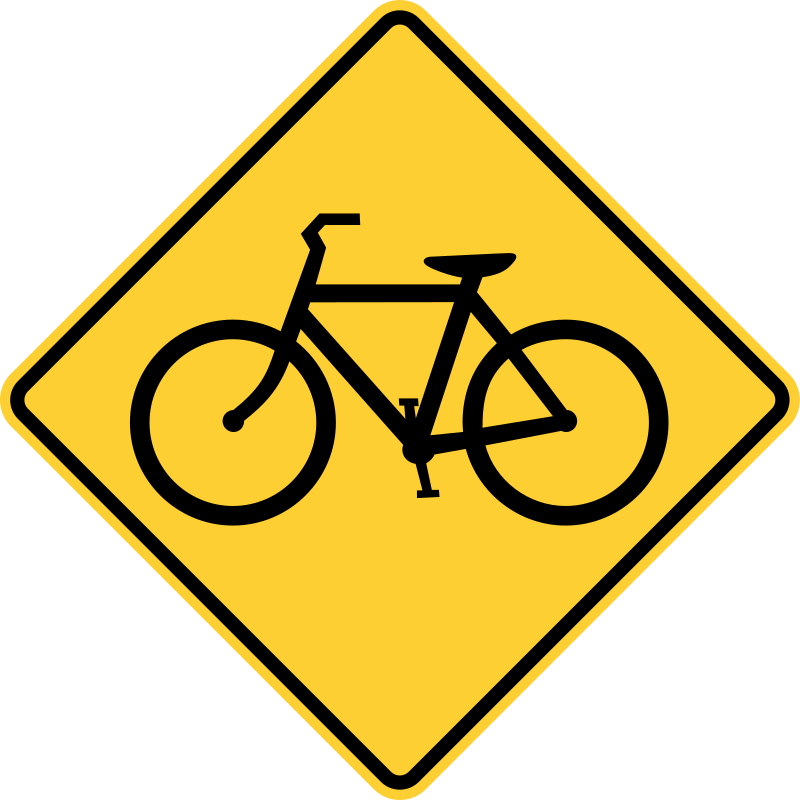 This road sign means:
A
Yield right-of-way to bicycles
B
Bicycles cross or ride beside traffic
C
Yield to motorcyles, but not to bicycles
D
Bicycles have the same rights as other vehicles
Answer Explanation
This traffic sign indicates: Bicycles cross or ride beside traffic. Observing and obeying all roadway signs ensures safe traffic flow and legal driving.
This traffic sign indicates: Bicycles cross or ride beside traffic. Observing and obeying all roadway signs ensures safe traffic flow and legal driving.
Question 6:
A red arrow pointing to the right on a traffic light means you may:
A
turn in that direction after you come to a complete stop.
B
turn in that direction after slowing and checking traffic.
C
not turn in that direction until the light turns green.
Answer Explanation
The correct driving rule is: not turn in that direction until the light turns green. Following standard DMV road rules and practicing defensive driving ensures safety for all road users.
The correct driving rule is: not turn in that direction until the light turns green. Following standard DMV road rules and practicing defensive driving ensures safety for all road users.
Question 7:
Your vehicles braking distance will be much longer:
A
when driving at night.
B
on interstate highways.
C
on wet, icy or gravel roads.
D
All of the above.
Answer Explanation
For safe speed and stopping control: on wet, icy or gravel roads. Adjusting speed to match visibility and road traction prevents loss of steering grip.
For safe speed and stopping control: on wet, icy or gravel roads. Adjusting speed to match visibility and road traction prevents loss of steering grip.
Question 8:
When you back up:
A
always look through the rear window.
B
you should rely only on your rearview mirror.
C
do it as fast as possible.
Answer Explanation
The correct driving rule is: always look through the rear window. Following standard DMV road rules and practicing defensive driving ensures safety for all road users.
The correct driving rule is: always look through the rear window. Following standard DMV road rules and practicing defensive driving ensures safety for all road users.
Question 9:
When passing you should NOT:
A
leave less than 4 feet of space between your vehicle and the vehicle you are passing.
B
signal left to let others know that you will be pulling out.
C
look in your rearview mirrors and glance over your shoulder before pulling out to pass.
D
go far enough past the vehicle you are passing so that you can see the vehicle in your inside rearview mirror.
Answer Explanation
Defensive driving guidelines state that: leave less than 4 feet of space between your vehicle and the vehicle you are passing. Anticipating road hazards and communicating maneuvers keeps traffic predictable and safe.
Defensive driving guidelines state that: leave less than 4 feet of space between your vehicle and the vehicle you are passing. Anticipating road hazards and communicating maneuvers keeps traffic predictable and safe.
Question 10:
Driving slowly in front of traffic in the far left (last) lane on any freeway:
A
cannot result in a traffic citation.
B
saves lives by causing others to slow down, too.
C
can frustrate other drivers and make them angry.
Answer Explanation
Defensive driving guidelines state that: can frustrate other drivers and make them angry. Anticipating road hazards and communicating maneuvers keeps traffic predictable and safe.
Defensive driving guidelines state that: can frustrate other drivers and make them angry. Anticipating road hazards and communicating maneuvers keeps traffic predictable and safe.
Question 11:
Drivers should allow a larger space cushion when stopping:
A
at a stop sign.
B
on an up-hill.
C
at an intersection.
D
at a yield sign.
Answer Explanation
The correct driving rule is: on an up-hill. Following standard DMV road rules and practicing defensive driving ensures safety for all road users.
The correct driving rule is: on an up-hill. Following standard DMV road rules and practicing defensive driving ensures safety for all road users.
Question 12:
Always wear your shoulder strap seat belt:
A
under your right arm.
B
loosely fastened.
C
snug without any slack.
D
behind your back.
Answer Explanation
The correct driving rule is: snug without any slack. Following standard DMV road rules and practicing defensive driving ensures safety for all road users.
The correct driving rule is: snug without any slack. Following standard DMV road rules and practicing defensive driving ensures safety for all road users.
Question 13:
After passing a vehicle, it is safe to return to your lane:
A
when you can no longer see the vehicle over your right shoulder.
B
after about five seconds.
C
when you see the front bumper of the other vehicle in your mirror.
Answer Explanation
Defensive driving guidelines state that: when you see the front bumper of the other vehicle in your mirror. Anticipating road hazards and communicating maneuvers keeps traffic predictable and safe.
Defensive driving guidelines state that: when you see the front bumper of the other vehicle in your mirror. Anticipating road hazards and communicating maneuvers keeps traffic predictable and safe.
Question 14:
If you are following a truck, you should:
A
position your car so the truck driver can see you in his side mirrors.
B
always dim your headlights at night.
C
stay out of its blind spot to the rear.
D
All of the above.
Answer Explanation
Sharing the road safely requires mutual awareness and respect: position your car so the truck driver can see you in his side mirrors; always dim your headlights at night; stay out of its blind spot to the rear. Maintaining safe space cushions protects all roadway users.
Sharing the road safely requires mutual awareness and respect: position your car so the truck driver can see you in his side mirrors; always dim your headlights at night; stay out of its blind spot to the rear. Maintaining safe space cushions protects all roadway users.
Question 15:
A speed restriction sign:
A
shows the recommended speed for a curve/turn.
B
is blue with white lettering.
C
must be ignored in snow conditions.
D
has a diamond shape.
Answer Explanation
For safe speed and stopping control: shows the recommended speed for a curve/turn. Adjusting speed to match visibility and road traction prevents loss of steering grip.
For safe speed and stopping control: shows the recommended speed for a curve/turn. Adjusting speed to match visibility and road traction prevents loss of steering grip.
Question 16:
In urban areas, drivers moving out of a private road need NOT come to a complete stop before entering the roadway if the roadway is clear of traffic.
A
True
B
False
Answer Explanation
The correct driving rule is: False. Following standard DMV road rules and practicing defensive driving ensures safety for all road users.
The correct driving rule is: False. Following standard DMV road rules and practicing defensive driving ensures safety for all road users.
Question 17:
Drivers who are under age 21, stopped and found to have any trace of alcohol in their system while driving will have their driving privileges suspended for:
A
three months.
B
six weeks.
C
three years.
Answer Explanation
Under state DUI and traffic safety laws: three months. Alcohol degrades judgment, slows reaction times, and distorts depth perception.
Under state DUI and traffic safety laws: three months. Alcohol degrades judgment, slows reaction times, and distorts depth perception.
Question 18:
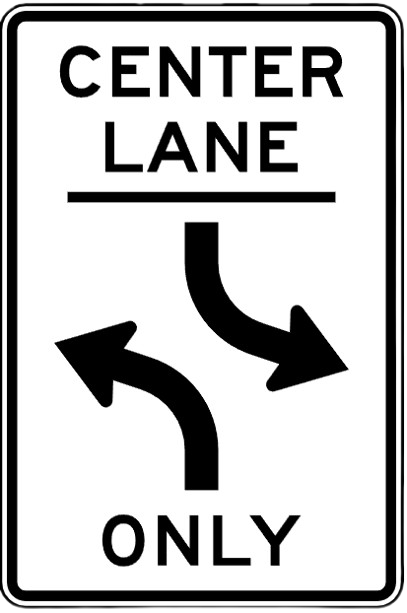 This road sign means:
A
Extra lane to the left
B
Two way left turn
C
Lane shifting
Answer Explanation
This traffic sign indicates: Two way left turn. Observing and obeying all roadway signs ensures safe traffic flow and legal driving.
This traffic sign indicates: Two way left turn. Observing and obeying all roadway signs ensures safe traffic flow and legal driving.
Question 19:
The average reaction distance at 60 MPH is:
A
33 feet
B
158 feet
C
66 feet
D
359 feet
Answer Explanation
For safe speed and stopping control: 66 feet. Adjusting speed to match visibility and road traction prevents loss of steering grip.
For safe speed and stopping control: 66 feet. Adjusting speed to match visibility and road traction prevents loss of steering grip.
Question 20:
 When you see this sign you:
A
should stop and wait for a flagger before crossing the railroad tracks.
B
should always stop at the upcoming railroad crossing.
C
are approaching a railroad crossing; be prepared to stop.
Answer Explanation
Circular signs with an 'X' and 'RR' designate a Railroad Advance Warning: are approaching a railroad crossing; be prepared to stop. Drivers must slow down, look both ways, listen for trains, and be prepared to stop.
Circular signs with an 'X' and 'RR' designate a Railroad Advance Warning: are approaching a railroad crossing; be prepared to stop. Drivers must slow down, look both ways, listen for trains, and be prepared to stop.
Question 21:
Failure to secure children ages 6-18 in a safety belt or child safety seat is punishable by:
A
two points assessed against your driving record.
B
a fine and one point assessed against your driving record.
C
two points plus court costs.
Answer Explanation
The correct driving rule is: a fine and one point assessed against your driving record. Following standard DMV road rules and practicing defensive driving ensures safety for all road users.
The correct driving rule is: a fine and one point assessed against your driving record. Following standard DMV road rules and practicing defensive driving ensures safety for all road users.
Question 22:
Which of the following is NOT true? When you enter an open intersection, you must yield the right-of-way if:
A
the traffic light is red.
B
a vehicle is already in the intersection.
C
you plan to make a left turn and a vehicle is approaching from the opposite direction.
D
All of the above.
Answer Explanation
According to standard right-of-way regulations: the traffic light is red. Yielding appropriately prevents intersection collisions and maintains safe traffic flow.
According to standard right-of-way regulations: the traffic light is red. Yielding appropriately prevents intersection collisions and maintains safe traffic flow.
Question 23:
When two vehicles enter an intersection from different highways at the same time, which vehicle must yield the right-of-way?
A
Either one.
B
The vehicle on the left.
C
The vehicle on the right.
Answer Explanation
According to standard right-of-way regulations: The vehicle on the left. Yielding appropriately prevents intersection collisions and maintains safe traffic flow.
According to standard right-of-way regulations: The vehicle on the left. Yielding appropriately prevents intersection collisions and maintains safe traffic flow.
Question 24:
On roadways, bicyclists are considered:
A
a distraction.
B
defensive drivers.
C
vehicles.
Answer Explanation
The correct driving rule is: vehicles. Following standard DMV road rules and practicing defensive driving ensures safety for all road users.
The correct driving rule is: vehicles. Following standard DMV road rules and practicing defensive driving ensures safety for all road users.
Question 25:
At 50 MPH, a vehicle will travel a minimum of ___ feet before the driver can bring it to a complete stop.
A
158
B
100
C
268
D
55
Answer Explanation
The correct driving rule is: 268. Following standard DMV road rules and practicing defensive driving ensures safety for all road users.
The correct driving rule is: 268. Following standard DMV road rules and practicing defensive driving ensures safety for all road users.
Question 26:
Never make a U-turn from:
A
the lane you’re in.
B
the right lane.
C
the left part of the lane nearest to the centerline of the roadway.
Answer Explanation
According to standard right-of-way regulations: the right lane. Yielding appropriately prevents intersection collisions and maintains safe traffic flow.
According to standard right-of-way regulations: the right lane. Yielding appropriately prevents intersection collisions and maintains safe traffic flow.
Question 27:
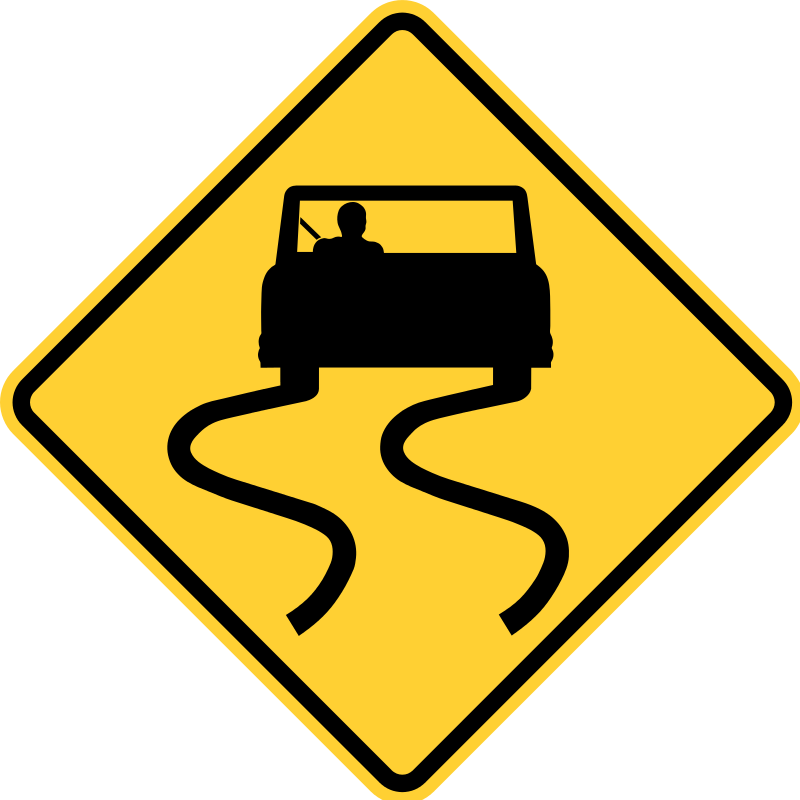 This yellow sign means:
A
there is a sharp curve in the road ahead.
B
the road ahead has many curves.
C
the road ahead may be slippery.
Answer Explanation
This traffic sign indicates: the road ahead may be slippery. Observing and obeying all roadway signs ensures safe traffic flow and legal driving.
This traffic sign indicates: the road ahead may be slippery. Observing and obeying all roadway signs ensures safe traffic flow and legal driving.
Question 28:
Which of the following is NOT true? Your license must be revoked if:
A
you are found guilty of drug possession.
B
you are found guilty of not stopping to give help when the vehicle you are driving is involved in a crash causing death or personal injury.
C
you use tobacco and you are under the age of 14.
D
All of the above.
Answer Explanation
The correct driving rule is: you use tobacco and you are under the age of 14. Following standard DMV road rules and practicing defensive driving ensures safety for all road users.
The correct driving rule is: you use tobacco and you are under the age of 14. Following standard DMV road rules and practicing defensive driving ensures safety for all road users.
Question 29:
When you drive near parks and playgrounds, you should expect children:
A
not to cross unless they are with an adult.
B
to know when it is safe to cross.
C
to stop at the curb before crossing the street.
D
to suddenly run into the street.
Answer Explanation
The correct driving rule is: to suddenly run into the street. Following standard DMV road rules and practicing defensive driving ensures safety for all road users.
The correct driving rule is: to suddenly run into the street. Following standard DMV road rules and practicing defensive driving ensures safety for all road users.
Question 30:
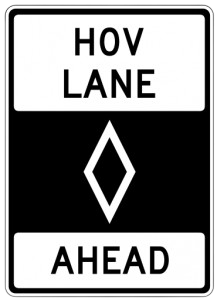 This road sign indicates that:
A
a lane is reserved for certain purposes or certain vehicles.
B
buses and car pools may not travel in the restricted lane.
C
vehicles cannot go straight ahead. Cars must turn either to the right or left.
Answer Explanation
This traffic sign indicates: a lane is reserved for certain purposes or certain vehicles. Observing and obeying all roadway signs ensures safe traffic flow and legal driving.
This traffic sign indicates: a lane is reserved for certain purposes or certain vehicles. Observing and obeying all roadway signs ensures safe traffic flow and legal driving.
Question 31:
Blocking an intersection during rush hour traffic is not permitted:
A
under any circumstances.
B
unless you entered the intersection on a green light.
C
unless you have the right-of-way.
Answer Explanation
According to standard right-of-way regulations: under any circumstances. Yielding appropriately prevents intersection collisions and maintains safe traffic flow.
According to standard right-of-way regulations: under any circumstances. Yielding appropriately prevents intersection collisions and maintains safe traffic flow.
Question 32:
When following another vehicle at night, drivers should use:
A
low beam headlights.
B
emergency flashers.
C
high beam headlights.
Answer Explanation
The correct driving rule is: low beam headlights. Following standard DMV road rules and practicing defensive driving ensures safety for all road users.
The correct driving rule is: low beam headlights. Following standard DMV road rules and practicing defensive driving ensures safety for all road users.
Question 33:
A diamond-shaped sign is a:
A
school zone sign.
B
warning sign.
C
regulatory sign.
Answer Explanation
The correct driving rule is: warning sign. Following standard DMV road rules and practicing defensive driving ensures safety for all road users.
The correct driving rule is: warning sign. Following standard DMV road rules and practicing defensive driving ensures safety for all road users.
Question 34:
Who must wear safety belts in Illinois?
A
All drivers and front seat passengers ages 8 and older.
B
All drivers and passengers (front and back seat) ages 8 and older.
C
All drivers and front seat passengers.
Answer Explanation
The correct driving rule is: All drivers and passengers (front and back seat) ages 8 and older. Following standard DMV road rules and practicing defensive driving ensures safety for all road users.
The correct driving rule is: All drivers and passengers (front and back seat) ages 8 and older. Following standard DMV road rules and practicing defensive driving ensures safety for all road users.
Question 35:
You reach an intersection and you want to turn left. The light is green but oncoming traffic is heavy. You should:
A
wait in the center of the intersection for traffic to clear.
B
go to the next intersection.
C
wait at the crosswalk for traffic to clear.
Answer Explanation
According to standard right-of-way regulations: wait in the center of the intersection for traffic to clear. Yielding appropriately prevents intersection collisions and maintains safe traffic flow.
According to standard right-of-way regulations: wait in the center of the intersection for traffic to clear. Yielding appropriately prevents intersection collisions and maintains safe traffic flow.
Question 36:
 This road sign means:
A
You have the right of way
B
No Passing Zone
C
Yield the right-of-way
Answer Explanation
A triangular Yield sign requires drivers to slow down and give right-of-way to other traffic: yield the right-of-way. Proceed only when there is a safe opening.
A triangular Yield sign requires drivers to slow down and give right-of-way to other traffic: yield the right-of-way. Proceed only when there is a safe opening.
Question 37:
 This sign is a:
A
regulatory sign.
B
warning sign.
C
guide sign.
Answer Explanation
This traffic sign indicates: warning sign. Observing and obeying all roadway signs ensures safe traffic flow and legal driving.
This traffic sign indicates: warning sign. Observing and obeying all roadway signs ensures safe traffic flow and legal driving.
Question 38:
Drivers should not sound their horn when:
A
near blind pedestrians.
B
visibility ahead is limited.
C
they may hit another vehicle.
Answer Explanation
The correct driving rule is: near blind pedestrians. Following standard DMV road rules and practicing defensive driving ensures safety for all road users.
The correct driving rule is: near blind pedestrians. Following standard DMV road rules and practicing defensive driving ensures safety for all road users.
Question 39:
When the road is slippery you should:
A
decrease the following distance.
B
slow and pro-ceed with caution.
C
check your brakes.
Answer Explanation
For safe speed and stopping control: slow and pro-ceed with caution. Adjusting speed to match visibility and road traction prevents loss of steering grip.
For safe speed and stopping control: slow and pro-ceed with caution. Adjusting speed to match visibility and road traction prevents loss of steering grip.
Question 40:
If you arrive at an uncontrolled intersection at the same time as another vehicle:
A
the car on the left has the right-of-way.
B
the car on the right should yield to the car on the left.
C
the car on the left should yield to the car on the right.
D
any vehicle already in the intersection should yield to the car on the right.
Answer Explanation
At an uncontrolled intersection or 4-way stop where vehicles arrive at the same time: the car on the left should yield to the car on the right. The driver on the left must always yield to the driver on the right.
At an uncontrolled intersection or 4-way stop where vehicles arrive at the same time: the car on the left should yield to the car on the right. The driver on the left must always yield to the driver on the right.
Question 41:
When driving in the far right lane of a freeway, you:
A
must give the right-of-way to merging traffic.
B
should expect merging vehicles at on-ramps.
C
must be driving slower than other traffic.
Answer Explanation
Defensive driving guidelines state that: should expect merging vehicles at on-ramps. Anticipating road hazards and communicating maneuvers keeps traffic predictable and safe.
Defensive driving guidelines state that: should expect merging vehicles at on-ramps. Anticipating road hazards and communicating maneuvers keeps traffic predictable and safe.
Question 42:
You have stopped for a train at a railroad crossing. After the train passes, you must:
A
look to see if another train is coming, then cross the tracks if it is safe to do so.
B
watch for vehicles that must stop at railroad crossings (school buses, vehicles carrying hazardous materials, etc.).
C
All of the above.
Answer Explanation
All of the listed points are essential driving requirements: look to see if another train is coming, then cross the tracks if it is safe to do so; watch for vehicles that must stop at railroad crossings (school buses, vehicles carrying hazardous materials, etc.). Practicing each ensures compliance with DMV safety laws.
All of the listed points are essential driving requirements: look to see if another train is coming, then cross the tracks if it is safe to do so; watch for vehicles that must stop at railroad crossings (school buses, vehicles carrying hazardous materials, etc.). Practicing each ensures compliance with DMV safety laws.
Question 43:
To make a right turn, drivers should:
A
turn from the right lane.
B
turn right from any lane.
C
swing to the left before turning right.
Answer Explanation
The correct driving rule is: turn from the right lane. Following standard DMV road rules and practicing defensive driving ensures safety for all road users.
The correct driving rule is: turn from the right lane. Following standard DMV road rules and practicing defensive driving ensures safety for all road users.
Question 44:
You must stop when you see a:
A
flashing red light.
B
yellow arrow.
C
steady yellow light.
D
flashing yellow light.
Answer Explanation
The correct driving rule is: flashing red light. Following standard DMV road rules and practicing defensive driving ensures safety for all road users.
The correct driving rule is: flashing red light. Following standard DMV road rules and practicing defensive driving ensures safety for all road users.
Question 45:
Parking is not allowed within __ feet of a railroad crossing.
A
100
B
200
C
30
D
50
Answer Explanation
Under standard parking and curb regulations: 50. Following parking distance clearances keeps roadways unobstructed and emergency lanes accessible.
Under standard parking and curb regulations: 50. Following parking distance clearances keeps roadways unobstructed and emergency lanes accessible.
Question 46:
The ‘Slower Traffic Keep Right’ sign is used:
A
at most intersections.
B
on multiple lane highways.
C
in school zones.
Answer Explanation
The correct driving rule is: on multiple lane highways. Following standard DMV road rules and practicing defensive driving ensures safety for all road users.
The correct driving rule is: on multiple lane highways. Following standard DMV road rules and practicing defensive driving ensures safety for all road users.
Question 47:
A flashing red light means:
A
The same as a STOP sign.
B
The light will soon change to steady red.
C
Drive with caution.
Answer Explanation
When an emergency vehicle approaches with flashing lights or sirens, you must safely pull over to the right curb and stop completely until it passes.
When an emergency vehicle approaches with flashing lights or sirens, you must safely pull over to the right curb and stop completely until it passes.
Question 48:
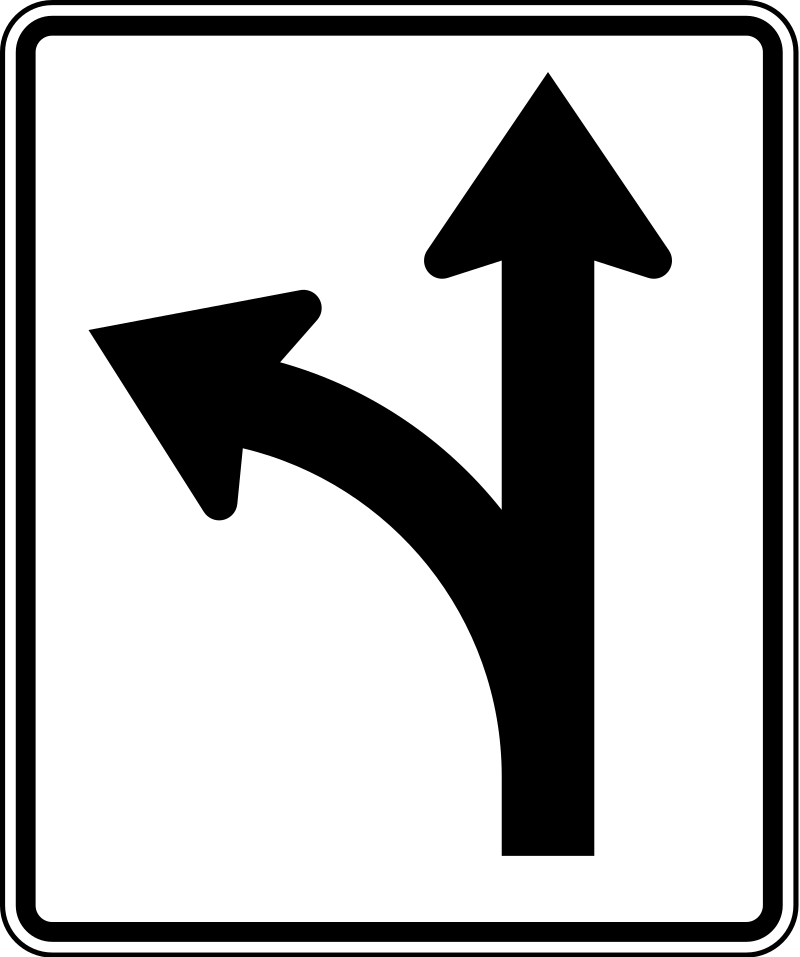 This road sign means:
A
Detour ahead
B
Turn left or go through
C
Divided highway ahead
Answer Explanation
This traffic sign indicates: turn left or go through. Observing and obeying all roadway signs ensures safe traffic flow and legal driving.
This traffic sign indicates: turn left or go through. Observing and obeying all roadway signs ensures safe traffic flow and legal driving.
Question 49:
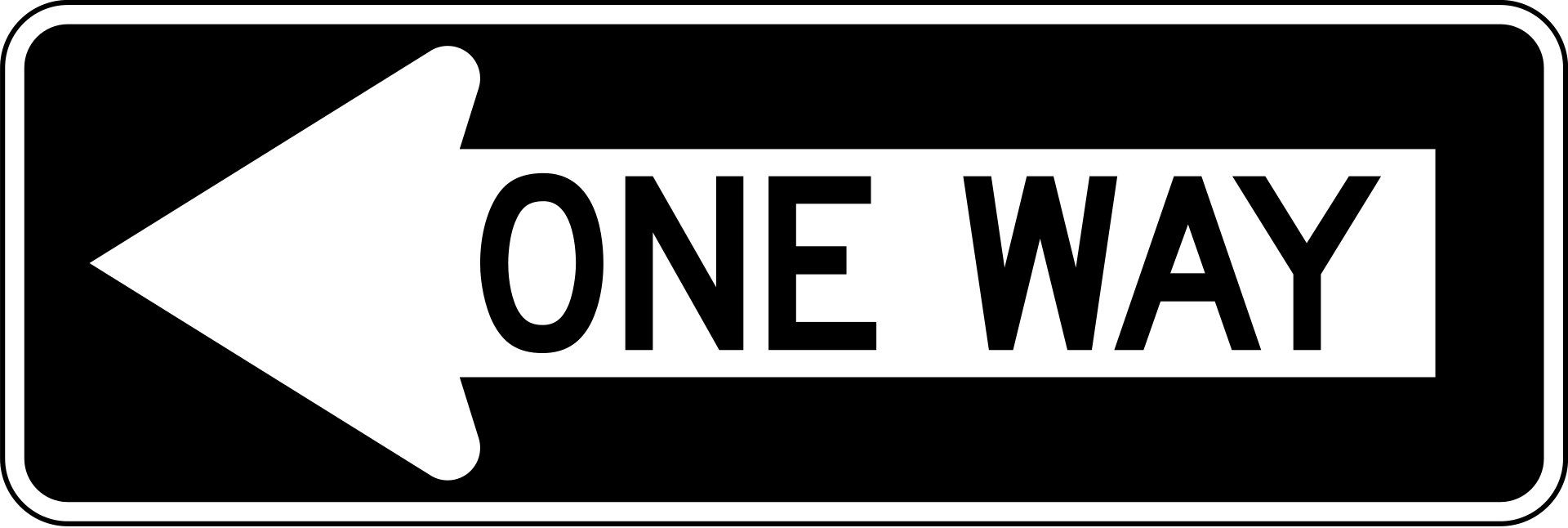 This road sign means:
A
Traffic flows only in the direction of the arrow
B
Turn right or left
C
No right turn
D
Sharp curve ahead
Answer Explanation
This traffic sign indicates: traffic flows only in the direction of the arrow. Observing and obeying all roadway signs ensures safe traffic flow and legal driving.
This traffic sign indicates: traffic flows only in the direction of the arrow. Observing and obeying all roadway signs ensures safe traffic flow and legal driving.
Question 50:
At a T-intersection without signs or signals, which driver must yield the right-of-way?
A
The driver on the through street
B
The driver on the terminating road (road that ends)
C
The driver who arrived first
D
The driver making a right turn
Answer Explanation
Vehicles traveling on the terminating road at a T-intersection must yield to all traffic and pedestrians on the through road.
Vehicles traveling on the terminating road at a T-intersection must yield to all traffic and pedestrians on the through road.