Question 1:
If a vehicle suddenly cuts in front of you creating a hazard, which of these actions should you take first?
A
Sound your horn and step on the brake firmly.
B
Swerve into the lane next to you.
C
Take your foot off the gas pedal.
Answer Explanation
The correct driving rule is: take your foot off the gas pedal. Following standard DMV road rules and practicing defensive driving ensures safety for all road users.
The correct driving rule is: take your foot off the gas pedal. Following standard DMV road rules and practicing defensive driving ensures safety for all road users.
Question 2:
When you make a left turn from a one-way road into a two-way road, you must:
A
enter the two-way road to the left of its center line.
B
make a U-turn into the two-way road.
C
enter the two-way road to the right of its center line.
Answer Explanation
The correct driving rule is: enter the two-way road to the right of its center line. Following standard DMV road rules and practicing defensive driving ensures safety for all road users.
The correct driving rule is: enter the two-way road to the right of its center line. Following standard DMV road rules and practicing defensive driving ensures safety for all road users.
Question 3:
What does a red arrow on a traffic light mean?
A
You may proceed slowly through the intersection.
B
You must stop and then proceed when the way is clear.
C
You may turn in the direction of the arrow.
D
You must stop. Do not go in the direction of the arrow until a green light or arrow light goes on.
Answer Explanation
The correct driving rule is: you must stop. Do not go in the direction of the arrow until a green light or arrow light goes on. Following standard DMV road rules and practicing defensive driving ensures safety for all road users.
The correct driving rule is: you must stop. Do not go in the direction of the arrow until a green light or arrow light goes on. Following standard DMV road rules and practicing defensive driving ensures safety for all road users.
Question 4:
Drivers may legally block an intersection:
A
under no circumstances.
B
only during rush hour traffic.
C
only after entering the intersection on a green light.
Answer Explanation
According to standard right-of-way regulations: under no circumstances. Yielding appropriately prevents intersection collisions and maintains safe traffic flow.
According to standard right-of-way regulations: under no circumstances. Yielding appropriately prevents intersection collisions and maintains safe traffic flow.
Question 5:
When passing you should NOT:
A
leave less than 4 feet of space between your vehicle and the vehicle you are passing.
B
signal left to let others know that you will be pulling out.
C
look in your rearview mirrors and glance over your shoulder before pulling out to pass.
D
go far enough past the vehicle you are passing so that you can see the vehicle in your inside rearview mirror.
Answer Explanation
Defensive driving guidelines state that: leave less than 4 feet of space between your vehicle and the vehicle you are passing. Anticipating road hazards and communicating maneuvers keeps traffic predictable and safe.
Defensive driving guidelines state that: leave less than 4 feet of space between your vehicle and the vehicle you are passing. Anticipating road hazards and communicating maneuvers keeps traffic predictable and safe.
Question 6:
Night driving can be more difficult because:
A
the ratio of motorcyles to cars is much higher at night.
B
vehicle operators tend to drive faster at night.
C
speed limits do not apply at night.
D
visibility is reduced.
Answer Explanation
The correct driving rule is: visibility is reduced. Following standard DMV road rules and practicing defensive driving ensures safety for all road users.
The correct driving rule is: visibility is reduced. Following standard DMV road rules and practicing defensive driving ensures safety for all road users.
Question 7:
 This sign means:
A
The highway ahead is divided into two one-way roadways.
B
Roundabout ahead. Slow down.
C
The divided highway on which drivers are traveling ends ahead.
Answer Explanation
This traffic sign indicates: The highway ahead is divided into two one-way roadways. Observing and obeying all roadway signs ensures safe traffic flow and legal driving.
This traffic sign indicates: The highway ahead is divided into two one-way roadways. Observing and obeying all roadway signs ensures safe traffic flow and legal driving.
Question 8:
It is legal to make a left turn at a red light after stopping if:
A
you are traveling on a two-way street and turning onto a two-way street.
B
you are traveling on a one-way street and turning onto another one-way street.
C
you yield to all other traffic at the intersection before proceeding.
Answer Explanation
When turning left across traffic lanes: you are traveling on a one-way street and turning onto another one-way street. You must yield to all oncoming vehicles and crossing pedestrians before completing the turn.
When turning left across traffic lanes: you are traveling on a one-way street and turning onto another one-way street. You must yield to all oncoming vehicles and crossing pedestrians before completing the turn.
Question 9:
 This sign indicates that:
A
there is a steep hill ahead.
B
trucks are merging from the right
C
there's a side road ahead
Answer Explanation
This traffic sign indicates: there is a steep hill ahead. Observing and obeying all roadway signs ensures safe traffic flow and legal driving.
This traffic sign indicates: there is a steep hill ahead. Observing and obeying all roadway signs ensures safe traffic flow and legal driving.
Question 10:
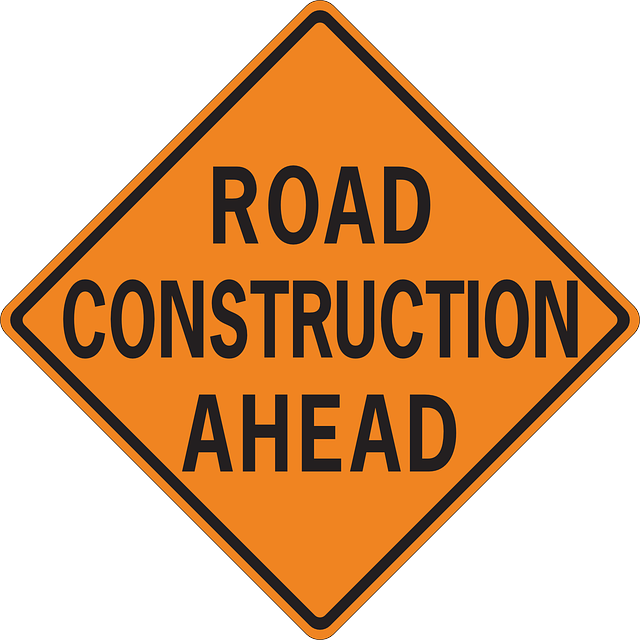 This road sign means:
A
No parking
B
Detour ahead
C
Road construction ahead
D
Stop
Answer Explanation
This traffic sign indicates: Road construction ahead. Observing and obeying all roadway signs ensures safe traffic flow and legal driving.
This traffic sign indicates: Road construction ahead. Observing and obeying all roadway signs ensures safe traffic flow and legal driving.
Question 11:
Road signs that point out scenic areas and parks are:
A
brown and white.
B
black and orange.
C
green and white.
Answer Explanation
The correct driving rule is: brown and white. Following standard DMV road rules and practicing defensive driving ensures safety for all road users.
The correct driving rule is: brown and white. Following standard DMV road rules and practicing defensive driving ensures safety for all road users.
Question 12:
When you approach a railroad crossing without flashing warning signals or crossing gates, you should:
A
always stop.
B
cross the tracks as slowly as possible.
C
yield to all trains at the crossing.
D
speed up to beat the train.
Answer Explanation
The correct driving rule is: yield to all trains at the crossing. Following standard DMV road rules and practicing defensive driving ensures safety for all road users.
The correct driving rule is: yield to all trains at the crossing. Following standard DMV road rules and practicing defensive driving ensures safety for all road users.
Question 13:
If another vehicle is approaching you head-on in your lane, you should _______, sound your horn and brake.
A
steer right
B
None of the other answers is correct.
C
steer left
D
stay in the center of your lane
Answer Explanation
The correct driving rule is: steer right. Following standard DMV road rules and practicing defensive driving ensures safety for all road users.
The correct driving rule is: steer right. Following standard DMV road rules and practicing defensive driving ensures safety for all road users.
Question 14:
 A four-way stop sign means:
A
traffic from all four directions must stop.
B
if two vehicles reach the intersection at the same time, the driver on the left yields to the driver on the right.
C
All of the above.
Answer Explanation
This sign alerts drivers to several mandatory requirements: traffic from all four directions must stop, if two vehicles reach the intersection at the same time, the driver on the left yields to the driver on the right. Obeying all posted traffic control instructions is required by law.
This sign alerts drivers to several mandatory requirements: traffic from all four directions must stop, if two vehicles reach the intersection at the same time, the driver on the left yields to the driver on the right. Obeying all posted traffic control instructions is required by law.
Question 15:
What is the only effective method to reduce your BAC?
A
Eating before or while you drink.
B
Not drinking over a period of time.
C
Drinking coffee.
Answer Explanation
Under state DUI and traffic safety laws: Not drinking over a period of time. Alcohol degrades judgment, slows reaction times, and distorts depth perception.
Under state DUI and traffic safety laws: Not drinking over a period of time. Alcohol degrades judgment, slows reaction times, and distorts depth perception.
Question 16:
When driving in heavy traffic, you should:
A
drive with the flow of traffic.
B
maintain a constant speed.
C
drive faster than the flow of traffic.
D
drive slower than the flow of traffic.
Answer Explanation
The correct driving rule is: drive with the flow of traffic. Following standard DMV road rules and practicing defensive driving ensures safety for all road users.
The correct driving rule is: drive with the flow of traffic. Following standard DMV road rules and practicing defensive driving ensures safety for all road users.
Question 17:
 This sign warns drivers that:
A
they must turn either to the right or left.
B
there is a double curve ahead.
C
there is a winding road ahead.
Answer Explanation
This traffic sign indicates: there is a winding road ahead. Observing and obeying all roadway signs ensures safe traffic flow and legal driving.
This traffic sign indicates: there is a winding road ahead. Observing and obeying all roadway signs ensures safe traffic flow and legal driving.
Question 18:
 This road sign means:
A
You must travel at the speed indicated
B
The maximum speed limit under ideal conditions
C
None of the above
Answer Explanation
This traffic sign indicates: The maximum speed limit under ideal conditions. Observing and obeying all roadway signs ensures safe traffic flow and legal driving.
This traffic sign indicates: The maximum speed limit under ideal conditions. Observing and obeying all roadway signs ensures safe traffic flow and legal driving.
Question 19:
 This road sign means:
A
A road joins from the right
B
All traffic must go straight ahead
C
All traffic must turn right
Answer Explanation
This traffic sign indicates: A road joins from the right. Observing and obeying all roadway signs ensures safe traffic flow and legal driving.
This traffic sign indicates: A road joins from the right. Observing and obeying all roadway signs ensures safe traffic flow and legal driving.
Question 20:
If your car goes into water, you should:
A
wait for water to rush in and let it out in small breaths through your nose.
B
call the fire department immediately.
C
remove yourself before it starts to sink.
Answer Explanation
The correct driving rule is: remove yourself before it starts to sink. Following standard DMV road rules and practicing defensive driving ensures safety for all road users.
The correct driving rule is: remove yourself before it starts to sink. Following standard DMV road rules and practicing defensive driving ensures safety for all road users.
Question 21:
Warning signs normally are:
A
rectangles.
B
triangles.
C
diamond-shaped.
Answer Explanation
The correct driving rule is: diamond-shaped. Following standard DMV road rules and practicing defensive driving ensures safety for all road users.
The correct driving rule is: diamond-shaped. Following standard DMV road rules and practicing defensive driving ensures safety for all road users.
Question 22:
If an aggressive driver cuts you off, you should:
A
sound your horn.
B
look towards the left side of the road.
C
stay calm and get out of the aggressive driver's way.
D
call the police immediately.
Answer Explanation
The correct driving rule is: stay calm and get out of the aggressive driver's way. Following standard DMV road rules and practicing defensive driving ensures safety for all road users.
The correct driving rule is: stay calm and get out of the aggressive driver's way. Following standard DMV road rules and practicing defensive driving ensures safety for all road users.
Question 23:
 This road sign means:
A
Divided highway ahead
B
Two-way traffic ahead
C
Four-lane traffic ahead
Answer Explanation
This traffic sign indicates: Two-way traffic ahead. Observing and obeying all roadway signs ensures safe traffic flow and legal driving.
This traffic sign indicates: Two-way traffic ahead. Observing and obeying all roadway signs ensures safe traffic flow and legal driving.
Question 24:
To drive defensively, you must:
A
avoid scanning the road ahead.
B
keep one hand on the steering wheel.
C
keep your eyes moving.
Answer Explanation
The correct driving rule is: keep your eyes moving. Following standard DMV road rules and practicing defensive driving ensures safety for all road users.
The correct driving rule is: keep your eyes moving. Following standard DMV road rules and practicing defensive driving ensures safety for all road users.
Question 25:
If you miss your exit from an interstate expressway, you should:
A
go to the next exit and come back to the exit you missed.
B
use the right turn signal, check your mirrors and move to the right.
C
pull over to the right and back up with caution until you reach the exit ramp.
D
make a quick U-turn from your lane of travel.
Answer Explanation
Defensive driving guidelines state that: go to the next exit and come back to the exit you missed. Anticipating road hazards and communicating maneuvers keeps traffic predictable and safe.
Defensive driving guidelines state that: go to the next exit and come back to the exit you missed. Anticipating road hazards and communicating maneuvers keeps traffic predictable and safe.