Question 1:
 This sign means:
A
The road will curve to the right.
B
Left turns are not allowed at the intersection.
C
Do not turn right.
This traffic sign indicates: The road will curve to the right. Observing and obeying all roadway signs ensures safe traffic flow and legal driving.
Question 2:
The effect that alcohol has on your judgment:
A
is greater if you were drinking hard liquor.
B
is less if you were only drinking wine.
C
is less if you were only drinking beer.
D
depends on the amount of alcohol in your blood.
Under state DUI and traffic safety laws: depends on the amount of alcohol in your blood. Alcohol degrades judgment, slows reaction times, and distorts depth perception.
Question 3:
 What does this sign indicate?
A
The highway ahead is divided into two one-way roadways.
B
Winding road ahead. Drive with caution.
C
Drivers will soon be on a roadway with two-way traffic.
This traffic sign indicates: drivers will soon be on a roadway with two-way traffic. Observing and obeying all roadway signs ensures safe traffic flow and legal driving.
Question 4:
You are driving on a four-lane divided highway, two vehicles are driving side by side ahead of you, and you are in a hurry. You should:
A
drive closely behind the vehicles ahead changing lanes frequently.
B
drive in either lane with at least a two-second time interval behind the vehicle ahead.
C
drive closely behind the vehicle in the left lane and flash your headlights.
D
drive closely behind the vehicle in the right lane.
Defensive driving guidelines state that: drive in either lane with at least a two-second time interval behind the vehicle ahead. Anticipating road hazards and communicating maneuvers keeps traffic predictable and safe.
Question 5:
Following another vehicle too closely is known as:
A
speedgating.
B
closetailing.
C
tailgating.
The correct driving rule is: tailgating. Following standard DMV road rules and practicing defensive driving ensures safety for all road users.
Question 6:
BAC is expressed in:
A
percentage of alcohol to blood.
B
percentage of blood to alcohol.
C
ounces of alcohol in your blood.
Under state DUI and traffic safety laws: percentage of alcohol to blood. Alcohol degrades judgment, slows reaction times, and distorts depth perception.
Question 7:
Which signs have black letters on a white background?
A
Warning signs (diamond)
B
Regulatory signs (vertical rectangle)
C
Guide signs (horizontal rectangle)
The correct driving rule is: Regulatory signs (vertical rectangle). Following standard DMV road rules and practicing defensive driving ensures safety for all road users.
Question 8:
When following a motorcycle, drivers do not need to allow as much distance as when following a car.
A
True
B
False
Motorcycles can stop rapidly and are easily hidden in vehicle blind spots: False. Always allow an increased following distance of at least 3 to 4 seconds.
Question 9:
 This sign warns that:
A
traffic must merge left.
B
the bridge ahead is wide enough for only one vehicle at a time.
C
traffic must merge right.
This traffic sign indicates: traffic must merge left. Observing and obeying all roadway signs ensures safe traffic flow and legal driving.
Question 10:
What is the first thing you should do if your wheels move off the pavement?
A
Pull the steering wheel back.
B
Pull over to the right and sound your horn to warn the other drivers.
C
Ease your foot off the gas pedal and brake gently.
The correct driving rule is: Ease your foot off the gas pedal and brake gently. Following standard DMV road rules and practicing defensive driving ensures safety for all road users.
Question 11:
If a bus has signaled and is pulling back onto the roadway, you must:
A
yield.
B
honk to let them know you’re there.
C
move to the left lane.
D
speed up to pass.
The correct driving rule is: yield. Following standard DMV road rules and practicing defensive driving ensures safety for all road users.
Question 12:
When passing a motorcycle you must:
A
give the motorcyclist the right hand part of his traffic lane.
B
give the motorcyclist the entire traffic lane as if the motorcycle was a car.
C
sound your horn to alert the motorcyclist.
Motorcycles can stop rapidly and are easily hidden in vehicle blind spots: give the motorcyclist the entire traffic lane as if the motorcycle was a car. Always allow an increased following distance of at least 3 to 4 seconds.
Question 13:
Just like alcohol and other drugs, drowsiness can:
A
help you to be a better driver.
B
make you feel better.
C
impair your judgment.
Under state DUI and traffic safety laws: impair your judgment. Alcohol degrades judgment, slows reaction times, and distorts depth perception.
Question 14:
When you come to an intersection with a flashing red light, you must:
A
stop at the intersection, then proceed when safe and observe the right-of-way rules.
B
slow down and drive carefully through the intersection.
C
stop at the intersection and wait for a flashing green light.
D
stop only if cars are approaching the intersection.
When an emergency vehicle approaches with flashing lights or sirens, you must safely pull over to the right curb and stop completely until it passes.
Question 15:
 This sign warns drivers that:
A
the highway ahead is divided into two one-way roadways. Drivers should keep to the right.
B
there is a winding road ahead.
C
there is a double curve ahead.
This traffic sign indicates: there is a double curve ahead. Observing and obeying all roadway signs ensures safe traffic flow and legal driving.
Question 16:
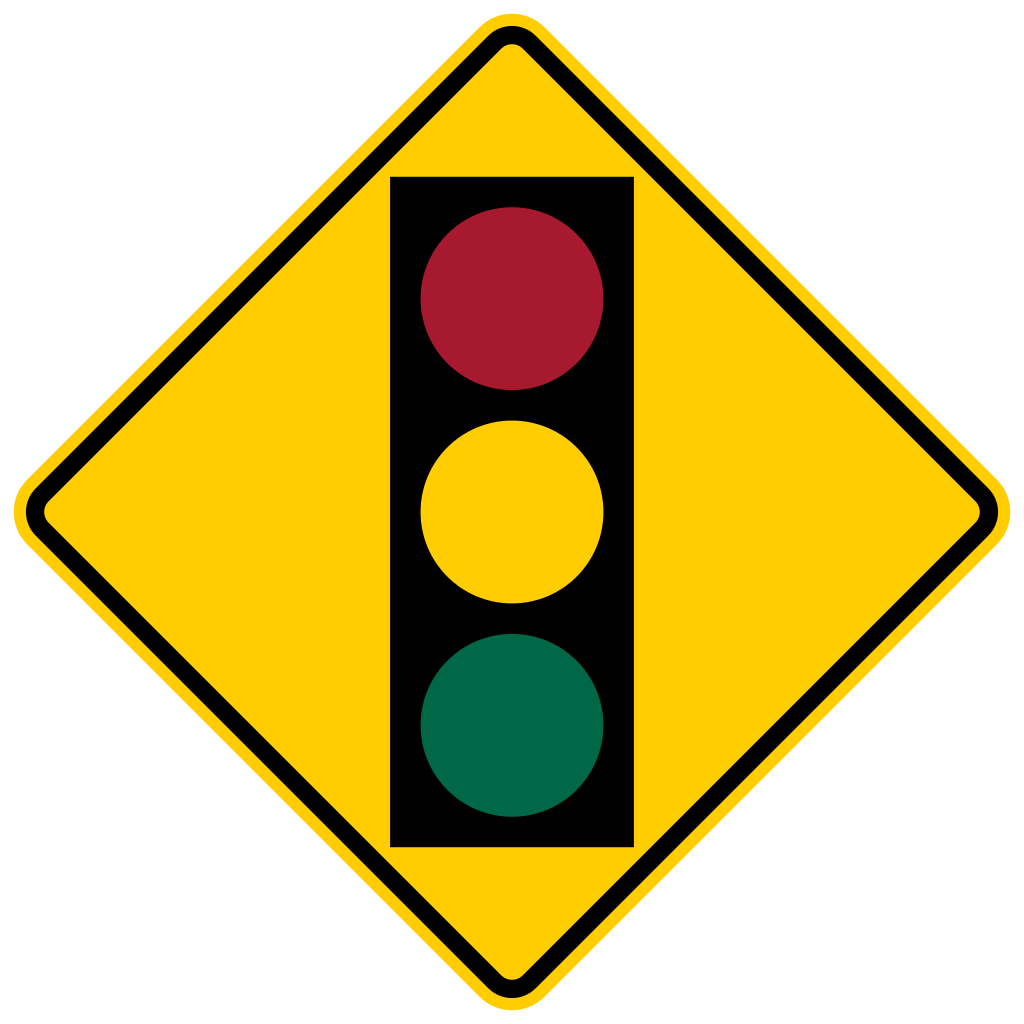 This road sign means:
A
Uncontrolled intersection ahead
B
Don’t park next to the traffic signal
C
The traffic signal ahead is out of order
D
Traffic signals ahead
This traffic sign indicates: traffic signals ahead. Observing and obeying all roadway signs ensures safe traffic flow and legal driving.
Question 17:
You may drive faster than the posted speed limit:
A
when passing another vehicle, as long as it is safe to do so.
B
when your lane is empty.
C
Under no circumstances.
For safe speed and stopping control: Under no circumstances. Adjusting speed to match visibility and road traction prevents loss of steering grip.
Question 18:
If a vehicle is coming towards you at night with its high beams on, making it hard to see the road ahead, you should:
A
look straight ahead towards the middle of the lane.
B
look ahead towards the left edge of your lane.
C
look ahead towards the right edge of your lane.
The correct driving rule is: look ahead towards the right edge of your lane. Following standard DMV road rules and practicing defensive driving ensures safety for all road users.
Question 19:
If your brakes are wet, you can dry them by:
A
riding the pedal lightly.
B
pull over to the right and wait until it stops raining.
C
having them checked by a mechanic.
The correct driving rule is: riding the pedal lightly. Following standard DMV road rules and practicing defensive driving ensures safety for all road users.
Question 20:
 This is the shape and color of a ________ sign.
A
yield
B
stop
C
do not enter
The correct driving rule is: yield. Following standard DMV road rules and practicing defensive driving ensures safety for all road users.
Question 21:
To avoid panic stops, you should:
A
scan the road ahead for hazards.
B
drive with your window down.
C
pump your brakes to make sure they work.
The correct driving rule is: scan the road ahead for hazards. Following standard DMV road rules and practicing defensive driving ensures safety for all road users.
Question 22:
 This road sign means:
A
Lane shifting
B
Merging traffic
C
Do not block intersection
This traffic sign indicates: Merging traffic. Observing and obeying all roadway signs ensures safe traffic flow and legal driving.
Question 23:
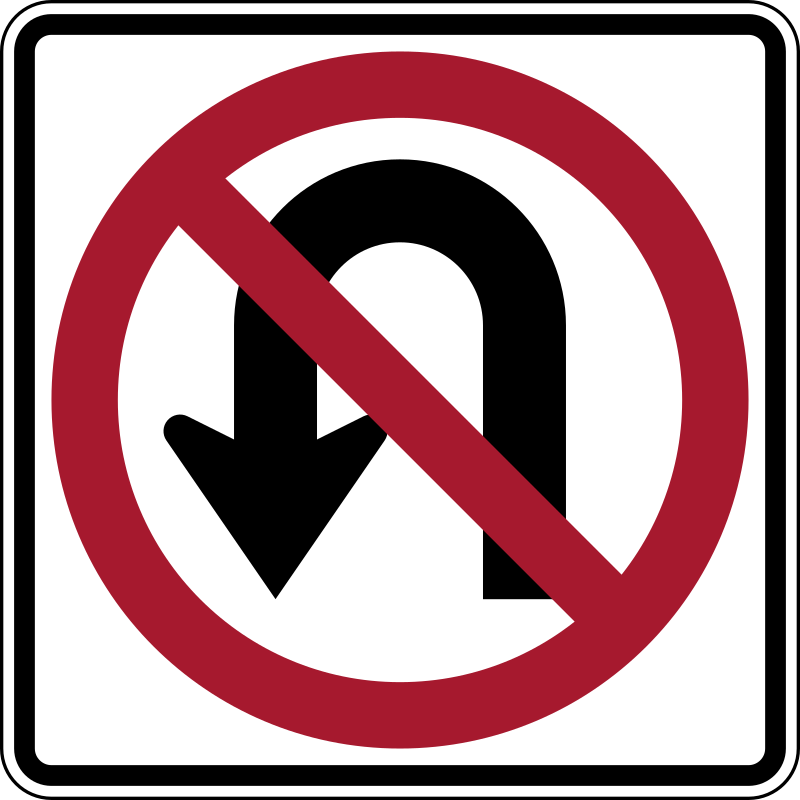 This road sign means:
A
No left turn
B
No U-turn
C
Detour ahead
This traffic sign indicates: No U-turn. Observing and obeying all roadway signs ensures safe traffic flow and legal driving.
Question 24:
A motorist arriving at the intersection must yield the right of way to motorists who arrived before him.
A
True
B
False
According to standard right-of-way regulations: True. Yielding appropriately prevents intersection collisions and maintains safe traffic flow.
Question 25:
 The octagonal shape is used:
A
for stop signs and railroad advance warning signs.
B
exclusively for stop signs.
C
to warn drivers of existing or possible hazards on roadways.
An octagonal Stop sign requires a full and complete stop before the stop line or crosswalk: exclusively for stop signs. Proceed only after yielding to all cross traffic and pedestrians.