Question 1:
Double solid lines on the roadway mean:
A
you cannot pass.
B
you can not go across the lines except to turn left to enter or leave the highway.
C
All of the above.
All of the listed points are essential driving requirements: you cannot pass; you can not go across the lines except to turn left to enter or leave the highway. Practicing each ensures compliance with DMV safety laws.
Question 2:
 This road sign means:
A
Railroad Crossing
B
One Way
C
Limited parking
Circular signs with an 'X' and 'RR' designate a Railroad Advance Warning: Railroad Crossing. Drivers must slow down, look both ways, listen for trains, and be prepared to stop.
Question 3:
A red traffic sign means?
A
Construction warning.
B
Railroad crossing.
C
Stop.
This traffic sign indicates: stop. Observing and obeying all roadway signs ensures safe traffic flow and legal driving.
Question 4:
 This sign means:
A
You may make a U-turn.
B
Hairpin corner ahead.
C
You must make a U-turn.
This traffic sign indicates: you must make a U-turn. Observing and obeying all roadway signs ensures safe traffic flow and legal driving.
Question 5:
Left turns on a red light are allowed:
A
from a one-way street into a one-way street.
B
Never.
C
at intersections, after stopping, if the way is clear.
When turning left across traffic lanes: from a one-way street into a one-way street. You must yield to all oncoming vehicles and crossing pedestrians before completing the turn.
Question 6:
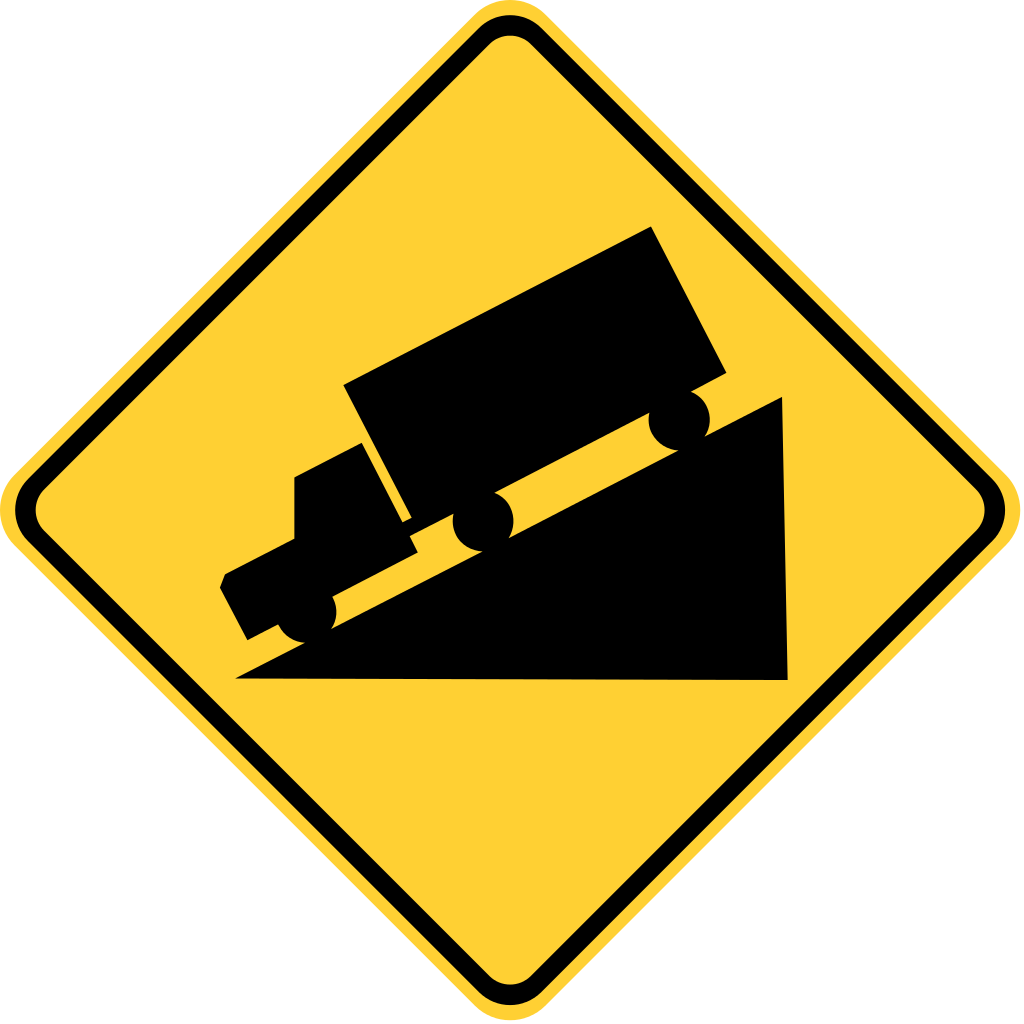 This road sign means:
A
Truck stop ahead
B
No trucks allowed
C
Hill or downgrade up ahead
This traffic sign indicates: Hill or downgrade up ahead. Observing and obeying all roadway signs ensures safe traffic flow and legal driving.
Question 7:
When you prepare to make a left turn from a one-way road into a two-way road, you must:
A
enter the two-way road to the left of its center line.
B
approach the turn in the right lane or from the right side of a single lane.
C
approach the turn in the left lane or from the left side of a single lane.
The correct driving rule is: approach the turn in the left lane or from the left side of a single lane. Following standard DMV road rules and practicing defensive driving ensures safety for all road users.
Question 8:
You face a green light, but traffic on the other side of the intersection does not allow you to travel all the way through the intersection. What must you do?
A
Enter the intersection and wait until traffic ahead clears.
B
Wait for the next green light.
C
Wait until traffic ahead clears, so you do not block the intersection.
According to standard right-of-way regulations: wait until traffic ahead clears, so you do not block the intersection. Yielding appropriately prevents intersection collisions and maintains safe traffic flow.
Question 9:
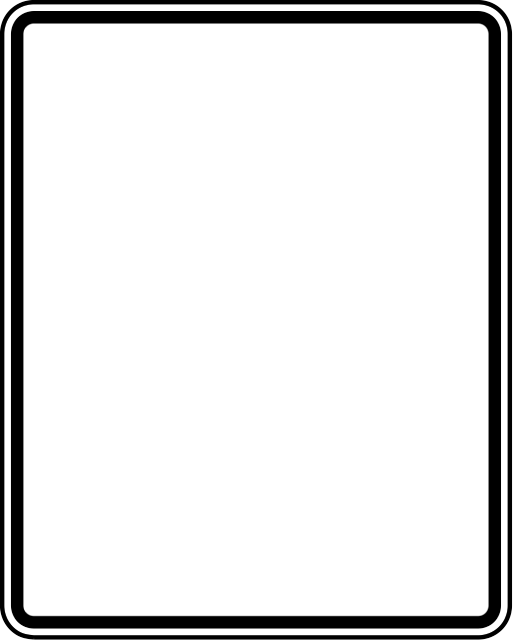 Vertical rectangles tell drivers:
A
the law.
B
what is not allowed.
C
the direction they should travel.
The correct driving rule is: the law. Following standard DMV road rules and practicing defensive driving ensures safety for all road users.
Question 10:
You want to turn left at an intersection ahead. A car reaches the intersection from the opposite direction and moves straight ahead. You:
A
can turn left. You have the right of way.
B
must wait for the car to go through before you turn.
C
may not enter the intersection to prepare for your left turn if the light is green.
According to standard right-of-way regulations: must wait for the car to go through before you turn. Yielding appropriately prevents intersection collisions and maintains safe traffic flow.
Question 11:
This road sign means:
A
Do not pass trucks
B
Truck must back up
C
Steep downgrade ahead
This traffic sign indicates: Steep downgrade ahead. Observing and obeying all roadway signs ensures safe traffic flow and legal driving.
Question 12:
On slippery roads, drivers should:
A
slow down.
B
increase their speed to avoid hydroplaning.
C
not drive faster than 25 MPH.
D
go faster.
For safe speed and stopping control: slow down. Adjusting speed to match visibility and road traction prevents loss of steering grip.
Question 13:
If a bus has signaled and is pulling back onto the roadway, you must:
A
yield.
B
honk to let them know you’re there.
C
move to the left lane.
D
speed up to pass.
The correct driving rule is: yield. Following standard DMV road rules and practicing defensive driving ensures safety for all road users.
Question 14:
When driving in icy or snowy conditions, to avoid crashes drivers should:
A
get off the highway as quickly as possible.
B
reduce speed and increase following distance.
C
add extra weight to the vehicle to improve traction.
D
engage 4 wheel drive on the vehicle.
The correct driving rule is: reduce speed and increase following distance. Following standard DMV road rules and practicing defensive driving ensures safety for all road users.
Question 15:
When parking downhill next to a curb, you should turn your front wheels:
A
straight.
B
away from the curb.
C
towards the curb.
D
None of the above.
When parking downhill (with or without a curb): towards the curb. Turn front wheels toward the curb or road edge (right) so the vehicle rolls safely off the roadway if it slips.
Question 16:
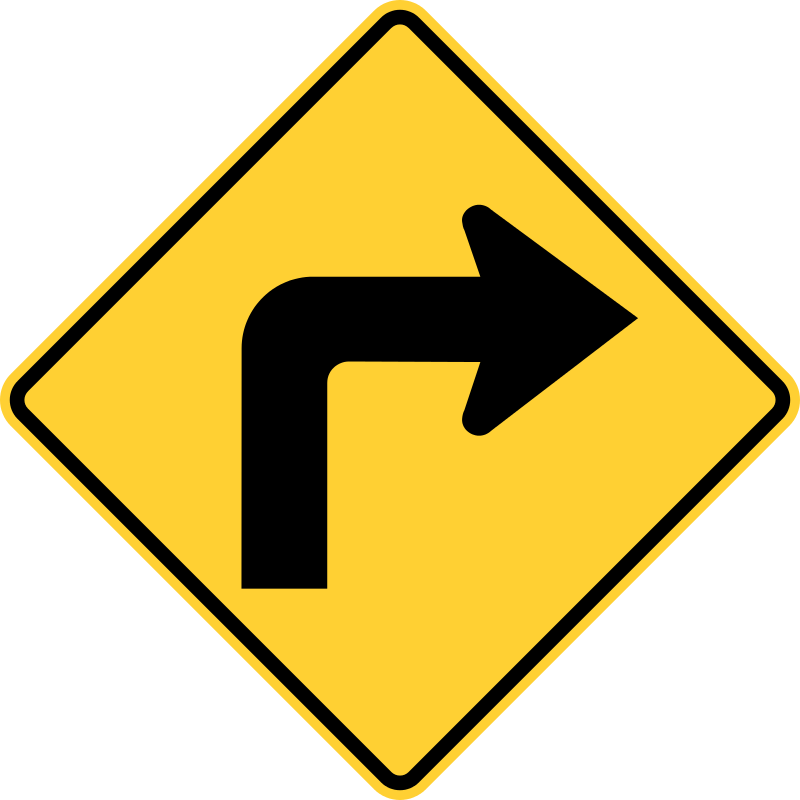 This sign warns drivers that:
A
the road will make a sharp turn to the right.
B
right turns are not allowed.
C
another road enters the highway from the direction shown.
This traffic sign indicates: the road will make a sharp turn to the right. Observing and obeying all roadway signs ensures safe traffic flow and legal driving.
Question 17:
Worn tires:
A
may cause you to hydroplane even with very little water on the road.
B
can increase your stopping distance.
C
can make turning more difficult.
D
All of the above.
All of the listed points are essential driving requirements: may cause you to hydroplane even with very little water on the road; can increase your stopping distance; can make turning more difficult. Practicing each ensures compliance with DMV safety laws.
Question 18:
What happens if two vehicles reach at the same time an intersection with four-way stop signs?
A
The driver on the right yields to the driver on the left.
B
The driver on the left yields to the driver on the right.
C
The first vehicle to reach the intersection must yield.
At an uncontrolled intersection or 4-way stop where vehicles arrive at the same time: The driver on the left yields to the driver on the right. The driver on the left must always yield to the driver on the right.
Question 19:
Arrows on the roadway:
A
show which lanes you must use.
B
indicate reserved lanes.
C
indicate HOV lanes.
The correct driving rule is: show which lanes you must use. Following standard DMV road rules and practicing defensive driving ensures safety for all road users.
Question 20:
The yield sign is ___ and white, with ___ letters.
A
yellow; black
B
red; red
C
red; white
The correct driving rule is: red; red. Following standard DMV road rules and practicing defensive driving ensures safety for all road users.
Question 21:
If your front wheels start to skid, the first thing you should do is:
A
Take your foot off the gas pedal and shift to neutral.
B
Immediately turn in the direction you want to go.
C
Speed up, pump your brakes and steer in the direction the vehicle is trying to go.
The correct driving rule is: take your foot off the gas pedal and shift to neutral. Following standard DMV road rules and practicing defensive driving ensures safety for all road users.
Question 22:
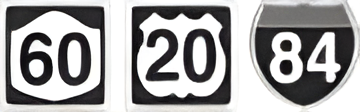 These are:
A
route signs.
B
miles-left signs.
C
speed limit signs.
The correct driving rule is: route signs. Following standard DMV road rules and practicing defensive driving ensures safety for all road users.
Question 23:
Which of the following should NOT be done when driving near pedestrians:
A
Drive on a sidewalk.
B
Pass a vehicle that has stopped at a crosswalk.
C
All of the above.
All of the listed points are essential driving requirements: Drive on a sidewalk; Pass a vehicle that has stopped at a crosswalk. Practicing each ensures compliance with DMV safety laws.
Question 24:
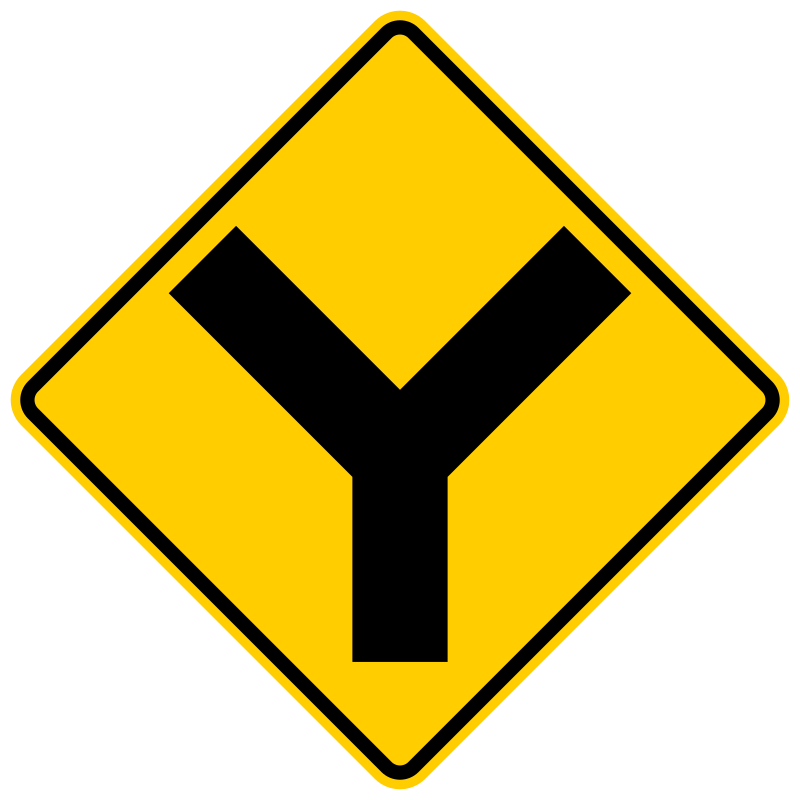 This road sign means:
A
The road ends ahead
B
A four-way intersection is ahead
C
“Y” intersection ahead
D
A road joins from the right
This traffic sign indicates: “Y” intersection ahead. Observing and obeying all roadway signs ensures safe traffic flow and legal driving.
Question 25:
An octagonal sign means that drivers must:
A
respect the posted speed limit.
B
come to a complete stop at the marked stop line.
C
be aware possible hazards ahead.
An octagonal Stop sign requires a full and complete stop before the stop line or crosswalk: come to a complete stop at the marked stop line. Proceed only after yielding to all cross traffic and pedestrians.