Question 1:
When following motorcycles, drivers should:
A
reduce the minimum following distance.
B
try to pass them as they have different braking capabilities than other motor vehicles.
C
keep more space in front of their vehicle.
Answer Explanation
The correct driving rule is: keep more space in front of their vehicle. Following standard DMV road rules and practicing defensive driving ensures safety for all road users.
The correct driving rule is: keep more space in front of their vehicle. Following standard DMV road rules and practicing defensive driving ensures safety for all road users.
Question 2:
A yellow arrow means:
A
Do not go in the direction of the arrow.
B
If you intend to turn in the direction of the arrow, be prepared to stop.
C
The same as a steady yellow light.
Answer Explanation
The correct driving rule is: If you intend to turn in the direction of the arrow, be prepared to stop. Following standard DMV road rules and practicing defensive driving ensures safety for all road users.
The correct driving rule is: If you intend to turn in the direction of the arrow, be prepared to stop. Following standard DMV road rules and practicing defensive driving ensures safety for all road users.
Question 3:
When a traffic signal light turns green, you should:
A
back up slowly.
B
yield the right-of-way to pedestrians.
C
yield the right-of-way to larger vehicles.
D
wait 5 seconds before proceeding.
Answer Explanation
A triangular Yield sign requires drivers to slow down and give right-of-way to other traffic: yield the right-of-way to pedestrians. Proceed only when there is a safe opening.
A triangular Yield sign requires drivers to slow down and give right-of-way to other traffic: yield the right-of-way to pedestrians. Proceed only when there is a safe opening.
Question 4:
To avoid the risk of being involved in an alcohol-related crash, you should:
A
decide before you start drinking that you are not going to drive.
B
say 'No, thanks' if someone offers you alcohol.
C
call a taxi if you've been drinking.
D
All of the above.
Answer Explanation
Alcohol and impairing substances degrade all critical driving functions: decide before you start drinking that you are not going to drive; say 'No, thanks' if someone offers you alcohol; call a taxi if you've been drinking. Driving while impaired carries severe criminal and safety penalties.
Alcohol and impairing substances degrade all critical driving functions: decide before you start drinking that you are not going to drive; say 'No, thanks' if someone offers you alcohol; call a taxi if you've been drinking. Driving while impaired carries severe criminal and safety penalties.
Question 5:
When driving in heavy rain, drivers should use:
A
parking lights.
B
low beam headlights.
C
high beam headlights.
Answer Explanation
For safe speed and stopping control: low beam headlights. Adjusting speed to match visibility and road traction prevents loss of steering grip.
For safe speed and stopping control: low beam headlights. Adjusting speed to match visibility and road traction prevents loss of steering grip.
Question 6:
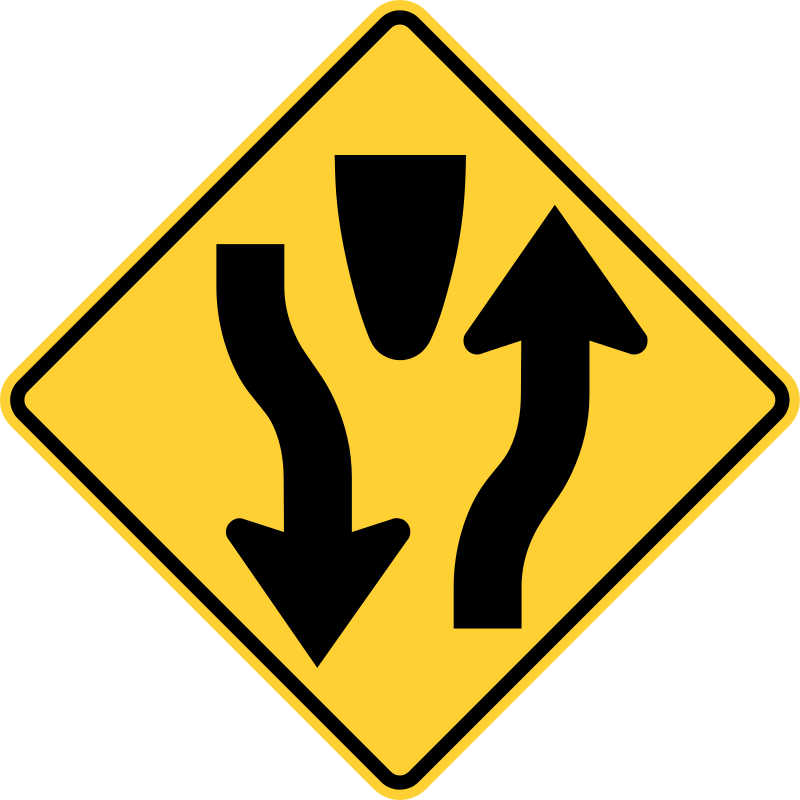 This road sign means:
A
Divided highway ahead - stay to the right
B
Do not enter
C
Do not pass
Answer Explanation
This traffic sign indicates: Divided highway ahead - stay to the right. Observing and obeying all roadway signs ensures safe traffic flow and legal driving.
This traffic sign indicates: Divided highway ahead - stay to the right. Observing and obeying all roadway signs ensures safe traffic flow and legal driving.
Question 7:
If you begin to feel drowsy while driving, you should:
A
open your window.
B
get some coffee.
C
get an energy drink.
D
stop driving.
Answer Explanation
Under state DUI and traffic safety laws: stop driving. Alcohol degrades judgment, slows reaction times, and distorts depth perception.
Under state DUI and traffic safety laws: stop driving. Alcohol degrades judgment, slows reaction times, and distorts depth perception.
Question 8:
What is the first thing you should do if your wheels move off the pavement?
A
Pull the steering wheel back.
B
Pull over to the right and sound your horn to warn the other drivers.
C
Ease your foot off the gas pedal and brake gently.
Answer Explanation
The correct driving rule is: Ease your foot off the gas pedal and brake gently. Following standard DMV road rules and practicing defensive driving ensures safety for all road users.
The correct driving rule is: Ease your foot off the gas pedal and brake gently. Following standard DMV road rules and practicing defensive driving ensures safety for all road users.
Question 9:
What is the first thing to do when you make a three-point turn?
A
Signal with your left turn signal, then check carefully for traffic coming toward you.
B
Signal with your right turn signal, then pull over to the right and stop.
C
Turn left, go across the road so you come to a stop while you face the edge of the road.
Answer Explanation
The correct driving rule is: signal with your right turn signal, then pull over to the right and stop. Following standard DMV road rules and practicing defensive driving ensures safety for all road users.
The correct driving rule is: signal with your right turn signal, then pull over to the right and stop. Following standard DMV road rules and practicing defensive driving ensures safety for all road users.
Question 10:
Which of the following is a defensive driving skill/technique?
A
Maintain the correct speed.
B
Do not drive if you are very weary.
C
All of the above.
Answer Explanation
All of the listed points are essential driving requirements: Maintain the correct speed; Do not drive if you are very weary. Practicing each ensures compliance with DMV safety laws.
All of the listed points are essential driving requirements: Maintain the correct speed; Do not drive if you are very weary. Practicing each ensures compliance with DMV safety laws.
Question 11:
What is the meaning of orange traffic signs?
A
Yield.
B
Warning of school, pedestrian, and bicycling activity.
C
Construction and maintenance warning.
Answer Explanation
The correct driving rule is: Construction and maintenance warning. Following standard DMV road rules and practicing defensive driving ensures safety for all road users.
The correct driving rule is: Construction and maintenance warning. Following standard DMV road rules and practicing defensive driving ensures safety for all road users.
Question 12:
While driving, it is important to slow down:
A
when the road is wet.
B
on narrow roads.
C
at intersections.
D
All of the above.
Answer Explanation
All of the listed points are essential driving requirements: when the road is wet; on narrow roads; at intersections. Practicing each ensures compliance with DMV safety laws.
All of the listed points are essential driving requirements: when the road is wet; on narrow roads; at intersections. Practicing each ensures compliance with DMV safety laws.
Question 13:
Green and white signs:
A
give information about directions and distances.
B
are mainly used at intersections and driveways.
C
warn drivers of unexpected road conditions.
Answer Explanation
The correct driving rule is: give information about directions and distances. Following standard DMV road rules and practicing defensive driving ensures safety for all road users.
The correct driving rule is: give information about directions and distances. Following standard DMV road rules and practicing defensive driving ensures safety for all road users.
Question 14:
You are stopped at a stop sign and you are going to go straight through the intersection. A car on the cross road has stopped at a stop sign on your right and is going to go straight. Who has the right-of-way?
A
Whoever enters the intersection first.
B
You.
C
The car on your right.
Answer Explanation
According to standard right-of-way regulations: The car on your right. Yielding appropriately prevents intersection collisions and maintains safe traffic flow.
According to standard right-of-way regulations: The car on your right. Yielding appropriately prevents intersection collisions and maintains safe traffic flow.
Question 15:
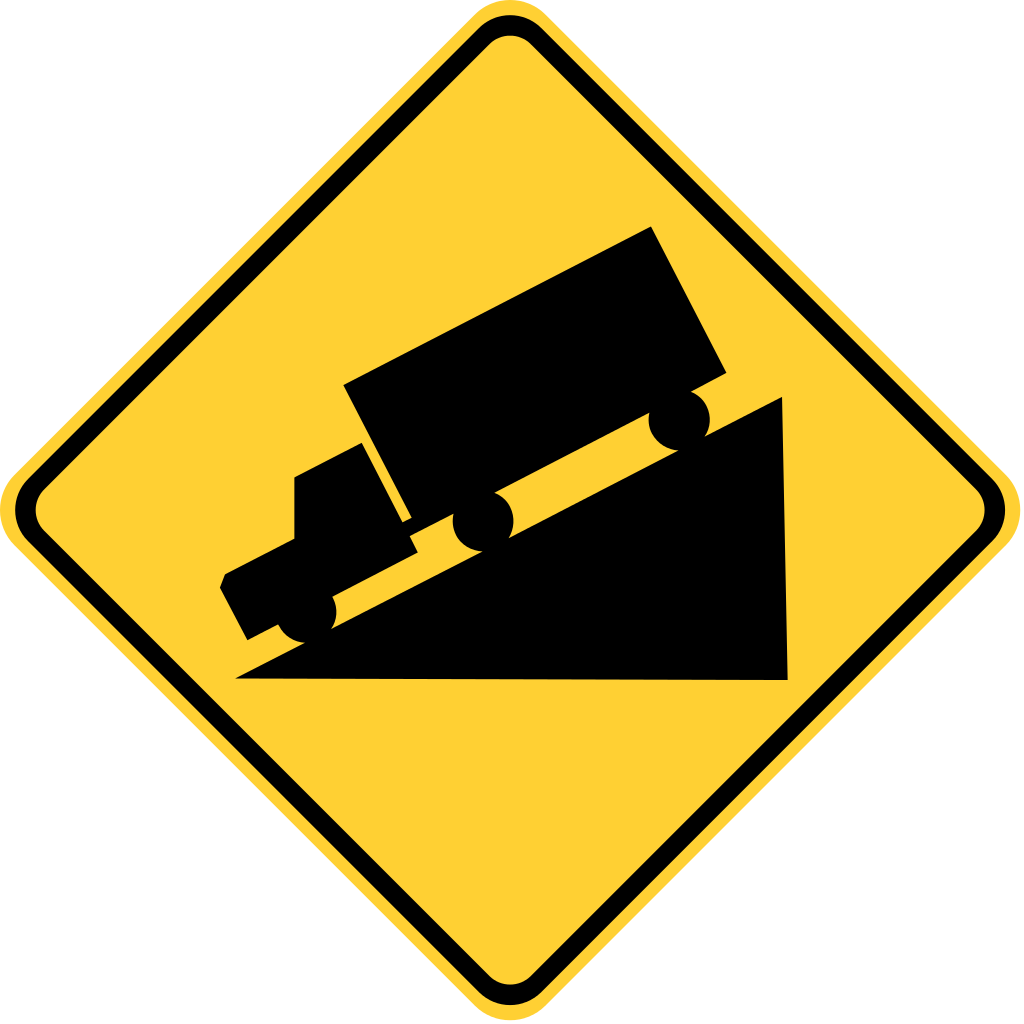 This sign warns of a ________ ahead.
A
hill
B
no passing zone
C
soft shoulder
Answer Explanation
This traffic sign indicates: hill. Observing and obeying all roadway signs ensures safe traffic flow and legal driving.
This traffic sign indicates: hill. Observing and obeying all roadway signs ensures safe traffic flow and legal driving.
Question 16:
A steady yellow light means that a ______ light will soon appear.
A
steady green
B
steady red
C
flashing yellow
D
flashing green
Answer Explanation
According to standard right-of-way regulations: steady red. Yielding appropriately prevents intersection collisions and maintains safe traffic flow.
According to standard right-of-way regulations: steady red. Yielding appropriately prevents intersection collisions and maintains safe traffic flow.
Question 17:
 What does a flashing red light mean?
A
NO TURN ON RED.
B
The same thing as a stop sign.
C
Drivers may move forward with caution.
Answer Explanation
When an emergency vehicle approaches with flashing lights or sirens, you must safely pull over to the right curb and stop completely until it passes.
When an emergency vehicle approaches with flashing lights or sirens, you must safely pull over to the right curb and stop completely until it passes.
Question 18:
Drivers should be aware that a motorcyclist may:
A
decrease speed and rise off the seat when approaching a railroad crossing.
B
quickly change speed or lane position.
C
All of the above.
Answer Explanation
All of the listed points are essential driving requirements: decrease speed and rise off the seat when approaching a railroad crossing; quickly change speed or lane position. Practicing each ensures compliance with DMV safety laws.
All of the listed points are essential driving requirements: decrease speed and rise off the seat when approaching a railroad crossing; quickly change speed or lane position. Practicing each ensures compliance with DMV safety laws.
Question 19:
If you remain in the back blind spot of a large vehicle:
A
you increase the chance of a crash.
B
the large vehicle will take much longer to stop.
C
you can reduce fuel consumption.
Answer Explanation
Large commercial trucks have extensive blind spots on all four sides called the 'No-Zone': you increase the chance of a crash. If you cannot see the truck driver in their side mirrors, they cannot see you.
Large commercial trucks have extensive blind spots on all four sides called the 'No-Zone': you increase the chance of a crash. If you cannot see the truck driver in their side mirrors, they cannot see you.
Question 20:
 This sign warns drivers that:
A
there is a one lane bridge ahead.
B
the right lane ends.
C
the road ahead is narrow.
Answer Explanation
This traffic sign indicates: the right lane ends. Observing and obeying all roadway signs ensures safe traffic flow and legal driving.
This traffic sign indicates: the right lane ends. Observing and obeying all roadway signs ensures safe traffic flow and legal driving.
Question 21:
To avoid being in a truck driver’s blind spot, you should:
A
never pass the truck and put your headlights on.
B
avoid driving on either side of the truck and don’t tailgate.
C
flash your lights.
D
sound your horn.
Answer Explanation
Large commercial trucks have extensive blind spots on all four sides called the 'No-Zone': avoid driving on either side of the truck and don’t tailgate. If you cannot see the truck driver in their side mirrors, they cannot see you.
Large commercial trucks have extensive blind spots on all four sides called the 'No-Zone': avoid driving on either side of the truck and don’t tailgate. If you cannot see the truck driver in their side mirrors, they cannot see you.
Question 22:
What should you do if one of your tires blows out?
A
Hold the steering wheel tight and brake immediately to avoid the risk of skidding.
B
Leave the road immediately.
C
Hold the steering wheel tight and slowly take your foot off the gas pedal.
Answer Explanation
The correct driving rule is: Hold the steering wheel tight and slowly take your foot off the gas pedal. Following standard DMV road rules and practicing defensive driving ensures safety for all road users.
The correct driving rule is: Hold the steering wheel tight and slowly take your foot off the gas pedal. Following standard DMV road rules and practicing defensive driving ensures safety for all road users.
Question 23:
Drive below the posted speed limit when:
A
anything makes conditions less than perfect.
B
you are on a four lane road.
C
entering a highway where there are other cars.
D
others drive below the speed limit.
Answer Explanation
For safe speed and stopping control: anything makes conditions less than perfect. Adjusting speed to match visibility and road traction prevents loss of steering grip.
For safe speed and stopping control: anything makes conditions less than perfect. Adjusting speed to match visibility and road traction prevents loss of steering grip.
Question 24:
Passing is prohibited:
A
when a school bus is stopped to load or unload children on a public road.
B
at intersections.
C
whenever a solid line marks the left side of your lane.
D
All of the above.
Answer Explanation
Defensive driving best practices include: when a school bus is stopped to load or unload children on a public road; at intersections; whenever a solid line marks the left side of your lane. Staying alert and maintaining spacing prevents unexpected hazards.
Defensive driving best practices include: when a school bus is stopped to load or unload children on a public road; at intersections; whenever a solid line marks the left side of your lane. Staying alert and maintaining spacing prevents unexpected hazards.
Question 25:
When they see a crossbuck sign, drivers:
A
must slow down and wait for the red lights to flash.
B
must always come to a complete stop.
C
are legally required to yield the right of way to trains.
Answer Explanation
The correct driving rule is: are legally required to yield the right of way to trains. Following standard DMV road rules and practicing defensive driving ensures safety for all road users.
The correct driving rule is: are legally required to yield the right of way to trains. Following standard DMV road rules and practicing defensive driving ensures safety for all road users.