Question 1:
If your gas pedal is stuck, you should:
A
hook your shoe under the pedal and see if you can free it. If not, shift into neutral and use the brake to slow your vehicle and get off the road.
B
ease your foot off the gas pedal and brake gently.
C
turn off the ignition if your vehicle has power steering.
The correct driving rule is: hook your shoe under the pedal and see if you can free it. If not, shift into neutral and use the brake to slow your vehicle and get off the road. Following standard DMV road rules and practicing defensive driving ensures safety for all road users.
Question 2:
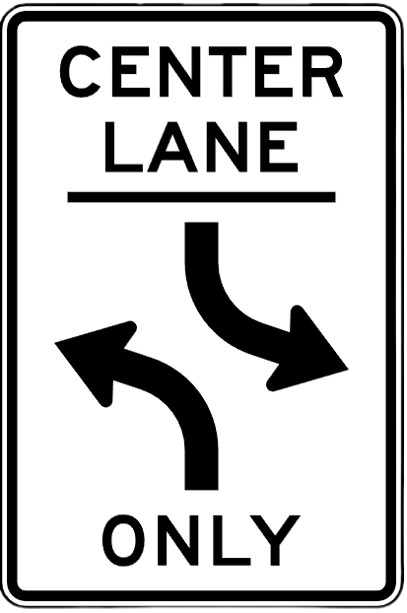 This sign means:
A
The center lane is shared for left turns.
B
Left turns in both directions of travel are not permitted.
C
Vehicles may only turn left.
This traffic sign indicates: The center lane is shared for left turns. Observing and obeying all roadway signs ensures safe traffic flow and legal driving.
Question 3:
You should increase your following distance when:
A
exiting a freeway.
B
following a motorcycle.
C
driving behind a large vehicle that blocks your vision.
D
All of the above.
Defensive driving best practices include: exiting a freeway; following a motorcycle; driving behind a large vehicle that blocks your vision. Staying alert and maintaining spacing prevents unexpected hazards.
Question 4:
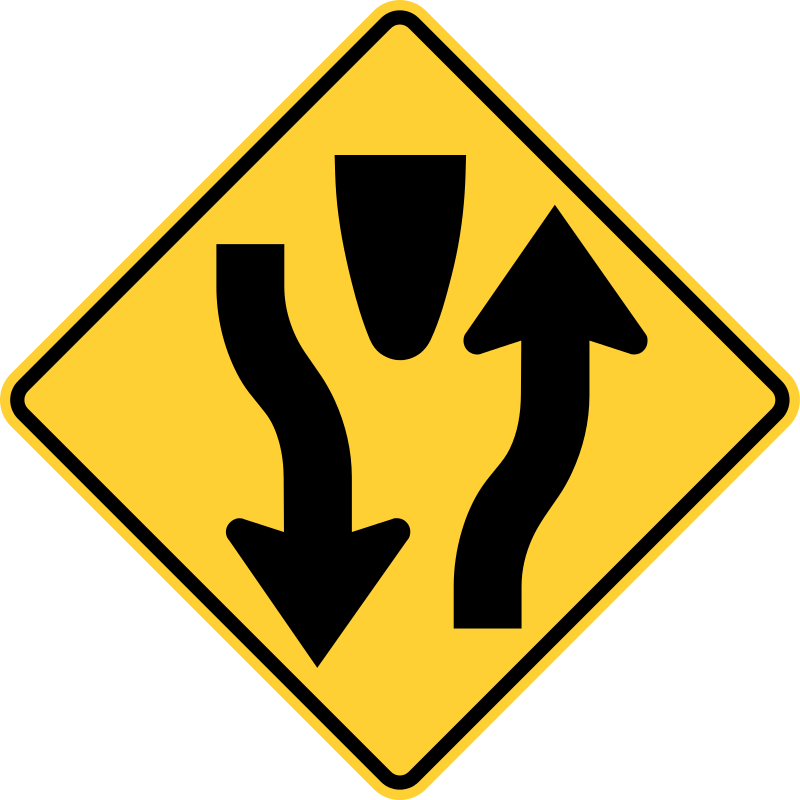 This road sign means:
A
Divided highway ahead
B
Merging traffic
C
Flagger ahead
This traffic sign indicates: Divided highway ahead. Observing and obeying all roadway signs ensures safe traffic flow and legal driving.
Question 5:
When driving on slick roads, drivers should:
A
accelerate quickly.
B
take turns more slowly.
C
use alternate routes.
D
drive as they would on dry roads.
The correct driving rule is: take turns more slowly. Following standard DMV road rules and practicing defensive driving ensures safety for all road users.
Question 6:
When driving in bad weather, drivers should:
A
decrease the following distance.
B
increase their speed to get to their destination more quickly.
C
increase the following distance.
D
None of the above.
The correct driving rule is: increase the following distance. Following standard DMV road rules and practicing defensive driving ensures safety for all road users.
Question 7:
Most signs used in street work areas are:
A
round.
B
diamond shaped.
C
rectangle shaped.
The correct driving rule is: diamond shaped. Following standard DMV road rules and practicing defensive driving ensures safety for all road users.
Question 8:
Which of the following is NOT true about ABS?
A
It improves the vehicle stability.
B
It helps increase your stopping distance.
C
It improves the steering ability.
The correct driving rule is: it helps increase your stopping distance. Following standard DMV road rules and practicing defensive driving ensures safety for all road users.
Question 9:
If you are continually being passed on the right, you should:
A
move into the right lane and allow other vehicles to pass you on the left.
B
move into the left lane and allow other vehicles to pass you on the right.
C
increase your speed immediately.
The correct driving rule is: move into the right lane and allow other vehicles to pass you on the left. Following standard DMV road rules and practicing defensive driving ensures safety for all road users.
Question 10:
If you missed your exit on a freeway, you should:
A
use the right turn signal, check your mirrors and move to the right.
B
None of the above.
C
go to the next exit and come back to the exit you missed.
D
make a quick U-turn from your lane of travel.
Defensive driving guidelines state that: go to the next exit and come back to the exit you missed. Anticipating road hazards and communicating maneuvers keeps traffic predictable and safe.
Question 11:
Blind spots around a large vehicle are _________________ than the blind spots around a car.
A
larger and deeper
B
less dangerous
C
narrower and shorter
The correct driving rule is: larger and deeper. Following standard DMV road rules and practicing defensive driving ensures safety for all road users.
Question 12:
 This sign tells drivers:
A
they must wait for the traffic signal to turn green before turning right or left.
B
they may not turn right or left during the red light.
C
All of the above.
This sign alerts drivers to several mandatory requirements: they must wait for the traffic signal to turn green before turning right or left, they may not turn right or left during the red light. Obeying all posted traffic control instructions is required by law.
Question 13:
Two solid yellow lines on the pavement mean:
A
passing is not allowed.
B
passing is allowed during daylight only.
C
passing is allowed for both drivers.
D
passing is allowed if you are at the top of a hill.
The correct driving rule is: passing is not allowed. Following standard DMV road rules and practicing defensive driving ensures safety for all road users.
Question 14:
 This road sign means:
A
Slow down and be prepared to stop if necessary
B
You must come to a complete stop
C
You may proceed at regular speed through the intersection
D
Wrong Way
This traffic sign indicates: slow down and be prepared to stop if necessary. Observing and obeying all roadway signs ensures safe traffic flow and legal driving.
Question 15:
When in a motor vehicle on a highway, it is:
A
illegal to drink from, but permissible to transport, open containers of alcohol in the passenger compartment.
B
illegal to possess an open container of alcohol in the passenger compartment.
C
acceptable to drink alcoholic beverages if you are not driving.
D
permissible to drink a moderate amount of alcohol when driving with a passenger.
Defensive driving guidelines state that: illegal to possess an open container of alcohol in the passenger compartment. Anticipating road hazards and communicating maneuvers keeps traffic predictable and safe.
Question 16:
 This road sign means:
A
Pavement ends
B
Winding road
C
Double curve ahead
This traffic sign indicates: Winding road. Observing and obeying all roadway signs ensures safe traffic flow and legal driving.
Question 17:
This road sign means:
A
Keep left
B
Divided highway begins
C
Lane ends
This traffic sign indicates: Divided highway begins. Observing and obeying all roadway signs ensures safe traffic flow and legal driving.
Question 18:
Bicyclists must:
A
ride in a bicycle lane, if available.
B
remain to the right when they prepare for a left turn.
C
remain near the left edge of the road.
The correct driving rule is: ride in a bicycle lane, if available. Following standard DMV road rules and practicing defensive driving ensures safety for all road users.
Question 19:
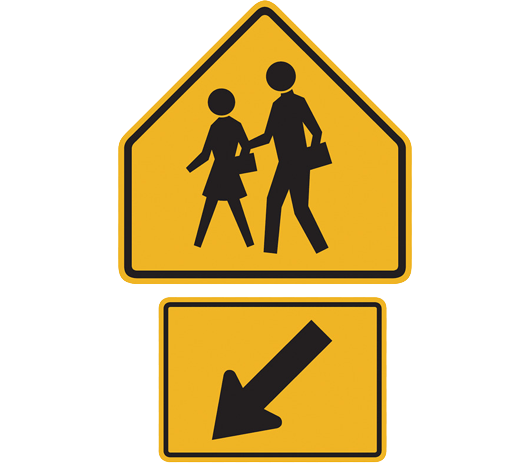 At a school crossing, drivers should:
A
always stop, whether there’s a stop sign or not.
B
always sound their horn and stay alert.
C
watch for children and be ready to stop.
The correct driving rule is: watch for children and be ready to stop. Following standard DMV road rules and practicing defensive driving ensures safety for all road users.
Question 20:
When approaching a railroad crossing drivers should:
A
slow down.
B
be ready to stop.
C
look for a train.
D
All of the above.
All of the listed points are essential driving requirements: slow down; be ready to stop; look for a train. Practicing each ensures compliance with DMV safety laws.
Question 21:
 The sign in the picture:
A
is a Construction and Maintenance Traffic Control sign.
B
is found at most intersections and indicates that drivers must yield to other vehicles.
C
is displayed on the rear of slow moving vehicles.
The correct driving rule is: is displayed on the rear of slow moving vehicles. Following standard DMV road rules and practicing defensive driving ensures safety for all road users.
Question 22:
 What does this sign indicate?
A
The highway ahead is divided into two one-way roadways.
B
Winding road ahead. Drive with caution.
C
Drivers will soon be on a roadway with two-way traffic.
This traffic sign indicates: drivers will soon be on a roadway with two-way traffic. Observing and obeying all roadway signs ensures safe traffic flow and legal driving.
Question 23:
 This road sign means:
A
Winding Road Ahead
B
Persons with Disabilities Parking
C
Merge
This traffic sign indicates: merge. Observing and obeying all roadway signs ensures safe traffic flow and legal driving.
Question 24:
The effects of alcohol on driving include:
A
None of the above.
B
Improved coordination
C
Better reflexes
D
Improved judgement
Under state DUI and traffic safety laws: None of the above. Alcohol degrades judgment, slows reaction times, and distorts depth perception.
Question 25:
 This sign indicates that the road ahead:
A
turns sharply right, then left.
B
is a divided highway.
C
curves right, then left.
D
curves right.
This traffic sign indicates: curves right, then left. Observing and obeying all roadway signs ensures safe traffic flow and legal driving.