Question 1:
What should you do in case of a brake failure?
A
Pull off the road into an open space, if available.
B
Apply the parking brake slowly.
C
All of the above.
Answer Explanation
All of the listed points are essential driving requirements: Pull off the road into an open space, if available; Apply the parking brake slowly. Practicing each ensures compliance with DMV safety laws.
All of the listed points are essential driving requirements: Pull off the road into an open space, if available; Apply the parking brake slowly. Practicing each ensures compliance with DMV safety laws.
Question 2:
 This sign means:
A
The road will curve to the right.
B
Left turns are not allowed at the intersection.
C
Do not turn right.
Answer Explanation
This traffic sign indicates: The road will curve to the right. Observing and obeying all roadway signs ensures safe traffic flow and legal driving.
This traffic sign indicates: The road will curve to the right. Observing and obeying all roadway signs ensures safe traffic flow and legal driving.
Question 3:
A “No Zone” is:
A
the blind spot area around large commercial vehicles.
B
a one way traffic area.
C
a No Parking area.
D
a No Stopping area.
Answer Explanation
The correct driving rule is: the blind spot area around large commercial vehicles. Following standard DMV road rules and practicing defensive driving ensures safety for all road users.
The correct driving rule is: the blind spot area around large commercial vehicles. Following standard DMV road rules and practicing defensive driving ensures safety for all road users.
Question 4:
Unlike passenger cars, trucks have blind spots:
A
on the right.
B
directly behind them.
C
on the front.
Answer Explanation
The correct driving rule is: directly behind them. Following standard DMV road rules and practicing defensive driving ensures safety for all road users.
The correct driving rule is: directly behind them. Following standard DMV road rules and practicing defensive driving ensures safety for all road users.
Question 5:
If a vehicle is approaching with high beams, drivers should look __________ until the vehicle passes.
A
to the right of the road
B
at the center of the road
C
to the left of the road
D
straight ahead
Answer Explanation
The correct driving rule is: to the right of the road. Following standard DMV road rules and practicing defensive driving ensures safety for all road users.
The correct driving rule is: to the right of the road. Following standard DMV road rules and practicing defensive driving ensures safety for all road users.
Question 6:
What should you do if your rear wheels start to skid?
A
Steer left if your rear wheels slide right.
B
If the vehicle has ABS, pump the pedal carefully.
C
Turn the steering wheel in the direction the vehicle is trying to go.
Answer Explanation
The correct driving rule is: turn the steering wheel in the direction the vehicle is trying to go. Following standard DMV road rules and practicing defensive driving ensures safety for all road users.
The correct driving rule is: turn the steering wheel in the direction the vehicle is trying to go. Following standard DMV road rules and practicing defensive driving ensures safety for all road users.
Question 7:
The traffic light is green and you want to drive straight through an intersection. If a car is already in the intersection and is making a turn, you must:
A
enter the intersection and then stop.
B
drive through the intersection. You have the right-of-way.
C
let that car complete its turn before you enter the intersection.
Answer Explanation
According to standard right-of-way regulations: let that car complete its turn before you enter the intersection. Yielding appropriately prevents intersection collisions and maintains safe traffic flow.
According to standard right-of-way regulations: let that car complete its turn before you enter the intersection. Yielding appropriately prevents intersection collisions and maintains safe traffic flow.
Question 8:
For protection, motorcyclists are required to:
A
keep their headlights and taillights on at all times.
B
signal turns, lane changes and stops.
C
wear approved helmets.
Answer Explanation
The correct driving rule is: wear approved helmets. Following standard DMV road rules and practicing defensive driving ensures safety for all road users.
The correct driving rule is: wear approved helmets. Following standard DMV road rules and practicing defensive driving ensures safety for all road users.
Question 9:
At a light rail intersection, you should always:
A
share the road with pedestrians and bicyclists.
B
look both ways before crossing the tracks.
C
be alert and obey all traffic signals.
D
All of the above.
Answer Explanation
Safe navigation at intersections requires following all established rules: share the road with pedestrians and bicyclists; look both ways before crossing the tracks; be alert and obey all traffic signals. Always yield right-of-way properly to prevent collisions.
Safe navigation at intersections requires following all established rules: share the road with pedestrians and bicyclists; look both ways before crossing the tracks; be alert and obey all traffic signals. Always yield right-of-way properly to prevent collisions.
Question 10:
Drinking alcohol while taking drugs:
A
reduces the effects of the alcohol.
B
reduces the effects of the drug or medicine.
C
has no effect, they are different substances.
D
could multiply the effects of the alcohol.
Answer Explanation
Under state DUI and traffic safety laws: could multiply the effects of the alcohol. Alcohol degrades judgment, slows reaction times, and distorts depth perception.
Under state DUI and traffic safety laws: could multiply the effects of the alcohol. Alcohol degrades judgment, slows reaction times, and distorts depth perception.
Question 11:
When other drivers around you are acting in anger, you should:
A
slow down or move over safely.
B
distance yourself from the situation.
C
avoid making eye contact.
D
All of the above.
Answer Explanation
All of the listed points are essential driving requirements: slow down or move over safely; distance yourself from the situation; avoid making eye contact. Practicing each ensures compliance with DMV safety laws.
All of the listed points are essential driving requirements: slow down or move over safely; distance yourself from the situation; avoid making eye contact. Practicing each ensures compliance with DMV safety laws.
Question 12:
Does a vehicle prepared to enter a traffic circle or rotary have right-of-way over vehicles in the circle?
A
Yes, but only if they are entering the rotary from the right lane.
B
No. Vehicles already in the circle have the right-of-way.
C
Only if the light is green.
D
Yes.
Answer Explanation
Vehicles entering a roundabout must yield right-of-way to circulating traffic already inside: No. Vehicles already in the circle have the right-of-way. Wait for a safe gap before entering.
Vehicles entering a roundabout must yield right-of-way to circulating traffic already inside: No. Vehicles already in the circle have the right-of-way. Wait for a safe gap before entering.
Question 13:
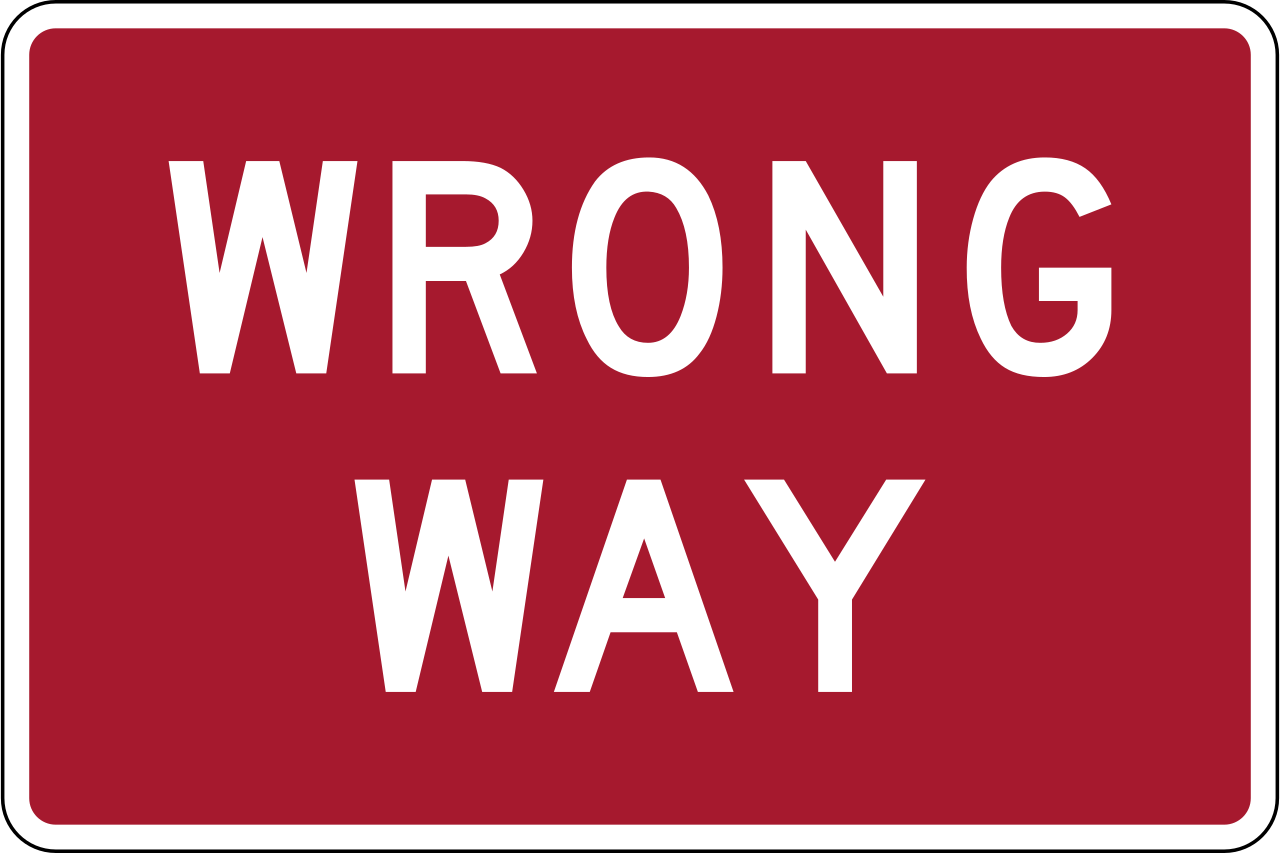 When drivers see this road sign:
A
they must come to a complete stop and call the police.
B
they must not drive past this sign.
C
they must turn around immediately.
Answer Explanation
This traffic sign indicates: they must turn around immediately. Observing and obeying all roadway signs ensures safe traffic flow and legal driving.
This traffic sign indicates: they must turn around immediately. Observing and obeying all roadway signs ensures safe traffic flow and legal driving.
Question 14:
 This sign means:
A
Railroad crossing
B
No Passing Zone
C
The road ends ahead
Answer Explanation
Circular signs with an 'X' and 'RR' designate a Railroad Advance Warning: Railroad crossing. Drivers must slow down, look both ways, listen for trains, and be prepared to stop.
Circular signs with an 'X' and 'RR' designate a Railroad Advance Warning: Railroad crossing. Drivers must slow down, look both ways, listen for trains, and be prepared to stop.
Question 15:
When a stop is required at an intersection with no stop line or crosswalk:
A
Drivers should stop only at a place where the driver can see at least 100 feet on either side.
B
Drivers are required to slow down to make sure crossing traffic is clear.
C
Drivers are not required to stop.
D
Drivers should stop at the point nearest the intersecting roadway where the driver has a view of approaching traffic on the intersecting roadway before actually entering the roadway.
Answer Explanation
Drivers must always yield the right-of-way to pedestrians crossing at intersections and crosswalks: drivers should stop at the point nearest the intersecting roadway where the driver has a view of approaching traffic on the intersecting roadway before actually entering the roadway. Stop and allow them to clear the lane safely.
Drivers must always yield the right-of-way to pedestrians crossing at intersections and crosswalks: drivers should stop at the point nearest the intersecting roadway where the driver has a view of approaching traffic on the intersecting roadway before actually entering the roadway. Stop and allow them to clear the lane safely.
Question 16:
Drivers may pass another vehicle if the line dividing two lanes is a ________ line.
A
broken white
B
double solid yellow
C
solid yellow
D
solid white
Answer Explanation
The correct driving rule is: broken white. Following standard DMV road rules and practicing defensive driving ensures safety for all road users.
The correct driving rule is: broken white. Following standard DMV road rules and practicing defensive driving ensures safety for all road users.
Question 17:
Who is most at risk?
A
Drivers who are fatigued.
B
Drivers who are driving on long, boring roads.
C
All of the above.
Answer Explanation
All of the listed points are essential driving requirements: Drivers who are fatigued; Drivers who are driving on long, boring roads. Practicing each ensures compliance with DMV safety laws.
All of the listed points are essential driving requirements: Drivers who are fatigued; Drivers who are driving on long, boring roads. Practicing each ensures compliance with DMV safety laws.
Question 18:
When entering highway from private road, drivers should:
A
turn on their emergency flashers to alert other drivers.
B
yield to all vehicles approaching on the roadway.
C
only yield to the vehicle on their right.
D
only yield to the vehicle on their left.
Answer Explanation
Defensive driving guidelines state that: yield to all vehicles approaching on the roadway. Anticipating road hazards and communicating maneuvers keeps traffic predictable and safe.
Defensive driving guidelines state that: yield to all vehicles approaching on the roadway. Anticipating road hazards and communicating maneuvers keeps traffic predictable and safe.
Question 19:
It is important for drivers to know that trucks:
A
are easier for the driver to operate.
B
require more space for turning movements.
C
take longer than cars to stop.
D
require less time to pass on an incline than cars.
Answer Explanation
The correct driving rule is: take longer than cars to stop. Following standard DMV road rules and practicing defensive driving ensures safety for all road users.
The correct driving rule is: take longer than cars to stop. Following standard DMV road rules and practicing defensive driving ensures safety for all road users.
Question 20:
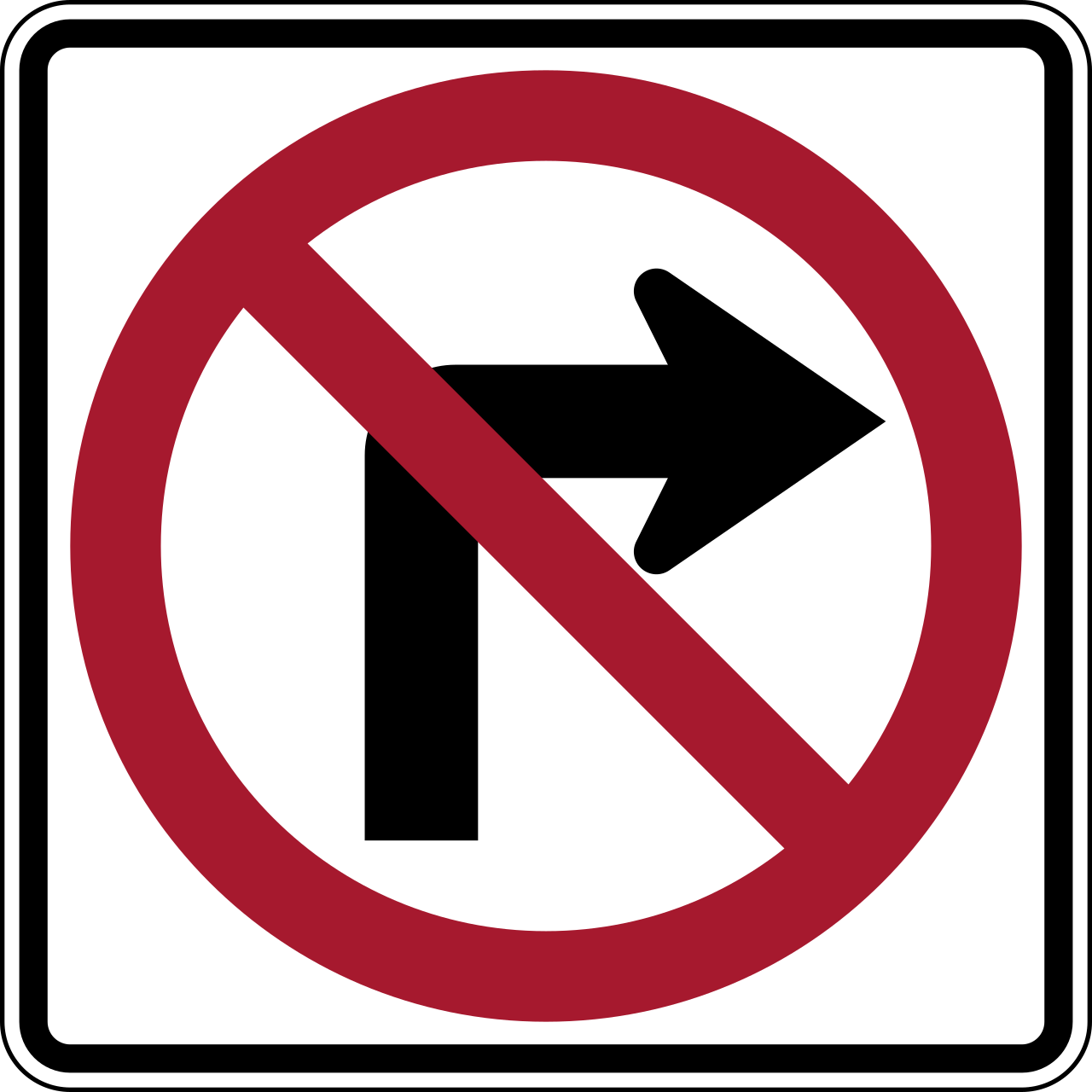 This sign tells drivers that:
A
they must make a left turn at the intersection.
B
U-turns are not allowed.
C
they must not make a right turn.
D
None of the above.
Answer Explanation
This traffic sign indicates: they must not make a right turn. Observing and obeying all roadway signs ensures safe traffic flow and legal driving.
This traffic sign indicates: they must not make a right turn. Observing and obeying all roadway signs ensures safe traffic flow and legal driving.
Question 21:
 The yield sign means:
A
Drive with caution in wet weather.
B
You must come to a complete stop.
C
Slow down and give vehicles crossing your path the right-of-way.
Answer Explanation
A triangular Yield sign requires drivers to slow down and give right-of-way to other traffic: slow down and give vehicles crossing your path the right-of-way. Proceed only when there is a safe opening.
A triangular Yield sign requires drivers to slow down and give right-of-way to other traffic: slow down and give vehicles crossing your path the right-of-way. Proceed only when there is a safe opening.
Question 22:
A broken yellow line alongside a solid yellow line means:
A
Passing is permitted on the side of the broken yellow line
B
Passing is not permitted in either direction
C
Passing on the right is permitted in either direction
Answer Explanation
The correct driving rule is: Passing is permitted on the side of the broken yellow line. Following standard DMV road rules and practicing defensive driving ensures safety for all road users.
The correct driving rule is: Passing is permitted on the side of the broken yellow line. Following standard DMV road rules and practicing defensive driving ensures safety for all road users.
Question 23:
If an aggressive driver is behind you:
A
sound your horn and move to the left lane.
B
slow down and confront the aggressive driver.
C
try to get out of the aggressive driver’s way.
D
increase you speed and flash your brake lights.
Answer Explanation
The correct driving rule is: try to get out of the aggressive driver’s way. Following standard DMV road rules and practicing defensive driving ensures safety for all road users.
The correct driving rule is: try to get out of the aggressive driver’s way. Following standard DMV road rules and practicing defensive driving ensures safety for all road users.
Question 24:
This sign is used to warn drivers about:
A
road construction.
B
changes in traffic lanes.
C
curves ahead.
D
drowsy driving.
Answer Explanation
This traffic sign indicates: curves ahead. Observing and obeying all roadway signs ensures safe traffic flow and legal driving.
This traffic sign indicates: curves ahead. Observing and obeying all roadway signs ensures safe traffic flow and legal driving.
Question 25:
What should you do in case of a steering failure?
A
Pump your gas pedal a few times to increase the pressure.
B
Don't panic. Turn on your emergency lights to let other drivers know you are having car problems. Move toward the side of the road and bring the car to a gradual stop.
C
Leave the road immediately.
Answer Explanation
The correct driving rule is: Don't panic. Turn on your emergency lights to let other drivers know you are having car problems. Move toward the side of the road and bring the car to a gradual stop. Following standard DMV road rules and practicing defensive driving ensures safety for all road users.
The correct driving rule is: Don't panic. Turn on your emergency lights to let other drivers know you are having car problems. Move toward the side of the road and bring the car to a gradual stop. Following standard DMV road rules and practicing defensive driving ensures safety for all road users.