DriveQuiz drivequiz.com

WI DMV PERMİT PRACTİCE TEST 6

Wisconsin
Duration: 45 min
|
Questions: 50
Student Name:
Date:
Correct:      Incorrect:      Score:      
1.
Slow down and give right-of-way to all oncoming vehicles, cyclists, and pedestrians. Stop completely if necessary before entering the intersection or merging.
This is the shape and color of a ________ sign.
A) yield
B) stop
C) do not enter
2.
In the following situations, drivers should increase their following interval:
A) When following vehicles that are required to come to a stop at railroad crossings.
B) When it is hard to see ahead because of bad weather.
C) All of the above.
3.
The median divider ends ahead, and you are returning to a two-way, two-lane undivided roadway. Watch for oncoming traffic on your left.
This road sign means:
A) Curves ahead
B) Divided highway ahead
C) Divided highway ends
4.
A steady green light at intersections means:
A) You may drive through the intersection if the road is clear
B) You must increase your speed
C) You may not turn right
5.
A yellow arrow means:
A) Do not go in the direction of the arrow.
B) If you intend to turn in the direction of the arrow, be prepared to stop.
C) The same as a steady yellow light.
6.
When passing a motorcycle you must:
A) give the motorcyclist the right hand part of his traffic lane.
B) give the motorcyclist the entire traffic lane as if the motorcycle was a car.
C) sound your horn to alert the motorcyclist.
7.
Drivers may pass another vehicle if the line dividing two lanes is a ________ line.
A) broken white
B) double solid yellow
C) solid yellow
D) solid white
8.
If you drive slower than the flow of traffic, you will most likely:
A) improve traffic flow.
B) help create a safe driving environment.
C) interfere with traffic and receive a ticket.
9.
If another car is in danger of hitting you, you should:
A) flash your brake lights.
B) sound your horn.
C) use your emergency lights.
D) flash your headlights.
10.
If you missed your exit on a freeway, you should:
A) use the right turn signal, check your mirrors and move to the right.
B) None of the above.
C) go to the next exit and come back to the exit you missed.
D) make a quick U-turn from your lane of travel.
11.
A flashing red traffic light:
A) has the same meaning as a yield sign.
B) is used to indicate a pedestrian crossing.
C) has the same meaning as a stop sign.
D) indicates that you should drive with caution.
12.
When approaching an intersection with a traffic control signal that is not working, drivers should:
A) stop as you would if there were stop signs in all directions, yield the right-of-way, then enter the intersection.
B) speed up and proceed through the intersection.
C) try not to stop if the intersection is clear.
13.
When driving in icy or snowy conditions, to avoid crashes drivers should:
A) get off the highway as quickly as possible.
B) reduce speed and increase following distance.
C) add extra weight to the vehicle to improve traction.
D) engage 4 wheel drive on the vehicle.
14.
Drivers should use high beam headlights when:
A) following another vehicle.
B) when they come within 50 feet of an oncoming vehicle.
C) there are no oncoming vehicles approaching.
15.
Which sign has white letters on a red background?
A) Stop
B) School zone
C) Yield
16.
To avoid traction loss from hydroplaning, drivers should:
A) keep a constant speed.
B) apply the brakes as soon as the car starts to skid.
C) slow down.
17.
When driving on major highways you should:
A) be ready to react to road hazards.
B) stay alert.
C) keep your eyes moving.
D) All of the above.
18.
Drivers should allow a larger space cushion when stopping:
A) at a stop sign.
B) on an up-hill.
C) at an intersection.
D) at a yield sign.
19.
When exiting a highway, you should slow down:
A) when you first see the exit sign.
B) before moving into the exit lane.
C) once you have moved into the exit lane.
D) once you see the toll booth.
20.
What is the meaning of blue traffic signs?
A) A blue background indicates a regulatory sign.
B) They give directional information.
C) Blue indicates road user services.
21.
A broken white line:
A) means passing or crossing is prohibited in that lane.
B) separates two lanes traveling in the same direction.
C) marks the right edge of the roadway.
22.
You reach an intersection that is not controlled at the same time as a driver on your right, and both of you prepare to go straight. Who has the right-of-way?
A) You.
B) No one.
C) The other driver.
23.
Hydroplaning is usually caused by:
A) excessive rain.
B) excessive stops.
C) excessive speed.
D) sudden turns.
24.
If the vehicle you are driving starts to skid, you should:
A) brake lightly.
B) turn off the ignition.
C) stay off the brakes.
25.
Your red traffic signal changes to green while a pedestrian is crossing in your traffic lane. The right of way should be given:
A) by the pedestrian, but only when vehicles are turning left.
B) by the pedestrian.
C) to the pedestrian.
26.
Drivers approaching an intersection with a flashing yellow light should:
A) slow down and proceed with caution.
B) stop before crossing through.
C) wait for a green light.
27.
Right turns are strictly prohibited at this intersection under all circumstances.
This sign tells drivers that:
A) they must make a left turn at the intersection.
B) U-turns are not allowed.
C) they must not make a right turn.
D) None of the above.
28.
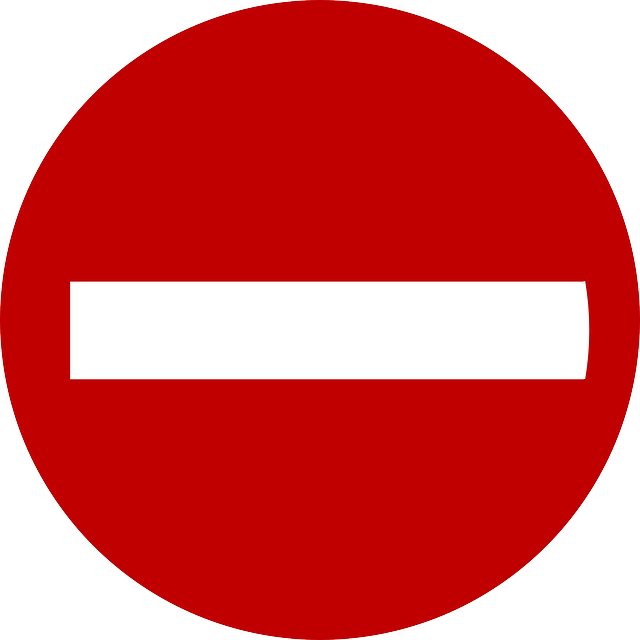
Indicates you have entered an exit ramp or one-way street in the incorrect direction. Stop immediately and safely turn around.
This road sign means:
A) No left turn
B) Lane ends
C) Do not enter
29.
You may park or stop along the shoulder of the freeway:
A) if you need to check your smartphone for directions.
B) only if you have an emergency.
C) if no part of your vehicle is on the road.
D) as long as you turn on your emergency flashers.
30.
Yellow diamond warning that pedestrians may be crossing ahead. Exercise caution and yield.
This road sign means:
A) School zone ahead
B) Pedestrians must not cross here
C) Pedestrian crossing ahead
31.
What should drivers do in case of a brake failure?
A) Shift to a lower gear.
B) Tie a white cloth on the left door handle.
C) Brake lightly.
32.
The traffic light is red and you want to turn right. You can turn:
A) when the traffic with the green light is clear.
B) immediately.
C) if there is no speed limit.
33.
When you make a left turn from a one-way road into a two-way road, you must:
A) enter the two-way road to the left of its center line.
B) make a U-turn into the two-way road.
C) enter the two-way road to the right of its center line.
34.
The shape of a route sign tells you:
A) the type of route you are on.
B) the speed limit on that route.
C) that the route you are on might be dangerous.
35.
Standard yellow warning sign outline used across the US for all caution, hazard, and roadway change notifications.
This sign is a:
A) regulatory sign.
B) warning sign.
C) guide sign.
36.
An emergency vehicle that uses lights and a siren can be unpredictable. Why?
A) The driver can legally pass red lights.
B) Emergency vehicles must go faster than the posted speed limit when it is safe to do so.
C) Emergency vehicle drivers are not required to be careful.
37.
When you prepare to make a left turn from a one-way road into a one-way road, you must:
A) move into the right lane, or to the left side of a single lane.
B) move into the right lane, or to the right side of a single lane.
C) move into the left lane, or to the left side of a single lane.
38.
A side road enters the highway from the right or left. Watch for traffic turning onto or crossing your lane.
This road sign means:
A) Merge
B) Side Road
C) Merging Traffic
D) All traffic must go straight ahead
39.
Warns of an extremely sharp 180-degree curve ahead. Decelerate significantly before entering the turn.
This sign means:
A) Hairpin corner ahead.
B) Warning: U-turn ahead.
C) Sharp right turn ahead.
40.
In heavy rain, tires can begin to ride on the water that is on top of the road pavement. This is called:
A) rideplaning.
B) hydroplaning.
C) pavement-planing.
D) waterplaning.
41.
Warns that a one-way street or divided highway is ending, and you are entering a roadway with oncoming traffic in the opposing lane. Stay to the right.
This road sign warns drivers that:
A) they are coming to a point where another traffic lane joins the one they are on.
B) a divided highway is ahead.
C) the one-way street or roadway is about to change to two-way traffic.
42.
A sharp curve is ahead with a recommended safe speed plate. Slow down before entering the curve to prevent vehicle rollover.
This road sign means:
A) Merge, then slow down to the safe speed indicated
B) The road ahead curves right; slow down to indicated speed
C) Winding road ahead; slow down to the indicated speed
D) Divided highway begins. Slow down to the safe speed indicated
43.
Give the right-of-way to any pedestrian:
A) on the opposite side of the street.
B) if you have the green light.
C) in a marked crosswalk.
44.
In 55 MPH traffic you are least likely to be involved in a collision if you:
A) stay within that speed range.
B) drive a few MPH faster than most.
C) drive a few MPH slower than most.
45.
Alerts drivers to an upcoming crosswalk where pedestrians frequently cross. Slow down and yield right-of-way to anyone in or about to enter the roadway.
The picture shows:
A) a railroad advance warning sign.
B) a speeding fines doubled sign.
C) a reversible road sign.
46.
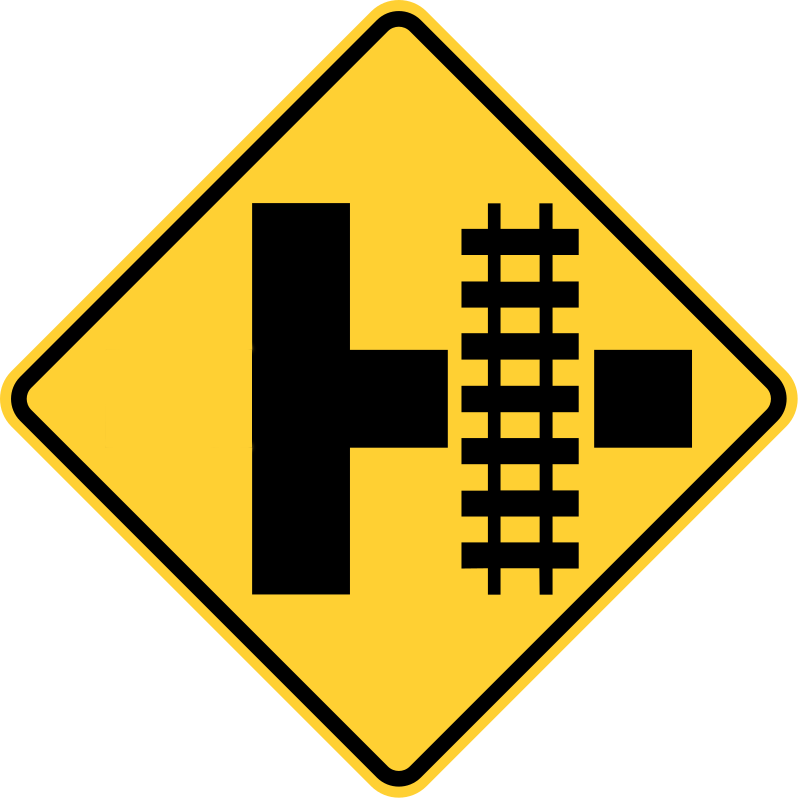
Four-way intersection ahead. Be prepared to yield right-of-way according to traffic control devices.
What does this sign indicate?
A) Parallel railroad crossing (side road)
B) Low ground clearance railroad crossing
C) Parallel railroad crossing (crossroad)
47.
At night, it is hardest to see:
A) street lights.
B) pedestrians.
C) other motorists.
D) road signs.
48.
Prohibits drivers from making a 180-degree turn to travel in the opposite direction at this intersection or stretch of road.
This road sign means:
A) Left turns are not allowed where this sign is displayed.
B) Drivers cannot make a complete turn to go in the opposite direction.
C) Vehicles turning left must make a U-turn.
49.
If you are feeling tired while driving, you should:
A) stop and get some rest.
B) open a window.
C) drink coffee.
50.
To drive defensively you should:
A) always put one car length between you and the car ahead.
B) keep your eyes moving to look for possible hazards.
C) look only at the car in front of you while driving.
ANSWER KEY Check answers after completing the test.
1 A
2 C
3 C
4 A
5 B
6 B
7 A
8 C
9 B
10 C
11 C
12 A
13 B
14 C
15 A
16 C
17 D
18 B
19 C
20 C
21 B
22 C
23 C
24 C
25 C
26 A
27 C
28 C
29 B
30 C
31 A
32 A
33 C
34 A
35 B
36 A
37 C
38 B
39 A
40 B
41 C
42 B
43 C
44 A
45 A
46 A
47 B
48 B
49 A
50 B