Question 1:
You must come to a full stop at a yield sign:
A
Always.
B
Never.
C
If traffic conditions require it.
Answer Explanation
The correct driving rule is: If traffic conditions require it. Following standard DMV road rules and practicing defensive driving ensures safety for all road users.
The correct driving rule is: If traffic conditions require it. Following standard DMV road rules and practicing defensive driving ensures safety for all road users.
Question 2:
When changing lanes, you should not:
A
signal your intentions early.
B
check your side and rear view mirrors.
C
use the inside rearview mirror to check for blind spots
D
check to see if other drivers are moving into the same lane.
Answer Explanation
The correct driving rule is: use the inside rearview mirror to check for blind spots. Following standard DMV road rules and practicing defensive driving ensures safety for all road users.
The correct driving rule is: use the inside rearview mirror to check for blind spots. Following standard DMV road rules and practicing defensive driving ensures safety for all road users.
Question 3:
 This traffic sign warns you about:
A
merging traffic.
B
a hill or a downgrade up ahead on the road.
C
an intersection ahead.
D
a winding road.
Answer Explanation
This traffic sign indicates: a hill or a downgrade up ahead on the road. Observing and obeying all roadway signs ensures safe traffic flow and legal driving.
This traffic sign indicates: a hill or a downgrade up ahead on the road. Observing and obeying all roadway signs ensures safe traffic flow and legal driving.
Question 4:
Roads are most slippery:
A
just before it rains.
B
when it stops raining.
C
when it first starts to rain.
Answer Explanation
For safe speed and stopping control: when it first starts to rain. Adjusting speed to match visibility and road traction prevents loss of steering grip.
For safe speed and stopping control: when it first starts to rain. Adjusting speed to match visibility and road traction prevents loss of steering grip.
Question 5:
When driving in heavy traffic, you should:
A
drive with the flow of traffic.
B
maintain a constant speed.
C
drive faster than the flow of traffic.
D
drive slower than the flow of traffic.
Answer Explanation
The correct driving rule is: drive with the flow of traffic. Following standard DMV road rules and practicing defensive driving ensures safety for all road users.
The correct driving rule is: drive with the flow of traffic. Following standard DMV road rules and practicing defensive driving ensures safety for all road users.
Question 6:
What should you do if your rear wheels start to skid?
A
Steer left if your rear wheels slide right.
B
If the vehicle has ABS, pump the pedal carefully.
C
Turn the steering wheel in the direction the vehicle is trying to go.
Answer Explanation
The correct driving rule is: turn the steering wheel in the direction the vehicle is trying to go. Following standard DMV road rules and practicing defensive driving ensures safety for all road users.
The correct driving rule is: turn the steering wheel in the direction the vehicle is trying to go. Following standard DMV road rules and practicing defensive driving ensures safety for all road users.
Question 7:
 This road sign means:
A
No left turn
B
No right turn
C
No U-turns
Answer Explanation
This traffic sign indicates: No right turn. Observing and obeying all roadway signs ensures safe traffic flow and legal driving.
This traffic sign indicates: No right turn. Observing and obeying all roadway signs ensures safe traffic flow and legal driving.
Question 8:
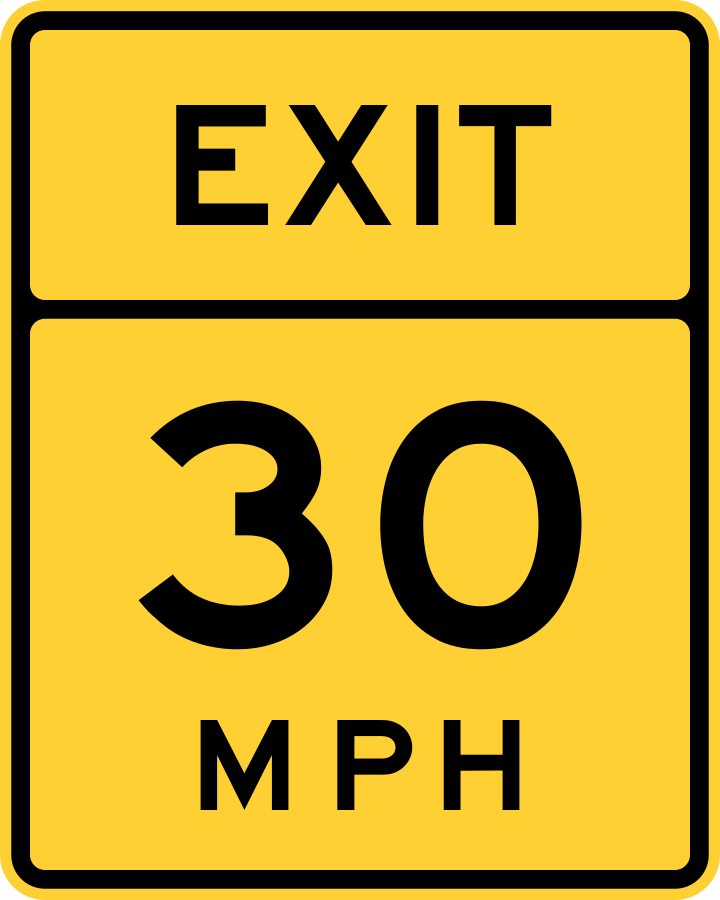 The sign in the picture:
A
shows the highest speed drivers can travel at the exit of the intersection.
B
is used to advise motorists of the appropriate ramp speed at the highway exit point.
C
indicates the minimum ramp speed at the highway exit point.
Answer Explanation
The correct driving rule is: is used to advise motorists of the appropriate ramp speed at the highway exit point. Following standard DMV road rules and practicing defensive driving ensures safety for all road users.
The correct driving rule is: is used to advise motorists of the appropriate ramp speed at the highway exit point. Following standard DMV road rules and practicing defensive driving ensures safety for all road users.
Question 9:
As you approach an intersection, the traffic light changes from green to yellow. You should:
A
apply the brakes sharply and come to a complete stop.
B
be prepared to stop before the intersection.
C
be prepared to stop in the middle of the intersection.
D
speed up to beat the red light.
Answer Explanation
According to standard right-of-way regulations: be prepared to stop before the intersection. Yielding appropriately prevents intersection collisions and maintains safe traffic flow.
According to standard right-of-way regulations: be prepared to stop before the intersection. Yielding appropriately prevents intersection collisions and maintains safe traffic flow.
Question 10:
 A pedestrian in the crosswalk when the 'DON’T WALK' signal begins flashing must:
A
stop immediately.
B
go back and wait the “WALK” light
C
finish crossing the street.
Answer Explanation
Drivers must always yield the right-of-way to pedestrians crossing at intersections and crosswalks: finish crossing the street. Stop and allow them to clear the lane safely.
Drivers must always yield the right-of-way to pedestrians crossing at intersections and crosswalks: finish crossing the street. Stop and allow them to clear the lane safely.
Question 11:
Always driving slower than other traffic:
A
is a good defensive driving technique.
B
is always safer than driving faster than other traffic.
C
can block traffic.
Answer Explanation
The correct driving rule is: can block traffic. Following standard DMV road rules and practicing defensive driving ensures safety for all road users.
The correct driving rule is: can block traffic. Following standard DMV road rules and practicing defensive driving ensures safety for all road users.
Question 12:
The first thing affected after drinking alcohol is:
A
balance.
B
judgment.
C
speech.
Answer Explanation
Under state DUI and traffic safety laws: judgment. Alcohol degrades judgment, slows reaction times, and distorts depth perception.
Under state DUI and traffic safety laws: judgment. Alcohol degrades judgment, slows reaction times, and distorts depth perception.
Question 13:
Where there is no bicycle lane, where on the road must a bicyclist ride?
A
on the left shoulder of the road.
B
near the right curb or edge of the road.
C
near the left edge of the road.
Answer Explanation
State laws require motorists to provide a safe clearance buffer: near the right curb or edge of the road. Allow at least 3 feet of space when overtaking a bicyclist.
State laws require motorists to provide a safe clearance buffer: near the right curb or edge of the road. Allow at least 3 feet of space when overtaking a bicyclist.
Question 14:
The amount of space you need to cross traffic depends on the:
A
road and weather conditions and oncoming traffic.
B
number of cars behind you.
C
presence of a yield sign.
D
number of cars in front of you.
Answer Explanation
The correct driving rule is: road and weather conditions and oncoming traffic. Following standard DMV road rules and practicing defensive driving ensures safety for all road users.
The correct driving rule is: road and weather conditions and oncoming traffic. Following standard DMV road rules and practicing defensive driving ensures safety for all road users.
Question 15:
What do flashing red lights on a school bus indicate?
A
The bus is stopped to load or discharge passengers.
B
Traffic that approaches from either direction may proceed.
C
The bus is about to stop.
Answer Explanation
When a school bus displays flashing red lights and extended stop sign: The bus is stopped to load or discharge passengers. Traffic in both directions must come to a full stop on undivided roads until children are clear.
When a school bus displays flashing red lights and extended stop sign: The bus is stopped to load or discharge passengers. Traffic in both directions must come to a full stop on undivided roads until children are clear.
Question 16:
 This sign means:
A
You must stop ahead
B
Railroad crossing ahead
C
No Passing Zone
D
There is a traffic signal ahead
Answer Explanation
This traffic sign indicates: There is a traffic signal ahead. Observing and obeying all roadway signs ensures safe traffic flow and legal driving.
This traffic sign indicates: There is a traffic signal ahead. Observing and obeying all roadway signs ensures safe traffic flow and legal driving.
Question 17:
 What should drivers do when they see this road sign?
A
come to a complete stop and wait for a train to cross.
B
slow down, look for a train, and be prepared to stop.
C
look for a human flagger.
Answer Explanation
This traffic sign indicates: slow down, look for a train, and be prepared to stop. Observing and obeying all roadway signs ensures safe traffic flow and legal driving.
This traffic sign indicates: slow down, look for a train, and be prepared to stop. Observing and obeying all roadway signs ensures safe traffic flow and legal driving.
Question 18:
To drive defensively, you must:
A
avoid scanning the road ahead.
B
keep one hand on the steering wheel.
C
keep your eyes moving.
Answer Explanation
The correct driving rule is: keep your eyes moving. Following standard DMV road rules and practicing defensive driving ensures safety for all road users.
The correct driving rule is: keep your eyes moving. Following standard DMV road rules and practicing defensive driving ensures safety for all road users.
Question 19:
Drivers under the age of 21 are subject to a specific restriction prohibiting them from driving:
A
before consuming alcohol.
B
with alcohol in their system.
C
before midnight.
Answer Explanation
The correct driving rule is: with alcohol in their system. Following standard DMV road rules and practicing defensive driving ensures safety for all road users.
The correct driving rule is: with alcohol in their system. Following standard DMV road rules and practicing defensive driving ensures safety for all road users.
Question 20:
Drivers may continue carefully through a yellow light if:
A
there are no pedestrians crossing.
B
they are turning right.
C
they already are within the intersection.
D
an emergency vehicle is crossing your lane.
Answer Explanation
According to standard right-of-way regulations: they already are within the intersection. Yielding appropriately prevents intersection collisions and maintains safe traffic flow.
According to standard right-of-way regulations: they already are within the intersection. Yielding appropriately prevents intersection collisions and maintains safe traffic flow.
Question 21:
 This sign indicates:
A
A slow-moving vehicle
B
A no-passing zone
C
Yield
Answer Explanation
This traffic sign indicates: A slow-moving vehicle. Observing and obeying all roadway signs ensures safe traffic flow and legal driving.
This traffic sign indicates: A slow-moving vehicle. Observing and obeying all roadway signs ensures safe traffic flow and legal driving.
Question 22:
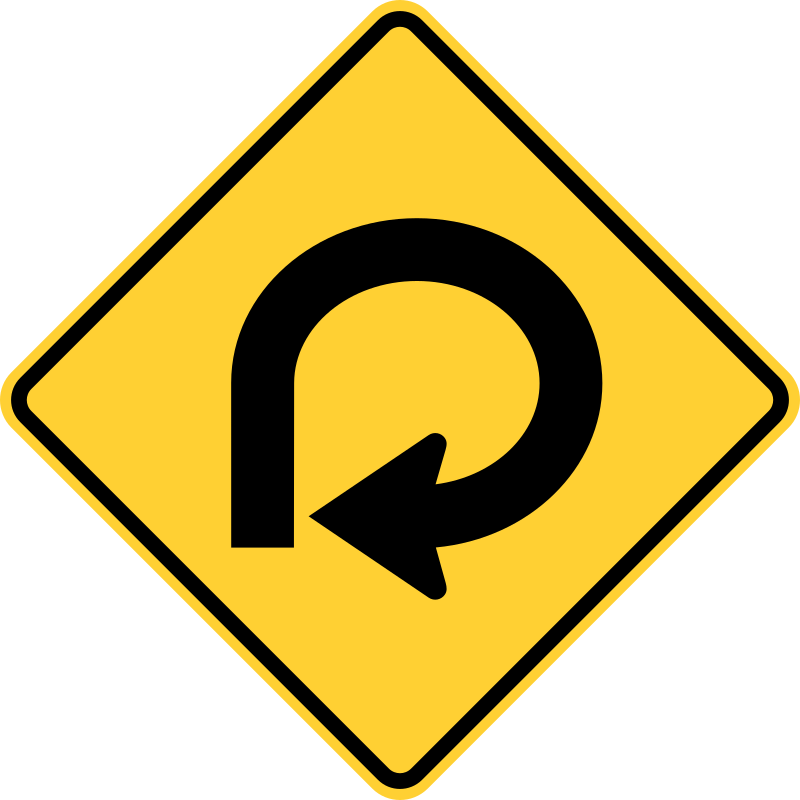 This sign means:
A
Roundabout ahead.
B
270 degree turn ahead.
C
Wrong way; Turn around immediately.
Answer Explanation
This traffic sign indicates: 270 degree turn ahead. Observing and obeying all roadway signs ensures safe traffic flow and legal driving.
This traffic sign indicates: 270 degree turn ahead. Observing and obeying all roadway signs ensures safe traffic flow and legal driving.
Question 23:
When driving in heavy rain, drivers should use:
A
parking lights.
B
low beam headlights.
C
high beam headlights.
Answer Explanation
For safe speed and stopping control: low beam headlights. Adjusting speed to match visibility and road traction prevents loss of steering grip.
For safe speed and stopping control: low beam headlights. Adjusting speed to match visibility and road traction prevents loss of steering grip.
Question 24:
 This regulatory road sign indicates that:
A
Vehicles must slow down and stay in the right lane.
B
The right hand lane is reserved for buses and car-pool vehicles.
C
Slower vehicles traveling on multiple lane highways must stay in the right hand lane.
Answer Explanation
This traffic sign indicates: Slower vehicles traveling on multiple lane highways must stay in the right hand lane. Observing and obeying all roadway signs ensures safe traffic flow and legal driving.
This traffic sign indicates: Slower vehicles traveling on multiple lane highways must stay in the right hand lane. Observing and obeying all roadway signs ensures safe traffic flow and legal driving.
Question 25:
If one of your tires blows out while driving, you should:
A
apply the brakes firmly and steer toward the right edge of the road.
B
pump the brakes.
C
hold the steering wheel firmly, slow down, and steer smoothly.
Answer Explanation
The correct driving rule is: hold the steering wheel firmly, slow down, and steer smoothly. Following standard DMV road rules and practicing defensive driving ensures safety for all road users.
The correct driving rule is: hold the steering wheel firmly, slow down, and steer smoothly. Following standard DMV road rules and practicing defensive driving ensures safety for all road users.
Question 26:
You want to turn left at an intersection ahead. A car reaches the intersection from the opposite direction and moves straight ahead. You:
A
can turn left. You have the right of way.
B
must wait for the car to go through before you turn.
C
may not enter the intersection to prepare for your left turn if the light is green.
Answer Explanation
According to standard right-of-way regulations: must wait for the car to go through before you turn. Yielding appropriately prevents intersection collisions and maintains safe traffic flow.
According to standard right-of-way regulations: must wait for the car to go through before you turn. Yielding appropriately prevents intersection collisions and maintains safe traffic flow.
Question 27:
A flashing red light means:
A
The same as a STOP sign.
B
The light will soon change to steady red.
C
Drive with caution.
Answer Explanation
When an emergency vehicle approaches with flashing lights or sirens, you must safely pull over to the right curb and stop completely until it passes.
When an emergency vehicle approaches with flashing lights or sirens, you must safely pull over to the right curb and stop completely until it passes.
Question 28:
Which shape is a yield sign?
A
Vertical rectangle
B
Upside-down triangle
C
Diamond
Answer Explanation
The correct driving rule is: Upside-down triangle. Following standard DMV road rules and practicing defensive driving ensures safety for all road users.
The correct driving rule is: Upside-down triangle. Following standard DMV road rules and practicing defensive driving ensures safety for all road users.
Question 29:
What type of pavement marking shows you which lane you must use for a turn?
A
Edge line
B
Diamond
C
Crosswalk Lines
D
Arrows
Answer Explanation
This traffic sign indicates: Arrows. Observing and obeying all roadway signs ensures safe traffic flow and legal driving.
This traffic sign indicates: Arrows. Observing and obeying all roadway signs ensures safe traffic flow and legal driving.
Question 30:
You are stopped at a stop sign and you are going to go straight through the intersection. A car on the cross road has stopped at a stop sign on your right and is going to go straight. Who has the right-of-way?
A
Whoever enters the intersection first.
B
You.
C
The car on your right.
Answer Explanation
According to standard right-of-way regulations: The car on your right. Yielding appropriately prevents intersection collisions and maintains safe traffic flow.
According to standard right-of-way regulations: The car on your right. Yielding appropriately prevents intersection collisions and maintains safe traffic flow.
Question 31:
Worn tires:
A
may cause you to hydroplane even with very little water on the road.
B
can increase your stopping distance.
C
can make turning more difficult.
D
All of the above.
Answer Explanation
All of the listed points are essential driving requirements: may cause you to hydroplane even with very little water on the road; can increase your stopping distance; can make turning more difficult. Practicing each ensures compliance with DMV safety laws.
All of the listed points are essential driving requirements: may cause you to hydroplane even with very little water on the road; can increase your stopping distance; can make turning more difficult. Practicing each ensures compliance with DMV safety laws.
Question 32:
Drivers can not pass a vehicle on the left if:
A
they approach the top of a hill on a two-way road and can not see over it.
B
they can not safely return to the right lane before they reach a solid yellow center line for the right lane.
C
All of the above.
Answer Explanation
All of the listed points are essential driving requirements: they approach the top of a hill on a two-way road and can not see over it; they can not safely return to the right lane before they reach a solid yellow center line for the right lane. Practicing each ensures compliance with DMV safety laws.
All of the listed points are essential driving requirements: they approach the top of a hill on a two-way road and can not see over it; they can not safely return to the right lane before they reach a solid yellow center line for the right lane. Practicing each ensures compliance with DMV safety laws.
Question 33:
 This sign means:
A
Reversible lane ahead.
B
The divided highway ends ahead.
C
Drivers are coming to a point where another traffic lane joins the one they are on.
Answer Explanation
This traffic sign indicates: The divided highway ends ahead. Observing and obeying all roadway signs ensures safe traffic flow and legal driving.
This traffic sign indicates: The divided highway ends ahead. Observing and obeying all roadway signs ensures safe traffic flow and legal driving.
Question 34:
You may drive faster than the posted speed limit:
A
when passing another vehicle, as long as it is safe to do so.
B
when your lane is empty.
C
Under no circumstances.
Answer Explanation
For safe speed and stopping control: Under no circumstances. Adjusting speed to match visibility and road traction prevents loss of steering grip.
For safe speed and stopping control: Under no circumstances. Adjusting speed to match visibility and road traction prevents loss of steering grip.
Question 35:
When preparing to exit an expressway, drivers should start reducing their speed:
A
about halfway through the deceleration lane.
B
immediately upon entering the deceleration lane.
C
at least 100 feet before entering the deceleration lane.
Answer Explanation
For safe speed and stopping control: immediately upon entering the deceleration lane. Adjusting speed to match visibility and road traction prevents loss of steering grip.
For safe speed and stopping control: immediately upon entering the deceleration lane. Adjusting speed to match visibility and road traction prevents loss of steering grip.
Question 36:
A vehicle that enters a road from a driveway:
A
has the right-of-way.
B
must yield to traffic approaching from the right, while it has the right-of-way over vehicles approaching from the left.
C
must stop and yield the right-of-way to traffic on the roadway and to pedestrians.
Answer Explanation
The correct driving rule is: must stop and yield the right-of-way to traffic on the roadway and to pedestrians. Following standard DMV road rules and practicing defensive driving ensures safety for all road users.
The correct driving rule is: must stop and yield the right-of-way to traffic on the roadway and to pedestrians. Following standard DMV road rules and practicing defensive driving ensures safety for all road users.
Question 37:
 This road sign means:
A
Merge right
B
Stop sign ahead
C
Reduction in lanes
Answer Explanation
This traffic sign indicates: Reduction in lanes. Observing and obeying all roadway signs ensures safe traffic flow and legal driving.
This traffic sign indicates: Reduction in lanes. Observing and obeying all roadway signs ensures safe traffic flow and legal driving.
Question 38:
If you see a “lane closed ahead” sign you should:
A
make a U-turn. You are on the wrong side of the road.
B
merge into the correct lane when it is safe.
C
speed to the end of the closed lane and try to get into the other lane.
Answer Explanation
The correct driving rule is: merge into the correct lane when it is safe. Following standard DMV road rules and practicing defensive driving ensures safety for all road users.
The correct driving rule is: merge into the correct lane when it is safe. Following standard DMV road rules and practicing defensive driving ensures safety for all road users.
Question 39:
You should never depend on your mirrors when you prepare to change lanes. Why?
A
Mirrors leave “blind spots” behind both sides of vehicles.
B
Mirrors need to be adjusted.
C
Mirrors are useless.
Answer Explanation
The correct driving rule is: Mirrors leave “blind spots” behind both sides of vehicles. Following standard DMV road rules and practicing defensive driving ensures safety for all road users.
The correct driving rule is: Mirrors leave “blind spots” behind both sides of vehicles. Following standard DMV road rules and practicing defensive driving ensures safety for all road users.
Question 40:
What is the first thing to do when you make a three-point turn?
A
Signal with your left turn signal, then check carefully for traffic coming toward you.
B
Signal with your right turn signal, then pull over to the right and stop.
C
Turn left, go across the road so you come to a stop while you face the edge of the road.
Answer Explanation
The correct driving rule is: signal with your right turn signal, then pull over to the right and stop. Following standard DMV road rules and practicing defensive driving ensures safety for all road users.
The correct driving rule is: signal with your right turn signal, then pull over to the right and stop. Following standard DMV road rules and practicing defensive driving ensures safety for all road users.
Question 41:
The blind spot to the rear of large trucks can extend for:
A
200 feet
B
300 feet
C
150 feet
D
50 feet
Answer Explanation
Large commercial trucks have extensive blind spots on all four sides called the 'No-Zone': 200 feet. If you cannot see the truck driver in their side mirrors, they cannot see you.
Large commercial trucks have extensive blind spots on all four sides called the 'No-Zone': 200 feet. If you cannot see the truck driver in their side mirrors, they cannot see you.
Question 42:
When driving at night with no other vehicles ahead, a driver should use:
A
high beam lights.
B
low-beam lights.
C
parking lights.
Answer Explanation
The correct driving rule is: high beam lights. Following standard DMV road rules and practicing defensive driving ensures safety for all road users.
The correct driving rule is: high beam lights. Following standard DMV road rules and practicing defensive driving ensures safety for all road users.
Question 43:
 This road sign means:
A
Watch for vehicles entering from the side
B
When pavement is wet, reduce your speed
C
Winding road ahead
Answer Explanation
This traffic sign indicates: When pavement is wet, reduce your speed. Observing and obeying all roadway signs ensures safe traffic flow and legal driving.
This traffic sign indicates: When pavement is wet, reduce your speed. Observing and obeying all roadway signs ensures safe traffic flow and legal driving.
Question 44:
Are bicyclists required to obey traffic laws and signs?
A
No, bicyclists are considered pedestrians when it comes to the rules of the road.
B
Yes.
C
Yes, but only if they are riding in a bicycle lane.
Answer Explanation
The correct driving rule is: Yes. Following standard DMV road rules and practicing defensive driving ensures safety for all road users.
The correct driving rule is: Yes. Following standard DMV road rules and practicing defensive driving ensures safety for all road users.
Question 45:
A steady yellow light means:
A
Be prepared to stop for the red light.
B
Drive with caution.
C
Be prepared to go. The light will soon be green.
Answer Explanation
According to standard right-of-way regulations: Be prepared to stop for the red light. Yielding appropriately prevents intersection collisions and maintains safe traffic flow.
According to standard right-of-way regulations: Be prepared to stop for the red light. Yielding appropriately prevents intersection collisions and maintains safe traffic flow.
Question 46:
There are two traffic lanes in your direction. You are driving in the left lane and many vehicles are passing you on the right, and the driver behind you wishes to drive faster. You should:
A
stay in your lane and maintain your current speed.
B
drive onto the left shoulder to let the other driver pass.
C
move over into the right lane when safe to do so.
Answer Explanation
Defensive driving guidelines state that: move over into the right lane when safe to do so. Anticipating road hazards and communicating maneuvers keeps traffic predictable and safe.
Defensive driving guidelines state that: move over into the right lane when safe to do so. Anticipating road hazards and communicating maneuvers keeps traffic predictable and safe.
Question 47:
If your car goes into water, you should:
A
wait for water to rush in and let it out in small breaths through your nose.
B
call the fire department immediately.
C
remove yourself before it starts to sink.
Answer Explanation
The correct driving rule is: remove yourself before it starts to sink. Following standard DMV road rules and practicing defensive driving ensures safety for all road users.
The correct driving rule is: remove yourself before it starts to sink. Following standard DMV road rules and practicing defensive driving ensures safety for all road users.
Question 48:
When a ‘Road Closed’ sign is displayed, drivers must:
A
make a U-turn.
B
look for a detour or another route.
C
come to a complete stop and wait for the lights to turn green.
Answer Explanation
The correct driving rule is: look for a detour or another route. Following standard DMV road rules and practicing defensive driving ensures safety for all road users.
The correct driving rule is: look for a detour or another route. Following standard DMV road rules and practicing defensive driving ensures safety for all road users.
Question 49:
 This road sign means:
A
Cars in right lane must slow down
B
Merging traffic ahead
C
Pass only in the right lane
D
No left turn
Answer Explanation
This traffic sign indicates: Merging traffic ahead. Observing and obeying all roadway signs ensures safe traffic flow and legal driving.
This traffic sign indicates: Merging traffic ahead. Observing and obeying all roadway signs ensures safe traffic flow and legal driving.
Question 50:
Blind spots around a large vehicle are _________________ than the blind spots around a car.
A
larger and deeper
B
less dangerous
C
narrower and shorter
Answer Explanation
The correct driving rule is: larger and deeper. Following standard DMV road rules and practicing defensive driving ensures safety for all road users.
The correct driving rule is: larger and deeper. Following standard DMV road rules and practicing defensive driving ensures safety for all road users.