DriveQuiz drivequiz.com

WA DMV PERMİT PRACTİCE TEST 1

Washington
Duration: 36 min
|
Questions: 40
Student Name:
Date:
Correct:      Incorrect:      Score:      
1.
The shape of a route sign tells you:
A) the type of route you are on.
B) the speed limit on that route.
C) that the route you are on might be dangerous.
2.
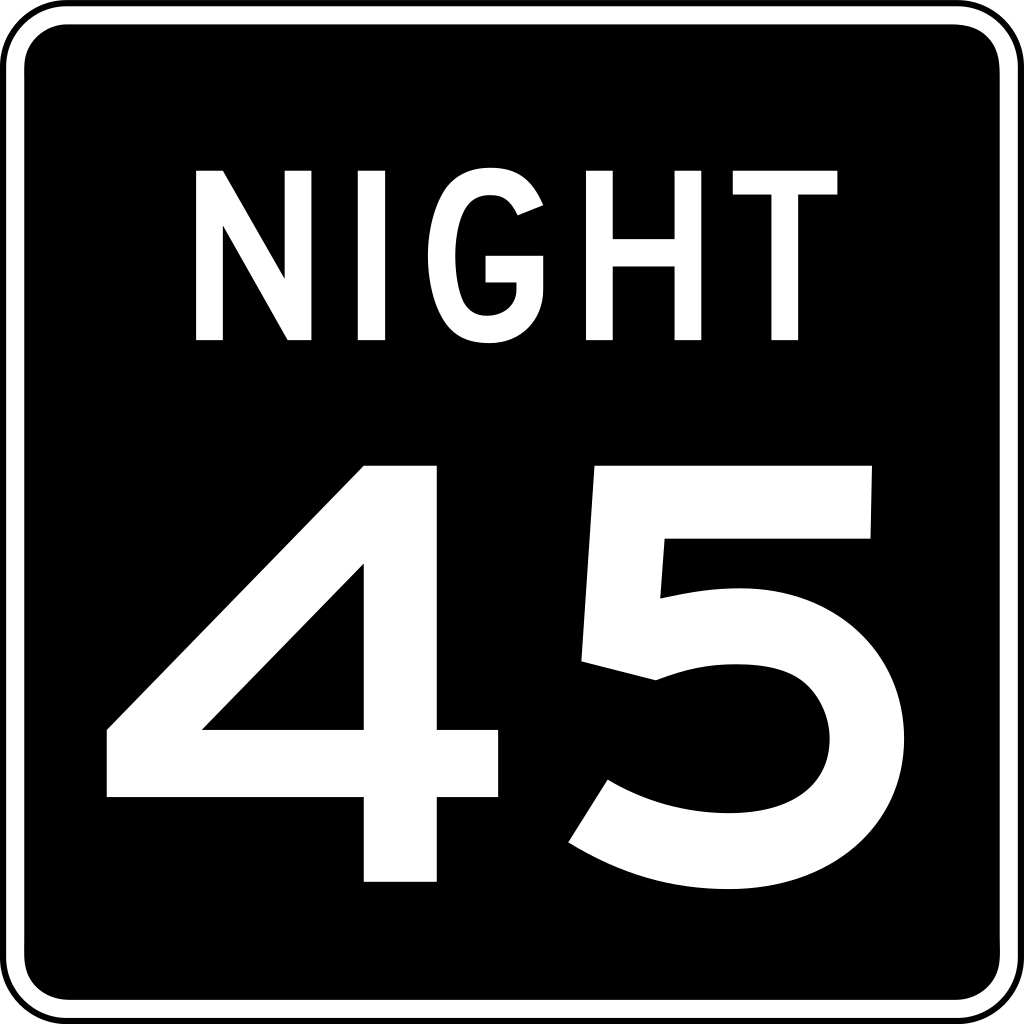
Indicates a lower maximum legal speed limit that applies only during nighttime hours for safety.
This sign means:
A) Take route 45 if you are driving at night.
B) The night-time speed limit is 45 MPH.
C) The minimum speed limit is 45 MPH.
3.
Treat the flashing red signal exactly like a STOP sign: come to a complete stop, yield to cross traffic and pedestrians, then proceed when safe.
A flashing red light:
A) is used at dangerous intersections.
B) means the same thing as a stop sign.
C) All of the above.
4.
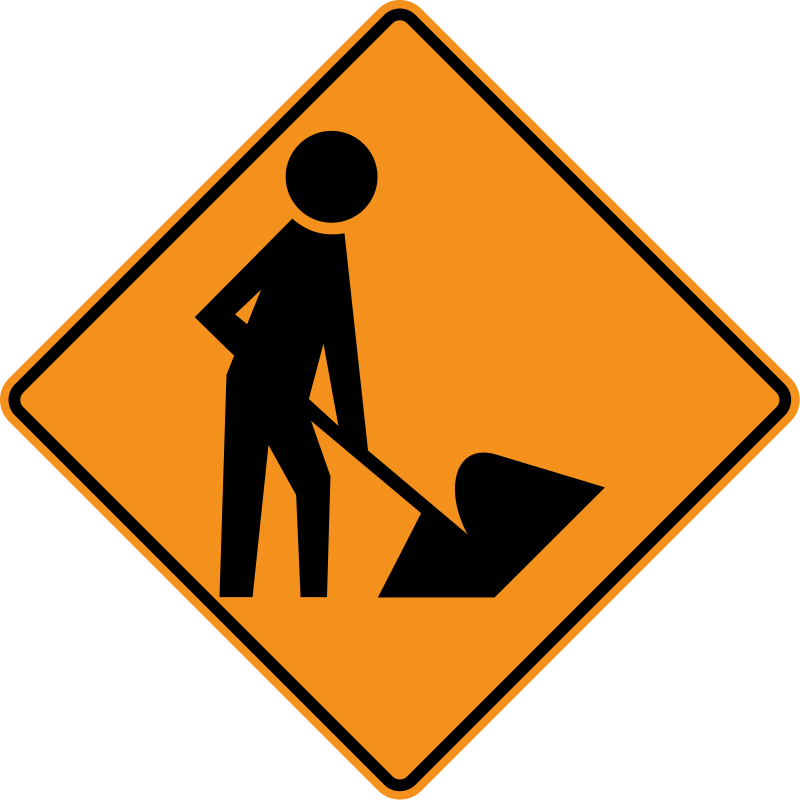
Construction or maintenance personnel are actively working in or adjacent to the roadway. Slow down and maintain a safe buffer.
This road sign means that:
A) Workers are on or very close to the road in the work zone ahead.
B) There is a children's playground ahead.
C) There is a pedestrian crosswalk ahead.
D) A group of prison workers is ahead.
5.
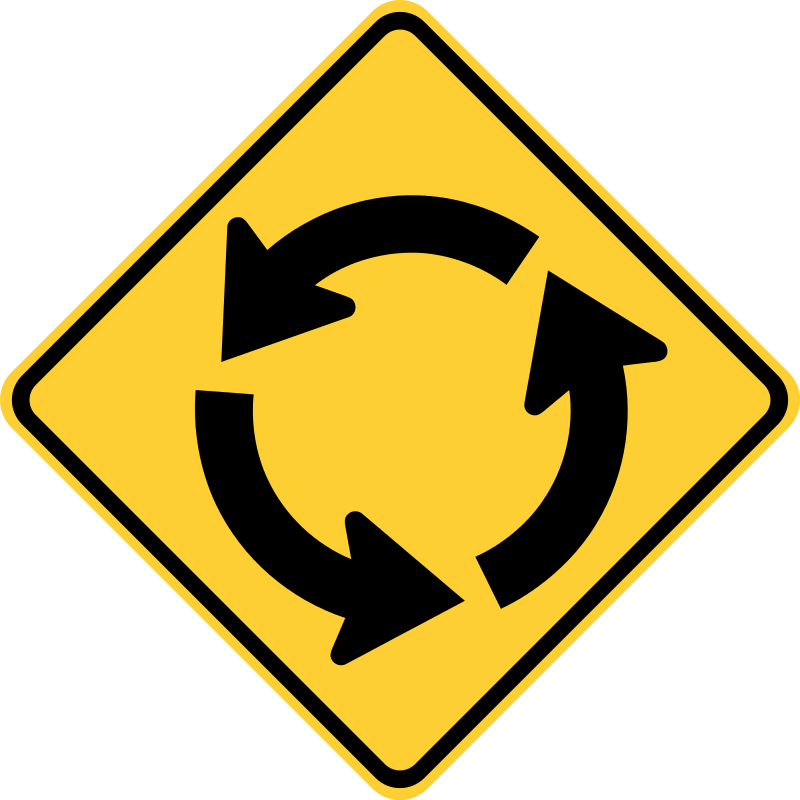
A circular intersection is ahead. Vehicles inside the roundabout have right-of-way; entering traffic must yield to traffic approaching from the left.
This road sign:
A) warns drivers of a sharp turn left. Drivers should slow their speed and keep to the left.
B) provides an advance notice of a roundabout.
C) warns drivers that U-turns are not permitted.
D) is a no-right-turns sign.
6.
BAC is expressed in:
A) percentage of alcohol to blood.
B) percentage of blood to alcohol.
C) ounces of alcohol in your blood.
7.
Drivers shoul be cautious when large trucks make turns because:
A) they have to back before making the turn.
B) they may stop and flash their brake lights during the turn.
C) they make wide turns and may cross the center line.
D) None of the other answers are correct.
8.
Slow down and give right-of-way to all oncoming vehicles, cyclists, and pedestrians. Stop completely if necessary before entering the intersection or merging.
The yield sign means:
A) Go. The light will soon be red.
B) If the way is clear, you may move forward slowly without stopping.
C) Stop if you can.
9.
Drivers must dim their high beam headlights when within _____ of an oncoming vehicle.
A) 100 feet
B) 500 feet
C) 250 feet
D) 200 feet
10.
When making a left or right turn in a business or residential district, you should activate your turn signal for:
A) not less than 75 feet before turning.
B) not less than 100 feet before turning.
C) not less than 50 feet after turning.
D) not less than 50 feet before turning.
11.
To safely stop in emergencies always allow a space cushion of at least:
A) 1 second behind the vehicle in front of you.
B) 5 seconds behind the vehicle in front of you.
C) 4 seconds behind the vehicle in front of you.
D) 7 seconds behind the vehicle in front of you.
12.
You want to turn left at an intersection ahead. A car reaches the intersection from the opposite direction and moves straight ahead. You:
A) can turn left. You have the right of way.
B) must wait for the car to go through before you turn.
C) may not enter the intersection to prepare for your left turn if the light is green.
13.
When an aggressive driver confronts you, you should:
A) Try to move away safely.
B) Remain calm and relaxed.
C) All of the above.
14.
Roads are most slippery:
A) just before it rains.
B) when it stops raining.
C) when it first starts to rain.
15.
Before a school bus stops to load passengers, the driver will usually flash:
A) yellow warning lights.
B) red warning lights.
C) red lights.
16.
Warns of two consecutive curves in opposite directions (e.g., curves right then left). Slow down to maintain control.
This sign warns drivers that:
A) the highway ahead is divided into two one-way roadways. Drivers should keep to the right.
B) there is a winding road ahead.
C) there is a double curve ahead.
17.
Bicyclists must:
A) ride in a bicycle lane, if available.
B) remain to the right when they prepare for a left turn.
C) remain near the left edge of the road.
18.
Traffic lights are normally ____________ from the top to bottom or left to right.
A) red, green and yellow
B) green, yellow and red
C) red, yellow and green
19.
An octagonal sign means that drivers must:
A) respect the posted speed limit.
B) come to a complete stop at the marked stop line.
C) be aware possible hazards ahead.
20.
When riding at night, bicycles must have a white headlight visible for ____ feet.
A) 600
B) 300
C) 500
D) 400
21.
As you drive on the expressway, make sure:
A) you cut off vehicles behind you when you change lanes.
B) to signal all lane changes.
C) your directional signal goes off before you change lanes.
22.
To enter a freeway:
A) signal, yield, and enter at the same speed that traffic is moving.
B) drive slowly so you can check traffic.
C) signal and enter the freeway. You have the right-of-way.
D) make a complete stop before entering the freeway.
23.
When there are no signs or lane markings to control turning, drivers should:
A) stop before turning.
B) turn from any lane.
C) turn from the lane that’s closest to the direction they want to go.
D) turn from the center lane.
24.
Don’t park within _____ feet of a fire hydrant.
A) 10
B) 15
C) 20
D) 30
25.
What should you do in case of a steering failure?
A) Pump your gas pedal a few times to increase the pressure.
B) Don't panic. Turn on your emergency lights to let other drivers know you are having car problems. Move toward the side of the road and bring the car to a gradual stop.
C) Leave the road immediately.
26.
You can pass on the right:
A) when a vehicle ahead makes a right turn.
B) when a vehicle ahead makes a left turn.
C) when a vehicle that is approaching from the opposite direction is prepared to turn left.
27.
The roadway becomes particularly slippery during wet or rainy conditions. Reduce your speed, increase following distance, and avoid abrupt braking or steering.
This sign indicates:
A) Warning: drunk drivers.
B) Winding road. Drive with caution.
C) The road may be slippery when wet. Drive slowly.
28.
If you refuse to take a BAC test when asked by an officer, you will lose your driver license for at least:
A) 2 years.
B) 1 year.
C) 6 months.
D) 60 days.
29.
In heavy rain, tires can begin to ride on the water that is on top of the road pavement. This is called:
A) rideplaning.
B) hydroplaning.
C) pavement-planing.
D) waterplaning.
30.
A side road enters the highway from the right or left. Watch for traffic turning onto or crossing your lane.
This is:
A) a side road sign.
B) a merging traffic sign.
C) a right curve sign.
31.
A driver who approaches an intersection:
A) must yield the right-of-way to traffic already in the intersection.
B) must drive straight through the intersection, even if another vehicle is already in the intersection.
C) has the right-of-way over traffic already in the intersection.
32.
Posted on the far side of a sharp curve or T-intersection to indicate a sharp change in direction of travel.
This road sign means:
A) Road construction ahead. Detour to the left.
B) Blind intersection ahead.
C) One-way street ahead.
D) Slow down. The road ahead changes direction at an extreme angle.
33.
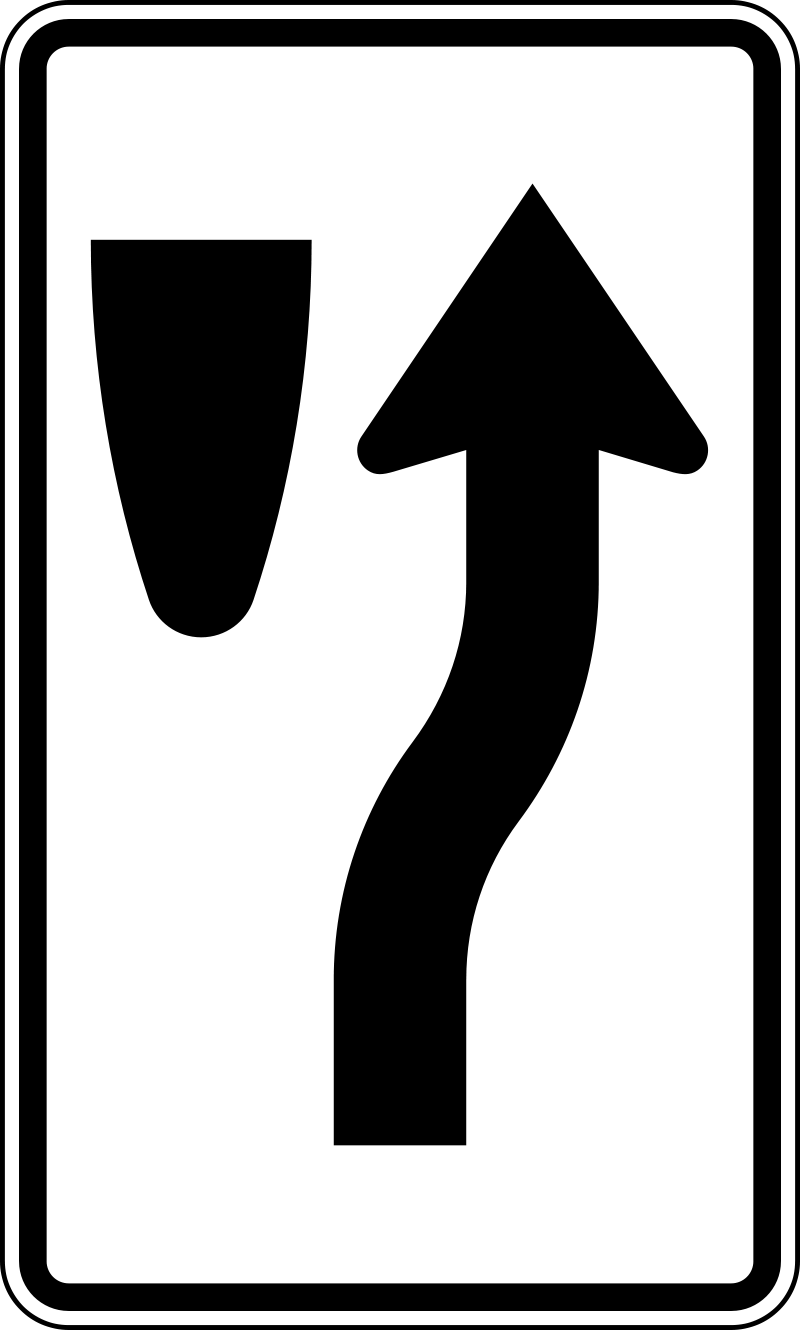
Drivers must pass to the right side of a traffic island, median barrier, or highway divider.
This sign tells drivers that:
A) there is a right turn ahead.
B) they must stay on the right side of the divider
C) a divided highway ends ahead.
34.
Drivers should use the horn:
A) if a driver is moving slowly, and you want them to drive faster.
B) only when necessary, to avoid collisions.
C) when feeling angry or upset.
D) to alert other drivers that they made a mistake.
35.
Destination signs are ______ with ____ letters and symbols.
A) green; white
B) blue; white
C) white; black
36.
Proceed with caution. You do not need to stop unless pedestrians or hazards are present in the intersection.
What does a flashing yellow light mean?
A) The same thing as a stop sign.
B) Drivers may move forward with caution.
C) All of the above.
37.
Interstate or State Route numbered highway marker used for route navigation and guide information.
These are:
A) route signs.
B) miles-left signs.
C) speed limit signs.
38.
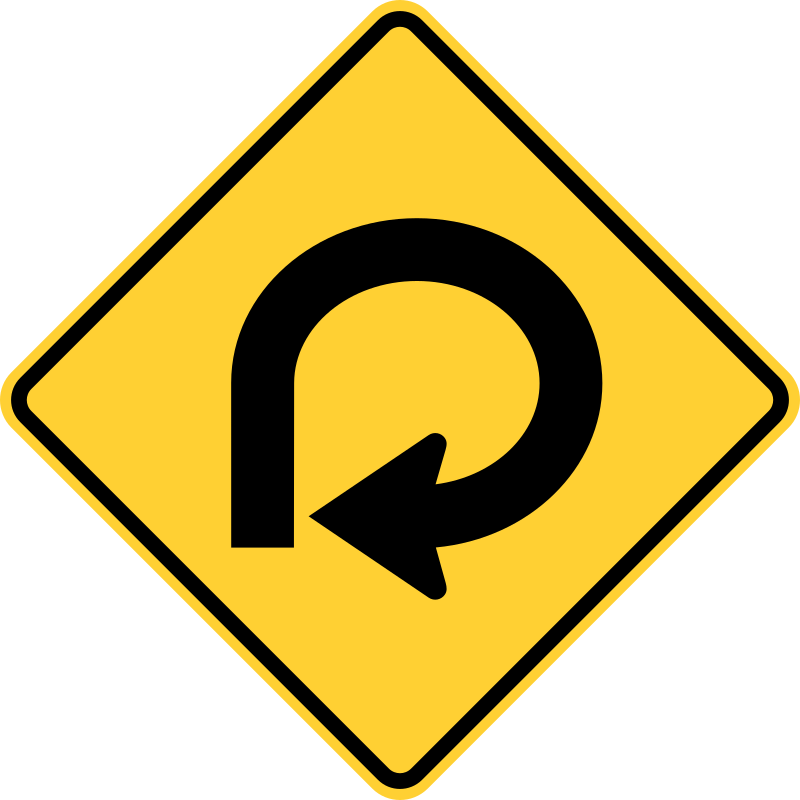
Warns of a circular exit or interchange ramp looping 270 degrees. Slow down significantly to the posted advisory speed.
This sign means:
A) Roundabout ahead.
B) 270 degree turn ahead.
C) Wrong way; Turn around immediately.
39.
Warns of an upcoming STOP sign that may not be immediately visible. Begin slowing down to prepare for a complete stop.
This road sign means:
A) Railroad Warning
B) Stop ahead
C) Yield ahead
D) Side Road
40.
Drivers can not pass a vehicle on the left if:
A) they approach the top of a hill on a two-way road and can not see over it.
B) they can not safely return to the right lane before they reach a solid yellow center line for the right lane.
C) All of the above.
ANSWER KEY Check answers after completing the test.
1 A
2 B
3 C
4 A
5 B
6 A
7 C
8 B
9 B
10 B
11 C
12 B
13 C
14 C
15 A
16 C
17 A
18 C
19 B
20 C
21 B
22 A
23 C
24 B
25 B
26 B
27 C
28 B
29 B
30 A
31 A
32 D
33 B
34 B
35 A
36 B
37 A
38 B
39 B
40 C