Question 1:
At intersections where two or more drivers stop at STOP signs at the same time and they are at right angles:
A
the driver on the left must yield to the driver on the right.
B
the driver who is late for work has the right-of-way.
C
the driver on the right must yield to the driver on the left.
The correct driving rule is: the driver on the left must yield to the driver on the right. Following standard DMV road rules and practicing defensive driving ensures safety for all road users.
Question 2:
If you are found guilty of passing a stopped school bus with its red warning lights on:
A
your driving privileges will be suspended for three months.
B
you will receive two points on your drivers license.
C
your driving license will be revoked.
D
All of the above.
When a school bus displays flashing red lights and extended stop sign: your driving privileges will be suspended for three months. Traffic in both directions must come to a full stop on undivided roads until children are clear.
Question 3:
If traffic on the other side of an intersection is backed up and you cannot get completely through, you must:
A
enter the intersection and try to avoid blocking it.
B
enter the intersection and proceed with caution.
C
wait until traffic ahead is clear.
According to standard right-of-way regulations: wait until traffic ahead is clear. Yielding appropriately prevents intersection collisions and maintains safe traffic flow.
Question 4:
Before crossing any railroad tracks, you must:
A
look and listen for trains.
B
make sure there is room for your vehicle on the other side.
C
All of the above.
All of the listed points are essential driving requirements: look and listen for trains; make sure there is room for your vehicle on the other side. Practicing each ensures compliance with DMV safety laws.
Question 5:
 This sign warns of a ________ ahead.
A
hill
B
no passing zone
C
soft shoulder
This traffic sign indicates: hill. Observing and obeying all roadway signs ensures safe traffic flow and legal driving.
Question 6:
You should increase your following distance when:
A
exiting a freeway.
B
following a motorcycle.
C
driving behind a large vehicle that blocks your vision.
D
All of the above.
Defensive driving best practices include: exiting a freeway; following a motorcycle; driving behind a large vehicle that blocks your vision. Staying alert and maintaining spacing prevents unexpected hazards.
Question 7:
If a traffic officer signals you to drive through a red light:
A
you must do it.
B
you must wait for the red light to turn green.
C
you must not obey the officer. Signs and signals take precedence over directions given by traffic officers.
According to standard right-of-way regulations: you must do it. Yielding appropriately prevents intersection collisions and maintains safe traffic flow.
Question 8:
At a light rail intersection, you should always:
A
share the road with pedestrians and bicyclists.
B
look both ways before crossing the tracks.
C
be alert and obey all traffic signals.
D
All of the above.
Safe navigation at intersections requires following all established rules: share the road with pedestrians and bicyclists; look both ways before crossing the tracks; be alert and obey all traffic signals. Always yield right-of-way properly to prevent collisions.
Question 9:
Keeping a space cushion between you and the other vehicles around you is important because it:
A
gives you time to react to situations.
B
prevents distractions from other vehicles.
C
keeps other drivers alert.
D
keeps traffic flowing at a safe pace.
The correct driving rule is: gives you time to react to situations. Following standard DMV road rules and practicing defensive driving ensures safety for all road users.
Question 10:
Drivers under 21 years of age are considered to be driving under the influence if their blood alcohol concentration (BAC) is:
A
.10% or higher.
B
.05% or higher.
C
.08% or higher.
D
.02% or higher.
Under state DUI and traffic safety laws: .02% or higher. Alcohol degrades judgment, slows reaction times, and distorts depth perception.
Question 11:
The driver of an emergency vehicle that uses lights and a siren can legally:
A
pass red lights.
B
exceed the speed limit
C
All of the above.
Sharing the road safely requires mutual awareness and respect: pass red lights; exceed the speed limit. Maintaining safe space cushions protects all roadway users.
Question 12:
What can you do to prevent skids on snow and ice?
A
Allow the wheels to keep turning.
B
Brake early and gently.
C
All of the above.
Hazardous road and weather conditions require extra caution: Allow the wheels to keep turning; Brake early and gently. Reducing speed and expanding following distance preserves control.
Question 13:
What is a likely effect when you take another drug while you drink alcohol?
A
The effects of the alcohol and the drug are enhanced.
B
There are no effects, unless the drug is prescription only.
C
If the drug is over-the-counter, there are no effects.
Under state DUI and traffic safety laws: The effects of the alcohol and the drug are enhanced. Alcohol degrades judgment, slows reaction times, and distorts depth perception.
Question 14:
When parking uphill on a road with a curb, turn the front wheels:
A
towards the curb.
B
parallel to the curb.
C
straight ahead.
D
away from the curb.
When parking uphill with a curb: away from the curb. Turn wheels away from the curb (left) so the back of the front tire catches the curb if brakes slip.
Question 15:
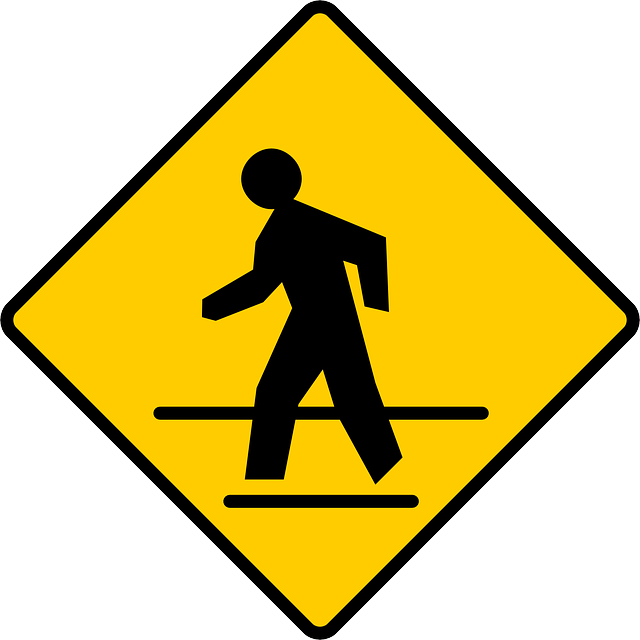 This road sign means:
A
School zone ahead
B
Pedestrians must not cross here
C
Pedestrian crossing ahead
This traffic sign indicates: Pedestrian crossing ahead. Observing and obeying all roadway signs ensures safe traffic flow and legal driving.
Question 16:
You must come to a full stop at a yield sign:
A
Always.
B
Never.
C
If traffic conditions require it.
The correct driving rule is: If traffic conditions require it. Following standard DMV road rules and practicing defensive driving ensures safety for all road users.
Question 17:
 This road sign means:
A
Curves ahead
B
Divided highway ahead
C
Divided highway ends
This traffic sign indicates: Divided highway ends. Observing and obeying all roadway signs ensures safe traffic flow and legal driving.
Question 18:
______________ is an unsafe distraction when driving.
A
Leaving early to drive to an appointment.
B
Texting a message on your cell phone.
C
Controlling an emotion before putting the vehicle in gear.
D
Asking a passenger to enter your mapping request into your GPS.
The correct driving rule is: Texting a message on your cell phone. Following standard DMV road rules and practicing defensive driving ensures safety for all road users.
Question 19:
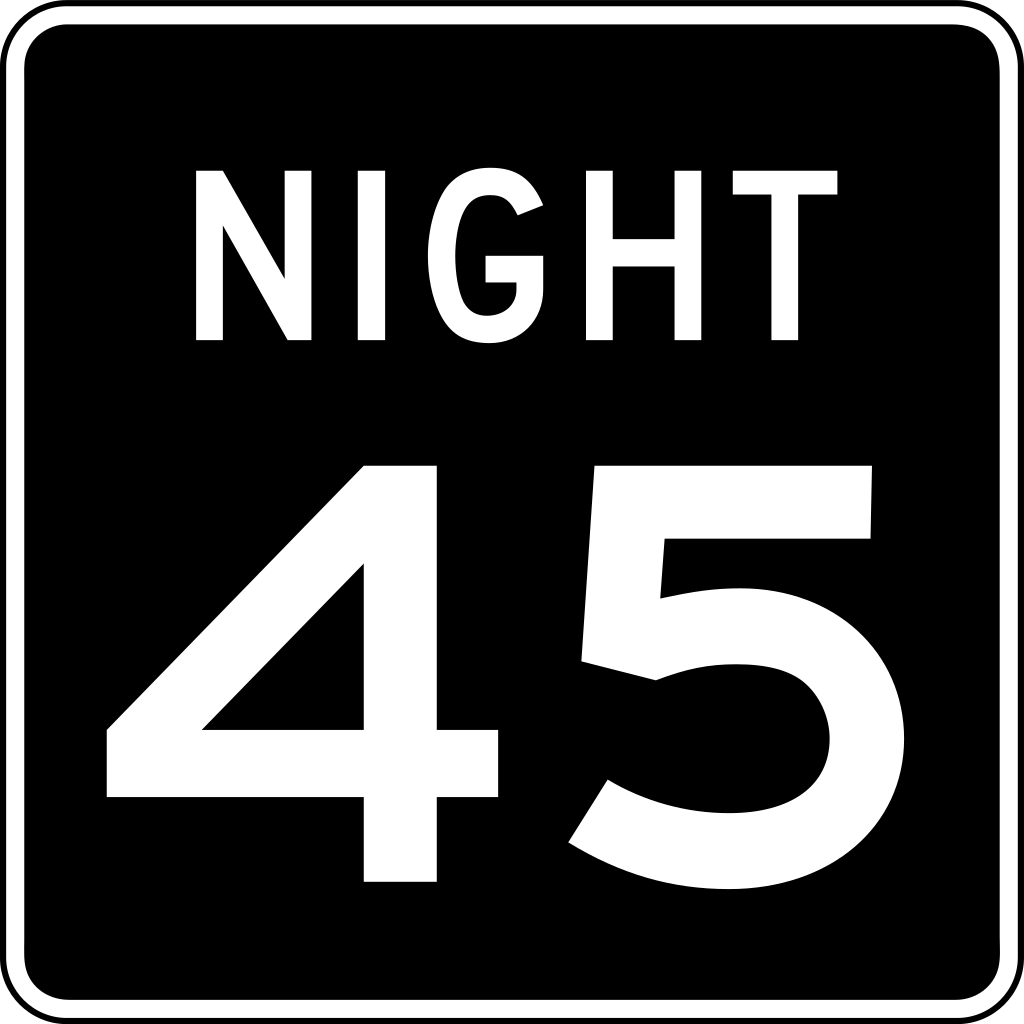 This sign means:
A
Take route 45 if you are driving at night.
B
The night-time speed limit is 45 MPH.
C
The minimum speed limit is 45 MPH.
This traffic sign indicates: The night-time speed limit is 45 MPH. Observing and obeying all roadway signs ensures safe traffic flow and legal driving.
Question 20:
Many crashes are caused by:
A
yielding the right of way.
B
frequently checking mirrors and blind spot.
C
maintaining a 4-second following distance between your vehicle and any vehicle in front of you.
D
driving too fast for conditions.
The correct driving rule is: driving too fast for conditions. Following standard DMV road rules and practicing defensive driving ensures safety for all road users.