Question 1:
A red traffic sign means?
A
Do not enter.
B
Stop.
C
All of the above.
This sign alerts drivers to several mandatory requirements: Do not enter, Stop. Obeying all posted traffic control instructions is required by law.
Question 2:
What happens if two vehicles reach at the same time an intersection with four-way stop signs?
A
The driver on the right yields to the driver on the left.
B
The driver on the left yields to the driver on the right.
C
The first vehicle to reach the intersection must yield.
At an uncontrolled intersection or 4-way stop where vehicles arrive at the same time: The driver on the left yields to the driver on the right. The driver on the left must always yield to the driver on the right.
Question 3:
Most signs used in street work areas are:
A
round.
B
diamond shaped.
C
rectangle shaped.
The correct driving rule is: diamond shaped. Following standard DMV road rules and practicing defensive driving ensures safety for all road users.
Question 4:
Drivers should __________ share the lane with a motorcycle.
A
stay on the left and
B
always attempt to
C
slow down and
D
never attempt to
Motorcycles can stop rapidly and are easily hidden in vehicle blind spots: never attempt to. Always allow an increased following distance of at least 3 to 4 seconds.
Question 5:
Drivers should be aware that a motorcyclist may:
A
decrease speed and rise off the seat when approaching a railroad crossing.
B
quickly change speed or lane position.
C
All of the above.
All of the listed points are essential driving requirements: decrease speed and rise off the seat when approaching a railroad crossing; quickly change speed or lane position. Practicing each ensures compliance with DMV safety laws.
Question 6:
Work zone signs:
A
mean that road conditions will improve soon.
B
mean that drivers must come to a complete stop and back up.
C
provide information on road work or other temporary road conditions.
D
mean that drivers should drive faster to get out of the work zone.
The correct driving rule is: provide information on road work or other temporary road conditions. Following standard DMV road rules and practicing defensive driving ensures safety for all road users.
Question 7:
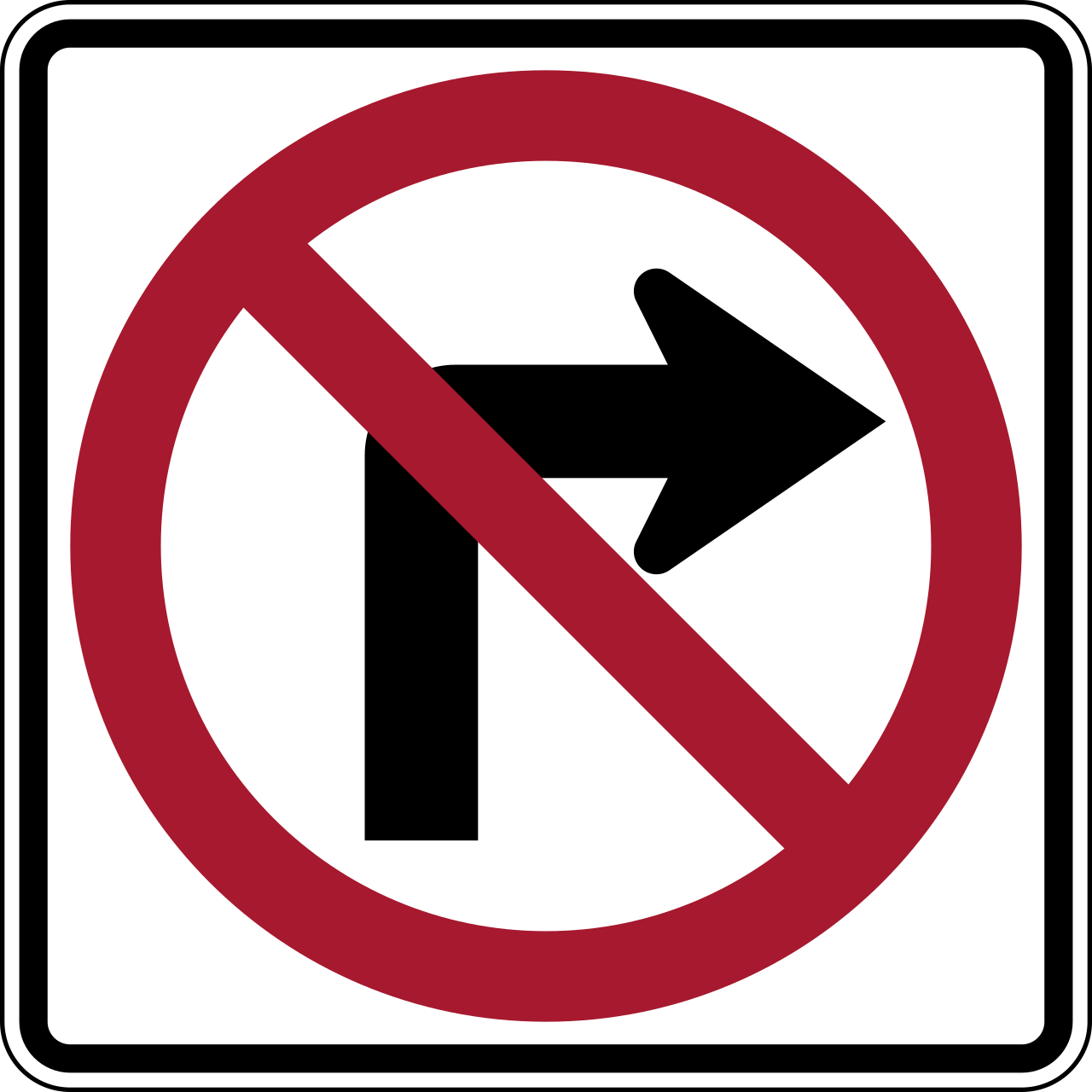 This sign tells drivers that:
A
they must make a left turn at the intersection.
B
U-turns are not allowed.
C
they must not make a right turn.
D
None of the above.
This traffic sign indicates: they must not make a right turn. Observing and obeying all roadway signs ensures safe traffic flow and legal driving.
Question 8:
While driving, it is important to slow down:
A
when the road is wet.
B
on narrow roads.
C
at intersections.
D
All of the above.
All of the listed points are essential driving requirements: when the road is wet; on narrow roads; at intersections. Practicing each ensures compliance with DMV safety laws.
Question 9:
Roads are most slippery:
A
just before it rains.
B
when it stops raining.
C
when it first starts to rain.
For safe speed and stopping control: when it first starts to rain. Adjusting speed to match visibility and road traction prevents loss of steering grip.
Question 10:
When a driver is turning and a pedestrian is crossing without a traffic light, __________ must yield the right-of-way.
A
the pedestrian
B
the driver
C
both
D
whoever is slower
Drivers must always yield the right-of-way to pedestrians crossing at intersections and crosswalks: the driver. Stop and allow them to clear the lane safely.
Question 11:
A thumping sound can be a warning:
A
that a tire blowout is about to occur.
B
of a steering failure.
C
of a brake failure.
The correct driving rule is: that a tire blowout is about to occur. Following standard DMV road rules and practicing defensive driving ensures safety for all road users.
Question 12:
 What does a flashing red light mean?
A
NO TURN ON RED.
B
The same thing as a stop sign.
C
Drivers may move forward with caution.
When an emergency vehicle approaches with flashing lights or sirens, you must safely pull over to the right curb and stop completely until it passes.
Question 13:
Tailgating:
A
cannot result in a traffic citation.
B
helps reduce traffic congestion.
C
is a defensive driving tecnique.
D
can frustrate other drivers and make them angry.
The correct driving rule is: can frustrate other drivers and make them angry. Following standard DMV road rules and practicing defensive driving ensures safety for all road users.
Question 14:
Where there is no bicycle lane, where on the road must a bicyclist ride?
A
on the left shoulder of the road.
B
near the right curb or edge of the road.
C
near the left edge of the road.
State laws require motorists to provide a safe clearance buffer: near the right curb or edge of the road. Allow at least 3 feet of space when overtaking a bicyclist.
Question 15:
Braking distance is affected by:
A
the condition of your brakes and tires.
B
pavement conditions.
C
the speed your vehicle is traveling.
D
All of the above.
Hazardous road and weather conditions require extra caution: the condition of your brakes and tires; pavement conditions; the speed your vehicle is traveling. Reducing speed and expanding following distance preserves control.
Question 16:
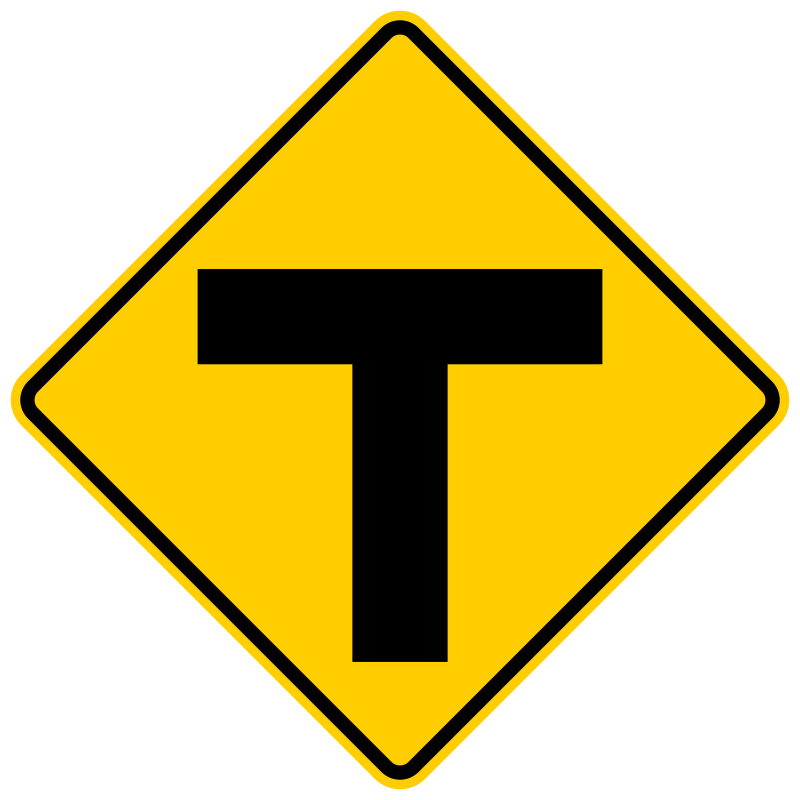 This road sign means:
A
Side road
B
T-intersection ahead
C
Keep right
D
Left lane must turn left
This traffic sign indicates: T-intersection ahead. Observing and obeying all roadway signs ensures safe traffic flow and legal driving.
Question 17:
Arrows on the roadway:
A
show which lanes you must use.
B
indicate reserved lanes.
C
indicate HOV lanes.
The correct driving rule is: show which lanes you must use. Following standard DMV road rules and practicing defensive driving ensures safety for all road users.
Question 18:
Two motorcyclists are allowed to:
A
ride side-by-side in a single lane.
B
share the lane with another vehicle.
C
race on empty roads.
The correct driving rule is: ride side-by-side in a single lane. Following standard DMV road rules and practicing defensive driving ensures safety for all road users.
Question 19:
Which sign has white letters on a red background?
A
Stop
B
School zone
C
Yield
The correct driving rule is: stop. Following standard DMV road rules and practicing defensive driving ensures safety for all road users.
Question 20:
 When they see a yellow X signal, drivers should:
A
come to a complete stop at the marked stop line.
B
turn off the ignition.
C
prepare to leave the lane safely.
State laws require signaling your intention: prepare to leave the lane safely. Signal at least 100 feet before making a turn or changing lanes.