←
Back to Test
Hide Answer Key
Print / Save as PDF
Print / PDF
drive
quiz
.com
VA DMV PERMİT PRACTİCE TEST 5
Virginia
Duration: 36 min
|
Questions: 40
Student Name:
Date:
Correct:
Incorrect:
Score:
1.

This road sign means:
A)
Pedestrian crossing
B)
School zone
C)
School crossing
2.
This sign indicates that the road ahead:
A)
turns sharply right, then left.
B)
is a divided highway.
C)
curves right, then left.
D)
curves right.
3.
This sign warns drivers that:
A)
they must turn either to the right or left.
B)
there is a double curve ahead.
C)
there is a winding road ahead.
4.
This sign warns drivers that:
A)
the highway ahead is divided into two one-way roadways. Drivers should keep to the right.
B)
there is a winding road ahead.
C)
there is a double curve ahead.
5.
This road sign warns drivers that:
A)
left turns are not allowed at the intersection.
B)
the road will make a sharp turn to the right.
C)
another road enters the highway from the direction shown.
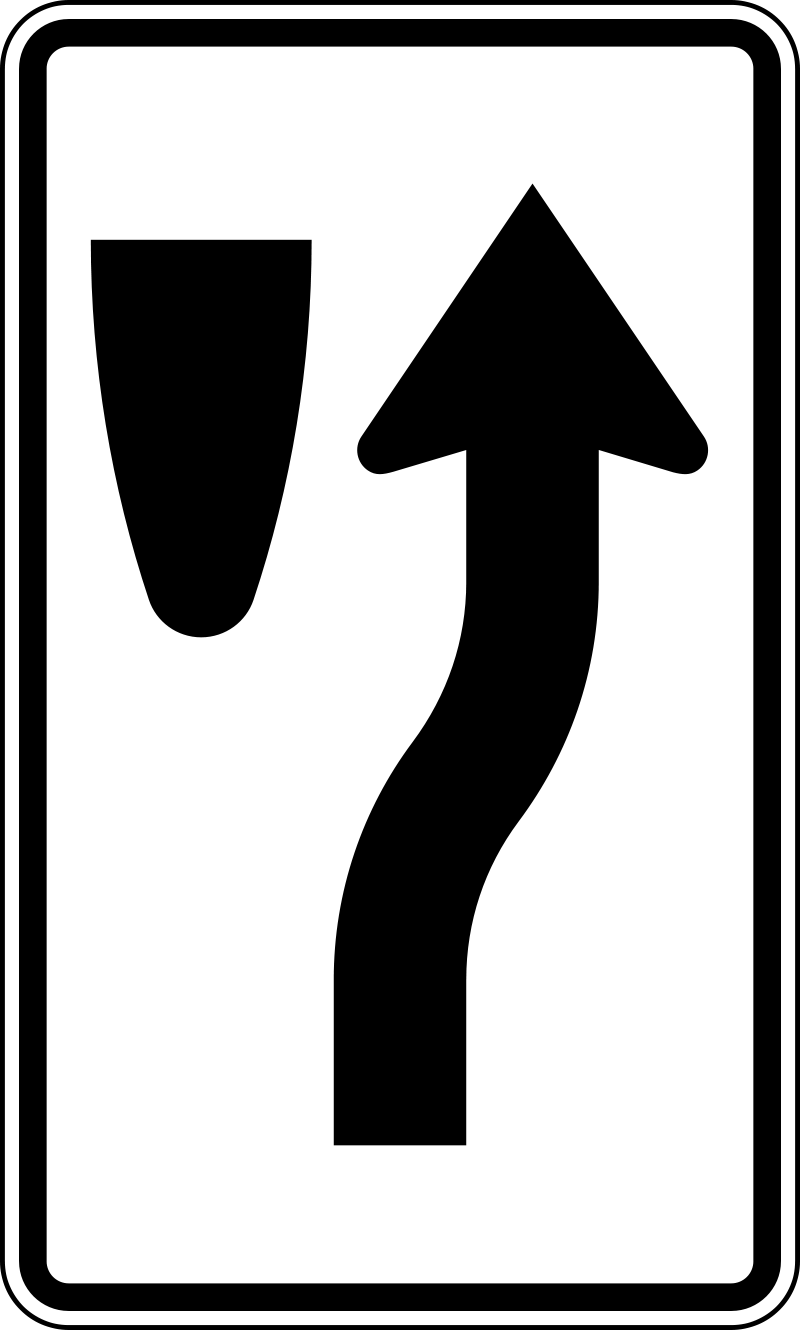
6.
This road sign means:
A)
Divided highway ahead - stay to the right
B)
Do not enter
C)
Do not pass
7.
This road sign means:
A)
Keep to the right
B)
One-way traffic ahead
C)
Lane ends ahead
8.
A pedestrian in the crosswalk when the 'DON’T WALK' signal begins flashing must:
A)
stop immediately.
B)
go back and wait the “WALK” light
C)
finish crossing the street.
9.
This traffic sign warns you about:
A)
merging traffic.
B)
a hill or a downgrade up ahead on the road.
C)
an intersection ahead.
D)
a winding road.
10.
The octagonal shape is used:
A)
for stop signs and railroad advance warning signs.
B)
exclusively for stop signs.
C)
to warn drivers of existing or possible hazards on roadways.
11.
Braking distance is affected by:
A)
the condition of your brakes and tires.
B)
pavement conditions.
C)
the speed your vehicle is traveling.
D)
All of the above.
12.
You must come to a full stop at a yield sign:
A)
Always.
B)
Never.
C)
If traffic conditions require it.
13.
Are bicyclists required to obey traffic laws and signs?
A)
No, bicyclists are considered pedestrians when it comes to the rules of the road.
B)
Yes.
C)
Yes, but only if they are riding in a bicycle lane.
14.
DMV can deny or suspend driving privileges for persons under 18 if the person is found:
A)
involved in an alcohol or drug-related offense.
B)
in need of supervision.
C)
delinquent by a court.
D)
All of the above.
15.
Searching does not include:
A)
looking ahead and behind.
B)
checking from left to right and then left again before entering an intersection.
C)
trying to find your car in a parking lot.
D)
actively looking hazards on the road.
16.
When parking on a public road, drivers should:
A)
move as far away from traffic as possible.
B)
always park on the left side of the roadway.
C)
All of the above.
17.
Turn signals should be used when:
A)
making turns.
B)
changing lanes.
C)
entering or exiting highways.
D)
All of the above.
18.
When changing lanes, you should not:
A)
signal your intentions early.
B)
check your side and rear view mirrors.
C)
use the inside rearview mirror to check for blind spots
D)
check to see if other drivers are moving into the same lane.
19.
Passing is prohibited:
A)
when a school bus is stopped to load or unload children on a public road.
B)
at intersections.
C)
whenever a solid line marks the left side of your lane.
D)
All of the above.
20.
How many passengers may travel with a 16 year old driver?
A)
Three.
B)
One.
C)
Two.
D)
Four.
21.
Drivers entering an interstate highway from an entrance ramp must:
A)
yield to traffic already on the highway.
B)
slow down.
C)
merge without looking.
D)
turn around if another vehicle is in the lane.
22.
What is the main reason night driving is more difficult than daytime driving?
A)
The use of headlight is required by law.
B)
Reduced visibility.
C)
Driving within the range.
23.
When you pass another vehicle, before you return to the right lane, you must:
A)
look at your interior rear-view mirror.
B)
signal.
C)
All of the above.
24.
In Virginia it is illegal to avoid traffic signals, signs and pavement markings by cutting through a parking lot or field.
A)
True
B)
False
25.
In the following situations, drivers should increase their following interval:
A)
When following vehicles that are required to come to a stop at railroad crossings.
B)
When it is hard to see ahead because of bad weather.
C)
All of the above.
26.
What should you do when an aggressive driver confronts you?
A)
Avoid eye contact with the aggressive driver.
B)
Make eye contact.
C)
Challenge the aggressive driver with increased speed.
27.
What type of pavement marking shows you which lane you must use for a turn?
A)
Edge line
B)
Diamond
C)
Crosswalk Lines
D)
Arrows
28.
BAC is:
A)
the acronym for Beer ACcumulation.
B)
the number of ounces of alcohol in your blood.
C)
the percentage of alcohol in your blood.
29.
You should use turn signals to indicate your intention with sufficient time to allow other drivers to see the signal:
A)
if it’s raining.
B)
AFTER you move.
C)
BEFORE you move.
30.
If under age 21, you can be convicted of illegal consumption of alcohol:
A)
if your BAC is .08 or higher.
B)
if your BAC is at least .02 but less than .08.
C)
if you had at more than 2 beers.
31.
The driver is responsible for making sure that children are properly secured when riding.
A)
False
B)
True
32.
At intersections where two or more drivers stop at STOP signs at the same time and they are at right angles:
A)
the driver on the left must yield to the driver on the right.
B)
the driver who is late for work has the right-of-way.
C)
the driver on the right must yield to the driver on the left.
33.
You must pull over to the edge of the road and allow an emergency vehicle to pass:
A)
only if the emergency vehicle is following you.
B)
regardless of your direction.
C)
only if the emergency vehicle is approaching.
D)
None of the above.
34.
Parking is not allowed:
A)
on the road side of a parked vehicle.
B)
in a tunnel.
C)
All of the above.
35.
When a hazard is seen ahead, reaction distance:
A)
is the sum of perception distance and braking distance.
B)
equals total stopping distance minus perception distance.
C)
is how far a vehicle will continue to travel, in ideal conditions, before the driver hits the brakes.
36.
Which of the following drugs could affect your ability to drive?
A)
A cold remedy.
B)
Marijuana.
C)
All of the above.
37.
Zero tolerance is:
A)
how many times you can exceed the posted speed limit.
B)
a law that makes it illegal for youth under 21 to drive with a blood alcohol content of .02 or higher.
C)
a police officer asking you to take a blood alcohol test.
D)
None of the above.
38.
Your BAC depends on:
A)
how much alcohol you drink.
B)
how much time passes between drinks.
C)
All of the above.
39.
At a stop sign there is no stop line, you must stop:
A)
before you enter the intersection.
B)
before you enter the crosswalk.
C)
after you enter the crosswalk.
40.
Before crossing any railroad tracks, you must:
A)
look and listen for trains.
B)
make sure there is room for your vehicle on the other side.
C)
All of the above.
ANSWER KEY
Check answers after completing the test.
1
A
2
C
3
C
4
C
5
C
6
A
7
A
8
C
9
B
10
B
11
D
12
C
13
B
14
D
15
C
16
A
17
D
18
C
19
D
20
B
21
A
22
B
23
C
24
A
25
C
26
A
27
D
28
C
29
C
30
B
31
B
32
A
33
B
34
C
35
C
36
C
37
B
38
C
39
B
40
C