Question 1:
 This is:
A
a side road sign.
B
a merging traffic sign.
C
a right curve sign.
The correct driving rule is: a side road sign. Following standard DMV road rules and practicing defensive driving ensures safety for all road users.
Question 2:
 This road sign means:
A
Yield the right-of-way to oncoming vehicles
B
Stop if necessary
C
You must make a complete stop
D
Slow down or stop
An octagonal Stop sign requires a full and complete stop before the stop line or crosswalk: you must make a complete stop. Proceed only after yielding to all cross traffic and pedestrians.
Question 3:
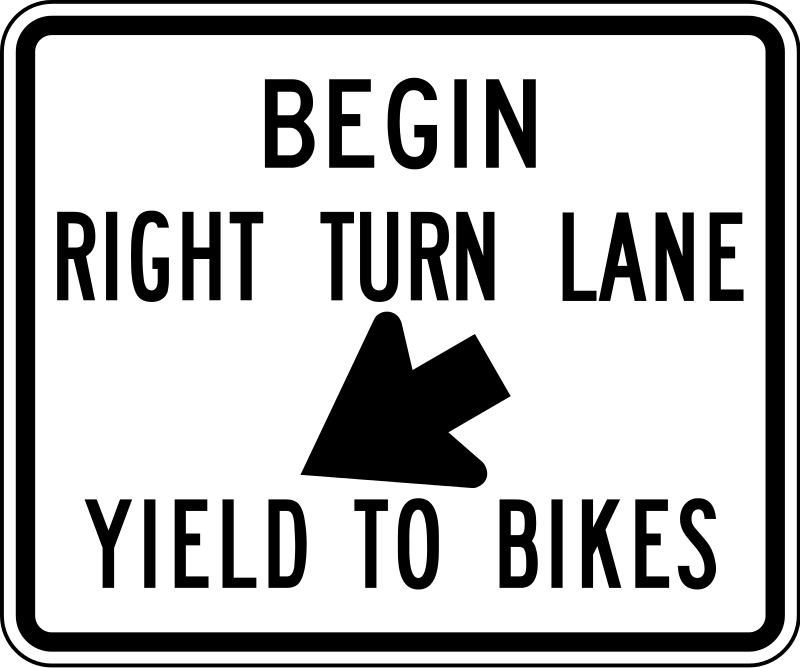 What does this road sign indicate?
A
Drivers have the right of way over bikes turning left.
B
Vehicles turning left must yield to bikes entering a right turn lane.
C
Motor vehicles entering an exclusive right-turn lane must weave across bicycle traffic in bicycle lanes.
This traffic sign indicates: Motor vehicles entering an exclusive right-turn lane must weave across bicycle traffic in bicycle lanes. Observing and obeying all roadway signs ensures safe traffic flow and legal driving.
Question 4:
 This sign warns that:
A
traffic must merge left.
B
the bridge ahead is wide enough for only one vehicle at a time.
C
traffic must merge right.
This traffic sign indicates: traffic must merge left. Observing and obeying all roadway signs ensures safe traffic flow and legal driving.
Question 5:
 What does a flashing red light mean?
A
NO TURN ON RED.
B
The same thing as a stop sign.
C
Drivers may move forward with caution.
When an emergency vehicle approaches with flashing lights or sirens, you must safely pull over to the right curb and stop completely until it passes.
Question 6:
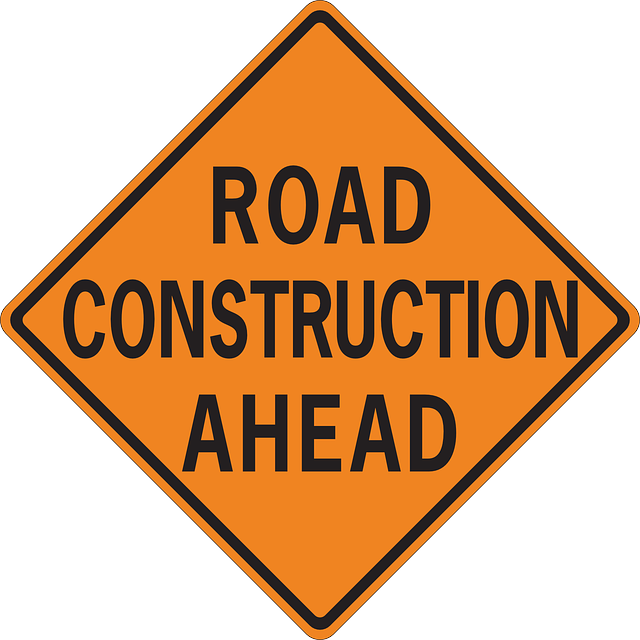 This road sign means:
A
One-way traffic ahead
B
No passing zone
C
Construction zone ahead
D
Your lane ends ahead
This traffic sign indicates: Construction zone ahead. Observing and obeying all roadway signs ensures safe traffic flow and legal driving.
Question 7:
 This sign means:
A
The road will curve to the right, then to the left.
B
Road slippery when wet. Drive slowly.
C
Winding road ahead. Drive with caution.
This traffic sign indicates: Road slippery when wet. Drive slowly. Observing and obeying all roadway signs ensures safe traffic flow and legal driving.
Question 8:
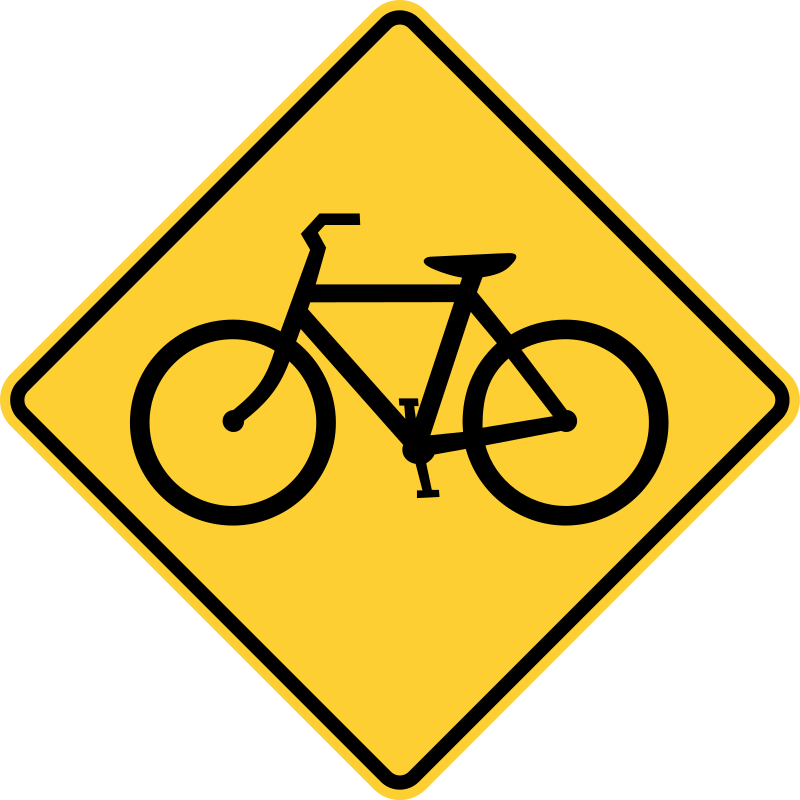 This sign means:
A
Bicycles should yield to vehicles ahead.
B
Warning: a bikeway crosses the roadway ahead.
C
The lane ahead is reserved for bicycles.
This traffic sign indicates: Warning: a bikeway crosses the roadway ahead. Observing and obeying all roadway signs ensures safe traffic flow and legal driving.
Question 9:
 This road sign means:
A
Divided highway ahead
B
Merging traffic
C
Flagger ahead
This traffic sign indicates: Divided highway ahead. Observing and obeying all roadway signs ensures safe traffic flow and legal driving.
Question 10:
 This road sign means:
A
Right turn permitted on red light
B
Drivers must turn right
C
No U-turns
D
No right turn permitted
This traffic sign indicates: No right turn permitted. Observing and obeying all roadway signs ensures safe traffic flow and legal driving.
Question 11:
What is the most important rule to remember in any emergency?
A
Do not panic.
B
Run away.
C
Call the police.
The correct driving rule is: Do not panic. Following standard DMV road rules and practicing defensive driving ensures safety for all road users.
Question 12:
Speed limit signs are:
A
service signs
B
regulation signs (regulatory signs)
C
warning signs
For safe speed and stopping control: regulation signs (regulatory signs). Adjusting speed to match visibility and road traction prevents loss of steering grip.
Question 13:
Every time you get behind the wheel, you:
A
accept responsibility for your actions.
B
must obey Virginias traffic laws.
C
must ensure you are a safe driver.
D
All of the above.
All of the listed points are essential driving requirements: accept responsibility for your actions; must obey Virginias traffic laws; must ensure you are a safe driver. Practicing each ensures compliance with DMV safety laws.
Question 14:
The speed limit in school zones is:
A
25 MPH
B
15 MPH
C
20 MPH
D
35 MPH
For safe speed and stopping control: 25 MPH. Adjusting speed to match visibility and road traction prevents loss of steering grip.
Question 15:
You can pass on the right:
A
when a vehicle ahead makes a right turn.
B
when a vehicle ahead makes a left turn.
C
when a vehicle that is approaching from the opposite direction is prepared to turn left.
The correct driving rule is: when a vehicle ahead makes a left turn. Following standard DMV road rules and practicing defensive driving ensures safety for all road users.
Question 16:
Bicyclists must:
A
ride in a bicycle lane, if available.
B
remain to the right when they prepare for a left turn.
C
remain near the left edge of the road.
The correct driving rule is: ride in a bicycle lane, if available. Following standard DMV road rules and practicing defensive driving ensures safety for all road users.
Question 17:
On average, how long does it take your body to remove the alcohol contained in 5 ounces of wine?
A
one hour.
B
30 minutes.
C
3 hours.
Under state DUI and traffic safety laws: one hour. Alcohol degrades judgment, slows reaction times, and distorts depth perception.
Question 18:
Double solid yellow lines mean:
A
the lane to the right may pass.
B
passing is not permitted in either direction.
C
the lane to the left may pass.
D
passing is permitted in either direction.
The correct driving rule is: passing is not permitted in either direction. Following standard DMV road rules and practicing defensive driving ensures safety for all road users.
Question 19:
What should you do if one of your tires blows out?
A
Hold the steering wheel tight and brake immediately to avoid the risk of skidding.
B
Leave the road immediately.
C
Hold the steering wheel tight and slowly take your foot off the gas pedal.
The correct driving rule is: Hold the steering wheel tight and slowly take your foot off the gas pedal. Following standard DMV road rules and practicing defensive driving ensures safety for all road users.
Question 20:
A broken white line:
A
means passing or crossing is prohibited in that lane.
B
separates two lanes traveling in the same direction.
C
marks the right edge of the roadway.
The correct driving rule is: separates two lanes traveling in the same direction. Following standard DMV road rules and practicing defensive driving ensures safety for all road users.
Question 21:
When driving on a multi-lane highway, you should __________ if you are driving slower than the traffic around you.
A
not change lanes
B
stay in the left lane
C
speed up
D
stay in the right lane
Defensive driving guidelines state that: stay in the right lane. Anticipating road hazards and communicating maneuvers keeps traffic predictable and safe.
Question 22:
To avoid the risk of being involved in an alcohol-related crash, you should:
A
decide before you start drinking that you are not going to drive.
B
say 'No, thanks' if someone offers you alcohol.
C
call a taxi if you've been drinking.
D
All of the above.
Alcohol and impairing substances degrade all critical driving functions: decide before you start drinking that you are not going to drive; say 'No, thanks' if someone offers you alcohol; call a taxi if you've been drinking. Driving while impaired carries severe criminal and safety penalties.
Question 23:
ABS is the acronym for:
A
Anti-Braking System
B
Average-Beam System
C
Anti-Locking Brake System
The correct driving rule is: Anti-Locking Brake System. Following standard DMV road rules and practicing defensive driving ensures safety for all road users.
Question 24:
Drivers must yield the right-of-way to:
A
military convoys.
B
pedestrians crossing a public street or highway.
C
funeral processions.
D
All of the above.
Safe navigation at intersections requires following all established rules: military convoys; pedestrians crossing a public street or highway; funeral processions. Always yield right-of-way properly to prevent collisions.
Question 25:
When approaching a stopped school bus with its red lights flashing and its stop arm extended, you must:
A
stop 15 feet away from the bus.
B
stop only if children are present.
C
stop and remain stopped until the red lights stop flashing and the stop arm has been withdrawn.
D
stop and remain stopped until it appears safe to proceed.
When a school bus displays flashing red lights and extended stop sign: stop and remain stopped until the red lights stop flashing and the stop arm has been withdrawn. Traffic in both directions must come to a full stop on undivided roads until children are clear.
Question 26:
If a driver follows you too closely, you should:
A
move to another lane if possible.
B
activate your stop lights.
C
brake suddenly.
The correct driving rule is: move to another lane if possible. Following standard DMV road rules and practicing defensive driving ensures safety for all road users.
Question 27:
If you drive without liability insurance coverage on your vehicle, in Virginia you face:
A
a fine.
B
higher insurance premiums.
C
driver's license suspension.
D
All of the above.
All of the listed points are essential driving requirements: a fine; higher insurance premiums; driver's license suspension. Practicing each ensures compliance with DMV safety laws.
Question 28:
How can you prevent fatigue on a long trip?
A
Plan to drive long trips with a companion.
B
Get enough sleep.
C
All of the above.
Alcohol and impairing substances degrade all critical driving functions: Plan to drive long trips with a companion; Get enough sleep. Driving while impaired carries severe criminal and safety penalties.
Question 29:
What is the first thing you should do if your wheels move off the pavement?
A
Pull the steering wheel back.
B
Pull over to the right and sound your horn to warn the other drivers.
C
Ease your foot off the gas pedal and brake gently.
The correct driving rule is: Ease your foot off the gas pedal and brake gently. Following standard DMV road rules and practicing defensive driving ensures safety for all road users.
Question 30:
A vehicle is stopped at a crosswalk to permit a pedestrian to cross the roadway. The driver of the vehicle approaching from the rear should:
A
sound the horn.
B
overtake and pass the stopped vehicle.
C
not overtake and pass the stopped vehicle.
Drivers must always yield the right-of-way to pedestrians crossing at intersections and crosswalks: not overtake and pass the stopped vehicle. Stop and allow them to clear the lane safely.
Question 31:
What should you do if your rear wheels start to skid?
A
Steer left if your rear wheels slide right.
B
If the vehicle has ABS, pump the pedal carefully.
C
Turn the steering wheel in the direction the vehicle is trying to go.
The correct driving rule is: turn the steering wheel in the direction the vehicle is trying to go. Following standard DMV road rules and practicing defensive driving ensures safety for all road users.
Question 32:
Which of the following does NOT affect the distance that it takes to stop your vehicle?
A
Perception time.
B
Braking distance.
C
Reaction distance.
D
Steering ability.
The correct driving rule is: Steering ability. Following standard DMV road rules and practicing defensive driving ensures safety for all road users.
Question 33:
Unlike passenger cars, trucks have blind spots:
A
on the right.
B
directly behind them.
C
on the front.
The correct driving rule is: directly behind them. Following standard DMV road rules and practicing defensive driving ensures safety for all road users.
Question 34:
One broken line indicates:
A
You can pass other vehicles and change lanes, if it is safe.
B
You can not pass other vehicles or go across the line.
C
You can change lanes, but only when traffic conditions or obstructions in the road make it necessary.
The correct driving rule is: you can pass other vehicles and change lanes, if it is safe. Following standard DMV road rules and practicing defensive driving ensures safety for all road users.
Question 35:
Traffic lights are normally ____________ from the top to bottom or left to right.
A
red, green and yellow
B
green, yellow and red
C
red, yellow and green
The correct driving rule is: red, yellow and green. Following standard DMV road rules and practicing defensive driving ensures safety for all road users.
Question 36:
You are stopped at a stop sign and you are going to go straight through the intersection. A car on the cross road has stopped at a stop sign on your right and is going to go straight. Who has the right-of-way?
A
Whoever enters the intersection first.
B
You.
C
The car on your right.
According to standard right-of-way regulations: The car on your right. Yielding appropriately prevents intersection collisions and maintains safe traffic flow.
Question 37:
Parking is not allowed:
A
on the road side of a parked vehicle.
B
in a tunnel.
C
All of the above.
Under standard parking and curb regulations: All of the above. Following parking distance clearances keeps roadways unobstructed and emergency lanes accessible.
Question 38:
For protection, motorcyclists are required to:
A
keep their headlights and taillights on at all times.
B
signal turns, lane changes and stops.
C
wear approved helmets.
The correct driving rule is: wear approved helmets. Following standard DMV road rules and practicing defensive driving ensures safety for all road users.
Question 39:
A thumping sound can be a warning:
A
that a tire blowout is about to occur.
B
of a steering failure.
C
of a brake failure.
The correct driving rule is: that a tire blowout is about to occur. Following standard DMV road rules and practicing defensive driving ensures safety for all road users.
Question 40:
Trucks, buses and RVs have:
A
much larger blind spots than cars.
B
no blind spots.
C
blind spots the same size as cars.
D
much smaller blind spots than cars.
The correct driving rule is: much larger blind spots than cars. Following standard DMV road rules and practicing defensive driving ensures safety for all road users.